Arches vertes de McDonald's
Sedona détient une particularité unique concernant une chaîne de restauration rapide mondialement connue, une qui défie son image de marque emblématique.
L'histoire complète se débloque dans le tour
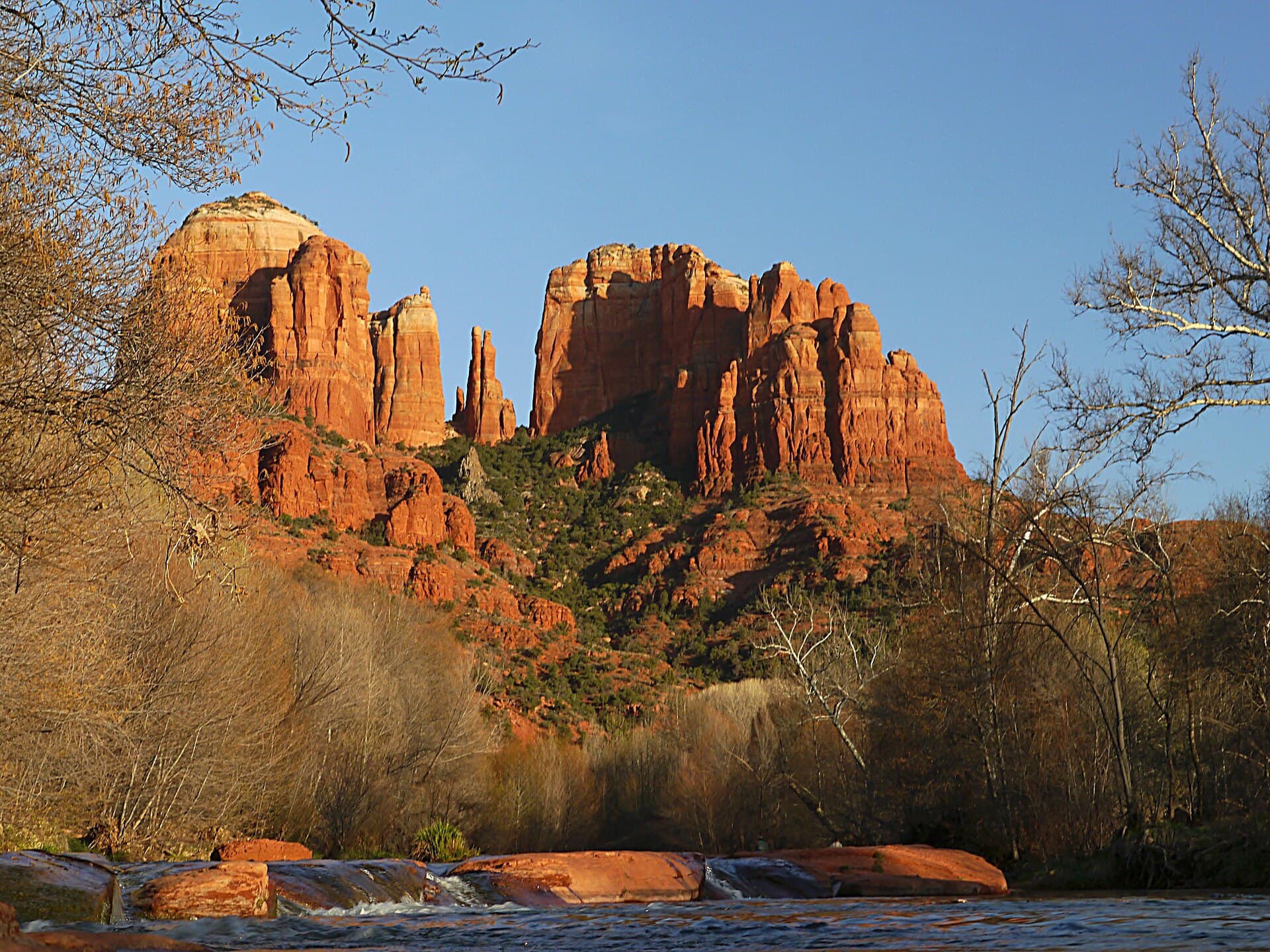 Terrydarc / CC BY-SA 3.0, via Wikimedia Commons
Visite audio autoguidée de Sedona — parcours GPS à pied, lecture hors ligne, narration en 32 langues.
“Là où les roches rouges s'embrasent du feu d'innombrables couchers de soleil, et où la terre murmure des secrets perdus dans le temps.”
Pas les cartes postales. Les histoires que même les habitants ignorent — soufflées à l'oreille, là où elles se sont passées.
Sedona détient une particularité unique concernant une chaîne de restauration rapide mondialement connue, une qui défie son image de marque emblématique.
Imaginez un parc aquatique naturel, sculpté par le temps et l'eau, offrant une expérience excitante et rafraîchissante, différente de toute attraction artificielle.
Au-delà des couleurs diurnes, Sedona offre un spectacle céleste que peu d'endroits sur Terre peuvent égaler, soigneusement préservé pour que tous puissent en être témoins.
Découvrez tous les secrets de Sedona
Chaque adresse, chaque révélation en entier — dans ton oreille, là où elle s'est passée.
Tu choisis tes lieux. Tu marches. La voix te révèle ce que les autres ignorent.


Votre visite audioguidée de Sedona vous attend — choisissez vos lieux, votre langue, et lancez-vous dès votre arrivée.
AcheterLume intègre un guide en réalité augmentée. Levez votre téléphone : sa caméra montre la rue devant vous, avec une flèche lumineuse posée sur l'image réelle qui pointe toujours vers votre prochain arrêt — aucune carte à déchiffrer, aucun mauvais virage. Comme tout dans Lume, ça fonctionne entièrement hors-ligne.
Sedona, en Arizona, est un lieu où la terre elle-même semble vibrer d'une énergie ancienne, un sentiment que l'on retrouve dans ses imposantes formations rocheuses rouges qui s'illuminent de couleur au lever et au coucher du soleil. Cette ville de montagne désertique, située à une altitude d'environ 1 370 mètres, offre un contraste saisissant entre le grès aux teintes rouille et la végétation sempervirente, créant un paysage que beaucoup considèrent comme l'un des plus beaux de la Terre.
Au-delà de sa splendeur visuelle, Sedona a cultivé une réputation de mecque spirituelle, attirant des visiteurs en quête de transformation personnelle et de connexion à ses célèbres vortex énergétiques. Qu'ils soient attirés par l'attrait de l'aventure en plein air, la promesse d'un éveil spirituel ou simplement le désir d'une beauté sereine, Sedona offre un mélange unique d'expériences qui captivent l'esprit, le corps et l'âme.
## Anciens habitants et premières colonies L'histoire de Sedona remonte à des milliers d'années, les premiers Amérindiens ayant parcouru la région il y a environ 37 000 ans. Vers 11 000 av. J.-C., des 'chasseurs d'éléphants' nomades ont découvert une Sedona plus tropicale, abritant d'anciens chameaux et bisons. À mesure que le climat changeait, les 'Archaïques' sont apparus il y a environ 4 000 ans, se basant sur la chasse de petits animaux et la cueillette. Entre 900 et 1350 ap. J.-C., le peuple Sinagua, signifiant 'sans eau', a établi des pueblos et des habitations troglodytes, démontrant des compétences en agriculture, poterie, vannerie et joaillerie. Ils ont développé des routes commerciales s'étendant jusqu'à la côte Pacifique, le Mexique et l'Amérique centrale. Les Sinagua ont finalement migré, et les peuples Yavapai et Apache ont ensuite habité la région.
Les explorateurs espagnols ont rencontré la région de Sedona pour la première fois à la fin des années 1500 alors qu'ils cherchaient de l'or. Cependant, la colonisation européenne n'a commencé qu'en 1876 lorsque John J. Thompson est devenu le premier colon anglo-américain documenté dans le canyon d'Oak Creek, revendiquant des terres qu'il a nommées Indian Gardens. La famille d'Abraham James est arrivée en 1879, devenant les premiers résidents de la communauté immédiate qui serait finalement appelée Sedona. Les premiers colons étaient principalement des agriculteurs et des éleveurs, établissant des vergers de pêchers et de pommiers.
## Nommer la ville et son développement En 1901, Carl et Sedona Schnebly ont déménagé dans la région. Carl Schnebly, espérant établir un bureau de poste, a soumis le nom 'Schnebly Station', qui a été rejeté car trop long. Son frère, Ellsworth, a suggéré d'utiliser le nom de Sedona. Le bureau de poste a accepté, et la ville de Sedona a été officiellement fondée le 26 juin 1902, nommée d'après Sedona Schnebly, qui était connue pour son hospitalité et son industrie. Sa mère, Amanda Miller, aurait inventé le nom parce qu'il 'sonnait joli'.
Pendant des décennies, Sedona est restée une petite communauté rurale. Certaines zones n'ont pas été électrifiées avant les années 1960, et son premier annuaire téléphonique au milieu des années 1950 ne répertoriait que 155 noms. Un tournant important est survenu avec la découverte de l'eau, ce qui a stimulé la croissance et le développement. Le véritable essor du tourisme a commencé à la fin des années 1960 et au début des années 1970, transformant la communauté agricole en une destination de voyage renommée. Les éleveurs ont vendu des terres à des promoteurs, et les vergers ont cédé la place à des maisons, des centres commerciaux et des complexes hôteliers. Dans les années 1980 et 1990, une grande partie du développement actuel a été construite, le tourisme dépassant rapidement l'agriculture en importance économique. Aujourd'hui, plus de quatre millions de personnes visitent Sedona chaque année.
Le paysage de Sedona invite à l'exploration, avec de nombreux sentiers et points de vue offrant un accès à ses emblématiques roches rouges. Les randonnées populaires incluent Devil's Bridge, connu pour son arche naturelle et ses vues imprenables au lever/coucher du soleil, et Cathedral Rock, un favori pour la randonnée et la photographie. Bell Rock et Courthouse Butte offrent également de fantastiques sentiers avec des panoramas. Pour une expérience géologique unique, le parc d'État de Slide Rock propose un toboggan naturel creusé par Oak Creek.
Au-delà de la randonnée, Sedona est reconnue pour ses vortex énergétiques, considérés comme des centres d'énergie terrestre puissante. Les quatre principaux sites de vortex sont Airport Mesa, Cathedral Rock, Bell Rock et Boynton Canyon, chacun offrant une atmosphère distincte pour la méditation et la réflexion. La Chapelle de la Sainte-Croix, une merveille architecturale construite dans une falaise, offre à la fois un réconfort spirituel et des vues impressionnantes. Pour un autre type d'aventure, envisagez une excursion tout-terrain pour explorer la forêt nationale de Coconino. Le Tlaquepaque Arts & Shopping Village offre un cadre charmant pour parcourir les galeries, les boutiques et les magasins de cristaux. En tant que communauté désignée Ciel Étoilé, Sedona offre également des opportunités exceptionnelles d'observation des étoiles.
Les meilleures périodes pour visiter Sedona sont le printemps (mars à mai) et l'automne (septembre à novembre). Pendant ces saisons, les températures sont douces, allant de 18 à 27 degrés Celsius, ce qui rend les conditions idéales pour les activités de plein air comme la randonnée. Les fleurs sauvages fleurissent au printemps et le feuillage d'automne ajoute des couleurs au paysage. Attendez-vous à des foules plus importantes et à des tarifs d'hébergement plus élevés pendant ces saisons de pointe. Pour moins de monde et des options plus économiques, envisagez de visiter en hiver (début janvier à mi-février), lorsque les températures sont plus fraîches mais les sentiers moins fréquentés, et que des chutes de neige occasionnelles saupoudrent les roches rouges.
Sedona est située à une altitude d'environ 1 370 mètres, ce qui signifie que les matins peuvent être frais même en été, il est donc conseillé de prévoir des couches de vêtements. Des chaussures robustes sont essentielles pour explorer les nombreux sentiers. Un Red Rock Pass est souvent requis pour le stationnement à de nombreux points de départ de sentiers et pour l'utilisation récréative sur les terres de la Forêt Nationale. Ces laissez-passer peuvent être achetés dans les commerces locaux, les stations-service, les centres d'information touristique ou les postes de garde forestier. Bien qu'un laissez-passer ne soit pas nécessaire pour les arrêts brefs (moins de 15 minutes) pour prendre des photos, il est indispensable pour la randonnée ou les visites prolongées. Sedona se trouve à environ deux heures de route au nord de l'aéroport international de Phoenix Sky Harbor (PHX) et à 45 minutes au sud de l'aéroport de Flagstaff Pulliam (FLG). Il est fortement recommandé de réserver à l'avance pour les visites guidées et les séances de bien-être, surtout pendant les saisons de pointe.
Sedona en coréen, en chinois ou en hébreu — et dans 29 autres langues, chaque étape narrée par une voix native. La plus large gamme de langues de tous les audioguides autoguidés.
Disponible en :