Gates Pass
De schilderachtige rit door Gates Pass, geliefd om zijn zonsondergangen, draagt een verrassende en sombere geschiedenis achter zijn naamgenoot.
Volledig verhaal ontgrendeld in de tour
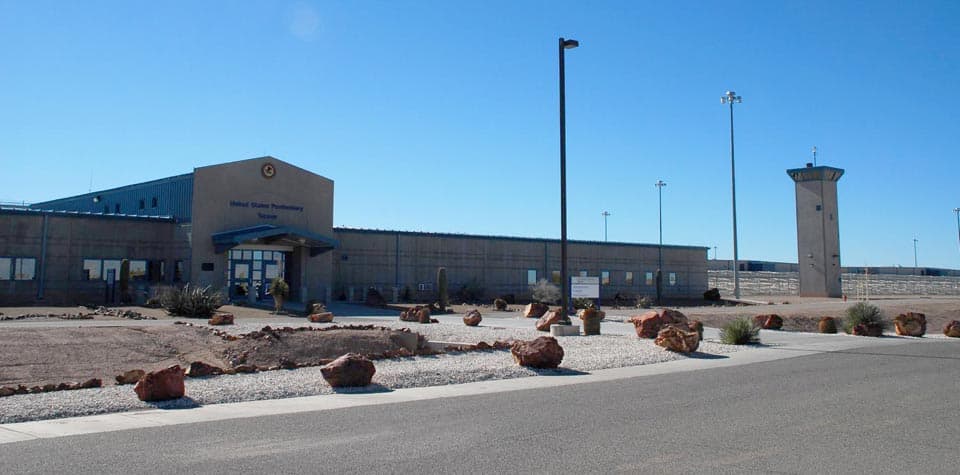 Federal Bureau of Prisons / Public domain, via Wikimedia Commons
Zelfgeleide audiowandeling door Tucson — GPS-route, offline afspelen, meeslepende vertelling in 32 talen.
“Waar de Sonorawoestijn oude verhalen en een heldere toekomst ademt.”
Niet de ansichtkaarten. De verhalen die zelfs locals niet kennen — gefluisterd in je oor, precies waar ze gebeurden.
De schilderachtige rit door Gates Pass, geliefd om zijn zonsondergangen, draagt een verrassende en sombere geschiedenis achter zijn naamgenoot.
De jaarlijkse rodeparade van Tucson is een spektakel als geen ander en heeft een uniek wereldwijd onderscheid.
Een van de natuurwonderen van Tucson, Colossal Cave, doet zijn naam eer aan op een manier die ontdekkingsreizigers blijft uitdagen.
Ontdek elk geheim van Tucson
Elk adres, elke onthulling volledig — in je oor, precies waar het gebeurde.
Jij kiest je stops. Jij wandelt. De stem onthult wat de anderen missen.
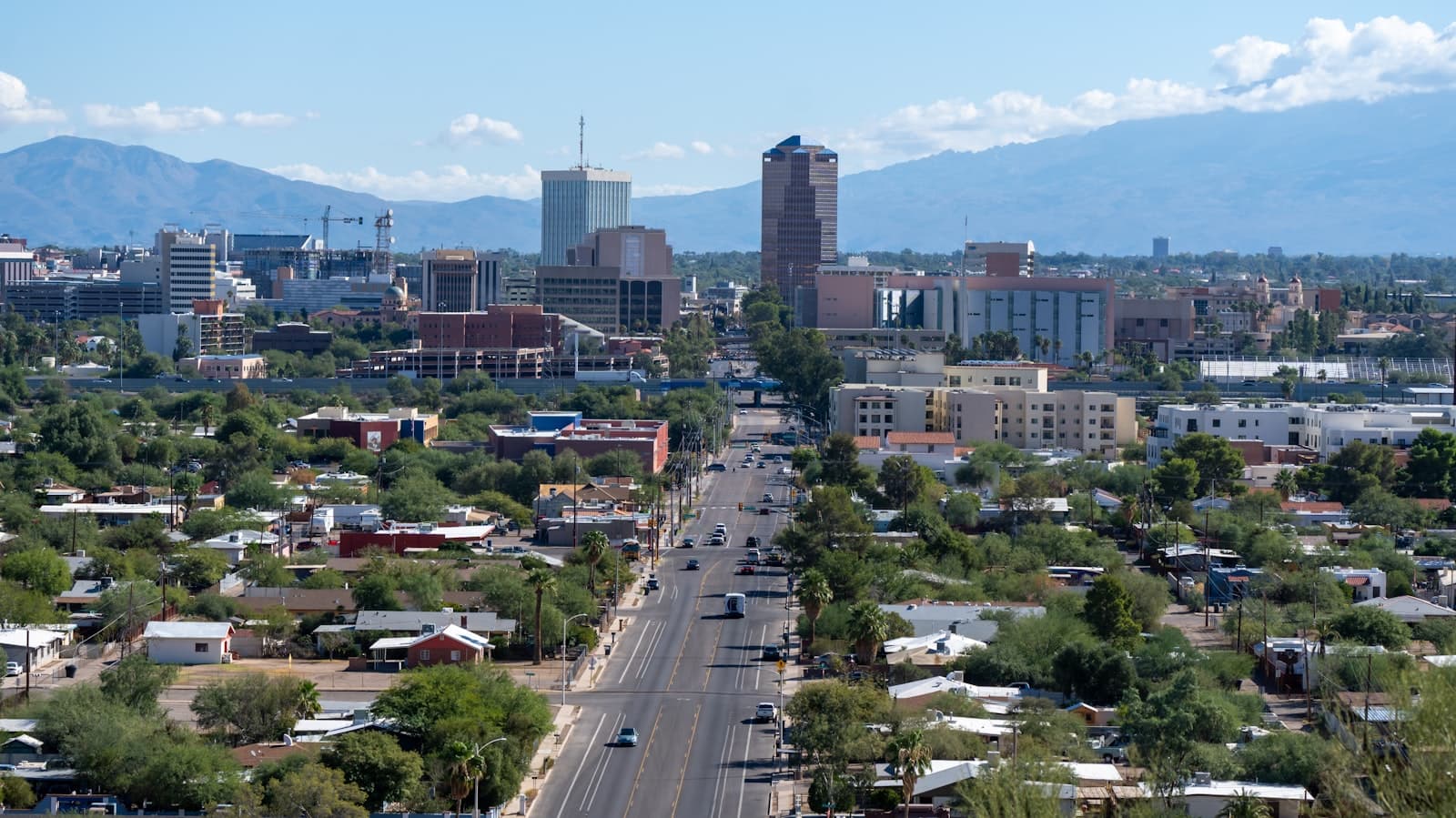
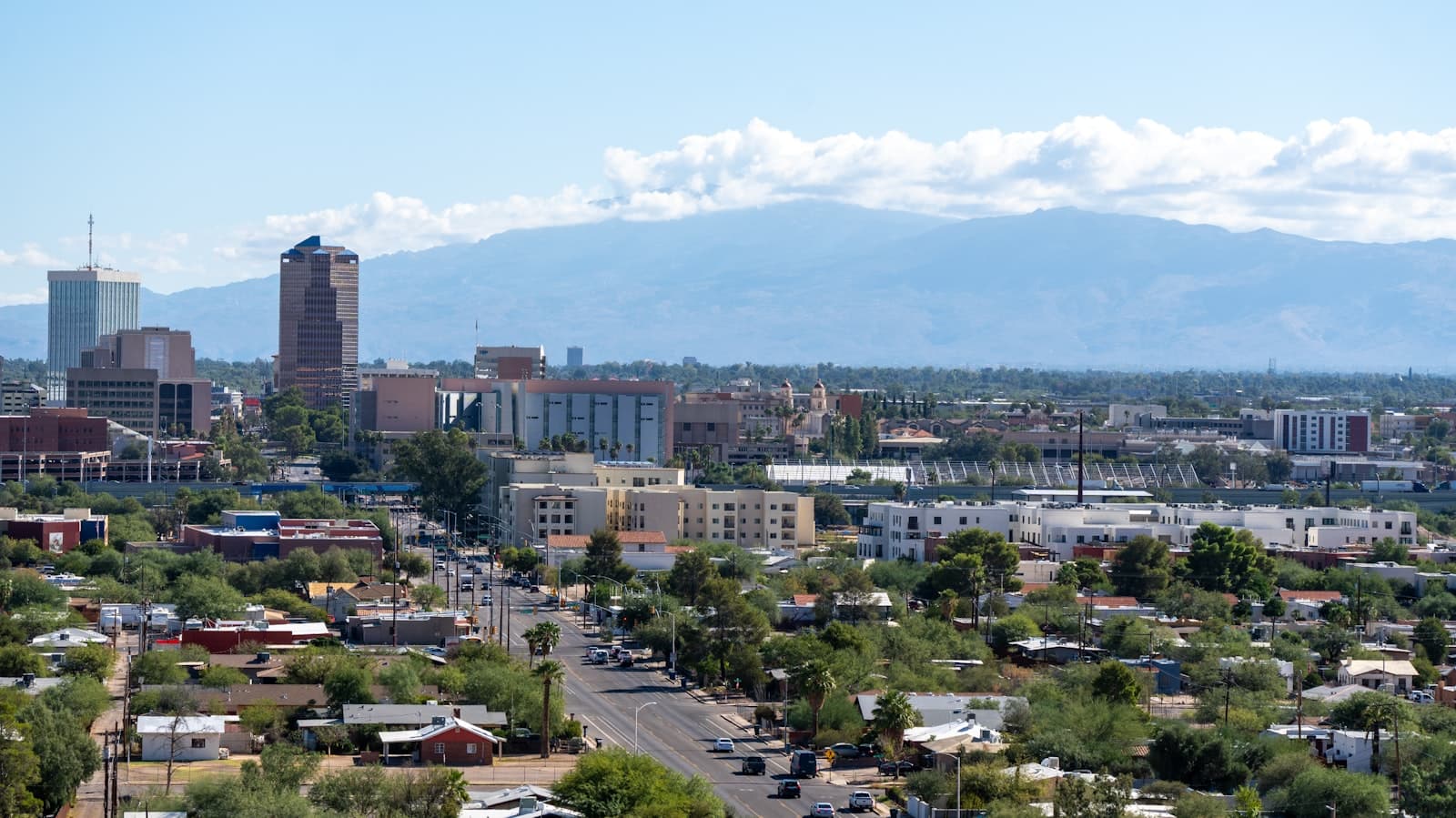
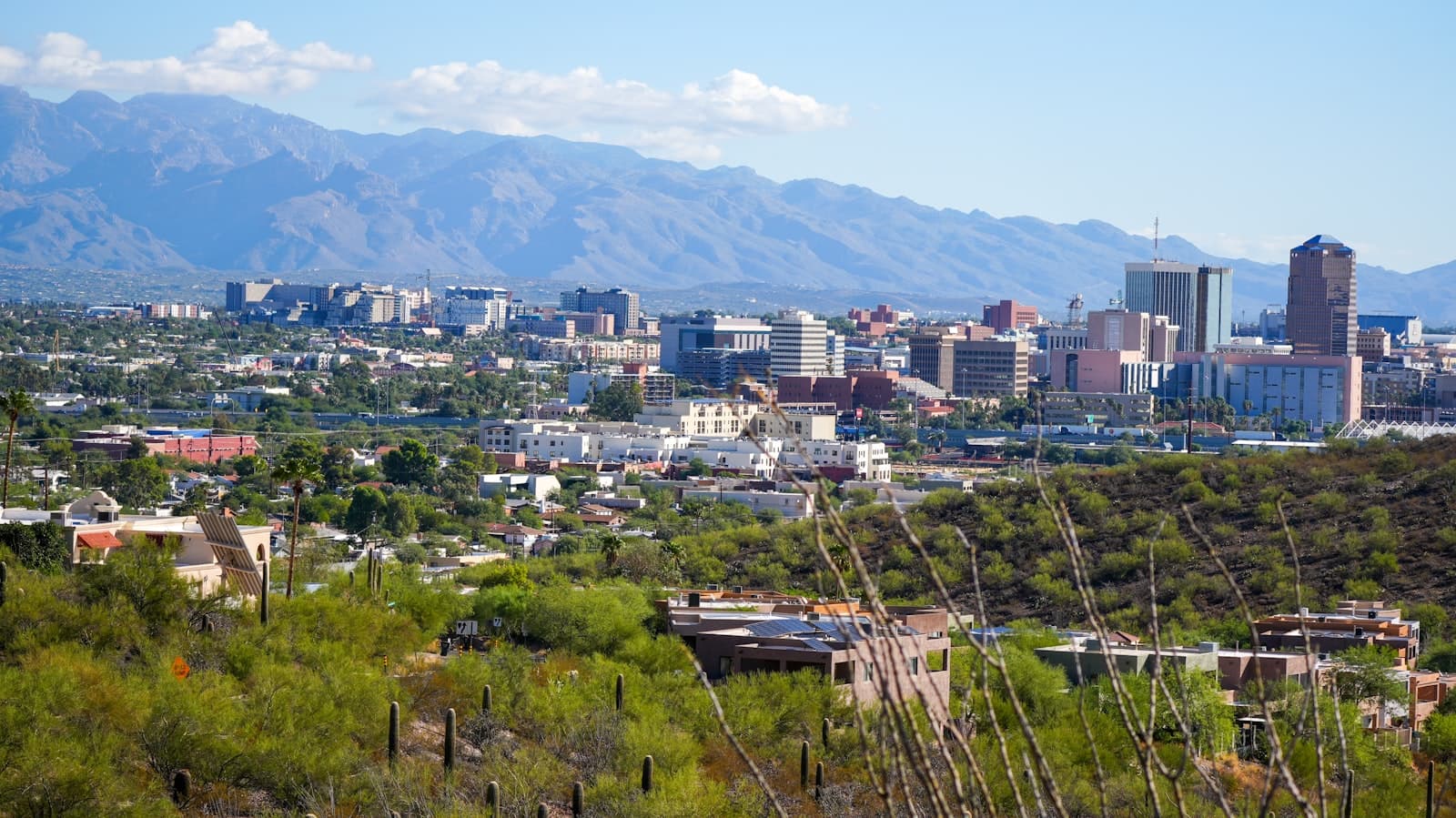
Je zelfgeleide audiotour van Tucson is klaar — kies je bezienswaardigheden, kies je taal en start zodra je aankomt.
KopenLume heeft een ingebouwde augmented-reality-gids. Houd je telefoon omhoog: de camera toont de straat voor je, met een oplichtende pijl over het echte beeld die altijd naar je volgende stop wijst — geen kaart om uit te puzzelen, geen verkeerde afslagen. Zoals alles in Lume werkt het volledig offline.
Tucson, de op één na meest bevolkte stad van Arizona, biedt een boeiende mix van de schoonheid van de Sonoranwoestijn, diepe geschiedenis en boeiende cultuur. Bekend als 'The Old Pueblo', ligt het tussen vijf bergketens en presenteert het een uniek landschap waar saguaro-cactussen dienst doen als wachters tegen dramatische zonsondergangen. Met meer dan 300 dagen zonneschijn per jaar biedt Tucson een uitnodigend klimaat voor buitenverkenning en een levendige sfeer voor culturele onderdompeling.
Naast zijn opvallende natuurlijke omgeving, is Tucson een stad met diepe wortels, erkend als een van de oudste continu bewoonde gebieden in Noord-Amerika. De erkenning als de eerste UNESCO Stad van Gastronomie in de Verenigde Staten spreekt tot een culinaire scene die inheemse ingrediënten prachtig combineert met diverse invloeden. Van oude archeologische vindplaatsen tot een bloeiende hedendaagse kunstscene, Tucson biedt een reis door tijd en smaak, en nodigt bezoekers uit om zijn vele lagen te ontdekken.
Het Tucson-gebied heeft een opmerkelijk lange geschiedenis van menselijke bewoning, met bewijs van Paleo-Indianen die teruggaan tot ongeveer 12.000 jaar geleden. Archeologische opgravingen nabij de Santa Cruz River hebben een dorpsterrein uit 2100 v.Chr. blootgelegd, en de uiterwaarden van de rivier werden uitgebreid bewerkt tijdens de Vroege Agrarische Periode (ca. 1200 v.Chr. tot 150 n.Chr.) met behulp van aangelegde irrigatiekanalen. De Hohokam-cultuur domineerde later het gebied tussen 200 n.Chr. en 1450 n.Chr., en de moderne Pima- en Tohono O'odham-volkeren zijn hun afstammelingen. De naam van de stad zelf, 'Tucson', is afgeleid van de O'odham-frase 'Cuk Ṣon', wat 'de voet van de heuvel is zwart' betekent, verwijzend naar Sentinel Peak.
Spaanse invloed begon met de oprichting van Mission San Xavier del Bac in 1699 door Pater Eusebio Kino. Het Presidio San Agustín del Tucsón, een ommuurd militair fort, werd officieel opgericht op 20 augustus 1775 door Hugo O'Conor, wat de formele oprichting markeerde van wat het moderne Tucson zou worden. Dit presidio diende als de meest noordelijke Spaanse buitenpost in de Nieuwe Wereld. Nadat Mexico in 1821 onafhankelijk werd van Spanje, werd Tucson een afgelegen Mexicaans dorp in de staat Sonora.
De Verenigde Staten verworven Tucson en de omliggende regio als onderdeel van de Gadsden Purchase in 1853. Van 1867 tot 1877 diende Tucson als de hoofdstad van het Arizona Territory. De komst van de Southern Pacific Railroad in 1880 stimuleerde de groei van de stad verder en diversifieerde haar culturele landschap. Tucson was de grootste stad in Arizona totdat Phoenix het qua bevolking voorbijstreefde in 1920.
In de 20e eeuw bleef Tucson zich ontwikkelen, met instellingen zoals het Desert Laboratory opgericht in 1903 en de Davis–Monthan Air Force Base opgericht in 1941. Het Arizona-Sonora Desert Museum opende in 1952, en Saguaro National Park werd opgericht in 1994, ter bescherming van het iconische woestijnlandschap. In 2015 schreef Tucson geschiedenis door de eerste Amerikaanse stad te worden die door UNESCO werd aangewezen als 'Stad van Gastronomie', een bewijs van haar unieke voedselcultuur en agrarische erfgoed.
Begin uw verkenning bij het Arizona-Sonora Desert Museum, een instelling van 98 hectare die een dierentuin, botanische tuin en natuurhistorisch museum combineert en de diverse flora en fauna van de regio tentoonstelt. Voor een meeslepende woestijnervaring bezoekt u Saguaro National Park, verdeeld in twee districten die de stad flankeren. Het Tucson Mountain District (west) biedt dichte saguaro-bossen en dramatische landschappen, terwijl het Rincon Mountain District (oost) oudere, grotere cactussen herbergt. Mis de Mission San Xavier del Bac niet, vaak de 'Witte Duif van de Woestijn' genoemd, een opmerkelijk voorbeeld van Spaanse koloniale architectuur en een belangrijke historische plek.
Voor weidse uitzichten, vooral bij zonsondergang, rijdt of wandelt u naar Gates Pass in de Tucson Mountains. Verken de DeGrazia Gallery in the Sun, een unieke adobe kunstgalerie ontworpen door de veelgeprezen kunstenaar Ted DeGrazia, met zijn expressieve Zuidwestelijke schilderijen. Wandel door Barrio Viejo, een van Tucson's oudste wijken, gekenmerkt door zijn kleurrijke adobe huizen. Voor een voorproefje van het Wilde Westen, bezoek Old Tucson Studios, oorspronkelijk een filmset voor Western films en nu een themapark. Ervaar ten slotte Sabino Canyon met zijn schilderachtige paden en tramtochten, die een kans bieden om woestijnleven en weelderige oevergebieden te zien.
De beste tijd om Tucson te bezoeken is van oktober tot april. Gedurende deze maanden is het weer mild en zonnig, met gemiddelde maxima van begin 20 tot midden 20 graden Celsius, ideaal voor buitenactiviteiten zoals wandelen en verkennen. Deze periode valt ook samen met veel festivals en evenementen in Tucson, waaronder de Tucson Highlight and Mineral Show en de Tucson Rodeo. Zomers, van mei tot september, zijn erg heet, met gemiddelde dagelijkse maximumtemperaturen boven de 34°C, en kunnen uitdagend zijn voor buitenactiviteiten, hoewel ze minder drukte en lagere prijzen bieden.
Tucson International Airport (TUS) ligt 8 mijl ten zuiden van het centrum en biedt non-stopvluchten naar tal van bestemmingen in de VS en Canada. Om u te verplaatsen, exploiteert het openbaarvervoersysteem van Tucson, Sun Tran, bussen met vaste routes door de metropoolregio, en Sun Link biedt tramvervoer dat de binnenstedelijke districten en de University of Arizona met elkaar verbindt. Ritten met Sun Tran, Sun Link, Sun Van, Sun On Demand, Sun Express en Sun Shuttle zijn momenteel gratis. Een huurauto is ook een handige optie, met grote verhuurbedrijven beschikbaar op de luchthaven. Houd er rekening mee dat het klimaat van Tucson erg droog is, dus hydratatie is cruciaal. Pak laagjes kleding, want woestijntemperaturen kunnen na zonsondergang aanzienlijk dalen, zelfs na hete dagen.
Tucson — Koreaans, Chinees, Hebreeuws en nog 29 talen, elke stop verteld door een moedertaalspreker. Het grootste taalaanbod van alle zelfgeleide audiotours.
Beschikbaar in: