The facades of Mogarraz's homes
Walk through Mogarraz, and you'll feel a thousand eyes upon you, not from the living, but from a unique art project that transformed the village into an open-air gallery.
Full story unlocks in the tour
 Tres1416 / Public domain, via Wikimedia Commons
Self-guided audio walking tour of Mogarraz — GPS route, offline playback, story-driven narration in 32 languages.
“In Mogarraz, the past watches over the present from every facade.”
Not the postcards. The stories even locals don't know — whispered in your ear, right where they happened.
Walk through Mogarraz, and you'll feel a thousand eyes upon you, not from the living, but from a unique art project that transformed the village into an open-air gallery.
A 17th-century cross in Mogarraz bears an unusual detail for a religious monument, hinting at a deeper, often overlooked layer of the village's heritage.
During Easter, Mogarraz undergoes a dramatic transformation that amplifies the already striking presence of its painted portraits, creating an unforgettable, almost spectral atmosphere.
Discover every secret of Mogarraz
Every address, every reveal in full — in your ear, right where it happened.
You pick your stops. You walk. The voice reveals what the others miss.


Your self-guided audio tour of Mogarraz is ready — pick your landmarks, choose your language, and start the moment you arrive.
BuyLume has a built-in augmented-reality guide. Hold your phone up and its camera shows the street ahead of you, with a glowing arrow laid over the real view that always points to your next stop — no map to puzzle over, no wrong turns. Like everything in Lume, it works fully offline.
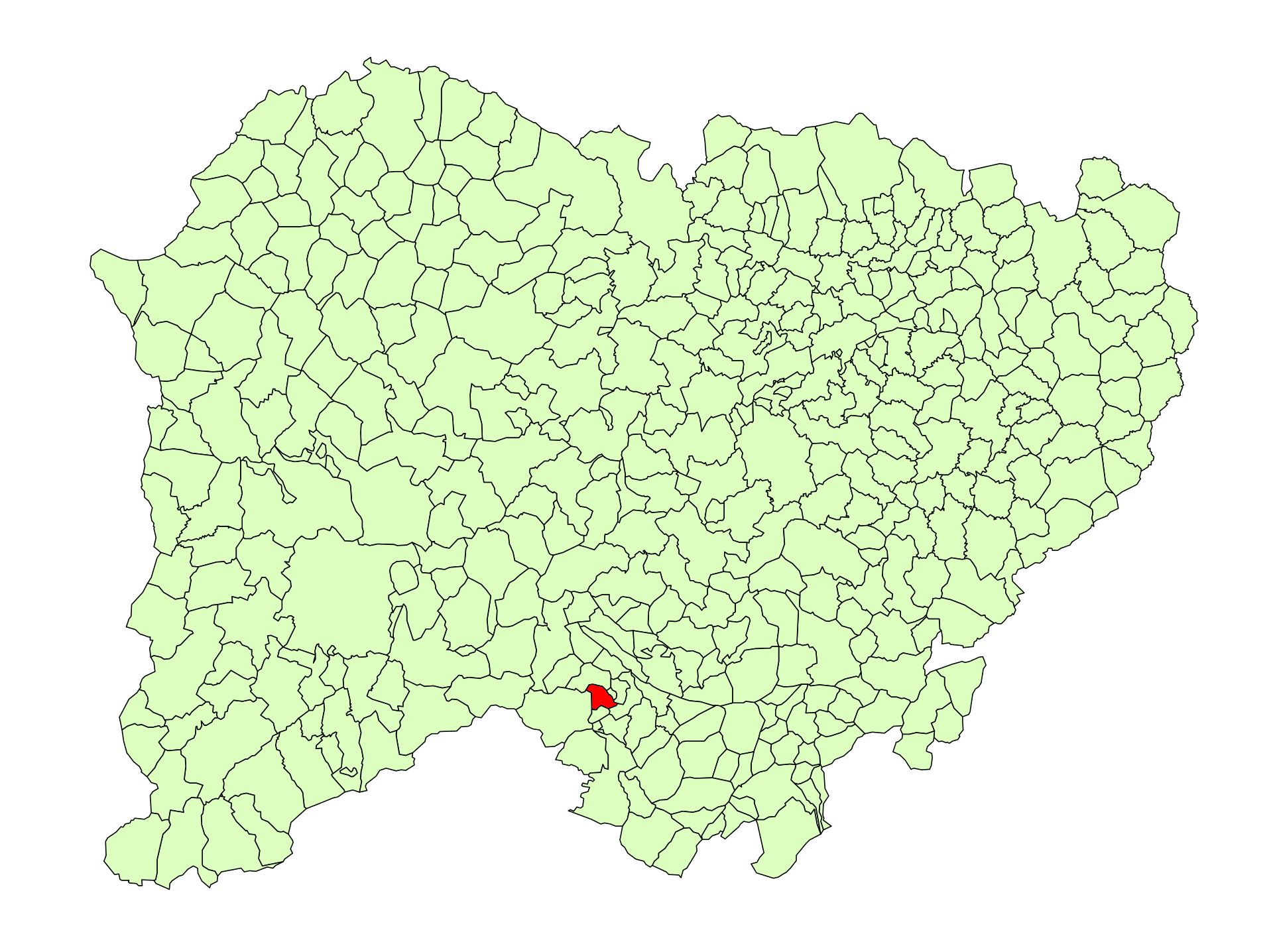
Mogarraz, a small, evocative village in the province of Salamanca, rests within the autonomous community of Castile and León in north-western Spain. It lies at an elevation of 758 meters, cradled by the Sierra de Francia mountain range, part of the Las Batuecas-Sierra de Francia Natural Park and a designated Biosphere Reserve. Recognized as a Historic-Artistic Site since 1998 and a member of 'The Most Beautiful Villages of Spain' network, Mogarraz has carefully preserved its civil and military architecture.
This village, approximately 80 kilometers southwest of Salamanca city, unfolds with narrow, winding lanes, traditional mountain architecture of adobe, wood, and stone, and balconies spilling with flowers. Mogarraz is especially known for its open-air art gallery, where over 800 portraits of former and current residents grace the facades of its homes, transforming the entire village into a living museum and a tender commemoration of its community.
Mogarraz’s story stretches back through centuries, with traces of human settlement reaching into prehistoric times. The village experienced epochs under Roman, Visigothic, and Moorish dominion. During the Middle Ages, Mogarraz formed part of the Kingdom of León and played a strategic role in the Reconquista, eventually coming under Christian authority in the 12th century. It was repopulated in the 11th century by people from France, Gascony, and Roussillon, a legacy still evident in some local surnames. The village was formally established during the 12th-century repopulation efforts by King Alfonso IX of León in 1213, becoming part of the Miranda del Castañar district.
The 15th century marked a significant turn in Mogarraz’s chronicle when its Jewish inhabitants were compelled to either convert to Christianity or depart. They chose conversion and remained in the village, weaving their threads into its unique cultural fabric. In the centuries that followed, Mogarraz’s economy relied primarily on agriculture, forestry, and livestock, navigating cycles of abundance and scarcity.
A pivotal event in recent memory occurred in 1967. During a period of economic difficulty in rural Spain, when many residents left for work, the government mandated national identity cards. To spare villagers the long journey to Salamanca for photographs, local photographer Alejandro Martín Criado captured images of all 388 adult inhabitants. Decades later, in 2012, local artist Florencio Maíllo Cascón transformed these negatives into large-scale encaustic portraits, which were then placed on the facades of the houses where the subjects once lived. This 'Faces of Mogarraz' project has since grown to include over 800 portraits, encompassing newer residents, turning the village into a celebrated open-air art gallery and a powerful remembrance of its community and heritage.
Begin your exploration in the Plaza Mayor, an oval-shaped square that serves as the village's beating heart, encircled by traditional mountain architecture. From here, wander the narrow, stone-paved lanes, where the 'Faces of Mogarraz' art project will draw you in. Over 800 portraits of past and present residents adorn the building facades, transforming the entire village into a singular outdoor museum. Each face recounts a story, making for a deeply personal and contemplative stroll.
Visit the Church of Nuestra Señora de las Nieves, a Renaissance-style temple constructed between the 16th and 17th centuries, which shelters the image of the Virgin of the Snows. Nearby, the 17th-century Bell Tower stands separate from the church, a former watchtower with military architectural elements. Seek out the Jewish Cross, a 17th-century monument with a base ornamented with skulls, a symbolic link to the village's historical Jewish community. Explore the Ethnographic Museum – Casa de las Artesanías, which displays traditional crafts like embroidery, shoemaking, and gold and silver jewelry. Do not overlook the 14 historic fountains scattered throughout the town, some dating back to the 1600s.
For those who enjoy nature, Mogarraz lies within the Las Batuecas-Sierra de Francia Natural Park, offering excellent opportunities for hiking. A favored choice is the 'Caminos del Agua' (Water Paths), a 9km circular route that traces rivers and fountains amidst wild landscapes.
The most pleasant times to visit Mogarraz are during the shoulder seasons of late spring (May and June) and early fall (September and October). During these months, the weather is mild and agreeable, ideal for exploring the village and its surrounding natural park, and visitor numbers are generally lower than in peak summer. July and August bring the warmest temperatures, with an average high of 85°F (29°C), and are also the clearest months, but can draw larger crowds. Precipitation is lowest in July and highest in October.
Mogarraz is situated in the province of Salamanca, Castile and León. It is approximately 83.7 km from Salamanca, a drive of about 1 hour and 12 minutes via CL-512 and SA-210. From Madrid, the journey spans around 294 km, taking about 3 hours and 17 minutes via A-50. Parking is available on Los Castillos Street, about 250 meters from the village center, though spaces can be limited on weekends. It is advisable to park outside the village as the streets are narrow.
While in Mogarraz, savor the local Iberian pork and sample the regional 'rufete' grape wine. Keep an eye out for local wine fairs, where you can visit small wineries and taste regional wines. The village offers a quiet, inviting atmosphere, and its local tourism office can provide further information.
Mogarraz in Korean, in Chinese or in Hebrew — and 29 more languages, every stop narrated by a native voice. The widest language range of any self-guided audio tour.
Available in: