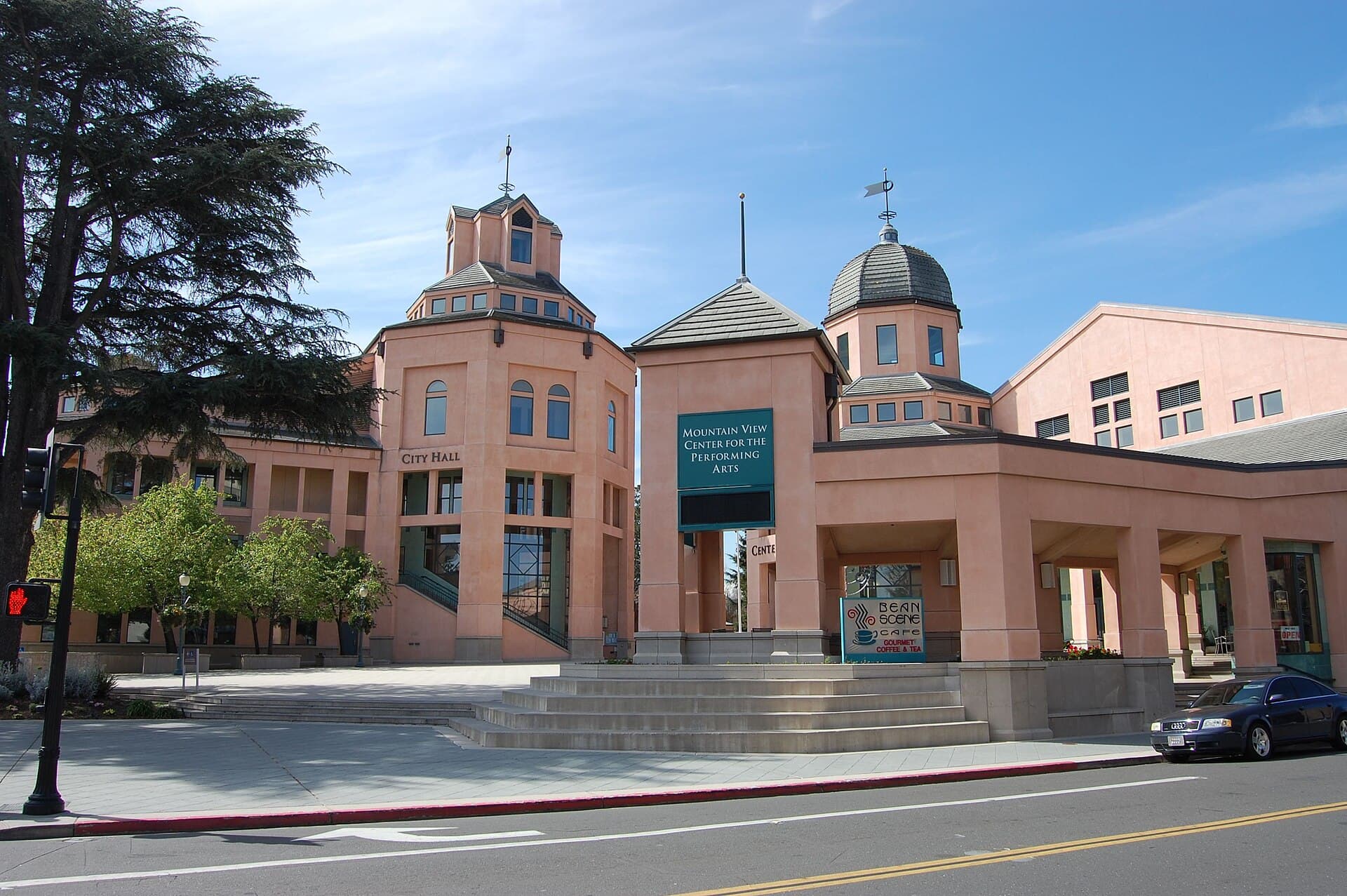
Mountain View, United StatesAleh Haiko / CC BY-SA 3.0, via Wikimedia Commons
US

Mountain View

Self-guided audio walking tour of Mountain View — GPS route, offline playback, story-driven narration in 32 languages.

Where innovation's future is built on an agricultural past.

The secrets of Mountain View

Mountain View, as no one tells it.

Not the postcards. The stories even locals don't know — whispered in your ear, right where they happened.

3 secrets below. Many more wait inside the tour.
Castro Street

The lively core of Mountain View, Castro Street, was not always the inviting pedestrian space it is today. What transformation did it undergo to become a place for people, not just cars?

Full story unlocks in the tour
Pioneer Memorial Park

Before it became a peaceful park, this downtown green space served a much more solemn purpose for Mountain View's early settlers. What lies beneath the grass and trees?

Full story unlocks in the tour
Rengstorff House

This elegant Victorian Italianate home, now a scenic venue, has traveled a remarkable distance. What is the story behind its unusual journey?

Full story unlocks in the tour
The full tour

Discover every secret of Mountain View

Every address, every reveal in full — in your ear, right where it happened.

Get the key to Mountain View

You pick your stops. You walk. The voice reveals what the others miss.

Mountain View — green grass field under white clouds and blue sky during daytime
Photo: Timothy Dykes / Unsplash
Mountain View — a sign on a hill
Photo: Brice Cooper / Unsplash
Mountain View — silhouette of man and woman standing on beach during sunset
Photo: Harika G / Unsplash
Choose your time

How long do you have in Mountain View?

Your self-guided audio tour of Mountain View is ready — pick your landmarks, choose your language, and start the moment you arrive.

Buy
About Mountain View

The story of Mountain View

Mountain View, California, is a city where the echoes of its agrarian past resonate beneath the hum of technological innovation. Situated in the heart of Silicon Valley, it offers a compelling blend of suburban charm and cutting-edge advancement. From its origins as a stagecoach stop to its current status as a global tech hub, Mountain View's landscape is constantly evolving, yet it retains a distinct sense of community.

The city's name itself, 'Mountain View,' speaks to the picturesque panorama of the Santa Cruz Mountains that graces its skyline. Beyond the corporate campuses, visitors can explore serene parks, historic homes, and a lively downtown, finding a surprising balance between the natural beauty of the Santa Clara Valley and the pioneering spirit of the information age.

History

From Indigenous Lands to Tech Frontier

The history of Mountain View stretches back millennia, rooted in the lands inhabited by the indigenous Ohlone people, particularly the Tamyen group. In the mid-1700s, Spanish explorers and missionaries arrived, establishing Mission Santa Clara de Asís in 1777, and the land that would become Mountain View was utilized as pasture for mission livestock.

Following Mexican independence in 1821 and the secularization of the missions, the land was subdivided through Mexican land grants. In 1842, the Mexican government granted the 8,800-acre Rancho Pastoria de las Borregas to Francisco Estrada and his wife, Inez Castro, a vast property encompassing much of present-day Mountain View and Sunnyvale. Another significant grant, Rancho Posolmi, was given to local Native American Lupe Ynigo in 1844, an area that later became Moffett Field.

The modern settlement of Mountain View began to take shape in the early 1850s as a vital stagecoach stop on the route between San Francisco and San Jose. A small community grew around this stop, and in 1854, store owner and postmaster Jacob Shumway is credited with officially naming the settlement 'Mountain View,' inspired by the vistas of the Santa Cruz Mountains.

The arrival of the railroad in 1864 spurred economic growth, transforming the small station into an important logistical hub for the region's agricultural produce. The town's center shifted to Castro Street, near the train tracks, a street named after the prominent Castro family. By the early 1900s, Mountain View was a significant shipping point for fruit and grain, part of the fertile 'Valley of Heart's Delight.'

Mountain View was officially incorporated as a city in 1902, with a population exceeding 600. The 20th century brought significant transformations. Moffett Field Naval Air Station was commissioned in 1933, and in 1939, flight research began at the Ames Laboratory of the National Advisory Committee for Aeronautics (NACA), the predecessor to NASA, laying the groundwork for the aerospace industry. However, it was in 1956 that William Shockley opened Shockley Semiconductor Laboratory in Mountain View, an event widely recognized as the genesis of Silicon Valley. This pivotal moment attracted talented engineers and redefined the region's future, leading to an explosion in population and the establishment of numerous high-technology companies, including Google, which moved its headquarters to Mountain View in 1999.

What to see

Mountain View offers a diverse range of attractions, blending its technological present with its historical roots and natural beauty. Begin on Castro Street, the city's lively downtown, known for its pedestrian-friendly design, diverse dining options, and local shops. For a deep dive into computing history, the Computer History Museum is an essential visit, housing an extensive collection of artifacts and exhibits that trace the evolution of technology.

Nature enthusiasts will appreciate Shoreline Lake Park, where you can enjoy sailing, windsurfing, kayaking, or simply relax by the water. Adjacent to it is the Shoreline Amphitheatre, a renowned outdoor music venue that has hosted legendary acts. Explore the scenic Stevens Creek Trail, a pathway that connects the bay to the mountains, offering opportunities for hiking, jogging, and bird watching.

Step back in time at the Rengstorff House, a beautifully restored Victorian Italianate mansion located in Shoreline Park, offering tours and a glimpse into the city's past. For a more tranquil green space, Cuesta Park provides lush greenery, walking trails, and picnic areas. Do not miss the Mountain View Farmers' Market for fresh produce and local goods, or catch a performance at the Mountain View Center for the Performing Arts.

When to visit

Mountain View enjoys a mild Mediterranean climate, making it pleasant for much of the year. The best time to visit for warm-weather activities and sightseeing is from April through October. During these months, you can expect warm temperatures, low precipitation, and abundant sunshine, with average highs ranging from the mid-60s to high 70s Fahrenheit. Summers are dry with low humidity and gentle breezes, ideal for outdoor exploration. While winters are cooler and wetter, snowfall is virtually nonexistent.

Practical

Mountain View is well-connected and easy to navigate. The city has a robust transportation network that accommodates pedestrians, cyclists, transit users, and motorists. For public transportation, the Downtown Transit Center is a central hub, offering Caltrain commuter rail service, VTA light rail, and VTA bus services. Additionally, free MVgo shuttles connect the Transit Center to various locations around Mountain View, including North Bayshore and downtown, during weekday commute hours. The Mountain View Community Shuttle also provides free service throughout town on weekdays, weekends, and holidays.

For those driving, Mountain View offers easy access to major routes like U.S. Route 101, State Highway 85, and El Camino Real. The city actively promotes walking and bicycling with a network of sidewalks, bike lanes, and scenic trails. Parking is available, including paid parking at the Mountain View Caltrain station.

Good to know
What is Mountain View known for?
Mountain View is globally recognized as a major hub of Silicon Valley, home to the headquarters of numerous high-technology companies, most notably Google. It is also known for its significant role in the birth of the semiconductor industry and its blend of innovation with natural beauty and a lively downtown.
Is Mountain View a good place to visit?
Yes, Mountain View offers a diverse range of attractions for visitors, including significant tech history, cultural venues like the Computer History Museum and Shoreline Amphitheatre, and numerous parks and trails for outdoor activities. Its mild climate and accessible transportation make it an enjoyable destination.
How do I get around Mountain View without a car?
Mountain View has an excellent public transportation system. The Downtown Transit Center provides access to Caltrain, VTA light rail, and VTA buses. Additionally, free MVgo shuttles and the Mountain View Community Shuttle offer convenient connections throughout the city. The city also has extensive bike lanes and walking trails.
What is the best time of year to visit Mountain View?
The best time to visit Mountain View for pleasant weather and outdoor activities is from April through October. During these months, the city experiences warm temperatures, minimal rainfall, and abundant sunshine.
What historical sites can I visit in Mountain View?
Key historical sites include the Rengstorff House, a beautifully restored Victorian mansion, and the Moffett Field Historical Society Museum, which highlights the airfield's role in aerospace history. The Computer History Museum also offers a historical perspective on technology.
Is Castro Street really named after Fidel Castro?
No, Castro Street in Mountain View is not named after Fidel Castro. It is named after the prominent Castro family, who were granted the vast Rancho Pastoria de las Borregas by the Mexican government in 1842, encompassing much of the land that became Mountain View.
On the map
Mountain View
€9.90
No booking · activate anytime · 12h to walk it
Load on Wi-Fi, then walk offline — no roaming abroad
Get the key to Mountain View