Burj Al Babas
A pocos kilómetros de Mudurnu, se despliega una vista extraña: cientos de mini-castillos idénticos, con torretas, permanecen misteriosamente vacíos, como un reino de Disney desierto.
La historia completa se desbloquea en el tour
 Dosseman / CC BY-SA 4.0, via Wikimedia Commons
Tour de audio autoguiado de Mudurnu — ruta GPS a pie, reproducción offline, narración en 32 idiomas.
“Donde los antiguos gremios y los ecos otomanos se encuentran con un cuento de hadas moderno e inquietante.”
No las postales. Las historias que ni los locales conocen — al oído, justo donde ocurrieron.
A pocos kilómetros de Mudurnu, se despliega una vista extraña: cientos de mini-castillos idénticos, con torretas, permanecen misteriosamente vacíos, como un reino de Disney desierto.
La icónica Torre del Reloj de la ciudad, un hito prominente que ofrece vistas panorámicas, tiene una sorprendente historia de origen que involucra un incendio local y una fuerza laboral inusual.
Una de las estructuras otomanas más significativas de Mudurnu, la Mezquita Yıldırım Bayezid, ocupa un lugar único en la historia arquitectónica por su diseño pionero.
Descubre todos los secretos de Mudurnu
Cada dirección, cada revelación al completo — a tu oído, justo donde ocurrió.
Eliges tus paradas. Caminas. La voz te revela lo que los demás ignoran.


Tu tour de audioguía por Mudurnu te espera — elige tus lugares, tu idioma y empieza al llegar.
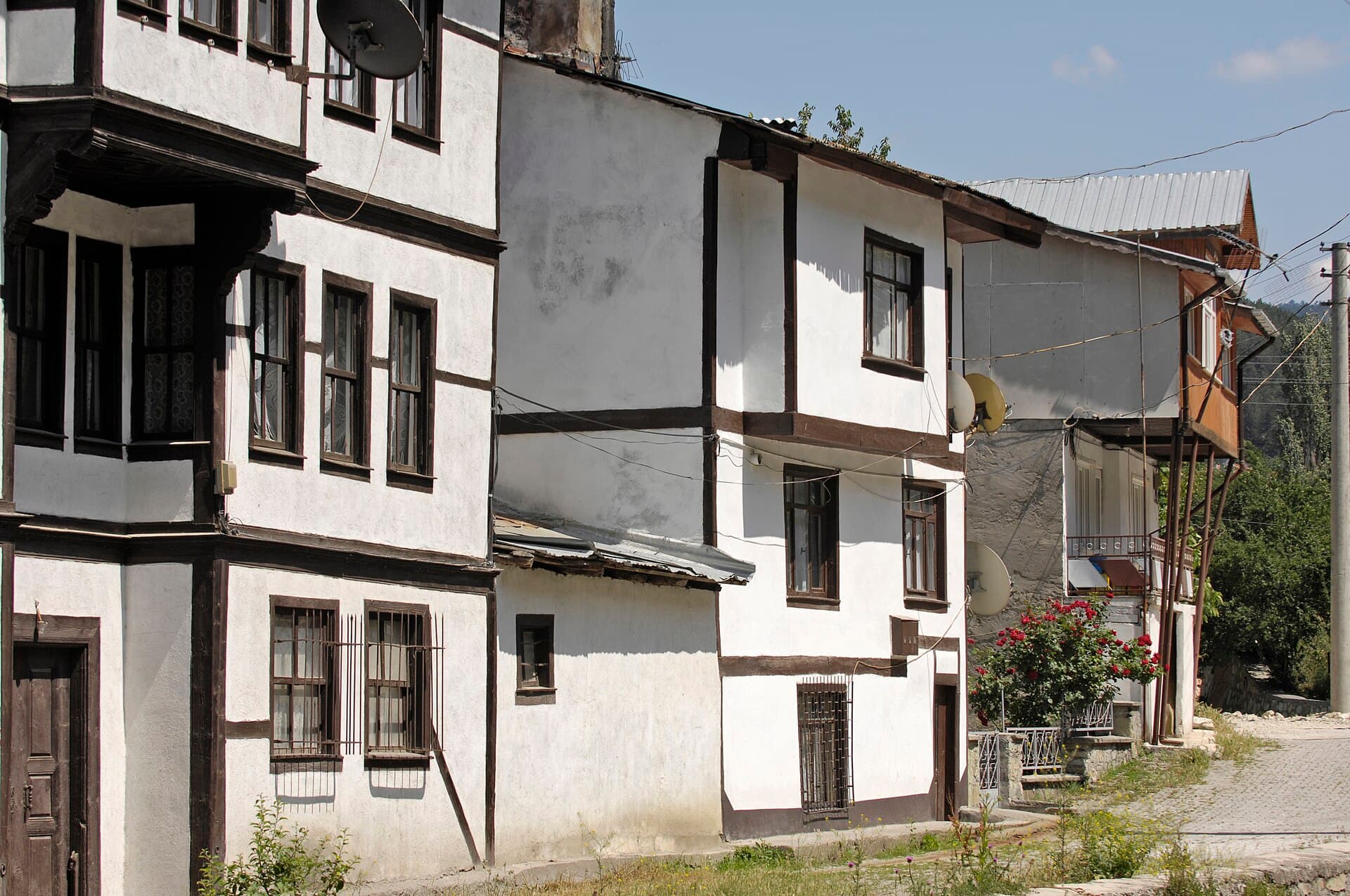
ComprarMudurnu, una pequeña ciudad histórica en la provincia turca de Bolu, se encuentra en un estrecho valle boscoso situado entre Estambul y Ankara. Ofrece un viaje tangible a paisajes urbanos otomanos, antiguas tradiciones gremiales y un ritmo de vida más lento. El atractivo de la ciudad reside en sus casas de entramado de madera notablemente conservadas, muchas de las cuales están oficialmente registradas como patrimonio cultural, adaptándose al valle empinado y al clima con pisos superiores salientes y tejados de tejas.
La ubicación estratégica de Mudurnu en el cruce de importantes rutas comerciales, incluida la Ruta de la Seda y la Ruta de Crimea, moldeó su identidad como puesto militar y centro comercial durante los períodos bizantino, selyúcida y otomano. Hoy en día, se erige como un testimonio de estas historias superpuestas, ofreciendo a los visitantes la oportunidad de explorar sus tradiciones vivas y su patrimonio arquitectónico. El compromiso de la ciudad con la preservación de su carácter único llevó a su inclusión en la lista provisional de sitios del Patrimonio Mundial de la UNESCO en Turquía en 2015.
La historia de Mudurnu se remonta a milenios, con evidencia de civilizaciones como los frigios, lidios, persas, romanos, bizantinos, selyúcidas y otomanos dejando su huella. Su ventajosa posición en las principales rutas comerciales de Anatolia, incluida la Ruta de la Seda y la Ruta de Crimea, la convirtió en un vital centro comercial y militar durante siglos.
Mudurnu desempeñó un papel significativo en la formación de los estados turcos en Anatolia. Durante el "Primer Período de Establecimiento", las fuerzas otomanas bajo Osman I iniciaron invasiones en el área. En 1307, bajo el hijo de Osman, Orhan, Mudurnu fue completamente incorporada a las tierras otomanas, convirtiéndose en parte del territorio central del imperio. La ciudad también sirvió como santuario para los príncipes otomanos durante el Interregno Otomano (1402-1413), un período tumultuoso en el que Çelebi Mehmed estableció su base en las montañas cercanas, lo que finalmente llevó al segundo reinado otomano.
Un aspecto definitorio del patrimonio de Mudurnu es la orden Ahi, un sistema de gremios turco-islámicos que surgió en el siglo XIII. Este sistema, basado en principios de tolerancia, comercio ético, apoyo mutuo y artesanía de calidad, influyó profundamente en el tejido económico y social de la ciudad. Mudurnu es única por realizar continuamente la "Oración de los Comerciantes", una tradición Ahi esencial, durante más de 700 años, y celebra oficialmente la "Semana de la Cultura Ahi" anualmente.
A principios del siglo XX, Mudurnu experimentó un cambio. Después de la quiebra de su principal productor avícola, "Mudurnu Chicken", la ciudad giró hacia el turismo, centrándose en la restauración y preservación de su centro histórico. Este compromiso con su valor cultural llevó a su inscripción en la Lista Tentativa de Sitios del Patrimonio Mundial de la UNESCO en 2015, reconociendo su tradición gremial Ahi, casas de madera, Arasta (bazar) y primeros monumentos otomanos.
Comience su exploración en la Mezquita Yıldırım Bayezid, una maravilla arquitectónica de 1382, notable por su diseño temprano de una sola cúpula. Cerca, el Hamam Yıldırım Bayezid, construido en 1382, exhibe estilos decorativos otomanos, aunque actualmente no está en uso activo. Pasee por el Bazar Otomano de Mudurnu (Arasta), el corazón comercial de la ciudad, reconstruido después de un incendio en 1906 con un plano de cuadrícula. Aquí, podrá observar la perdurable memoria del gremio Ahi, especialmente durante la Oración de los Comerciantes.
Ascienda a la Torre del Reloj, una estructura de piedra reconstruida en 1905 por presos después de un incendio, que ofrece amplias vistas de las casas otomanas de la ciudad, los minaretes y el valle boscoso circundante. Aunque solo quedan rastros limitados del Castillo de Mudurnu de la era bizantina en la Colina Hisar, la colina aún ofrece excelentes puntos de vista paisajísticos.
Más allá del centro histórico, considere una visita al cercano Burj Al Babas, un desarrollo abandonado de cientos de mini-castillos idénticos con torretas. Esta surrealista ciudad fantasma, un marcado contraste con la arquitectura tradicional de Mudurnu, ofrece una oportunidad fotográfica única, aunque inquietante. Para los entusiastas de la naturaleza, el valle boscoso ofrece paseos cortos, y lagos como Karamurat y Sülüklü son ideales para pescar y hacer picnic, aunque requieren transporte más allá del centro de la ciudad.
Las épocas más agradables para visitar Mudurnu para actividades al aire libre en general son desde mediados de junio hasta principios de septiembre, con un pico a finales de julio, cuando el clima es cálido y claro. La primavera (abril a junio) y el otoño (septiembre a noviembre) también ofrecen temperaturas agradables, ideales para explorar sitios históricos y disfrutar de los paisajes cambiantes. El otoño, en particular, transforma los bosques circundantes con colores intensos, y las aguas termales de la ciudad son un atractivo durante los meses más fríos. Si bien los inviernos pueden ser fríos con posibles nevadas y carreteras heladas, ofrecen una experiencia más tranquila para explorar los sitios.
Mudurnu es una ciudad compacta, y su centro histórico se explora mejor a pie, aunque se pueden encontrar algunas pendientes y pavimento irregular. Los autobuses regionales suelen conectar a través de Bolu, así que confirme las terminales exactas, los traslados y los horarios de regreso, especialmente si planea una excursión de un día desde Estambul o Ankara. Para explorar excursiones rurales como el lago Abant o las instalaciones termales, un coche ofrece mayor flexibilidad. Si viaja sin coche, organice los traslados con antelación, ya que los taxis pueden no estar fácilmente disponibles para las atracciones periféricas. Consulte los pronósticos locales antes de visitar, ya que las condiciones climáticas, especialmente en invierno, pueden afectar la accesibilidad por carretera y las actividades al aire libre. Si bien muchas casas históricas son residencias privadas, otras funcionan como alojamientos o restaurantes; siempre respete la propiedad privada.
Mudurnu en coreano, en chino o en hebreo — y 29 idiomas más, cada parada narrada por una voz nativa. La mayor variedad de idiomas de cualquier audioguía autoguiada.
Disponible en: