Narni Sotterranea (Narni souterraine)
Sous les rues paisibles de Narni se cache un monde oublié, découvert par des adolescents curieux.
L'histoire complète se débloque dans le tour
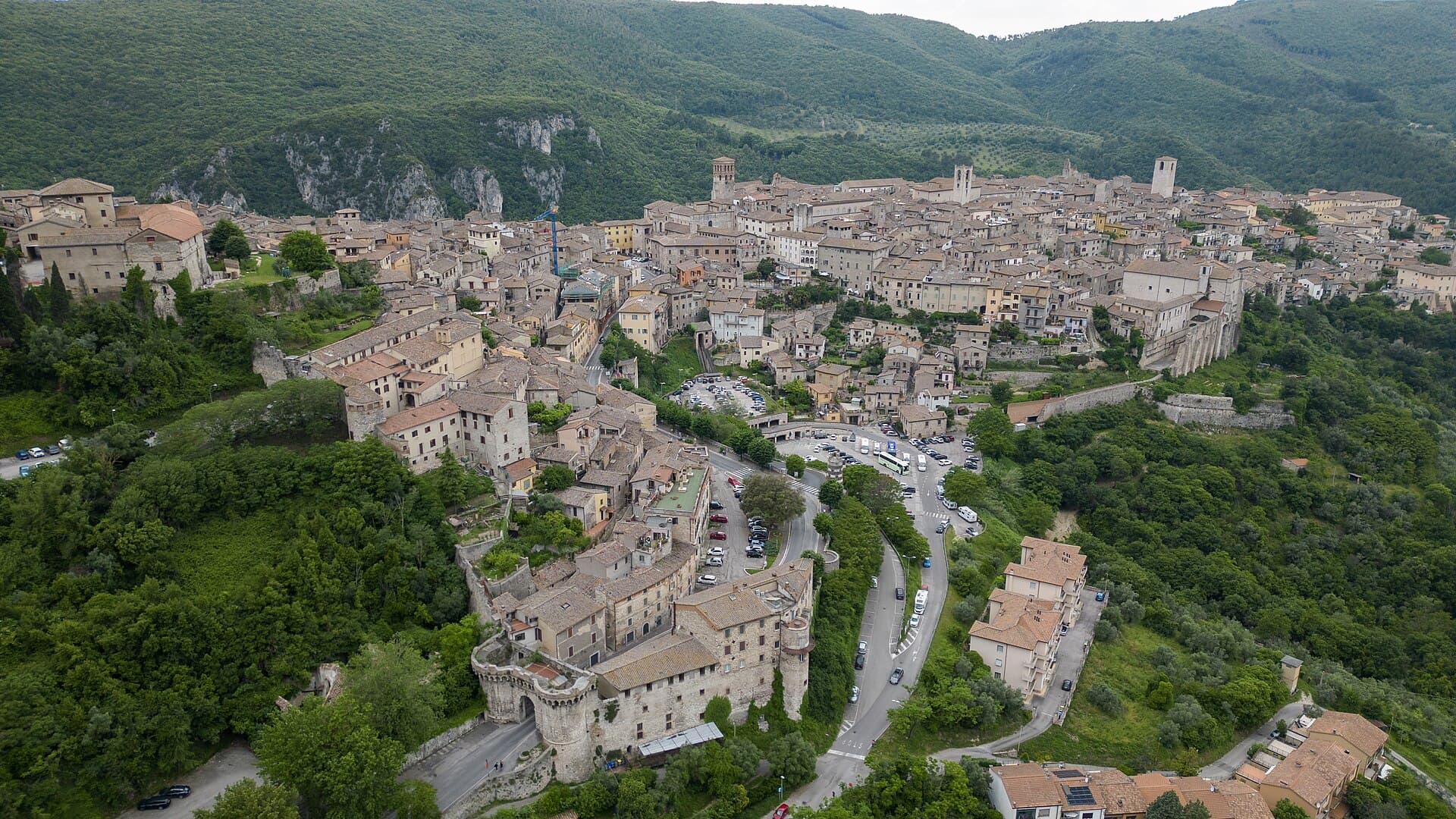 Wikiriello / CC BY-SA 4.0, via Wikimedia Commons
Visite audio autoguidée de Narni — parcours GPS à pied, lecture hors ligne, narration en 32 langues.
“Où la grandeur de la Rome antique résonne à travers la pierre médiévale.”
Pas les cartes postales. Les histoires que même les habitants ignorent — soufflées à l'oreille, là où elles se sont passées.
Sous les rues paisibles de Narni se cache un monde oublié, découvert par des adolescents curieux.
L'un des plus grandioses ponts romains jamais construits se dresse à Narni, bien qu'il ne reste qu'un fragment de son immense échelle d'origine.
Narni détient une distinction unique en tant que cœur même de l'Italie, marqué par une simple pierre.
Découvrez tous les secrets de Narni
Chaque adresse, chaque révélation en entier — dans ton oreille, là où elle s'est passée.
Tu choisis tes lieux. Tu marches. La voix te révèle ce que les autres ignorent.

Votre visite audioguidée de Narni vous attend — choisissez vos lieux, votre langue, et lancez-vous dès votre arrivée.
AcheterLume intègre un guide en réalité augmentée. Levez votre téléphone : sa caméra montre la rue devant vous, avec une flèche lumineuse posée sur l'image réelle qui pointe toujours vers votre prochain arrêt — aucune carte à déchiffrer, aucun mauvais virage. Comme tout dans Lume, ça fonctionne entièrement hors-ligne.
Narni, une ancienne ville perchée dans la région de l'Ombrie, au centre de l'Italie, s'élève de manière spectaculaire d'une falaise calcaire, surplombant une gorge étroite creusée par la rivière Nera. Un lieu où l'histoire est gravée dans chaque pierre, Narni vous invite à remonter le temps, de ses origines romaines à sa splendeur médiévale. C'est une ville qui recèle discrètement des secrets, inspirant des contes et préservant des couches de vie millénaire sous sa charmante surface.
Au-delà de sa beauté visible, faite de bâtiments en pierre ancienne et de ruelles sinueuses, Narni est un musée vivant, offrant un lien tangible avec le passé. Des vestiges de l'ingénierie romaine monumentale à l'intrigue de la vie médiévale découverte sous terre, cette ville récompense ceux qui cherchent à découvrir ses histoires moins connues. C'est une destination qui promet à la fois des vues pittoresques et de profondes découvertes historiques, le tout dans un cadre qui semble véritablement épargné par la précipitation du tourisme moderne.
## De l'ancienne Nequinum à la Narnia romaine L'histoire de Narni commence bien avant les Romains, avec des preuves de colonies paléolithiques dans ses grottes environnantes. Vers 600 av. J.-C., le peuple osco-ombrien y établit une colonie, la nommant Nequinum. Sa position stratégique, en hauteur sur une colline dominant la rivière Nera, en fit un lieu convoité. En 299 av. J.-C., les Romains conquirent Nequinum après un siège d'un an, prétendument avec l'aide de deux traîtres à l'intérieur des murs de la ville. Ils la renommèrent Narnia, d'après la rivière Nar (aujourd'hui Nera) voisine, et elle devint rapidement une colonie romaine vitale et un centre stratégique le long de la Via Flaminia, la route consulaire reliant Rome à l'Adriatique.
## Épanouissement médiéval et pouvoir papal L'importance militaire de Narni se poursuivit au début du Moyen Âge, en faisant un site contesté pendant les guerres entre l'Exarchat de Ravenne et le Duché lombard de Spolète. Malgré les invasions des Lombards et des Goths, Narni prospéra, devenant une ville libre au XIe siècle et atteignant son apogée entre les XIIe et XIVe siècles. Durant cette période, elle attira des artistes renommés comme Rossellino, Ghirlandaio, Vecchietta et Benozzo Gozzoli. L'imposante Rocca Albornoziana, une forteresse construite entre 1367 et 1378 par le cardinal Egidio Albornoz, témoigne de l'importance de Narni en tant que bastion du pouvoir papal après le retour de la Papauté d'Avignon.
## Déclin et redécouverte La fortune de Narni déclina en 1527 lorsqu'elle fut assiégée et lourdement pillée par les Landsknechts revenant du sac de Rome. La ville eut du mal à retrouver sa grandeur d'antan, restant largement déserte pendant un certain temps. Cependant, son patrimoine architectural durable est resté. Au XXe siècle, une redécouverte remarquable attira l'attention sur Narni : en 1979, un groupe de jeunes spéléologues découvrit un complexe de chambres souterraines, révélant une église médiévale, des citernes romaines et des cellules de l'Inquisition. Cette « Narni Sotterranea » est depuis devenue une fenêtre captivante sur le passé stratifié de la ville.
Commencez votre exploration au Ponte d'Augusto, un pont romain monumental construit vers 27 av. J.-C., où une arche imposante témoigne encore de l'ingénierie antique. De là, aventurez-vous dans le centre-ville pour découvrir la Cattedrale di San Giovenale, un chef-d'œuvre roman dédié au premier évêque de Narni, abritant d'importantes œuvres d'art et une chapelle. Ne manquez pas la Rocca Albornoziana, une formidable forteresse du XIVe siècle offrant des vues imprenables sur les Gorges de la Nera et le paysage ombrien environnant.
Plongez dans le monde souterrain de Narni avec une visite guidée de Narni Sotterranea, un complexe fascinant de chambres souterraines, comprenant une église du XIIIe siècle avec des fresques, des citernes romaines et une ancienne salle d'audience et cellule de prison de l'Inquisition. Explorez le Musée Eroli dans le Palazzo Eroli, où vous trouverez des artefacts archéologiques allant de la préhistoire au Moyen Âge, des peintures de la Renaissance de maîtres comme Ghirlandaio et Gozzoli, et même une momie égyptienne inattendue. Pour une aventure unique, envisagez une randonnée guidée à travers une section de l'Aqueduc de la Formina, une merveille d'ingénierie romaine toujours accessible aujourd'hui. Enfin, cherchez la modeste pierre marquant le Centre géographique de l'Italie, un point d'intérêt discret.
Les périodes les plus agréables pour visiter Narni sont généralement mai, juin et septembre. Durant ces mois, vous pouvez vous attendre à des températures diurnes confortables allant de 20°C à 27°C (68°F à 81°F), idéales pour explorer la ville et sa beauté naturelle environnante. Juillet et août peuvent être très chauds, avec des températures atteignant 40°C (104°F), alors préparez-vous à une chaleur importante si vous visitez en plein été. Novembre est généralement le mois le plus humide, tandis que juillet est le plus sec.
Narni est facilement accessible et constitue une excursion d'une journée enrichissante ou un séjour plus long. Elle se trouve à environ une heure de route au nord de Rome. La ville elle-même est mieux explorée à pied, avec ses ruelles étroites et sinueuses et son architecture médiévale. L'Office de Tourisme de Narni, Associazione Turistica Pro-Narni, se trouve Piazza dei Priori, 3, et propose des cartes et une assistance. De nombreuses attractions, telles que Narni Sotterranea et l'Aqueduc de la Formina, nécessitent des visites guidées et souvent une réservation à l'avance. Pour l'aqueduc, des vêtements et des chaussures de rechange sont essentiels, car les niveaux d'eau peuvent atteindre la hauteur des genoux dans certaines sections. Des options de transport en commun sont disponibles, reliant Narni aux grandes villes d'Ombrie et au-delà. Envisagez de visiter pendant le festival Corsa all'Anello en mai pour une expérience culturelle animée.
Narni en coréen, en chinois ou en hébreu — et dans 29 autres langues, chaque étape narrée par une voix native. La plus large gamme de langues de tous les audioguides autoguidés.
Disponible en :