L'emplacement original du temple de Nauvoo
Le grand temple qui dominait autrefois la ligne d'horizon de Nauvoo fut détruit, mais une partie de son art céleste a survécu contre toute attente.
L'histoire complète se débloque dans le tour
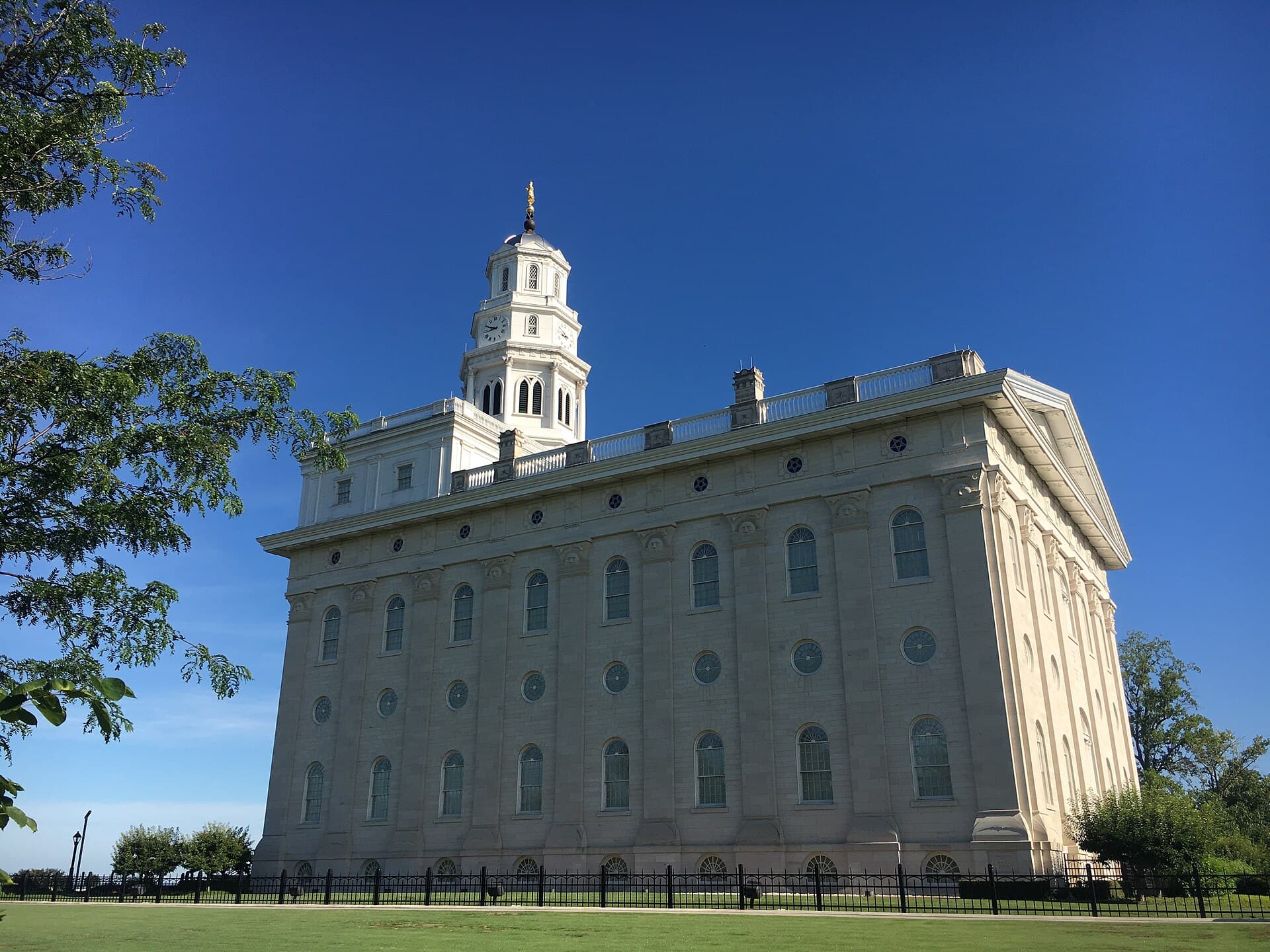 Connelly Brown / CC BY-SA 4.0, via Wikimedia Commons
Visite audio autoguidée de Nauvoo — parcours GPS à pied, lecture hors ligne, narration en 32 langues.
“Là où les rêves utopiques et les grandes migrations ont laissé leur marque indélébile sur le fleuve Mississippi.”
Pas les cartes postales. Les histoires que même les habitants ignorent — soufflées à l'oreille, là où elles se sont passées.
Le grand temple qui dominait autrefois la ligne d'horizon de Nauvoo fut détruit, mais une partie de son art céleste a survécu contre toute attente.
Avant d'être appelée Nauvoo, cet endroit sur le Mississippi portait un nom bien plus céleste, puis plus commercial.
Au milieu des années 1840, cette ville relativement petite de l'Illinois était, étonnamment, une sérieuse rivale de Chicago en termes de population.
Découvrez tous les secrets de Nauvoo
Chaque adresse, chaque révélation en entier — dans ton oreille, là où elle s'est passée.
Tu choisis tes lieux. Tu marches. La voix te révèle ce que les autres ignorent.

Votre visite audioguidée de Nauvoo vous attend — choisissez vos lieux, votre langue, et lancez-vous dès votre arrivée.
AcheterNauvoo, Illinois, repose sur un coude distinct en fer à cheval du fleuve Mississippi, un endroit qui a attiré diverses communautés en quête de nouveaux départs et d'un bel endroit où s'établir. Cette petite ville, avec une population actuelle d'environ 950 habitants, accueille près de 100 000 visiteurs par an, attirés par son histoire riche, ses vues panoramiques sur le fleuve et son caractère de petite ville. De ses origines en tant que village amérindien à son rôle central dans l'histoire primitive du mouvement des Saints des Derniers Jours, puis en tant que refuge pour les Icariens utopistes français et les immigrants allemands, l'histoire de Nauvoo est celle de l'ambition, de la foi et de la résilience.
Aujourd'hui, Nauvoo offre un mélange unique d'exploration historique et de vie contemporaine. Les visiteurs peuvent remonter le temps dans le quartier historique, où des maisons restaurées et des ateliers interactifs donnent vie aux années 1840. Au-delà des sites historiques, la ville embrasse son héritage agricole avec des vignobles et des caves à vin, un héritage introduit par ses divers colons. Que vous soyez intéressé par l'histoire religieuse, les expériences communautaires ou simplement la beauté sereine du Mississippi, Nauvoo offre un voyage captivant dans le passé de l'Amérique.
## De Quashquema à Commerce Avant la colonisation européenne, la région aujourd'hui connue sous le nom de Nauvoo était un grand village Sauk et Meskwaki (Fox) appelé "Quashquema", d'après un chef amérindien. En 1824, le capitaine James White aurait acheté le site du village au chef Quashquame pour "un peu de sku-ti-apo [liqueur] et deux mille boisseaux de maïs". En 1830, une petite communauté de colons non-autochtones avait établi un bureau de poste sous le nom de "Vénus". Ce nom fut changé en "Commerce" en 1834, reflétant les espoirs des spéculateurs fonciers de l'Est quant à la prospérité de la ville. Cependant, la panique de 1837 a freiné ces aspirations, laissant la ville diminuée et les terres bon marché.
## L'ère mormone En 1839, des membres de l'Église de Jésus-Christ des Saints des Derniers Jours, dirigés par Joseph Smith, acquirent la ville de Commerce en difficulté. Fuyant la persécution dans le Missouri, ils cherchaient un refuge sûr. Smith rebaptisa la ville "Nauvoo", un mot hébreu qu'il disait signifier "bel endroit" ou "être beau". Bien qu'initialement un marécage non développé, les Saints des Derniers Jours drainèrent la terre et construisirent rapidement une ville florissante. En 1844, la population de Nauvoo atteignit entre 12 000 et 15 000 habitants, ce qui en fit brièvement l'une des plus grandes villes de l'Illinois, rivalisant avec Chicago. La législature de l'Illinois accorda à Nauvoo une charte spéciale, lui permettant d'établir ses propres tribunaux et une milice, la Légion de Nauvoo, qui devint la deuxième plus grande force militaire de l'État.
Cependant, les tensions avec les voisins non-mormons s'intensifièrent, alimentées par des différences religieuses, le pouvoir politique et des accusations d'anarchie. En juin 1844, Joseph Smith et son frère Hyrum furent tués par une foule dans la prison de Carthage alors qu'ils étaient sous protection. La violence força finalement la majorité des Saints des Derniers Jours à abandonner Nauvoo en 1846, entamant leur migration historique vers l'ouest sous la direction de Brigham Young.
## Icariens et immigrants allemands Après l'exode mormon, Nauvoo devint une ville quasi fantôme. En 1849, un groupe d'idéalistes français connus sous le nom d'Icariens, dirigés par Étienne Cabet, arriva pour établir une commune socialiste utopique. Bien que la colonie ait prospéré pendant quelques années, les dissensions internes et la mort de Cabet entraînèrent sa dissolution en 1856. Les Icariens, cependant, laissèrent un héritage durable en introduisant la culture de la vigne et la vinification dans la région.
Après les Icariens, des immigrants allemands commencèrent à s'installer à Nauvoo, et pendant 50 ans, elle devint la plus grande communauté germanophone de l'Illinois. Cette période vit un essor de la production de raisin et de la vinification, avec de nombreux vignobles et caves à vin établis. Ces pionniers allemands, ainsi que les Icariens restants et certains Saints des Derniers Jours qui n'avaient pas migré, contribuèrent au caractère multiculturel de Nauvoo et aidèrent à préserver de nombreuses maisons mormones historiques.
Commencez votre visite dans l'un des centres d'accueil de Nauvoo, tel que le Centre d'accueil des visiteurs du Nauvoo historique, pour obtenir des informations, voir des expositions et vous inscrire à des visites guidées gratuites de maisons restaurées, de boutiques et de bâtiments religieux. Envisagez une visite en chariot tiré par des chevaux pour un aperçu de la vie des années 1830 dans le Nauvoo historique.
Explorez le quartier historique pour voir des sites tels que la Joseph Smith Mansion House, la maison de Brigham Young et des ateliers d'artisans comme la forge et la charronnerie. Ne manquez pas le temple de Nauvoo, reconstruit en 2002 sur son site d'origine, offrant de magnifiques vues sur le fleuve Mississippi. Bien que l'entrée au temple soit réservée aux membres de l'Église de Jésus-Christ des Saints des Derniers Jours, les jardins et le Centre d'accueil du temple sont ouverts à tous les visiteurs.
Juste à l'extérieur du quartier historique, découvrez le pont en arc de pierre, une structure de 1850 traversant l'un des fossés de drainage originaux construits par les premiers pionniers. À proximité, la Chambre de David offre un endroit paisible pour pique-niquer avec un ruisseau et des chutes, un ancien refuge du plus jeune fils de Joseph Smith. L'ancien cimetière des pionniers, un peu plus à l'est, est un lieu solennel honorant plus de 2 000 premiers pionniers.
Le parc d'État de Nauvoo comprend le lac Horton pour la pêche et la navigation de plaisance, des sentiers de randonnée et le musée Rheinberger House. Ce musée, abrité dans un bâtiment à l'histoire riche, présente des artefacts de diverses périodes du passé de Nauvoo et comprend la seule cave à vin publique de Nauvoo, située à côté du plus ancien vignoble de l'Illinois.
Pour ceux qui s'intéressent à l'héritage viticole de Nauvoo, visitez Baxter's Vineyards, la plus ancienne cave de l'Illinois établie en 1857, ou Press House Winery pour des dégustations.
Nauvoo est une destination ouverte toute l'année, chaque saison offrant une expérience différente. La saison touristique la plus chargée s'étend de mai à octobre, lorsque le quartier commercial de Mulholland Street est pleinement actif avec ses boutiques, restaurants et événements. L'été, en particulier juillet, est populaire pour le spectacle de Nauvoo, bien qu'il puisse faire chaud et humide.
La fin du printemps (avril-mai) et le début de l'automne (septembre-octobre) sont fortement recommandés pour un temps modéré, moins de foule et de beaux paysages. Le printemps apporte des fleurs en pleine floraison, tandis que l'automne offre un feuillage éclatant et des événements communautaires comme le festival du raisin de Nauvoo et la marche des citrouilles. Bien que de nombreuses entreprises puissent avoir des horaires limités à la fin de l'automne et en hiver, les sites historiques restent ouverts, offrant une visite plus calme et plus propice à la réflexion.
Nauvoo est une petite ville, et bien que le quartier historique couvre environ deux miles carrés, il n'y a pas de transports en commun au sein du site historique lui-même. Il est recommandé de se rendre en voiture aux principaux sites, puis d'explorer à pied. Des cartes de stationnement sont disponibles dans les centres d'accueil.
Les options d'hébergement comprennent des hôtels, des chambres d'hôtes, des séjours chez l'habitant et du camping, mais il est conseillé de réserver à l'avance, surtout pendant la haute saison en juillet. Le service de téléphonie mobile est disponible dans tout le Nauvoo historique, et l'accès Wi-Fi est fourni par le réseau Liahona de l'Église, bien que la réception puisse varier dans certains bâtiments. Bien que la plupart des visites soient en anglais, certaines visites en espagnol et en portugais peuvent être disponibles sur demande ; il est préférable d'appeler à l'avance pour vérifier. De nombreux commerces du centre-ville sont fermés le dimanche, mais certains services essentiels comme Baxter's Vineyards, Casey's et Dollar General restent généralement ouverts.
Nauvoo en coréen, en chinois ou en hébreu — et dans 29 autres langues, chaque étape narrée par une voix native. La plus large gamme de langues de tous les audioguides autoguidés.
Disponible en :