La Place des Corporations
Imaginez une bourse antique romaine animée, mais au lieu d'écrans numériques, les informations étaient affichées au sol.
L'histoire complète se débloque dans le tour
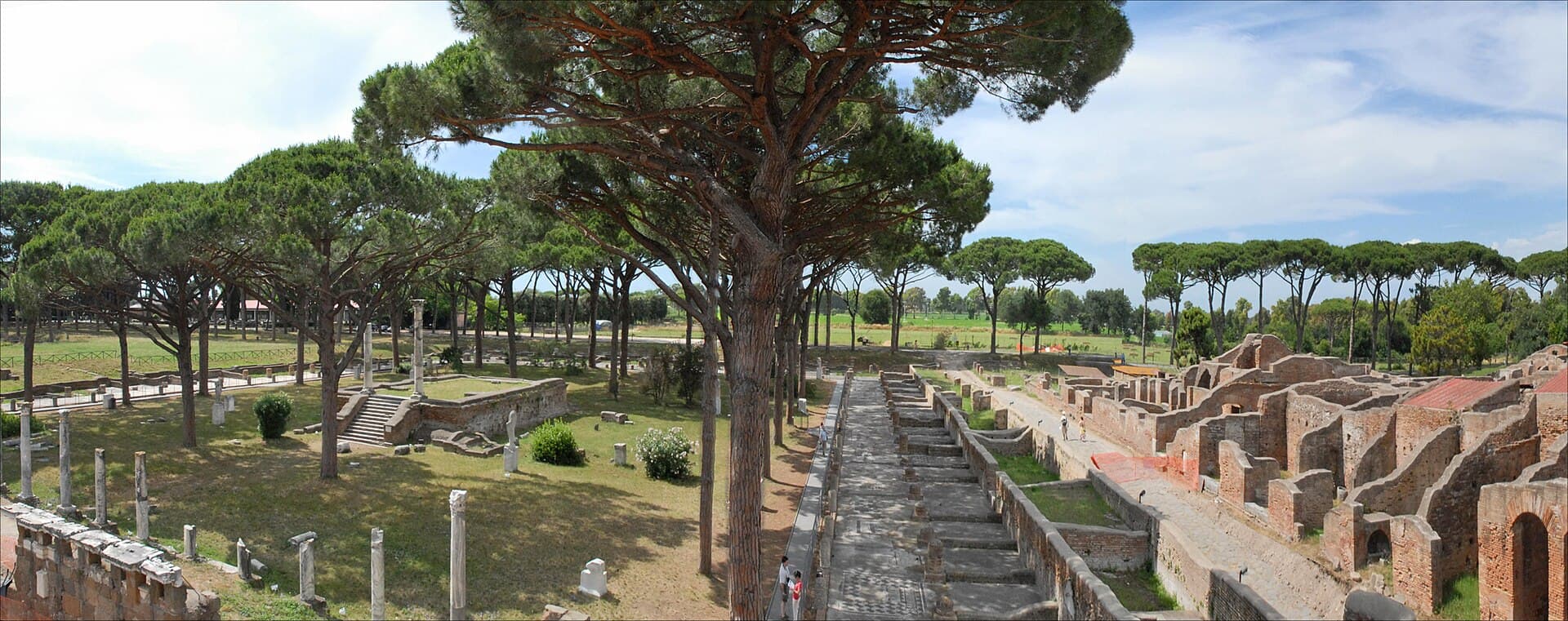 Jean-Pierre Dalbéra from Paris, France / CC BY 2.0, via Wikimedia Commons
Visite audio autoguidée de Ostie antique — parcours GPS à pied, lecture hors ligne, narration en 32 langues.
“Flânez dans les rues paisibles de l'ancien port de Rome, où les échos de la vie quotidienne résonnent encore.”
Pas les cartes postales. Les histoires que même les habitants ignorent — soufflées à l'oreille, là où elles se sont passées.
Imaginez une bourse antique romaine animée, mais au lieu d'écrans numériques, les informations étaient affichées au sol.
Les bains publics étaient un pilier de la vie sociale romaine, mais un établissement de bains particulier à Ostie antique offrait un rappel visuel saisissant de l'identité de la ville.
Sous la ville animée, un monde secret de culte existait, conçu pour évoquer un cadre naturel très spécifique.
Découvrez tous les secrets de Ostie antique
Chaque adresse, chaque révélation en entier — dans ton oreille, là où elle s'est passée.
Tu choisis tes lieux. Tu marches. La voix te révèle ce que les autres ignorent.


Votre visite audioguidée de Ostie antique vous attend — choisissez vos lieux, votre langue, et lancez-vous dès votre arrivée.
AcheterLume intègre un guide en réalité augmentée. Levez votre téléphone : sa caméra montre la rue devant vous, avec une flèche lumineuse posée sur l'image réelle qui pointe toujours vers votre prochain arrêt — aucune carte à déchiffrer, aucun mauvais virage. Comme tout dans Lume, ça fonctionne entièrement hors-ligne.
À seulement 30 kilomètres au sud-ouest de Rome, là où le Tibre rencontrait autrefois la mer, se trouve Ostie antique, la ville portuaire remarquablement préservée de la Rome antique. Souvent appelée « la Pompéi de Rome » en raison de son état de conservation exceptionnel, Ostie antique offre un voyage moins fréquenté et plus immersif dans la vie quotidienne romaine que son homologue plus célèbre. Ici, vous pouvez vous promener dans des rues originales, entrer dans d'anciens immeubles d'appartements, des boutiques et des thermes, et véritablement imaginer l'activité animée qui remplissait autrefois ce centre commercial crucial.
Contrairement à Pompéi, qui a été ensevelie brusquement par une éruption volcanique, Ostie antique a connu un déclin progressif. Cela a permis à ses structures de rester largement intactes alors que la ville était lentement abandonnée et finalement recouverte par le limon du Tibre. Cette histoire unique a laissé derrière elle un parc archéologique s'étendant sur 100 hectares, offrant un aperçu inégalé de l'architecture, du commerce et des diverses cultures qui ont prospéré dans une ville portuaire romaine de 50 000 habitants.
Les origines d'Ostie remontent à environ 620 av. J.-C., lorsque son principal attrait était le sel récolté dans les marais voisins, une denrée vitale pour la conservation de la viande. La légende suggère qu'elle aurait pu être la première colonia de Rome, fondée par Ancus Marcius, le quatrième roi de Rome, après la destruction d'une ville voisine dotée d'un petit port. Les preuves archéologiques indiquent un ancien camp militaire, ou castrum, établi au 7e siècle av. J.-C., signifiant son importance en tant que première colonie romaine.
Vers 400 av. J.-C., Rome conquiert Ostie, la transformant en base navale et en fort pour garder l'embouchure (ostium) du Tibre et protéger Rome des envahisseurs maritimes. À mesure que Rome s'étendait, l'importance d'Ostie augmentait, évoluant d'un avant-poste militaire à un centre commercial florissant. En 150 apr. J.-C., Rome contrôlant la Méditerranée, Ostie était devenue son port commercial animé, gérant les marchandises de tout l'empire.
À son apogée, Ostie était une ville grande et cosmopolite, un creuset de cultures et de religions en raison de son afflux constant de marchands et de représentants étrangers. La vie quotidienne tournait autour du mouvement des marchandises, avec des boutiques, des temples, des événements publics au forum et au théâtre, et des bains communaux formant le tissu de la ville. L'architecture de la ville était orientée vers le Tibre, avec un portique monumental de boutiques et un théâtre public, créant un environnement accueillant pour les visiteurs.
Le déclin d'Ostie a reflété celui de l'Empire romain. À mesure que les routes commerciales s'altéraient et que les incertitudes politiques et économiques se répandaient, la prospérité de la ville s'est érodée. L'ensablement du Tibre, crucial pour les activités maritimes, a encore accéléré sa chute. Au 4e siècle apr. J.-C., la ville fut abandonnée, sa population diminuant en raison de facteurs comme le paludisme. La boue du Tibre a finalement enseveli une grande partie d'Ostie, la préservant involontairement des ravages du temps et du pillage des pierres. Les fouilles ont commencé au 19e siècle, révélant progressivement les bâtiments, mosaïques et œuvres d'art remarquablement conservés que nous pouvons explorer aujourd'hui.
Explorer Ostie antique, c'est voyager à travers une ville romaine vivante et respirante. Commencez par le Decumanus Maximus, l'artère principale de la ville, portant encore les ornières des anciennes roues de charrettes. Cette artère centrale vous guide devant des monuments clés, notamment le Théâtre d'Ostie, une impressionnante structure en briques datant du 1er siècle av. J.-C. qui pouvait accueillir jusqu'à 4 000 spectateurs et est toujours utilisée pour des événements culturels aujourd'hui.
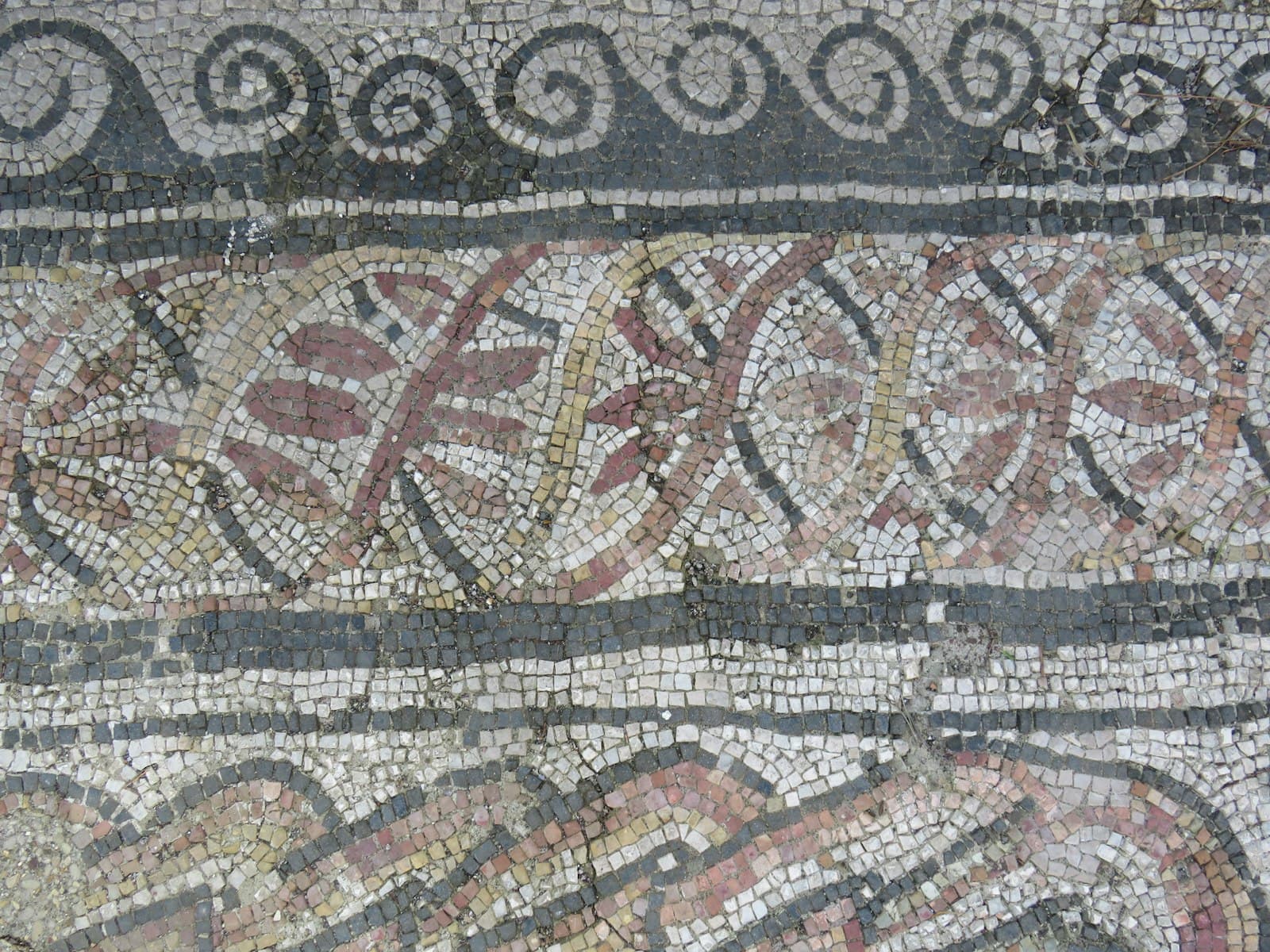
Adjacent au théâtre se trouve la Place des Corporations, une zone fascinante avec plus de 60 bureaux décorés de mosaïques qui annonçaient autrefois les diverses corporations de marchands et leurs métiers. Ne manquez pas les Thermes de Neptune, connus pour leur spectaculaire mosaïque noire et blanche représentant le dieu de la mer. Le Capitolium, un grand temple dédié à Jupiter, Junon et Minerve, est le principal bâtiment subsistant du Forum d'Ostie, le cœur civique et religieux de la ville. D'autres sites notables incluent le Thermopolium, un ancien établissement de restauration rapide romain avec son comptoir et ses étagères encore visibles, et la Maison de Diane, un immeuble d'appartements offrant un aperçu de la vie résidentielle romaine. Pour une immersion plus profonde dans la vie quotidienne, recherchez les latrines publiques et les nombreuses mosaïques, souvent complexes, que l'on trouve dans toute la ville, beaucoup représentant des motifs maritimes.
Ostie antique est ouverte toute l'année, ne fermant que les lundis, le jour de Noël et le jour de l'An. Le printemps et l'automne offrent le temps le plus agréable pour explorer le site, principalement en extérieur. Bien que l'été offre des heures d'ouverture plus longues, il peut faire très chaud, alors portez un chapeau et apportez de l'eau. Visiter en hiver signifie des températures plus fraîches, mais certaines des mosaïques les plus délicates sont couvertes pour les protéger de la mi-décembre jusqu'au printemps. Pour éviter les foules, envisagez d'arriver dès l'ouverture un mardi, un mercredi ou un jeudi. Prévoyez au moins 2 à 3 heures pour une visite, ou plus près de 4 heures si vous souhaitez explorer en profondeur.
Ostie antique est facilement accessible depuis Rome, ce qui en fait une excursion d'une journée idéale. Prenez le train de banlieue Rome-Lido depuis la gare de Piramide (connectée au métro B) jusqu'à l'arrêt Ostia Antica. Le trajet dure environ 30 à 35 minutes, et le parc archéologique se trouve à quelques pas de la gare. Les billets d'entrée standard coûtent environ 14 €, et le Roma Pass ou l'Omnia Card peuvent être intéressants si vous visitez d'autres sites romains. Il est conseillé de réserver les billets à l'avance, surtout le week-end ou les dimanches d'entrée gratuite (le premier dimanche de chaque mois). Le site est vaste et implique de marcher sur des pavés romains inégaux, des chaussures confortables sont donc essentielles. Bien qu'un peu d'ombre soit disponible grâce aux pins, les zones ouvertes comme le Forum peuvent être très chaudes en plein soleil. Un petit musée sur place abrite certaines des plus belles statues de la ville.
Ostie antique en coréen, en chinois ou en hébreu — et dans 29 autres langues, chaque étape narrée par une voix native. La plus large gamme de langues de tous les audioguides autoguidés.
Disponible en :