Murals de la rue Honduras
Parmi les fresques expressives de la rue Honduras, une œuvre particulière défend un message puissant d'autonomisation et de changement social.
L'histoire complète se débloque dans le tour
 Photo: Barbara Zandoval / Unsplash
Visite audio autoguidée de Street Art de Palermo Soho — parcours GPS à pied, lecture hors ligne, narration en 32 langues.
“Les murs de Buenos Aires murmurent des histoires en peinture.”
Pas les cartes postales. Les histoires que même les habitants ignorent — soufflées à l'oreille, là où elles se sont passées.
Parmi les fresques expressives de la rue Honduras, une œuvre particulière défend un message puissant d'autonomisation et de changement social.
Au-delà de leurs façades colorées, les fresques des rues Gurruchaga et Russell offrent un récit symbolique du passé et du présent de l'Argentine.
Malgré la prolifération de fresques extraordinaires, le statut juridique de l'art de rue à Buenos Aires n'est pas aussi clair qu'il n'y paraît.
Découvrez tous les secrets de Street Art de Palermo Soho
Chaque adresse, chaque révélation en entier — dans ton oreille, là où elle s'est passée.
Tu choisis tes lieux. Tu marches. La voix te révèle ce que les autres ignorent.
Votre visite audioguidée de Street Art de Palermo Soho vous attend — choisissez vos lieux, votre langue, et lancez-vous dès votre arrivée.
AcheterLume intègre un guide en réalité augmentée. Levez votre téléphone : sa caméra montre la rue devant vous, avec une flèche lumineuse posée sur l'image réelle qui pointe toujours vers votre prochain arrêt — aucune carte à déchiffrer, aucun mauvais virage. Comme tout dans Lume, ça fonctionne entièrement hors-ligne.
Bienvenue à Palermo Soho, un quartier où chaque mur raconte une histoire, et les rues elles-mêmes sont une toile en constante évolution. C'est le quartier principal de Buenos Aires pour l'art urbain, un lieu où des fresques expressives, des pochoirs complexes et des graffitis audacieux transforment des façades ordinaires en chefs-d'œuvre extraordinaires. En vous promenant dans ses avenues, vous découvrirez une galerie à ciel ouvert dynamique qui reflète la culture, l'histoire politique et l'esprit passionné de la ville.
Palermo Soho, avec ses cafés bohèmes, ses boutiques indépendantes et son atmosphère animée, offre le cadre idéal pour cette explosion de créativité. Des œuvres massives de plusieurs étages réalisées par des artistes renommés aux œuvres plus petites et plus intimes dans de charmants pasajes (ruelles), l'art ici est aussi diversifié que la ville elle-même. Cette promenade vous invite à regarder au-delà de la surface, à comprendre les récits peints sur ces murs et à vous connecter au pouls de Buenos Aires à travers sa forme d'art la plus accessible et la plus puissante.
Les racines de l'art de rue à Buenos Aires sont profondes et remontent à un passé politique turbulent. Dans les années 1950, sous la dictature, le gouvernement lui-même commanditait des graffitis politiques pour diffuser des slogans. Cependant, la véritable genèse de l'art de rue moderne en tant que forme de protestation et d'expression a émergé plus fortement pendant la dictature militaire des années 1970 et 1980. Lorsque les plateformes publiques traditionnelles étaient restreintes, les murs sont devenus un canal vital pour la dissidence, le souvenir et l'identité, les activistes utilisant le graffiti pour exprimer leur résistance.
La crise économique de 2001 a marqué un tournant significatif. Avec un chômage généralisé et une atmosphère sombre, des graphistes et illustrateurs talentueux ont cherché à insuffler de la positivité dans la ville. Ils ont commencé à créer des fresques colorées à grande échelle, souvent avec des personnages ludiques, pour égayer les rues et remonter le moral. Ce mouvement a transformé la perception du graffiti, passant du simple vandalisme à une forme d'art célébrée.
Aujourd'hui, Buenos Aires est reconnue mondialement comme un centre de l'art urbain, avec une culture qui, dans l'ensemble, embrasse et valorise les artistes de rue. Bien qu'il soit techniquement toujours illégal de peindre sur des bâtiments publics sans consentement, l'attitude détendue de la police et l'appréciation générale de l'art signifient que les artistes travaillent souvent en plein jour, les propriétaires accordant fréquemment leur permission. Cet environnement unique a attiré des artistes locaux et internationaux, favorisant une galerie en plein air expressive et en constante évolution qui reflète le paysage social, politique et culturel de l'Argentine. Le gouvernement de la ville a même commandé des œuvres à grande échelle, consolidant davantage la place de l'art de rue dans l'identité de Buenos Aires.
Palermo Soho, en particulier, est devenu une destination pour l'art de rue. Sa transformation d'un quartier ouvrier en un quartier branché et bohème est étroitement liée à l'essor de l'art urbain. Les charmantes avenues et les nombreux pasajes (ruelles) du quartier offrent une toile idéale aux artistes, créant une forte concentration de fresques, d'affiches collées et de mosaïques. L'art ici reflète souvent la société, encapsulant les passions les plus profondes du pays, du football à la politique en passant par l'identité.
Au-delà de la simple esthétique, l'art de rue de Palermo Soho sert souvent de commentaire social, reflétant des événements historiques, des figures politiques et des problèmes contemporains. Des artistes comme Jaz, Alfredo Segatori, BA Paste-Up et Martín Ron ont laissé leurs marques indélébiles, contribuant à la réputation du quartier en tant que destination artistique dynamique et stimulante. L'évolution constante de l'art, avec de nouvelles œuvres apparaissant régulièrement, garantit que chaque visite offre une nouvelle perspective sur la culture urbaine expressive de Buenos Aires.
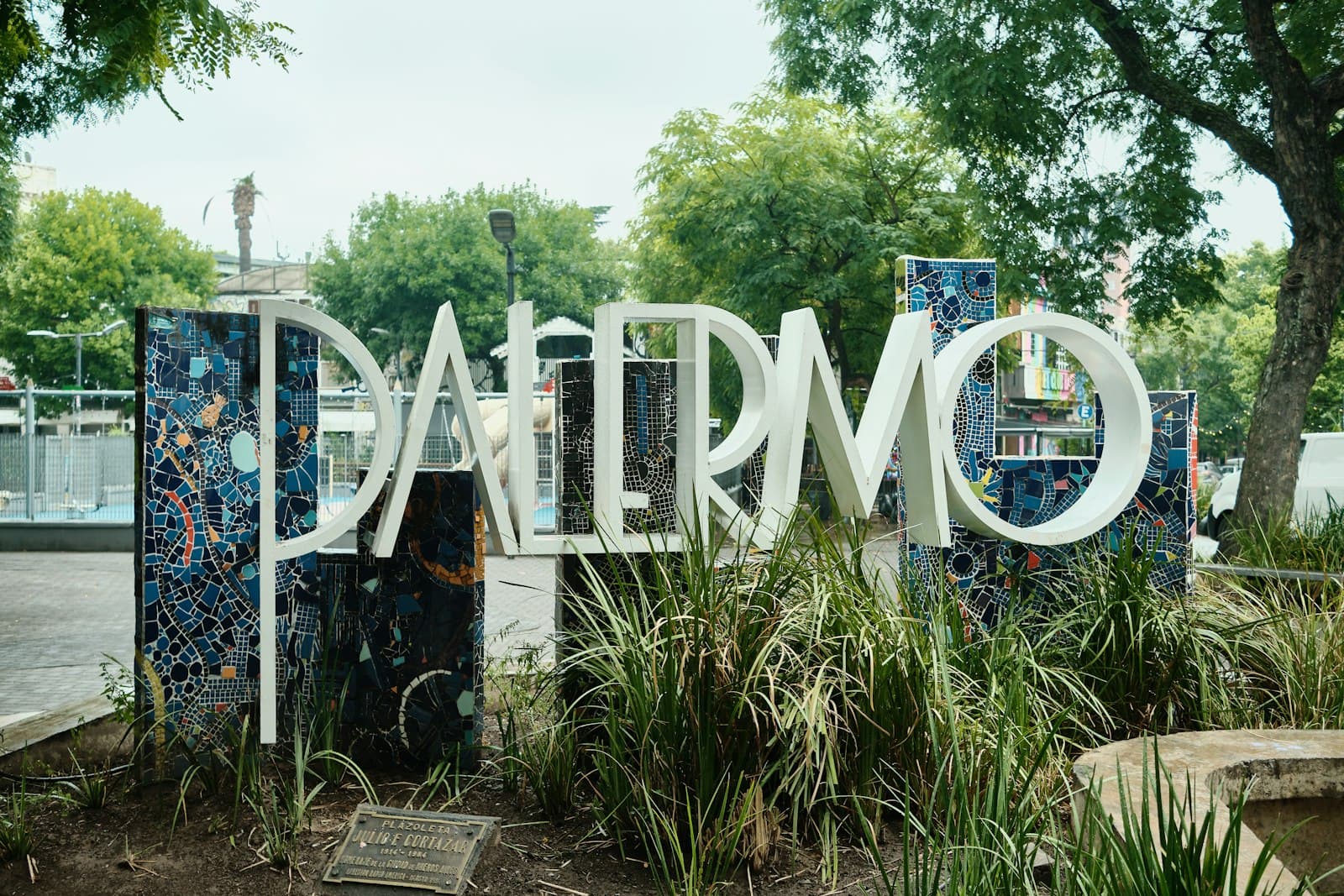
Votre voyage à travers l'art de rue de Palermo Soho commence à la Plaza Cortázar, plus communément appelée Plaza Serrano. Cette place est un centre névralgique de l'énergie artistique du quartier, entourée de murs ornés de fresques et de graffitis en constante évolution. De là, aventurez-vous dans les rues environnantes, où chaque coin révèle de nouveaux récits visuels.
Promenez-vous le long de la rue Honduras pour découvrir une gamme variée de fresques, y compris la puissante œuvre 'Mujer Luchadora' (Femme Combattante), qui aborde les thèmes de l'égalité des sexes et des droits humains. Explorez la rue Gurruchaga, où vous trouverez des œuvres importantes comme la fresque 'Évolution du Travail', offrant un aperçu de l'histoire sociale de l'Argentine. Ne manquez pas l'art expressif le long de la rue Borges (anciennement Calle Serrano), une rue qui mêle héritage littéraire et expression urbaine contemporaine.
Recherchez les pasajes (ruelles) étroits et charmants comme le Pasaje Russel et le Pasaje Santa Rosa. Ces zones sont souvent densément remplies de fresques, d'affiches collées et de mosaïques, créant une expérience artistique immersive parfaite pour la photographie. Gardez l'œil ouvert pour les œuvres à grande échelle documentées par les collectifs de graffitis locaux, qui couvrent souvent des façades entières de bâtiments. Un exemple notable est le 'Mural de Los Sueños' (Mural des Rêves) à l'angle de Gurruchaga et Soler, représentant un enfant tendant la main vers une fleur, symbolisant l'immigration en Argentine. Vous rencontrerez également des œuvres d'artistes renommés tels que Martín Ron, connu pour ses mélanges photoréalistes et surréalistes, et des pièces qui rendent hommage à des icônes argentines comme Lionel Messi et Diego Maradona. La beauté de cette promenade réside dans la découverte continue – chaque virage révèle une nouvelle perspective sur la toile vivante de Buenos Aires.
L'art de rue de Palermo Soho peut être apprécié toute l'année, mais les meilleurs moments pour le visiter sont pendant les heures de jour pour une visualisation et une photographie optimales. Les matins sont particulièrement recommandés pour éviter les foules et prendre des photos claires des fresques. Les week-ends apportent une atmosphère animée à la Plaza Serrano, avec un marché informel présentant des designers et artisans indépendants, ajoutant une autre couche à l'expérience culturelle. Buenos Aires a un climat agréable pour la marche, surtout pendant les mois de printemps (septembre à novembre) et d'automne (mars à mai), lorsque les températures sont douces.
Palermo Soho est un quartier très agréable à parcourir à pied, ce qui le rend idéal pour l'exploration. Portez des chaussures confortables, car vous couvrirez une bonne distance. Apportez un appareil photo ou un smartphone pour capturer les œuvres d'art expressives et en constante évolution. Bien que Palermo Soho soit généralement considéré comme l'un des quartiers les plus sûrs de Buenos Aires, surtout dans les zones animées, il est toujours judicieux d'être conscient de votre environnement et de garder vos objets de valeur en sécurité, en particulier dans les endroits bondés comme le marché de la Plaza Serrano. Les transports en commun vers Palermo Soho sont pratiques ; prenez la ligne D du Subte (ligne verte) jusqu'à la station Palermo ou Plaza Italia, puis il faut environ 10 à 15 minutes de marche jusqu'à la Plaza Serrano. De nombreuses lignes de bus desservent également la zone. Envisagez d'acheter et de charger une carte SUBE pour faciliter le paiement des transports en commun. Le quartier regorge de cafés, de bars et de restaurants, offrant de nombreuses occasions de faire des pauses et de se rafraîchir.
Street Art de Palermo Soho en coréen, en chinois ou en hébreu — et dans 29 autres langues, chaque étape narrée par une voix native. La plus large gamme de langues de tous les audioguides autoguidés.
Disponible en :