Puente Viejo
Ce pont rose en apparence pittoresque recèle un secret sur l'économie argentine des débuts.
L'histoire complète se débloque dans le tour
 Binksternet (talk) (Uploads) / Public domain, via Wikimedia Commons
Visite audio autoguidée de San Antonio de Areco — parcours GPS à pied, lecture hors ligne, narration en 32 langues.
“Où l'esprit du gaucho perdure, gravé dans les pavés et les vents de la pampa.”
Pas les cartes postales. Les histoires que même les habitants ignorent — soufflées à l'oreille, là où elles se sont passées.
Ce pont rose en apparence pittoresque recèle un secret sur l'économie argentine des débuts.
Au-delà de ses expositions sur la vie des gauchos, la fondation même du musée est un témoignage d'un héritage littéraire.
Ce bar historique, un incontournable de San Antonio de Areco, a un lien surprenant avec un phénomène moderne.
Découvrez tous les secrets de San Antonio de Areco
Chaque adresse, chaque révélation en entier — dans ton oreille, là où elle s'est passée.
Tu choisis tes lieux. Tu marches. La voix te révèle ce que les autres ignorent.


Votre visite audioguidée de San Antonio de Areco vous attend — choisissez vos lieux, votre langue, et lancez-vous dès votre arrivée.
AcheterLume intègre un guide en réalité augmentée. Levez votre téléphone : sa caméra montre la rue devant vous, avec une flèche lumineuse posée sur l'image réelle qui pointe toujours vers votre prochain arrêt — aucune carte à déchiffrer, aucun mauvais virage. Comme tout dans Lume, ça fonctionne entièrement hors-ligne.
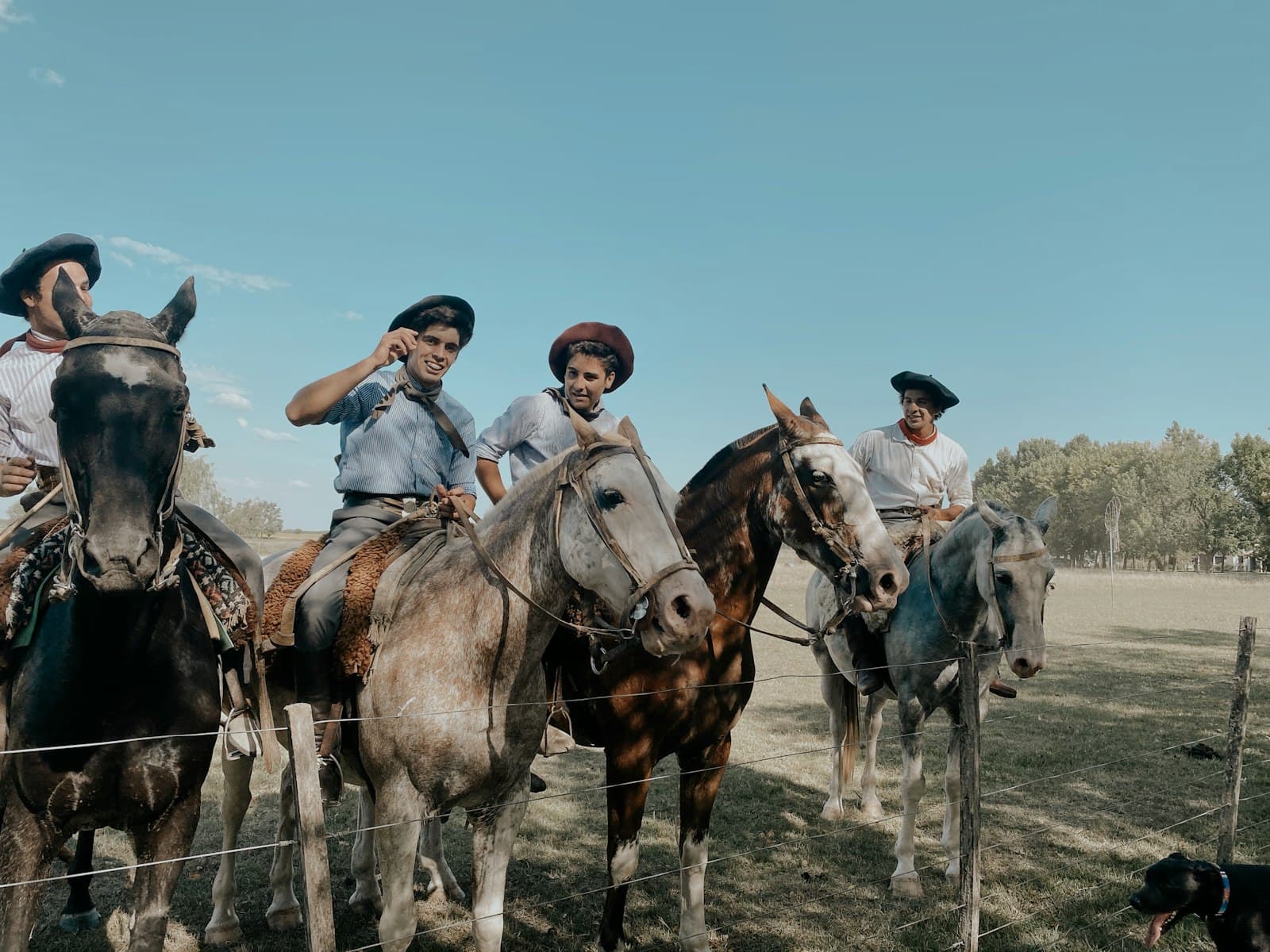
San Antonio de Areco, une ville du nord de la province de Buenos Aires, offre un lien tangible avec la culture gaucho argentine. Située à environ 113 kilomètres (70 miles) de la ville de Buenos Aires, elle offre un aperçu d'un mode de vie qui a façonné l'identité nationale. Déclarée ville d'intérêt historique national, San Antonio de Areco est reconnue pour sa préservation des traditions gauchos, de l'équitation à l'orfèvrerie.
L'architecture coloniale de la ville, ses rues pavées de pierre et la présence de locaux à cheval évoquent une sensation de retour dans le temps. C'est un endroit où les vastes plaines de la Pampa rencontrent un profond patrimoine culturel, invitant les visiteurs à explorer les estancias, les ateliers d'artisans et les sites historiques.
San Antonio de Areco est souvent considérée comme la "Capitale Nationale de la Tradition", un titre qu'elle a obtenu en 2015, consolidant son rôle de gardienne de la vie et des coutumes rurales argentines.
## Des terres indigènes au cœur du pays gaucho Les origines de San Antonio de Areco remontent à 1730, lorsqu'elle fut fondée sous le nom de Pagos de Areco, centrée autour de la construction de la Paroisse Saint Antoine de Padoue. Avant la conquête espagnole, la région était habitée par des tribus indigènes telles que les Ranqueles, les Querandíes et les Indiens Pampas. Le mélange de ces populations indigènes avec les conquistadors espagnols et les esclaves africains donna finalement naissance à la figure emblématique du gaucho.
Au début du XVIIIe siècle, la place principale, Ruiz de Arellano, servait de corral pour les premiers estancieros (propriétaires de fermes) envoyés par le roi d'Espagne pour cultiver les terres de la Pampa. La ville s'est progressivement étendue autour de cette place coloniale, son rythme dicté par la vie quotidienne des gauchos et des villageois. Un développement significatif est survenu en 1857 avec la construction du pont Martínez, aujourd'hui connu sous le nom de Puente Viejo, qui fut le premier pont à péage d'Argentine.
L'identité de la ville en tant que centre de la culture gaucho a été considérablement amplifiée après la publication en 1926 du roman de Ricardo Güiraldes, Don Segundo Sombra. Le livre, qui dépeint la vie d'un gaucho, a été inspiré par un gaucho local charismatique nommé Segundo Ramírez, qui travaillait à l'estancia de la famille Güiraldes. Ce lien littéraire a cimenté la place de San Antonio de Areco dans la conscience nationale comme la patrie gaucho par excellence. En 1939, le festival du Día de la Tradición (Jour de la Tradition) a commencé, renforçant davantage l'engagement de la ville à préserver son patrimoine. Le Museo Gauchesco Ricardo Güiraldes, dédié à la vie gaucho et à l'œuvre de Güiraldes, a ouvert ses portes en 1938.
Une grande partie de l'attrait de San Antonio de Areco réside dans son authentique culture gaucho et son caractère historique. Un point central est le Museo Gauchesco Ricardo Güiraldes, un vaste musée situé dans le Parque Criollo qui explore l'histoire locale des gauchos ainsi que la vie et l'œuvre de Ricardo Güiraldes. L'entrée du musée est une pulpería (taverne) recréée de 1850, offrant un aperçu d'un lieu de rassemblement traditionnel.
Promenez-vous sur le Puente Viejo (Vieux Pont), un pittoresque pont piéton rose datant de 1857 qui enjambe le Río Areco et mène au Parque Criollo. La place principale de la ville, la Plaza Ruiz de Arellano, est entourée de bâtiments coloniaux et du début du XXe siècle, offrant un endroit agréable pour une promenade. Explorez les nombreux ateliers d'orfèvrerie pour lesquels San Antonio de Areco est réputée, offrant l'occasion d'acheter de l'argent argentin traditionnel. Pour une immersion plus profonde, envisagez de passer une journée dans une estancia locale, où vous pourrez assister à des démonstrations de compétences gauchos, faire de l'équitation et savourer des barbecues argentins traditionnels (asados).
Le temps le plus agréable pour les activités de plein air à San Antonio de Areco s'étend de mi-octobre à mi-avril. Le printemps (septembre à novembre) et l'automne (mars à mai) offrent un temps équilibré, avec des journées chaudes et des nuits fraîches au printemps, et des matins vifs et des après-midi ensoleillés en automne. Le printemps apporte des champs verdoyants et des fleurs en éclosion, tandis que l'automne transforme le paysage avec des teintes dorées, rouges et ocres, le rendant idéal pour la photographie. Novembre est particulièrement significatif pour le festival annuel du Día de la Tradición (Jour de la Tradition), une grande célébration gaucho avec des défilés, des démonstrations d'équitation et des danses folkloriques. Les étés (décembre à février) sont chauds et humides, avec de longues heures de clarté, propices à la détente au bord d'une piscine. Les hivers (juin à septembre) sont plus froids, il faut donc prévoir des vêtements chauds.
San Antonio de Areco se trouve à environ 113 kilomètres (70 miles) au nord-ouest de Buenos Aires, un trajet qui prend généralement 1,5 à 2 heures en voiture. Vous pouvez rejoindre la ville en bus depuis la gare routière centrale de Buenos Aires, le voyage durant environ 2 à 2,5 heures. Pour une plus grande flexibilité dans l'exploration des estancias et de la campagne environnantes, la location d'une voiture est recommandée. De nombreuses excursions guidées d'une journée depuis Buenos Aires incluent également le transport et des visites de la ville et d'une estancia.
Bien que de nombreux visiteurs optent pour une excursion d'une journée, passer la nuit permet une expérience plus approfondie. Les hébergements vont des hôtels de charme en ville aux chambres dans les estancias. Des chaussures confortables sont conseillées pour marcher sur les rues pavées. En été, des vêtements légers, un insectifuge, de la crème solaire, un chapeau et des lunettes de soleil sont recommandés, tandis que des vêtements chauds, une casquette et une écharpe conviennent pour l'hiver.
San Antonio de Areco en coréen, en chinois ou en hébreu — et dans 29 autres langues, chaque étape narrée par une voix native. La plus large gamme de langues de tous les audioguides autoguidés.
Disponible en :