Fort Barrancas
This seemingly quiet fort holds a secret about its construction that speaks to a forgotten chapter of American ingenuity.
Full story unlocks in the tour
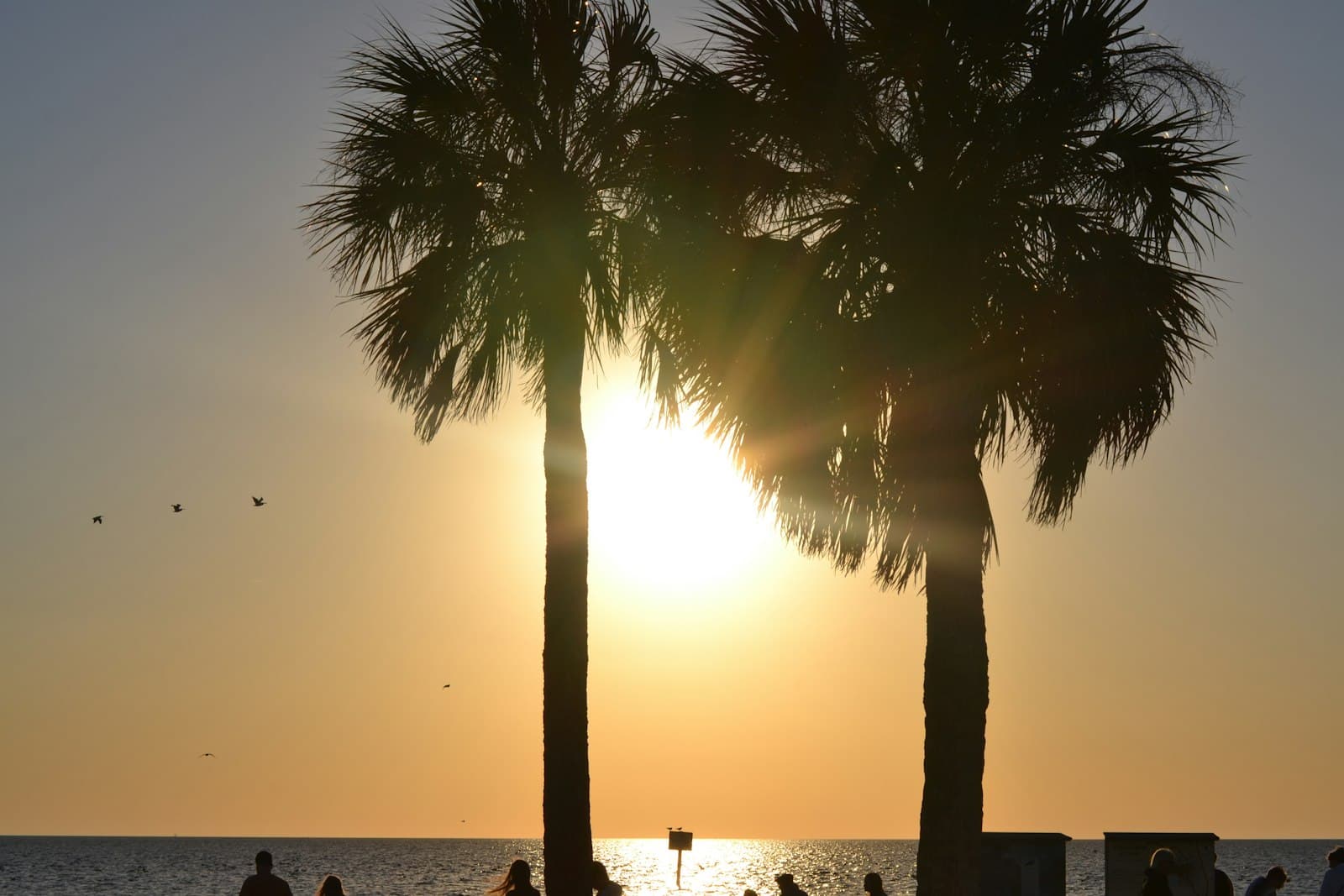 Photo: Meadow Marie / Unsplash
Self-guided audio walking tour of Pensacola — GPS route, offline playback, story-driven narration in 32 languages.
“Where history's tides meet sugar-white sands.”
Not the postcards. The stories even locals don't know — whispered in your ear, right where they happened.
This seemingly quiet fort holds a secret about its construction that speaks to a forgotten chapter of American ingenuity.
Beneath the lively atmosphere of Pensacola's main street lies a subtle nod to its earliest, and often turbulent, beginnings.
The serene waters of Pensacola Bay once concealed a dramatic and devastating event that reshaped the first European settlement in the continental U.S.
Discover every secret of Pensacola
Every address, every reveal in full — in your ear, right where it happened.
You pick your stops. You walk. The voice reveals what the others miss.


Your self-guided audio tour of Pensacola is ready — pick your landmarks, choose your language, and start the moment you arrive.
BuyLume has a built-in augmented-reality guide. Hold your phone up and its camera shows the street ahead of you, with a glowing arrow laid over the real view that always points to your next stop — no map to puzzle over, no wrong turns. Like everything in Lume, it works fully offline.
Pensacola, Florida, is a city where the past is always present, offering a unique blend of historical depth and coastal allure. This city, found in the westernmost part of the Florida Panhandle, presents miles of pure, white-sand beaches and the emerald waters of the Gulf of Mexico. Beyond its natural beauty, Pensacola is a city with a compelling narrative, often referred to as "The City of Five Flags" due to the various nations that have claimed it throughout its history: Spain, France, Great Britain, the Confederate States of America, and the United States.
This Gulf Coast destination invites visitors to explore a layered history that spans centuries, from its early indigenous communities to its pivotal role in American military aviation. Whether you are drawn to the quiet contemplation of historic sites or the energetic pulse of its downtown, Pensacola offers a distinctive experience. It is a place where you can walk through a meticulously preserved village from the 19th century in the morning and be kayaking in the calm bay waters by afternoon.
Pensacola's history begins long before European arrival, with indigenous communities inhabiting the area and establishing trade routes. The historical era, however, formally commenced in 1559 with the arrival of Spanish explorers. Don Tristán de Luna y Arellano led a large expedition of over 1,400 people on 11 ships from Vera Cruz, Mexico, establishing what was intended to be the first multi-year European settlement in what is now the continental United States. This initial attempt, however, was short-lived, as a devastating hurricane struck just weeks later, sinking ships and claiming many lives, ultimately leading to the abandonment of the colony in 1561.
For over a century, efforts to settle northwest Florida ceased, but the strategic importance of Pensacola Bay, with its deep waters, eventually drew European powers back. The Spanish re-established a presence, only to contend with French and British interests. Pensacola's location, south of British colonies and near the dividing line between French Louisiana and Spanish Florida, made it a contested prize. The city changed hands numerous times, cycling through Spanish, French, British, and then back to Spanish rule before becoming part of the United States. This tumultuous period earned Pensacola its enduring nickname, "The City of Five Flags."
The 19th century brought Pensacola into the American fold, and it even served briefly as the territorial capital of Florida. The city played a significant role in the Civil War, further adding to its complex narrative. A pivotal moment in Pensacola's modern history arrived in 1914 with the establishment of Naval Air Station (NAS) Pensacola. This marked the beginning of Pensacola's identity as the "Cradle of Naval Aviation" and later became the home base for the Navy's precision flying team, the Blue Angels. Today, Pensacola continues to evolve, blending its deep historical roots with a contemporary culture and a thriving tourist scene, all while maintaining its connection to the Gulf Coast.
Begin your exploration at Historic Pensacola Village, a collection of museums and preserved 19th-century homes that offer a glimpse into the city's past. Wander through the T.T. Wentworth Jr. Florida State Museum or step aboard the tall ship Bounty for a maritime perspective. Just a short drive away, the National Naval Aviation Museum at NAS Pensacola showcases over 150 meticulously restored aircraft. You might even catch the Blue Angels practicing their aerial maneuvers. For a dose of natural beauty and military history, visit Fort Pickens, a pre-Civil War fortress located on the western end of Santa Rosa Island, offering both historical insights and access to the Gulf's white sands. The Pensacola Lighthouse and Maritime Museum provides expansive views of the coastline and a chance to climb its historic tower. Do not miss a stroll down Palafox Street in downtown Pensacola, recognized as one of America's great streets, where you will find a lively mix of shops, restaurants, and cultural venues.
Pensacola enjoys a subtropical climate with hot, humid summers and mild, pleasant winters. The average water temperature at the beach is around 73 degrees Fahrenheit. For comfortable exploration and fewer crowds, the spring (March to May) and fall (September to November) months are ideal. During these times, the weather is generally pleasant, and you can enjoy both the beaches and outdoor historical sites without the peak summer heat or the larger crowds.
Pensacola is in the Central Time Zone (CT), observing Central Daylight Time (CDT) during Daylight Saving Time and Central Standard Time (CST) otherwise. The nearest airport is Pensacola International Airport (PNS). While some accommodations offer trolleys or shuttles, renting a car is often recommended for convenient access to all attractions, including Pensacola Beach. Public parking lots and metered spaces are available throughout Pensacola and on Pensacola Beach. Be sure to check local regulations regarding pets on beaches, as there are specific designated areas. Lifeguards are typically on duty at designated areas of Pensacola Beach during peak seasons.
Pensacola in Korean, in Chinese or in Hebrew — and 29 more languages, every stop narrated by a native voice. The widest language range of any self-guided audio tour.
Available in: