Ramsgate Royal Harbour
Ramsgate holds a singular distinction among British ports, a title granted by a monarch impressed by local generosity.
Full story unlocks in the tour
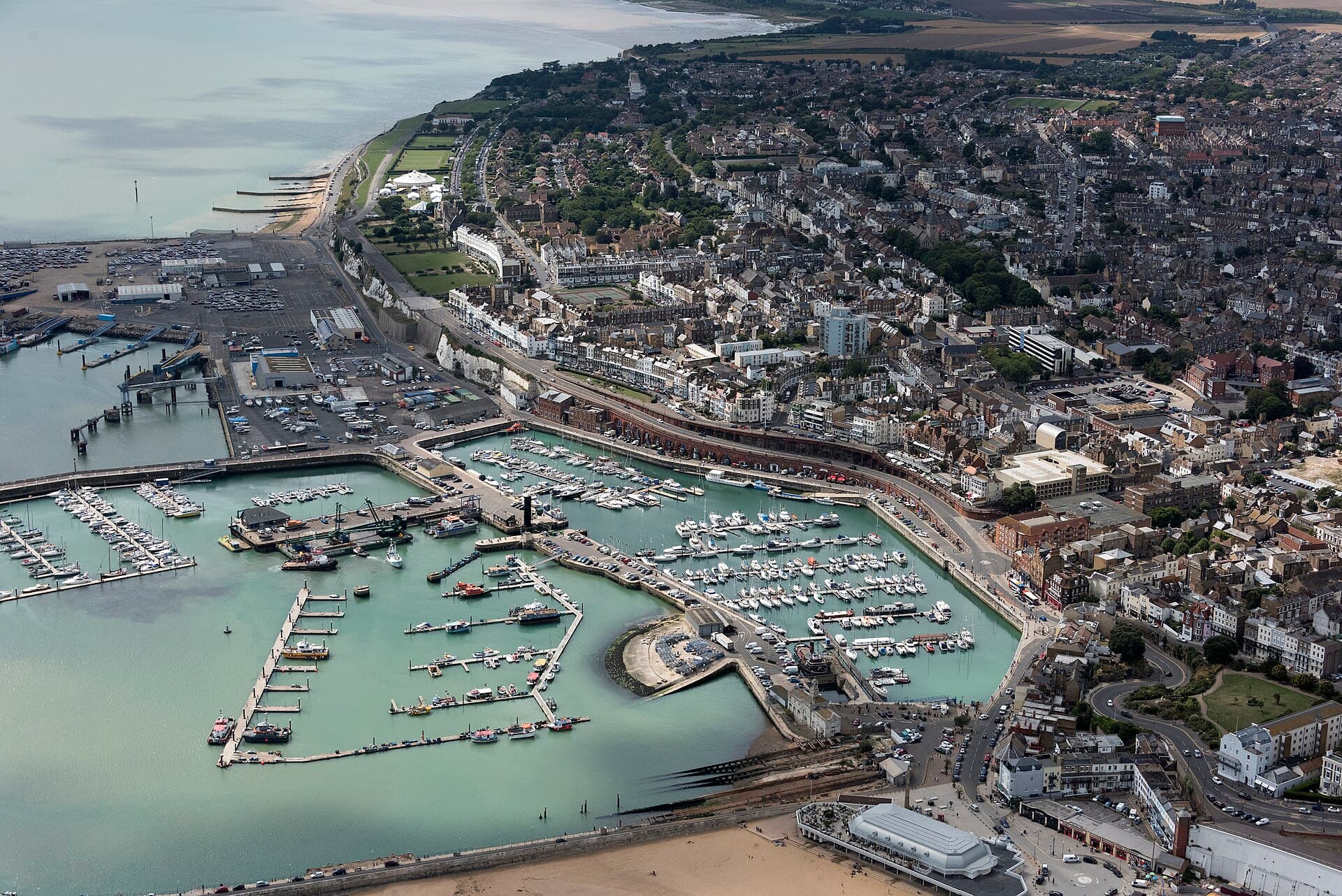 John Fielding from Norwich, UK / CC BY 2.0, via Wikimedia Commons
Self-guided audio walking tour of Ramsgate — GPS route, offline playback, story-driven narration in 32 languages.
“Where Georgian grandeur meets wartime grit and the sea murmurs forgotten stories.”
Not the postcards. The stories even locals don't know — whispered in your ear, right where they happened.
Ramsgate holds a singular distinction among British ports, a title granted by a monarch impressed by local generosity.
Beneath the sunlit avenues of Ramsgate lies an expansive, concealed city that once sheltered thousands during conflict.
There is a particular location in Ramsgate that once observed its own distinct time, slightly ahead of the rest of the nation.
Discover every secret of Ramsgate
Every address, every reveal in full — in your ear, right where it happened.
You pick your stops. You walk. The voice reveals what the others miss.

Your self-guided audio tour of Ramsgate is ready — pick your landmarks, choose your language, and start the moment you arrive.
BuyLume has a built-in augmented-reality guide. Hold your phone up and its camera shows the street ahead of you, with a glowing arrow laid over the real view that always points to your next stop — no map to puzzle over, no wrong turns. Like everything in Lume, it works fully offline.
Ramsgate, on England's southeastern coast, is a town where layers of history are visible at every turn, from its singular Royal Harbour to the subterranean wartime tunnels. It is a place that gracefully combines maritime heritage with an evolving cultural scene. With its golden sandy beaches and dramatic chalk cliffs, Ramsgate offers both serene coastal beauty and a captivating glimpse into Britain's past.
Beyond the picturesque harbour, the town uncovers a rich collection of stories, from royal visits that bestowed unique titles to the architectural legacy of a Gothic Revival master. Its closeness to mainland Europe has shaped its identity, making it a crucial embarkation point during conflicts and a recipient of varied influences.
Today, Ramsgate invites exploration, whether you are drawn to its historic architecture, eager to delve into its underground secrets, or simply wish to absorb the continental atmosphere in one of its many waterfront cafes. It is a destination that continues to surprise and engage, offering a distinct blend of relaxation and discovery.
Ramsgate began its existence as a modest fishing and farming hamlet, first appearing in historical records between 1274 and 1275 as 'Ramisgate' or 'Remmesgate.' This name, derived from the Anglo-Saxon 'Hræfn's geat,' literally translates to 'raven's cliff gap.' The town's early history is also marked by significant landings; legendary mercenaries Hengest and Horsa are said to have landed here in the 5th century, ushering in the pagan Anglo-Saxon age, followed by St. Augustine in 597 AD, who re-established Christianity in England.
Ramsgate's modern form largely developed from 1749 onwards, initially conceived as a 'Harbour of Refuge' following a violent storm in 1748 that wrecked ships along the treacherous Goodwin Sands. This ambition led to the construction of its defining harbour, a monumental project completed around 1850. Its strategic location near mainland Europe meant Ramsgate played a pivotal role in military history, serving as a chief embarkation point during the Napoleonic Wars. Many of Ramsgate's streets, including Military Road, still bear names commemorating this period.
In 1821, Ramsgate received its most prestigious honor when King George IV, impressed by the town's hospitality during his departure for Hanover, decreed it a 'Royal Harbour' – a unique distinction in mainland Britain. This royal seal of approval further boosted the town's appeal, which was already growing due to the 18th-century enthusiasm for sea-bathing. By the 1820s, Ramsgate became a fashionable resort, drawing notable visitors such as the future Queen Victoria, who even acquired the acclaimed painting 'Ramsgate Sands' as a remembrance of her happy childhood stays. The arrival of the railway in 1846 further cemented Ramsgate's status as a popular destination, bringing increasing numbers of visitors to its shores.
Ramsgate's closeness to Europe meant it was again on the front line during both World Wars. During WWI, it was heavily bombed by Zeppelin airships. In October 1939, the Royal Navy established a Coastal Forces base, HMS Fervent, in Ramsgate, which operated until September 1945. Most notably, in May 1940, Ramsgate Harbour became the main assembly point for the 'Little Ships' of Operation Dynamo, evacuating nearly 43,000 troops from Dunkirk. To protect its residents during WWII air raids, an expansive network of underground tunnels was constructed, creating an underground city capable of sheltering thousands, which proved vital during devastating attacks like the 'Murder Raid' of August 1940.
Beyond its wartime history, Ramsgate possesses a rich architectural heritage, with over 900 listed buildings. The town is particularly notable for its Regency and Victorian structures, including the elegant Wellington Crescent and the works of Augustus Pugin, the influential Gothic Revival architect. Pugin constructed his home, The Grange, and St Augustine's Church in Ramsgate, leaving an extraordinary legacy that can be explored on the free Pugin Town Trail. In July 2024, the harbour was further recognized as a Heritage Harbour, safeguarding its future and celebrating its enduring maritime significance.
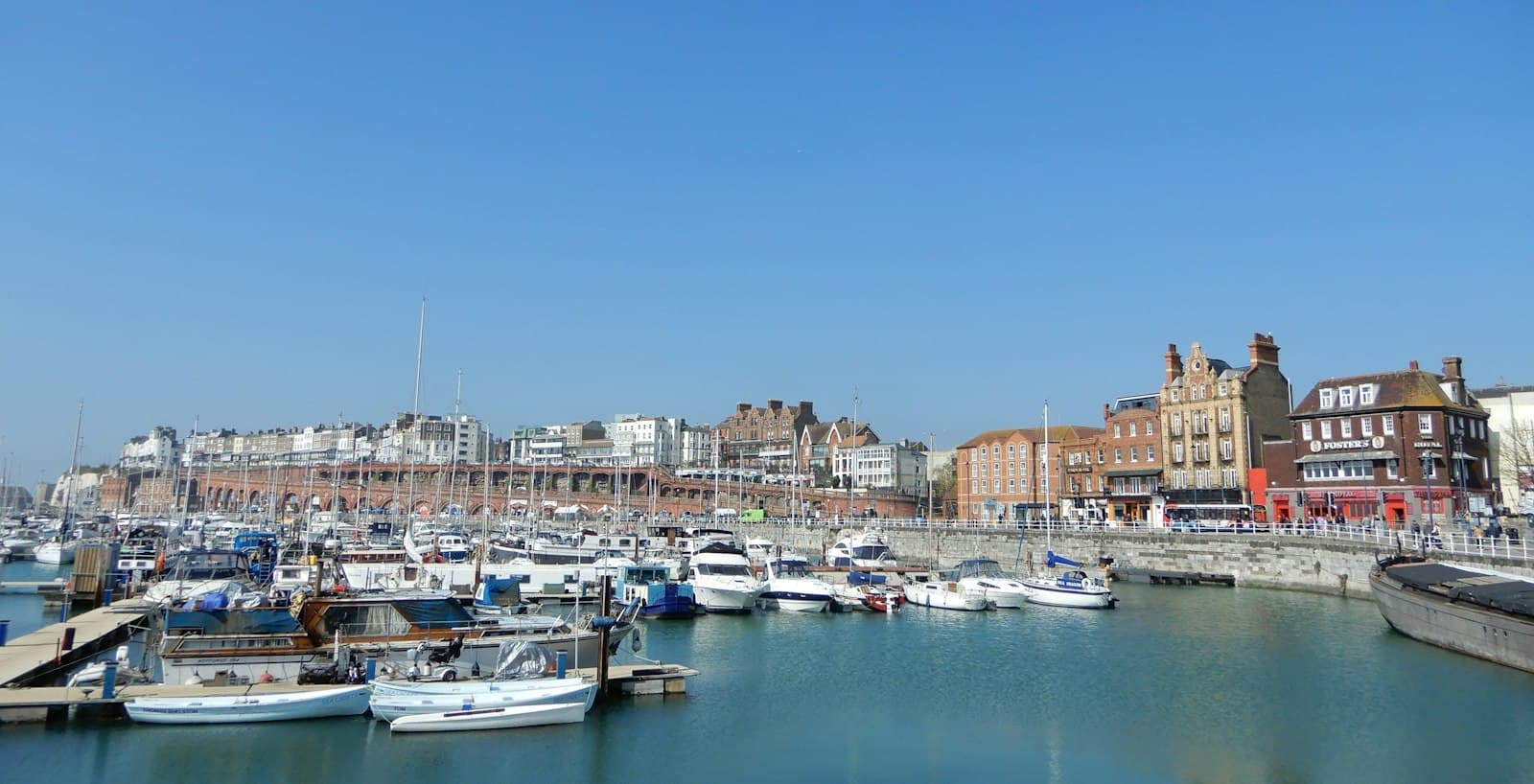
Ramsgate offers a captivating array of sights, starting with its Royal Harbour, the UK's only such designated port. Stroll along the active marina, admire the yachts, and take in the Georgian and Victorian architecture that frames the waterfront. Do not overlook the historic Clock House, home to the Ramsgate Maritime Museum (currently temporarily closed) and the distinctive Ramsgate Meridian.
Delve into the town's wartime past with a visit to the Ramsgate Tunnels. This extensive underground network, originally a railway tunnel, served as a civilian air-raid shelter during WWII, becoming an underground city for thousands. Guided tours offer a poignant and fascinating insight into this concealed history.
For architectural enthusiasts, explore the legacy of Augustus Pugin, the celebrated Gothic Revival architect. Visit The Grange, his former home, and the magnificent St Augustine's Church, both significant examples of his work. A free Pugin Town Trail guides you through these and other important sites.
Relax on Ramsgate Main Sands, a wide expanse of golden sand ideal for families, or explore the quieter Western Undercliff Beach. Take a walk along the cliff-top promenades, such as Madeira Walk, for expansive views over Pegwell Bay. Other points of interest include the Italianate Glasshouse, King George VI Memorial Park, and the Micro Museum. You can also explore the independent shops, galleries, and bars situated within the red-brick Victorian arches alongside the harbour.
Ramsgate is a year-round destination, but the most pleasant time to visit for warm-weather activities and beach enjoyment is from late June to early September. July and August generally offer the most comfortable weather for exploring, with average daytime highs around 21°C (70°F). Lifeguards are on duty at the main beaches during the summer months. Spring (March to May) and autumn (September and October) can also be delightful for outdoor activities like hiking and cycling, with fewer crowds and pleasant temperatures.
Ramsgate is readily accessible by both road and rail. High-speed trains from London St Pancras can reach Ramsgate in approximately 75 minutes, while slower, more scenic routes are available from London Victoria and Charing Cross (around 2 hours). If driving, Ramsgate is about 1 hour 45 minutes from London via the M2 and A299, with parking available around town. Local bus services operate frequently throughout Ramsgate, making it easy to navigate the town on foot or by public transport. For those arriving from mainland Europe, the Eurotunnel from Calais to Folkestone is a convenient option, followed by a 50-minute drive to Ramsgate.
Accommodation options range from hotels and B&Bs to guesthouses. Dining by the sea is a quintessential Ramsgate experience, with many restaurants offering fresh seafood and alfresco dining with harbour views. Do not miss trying traditional fish and chips. The town also has a variety of cafes, pubs, and international cuisine.
Ramsgate in Korean, in Chinese or in Hebrew — and 29 more languages, every stop narrated by a native voice. The widest language range of any self-guided audio tour.
Available in: