Iglesia de Notre-Dame
Observa de cerca la fachada de la Iglesia de Notre-Dame y notarás una elección arquitectónica deliberada que cuenta una poderosa historia.
La historia completa se desbloquea en el tour
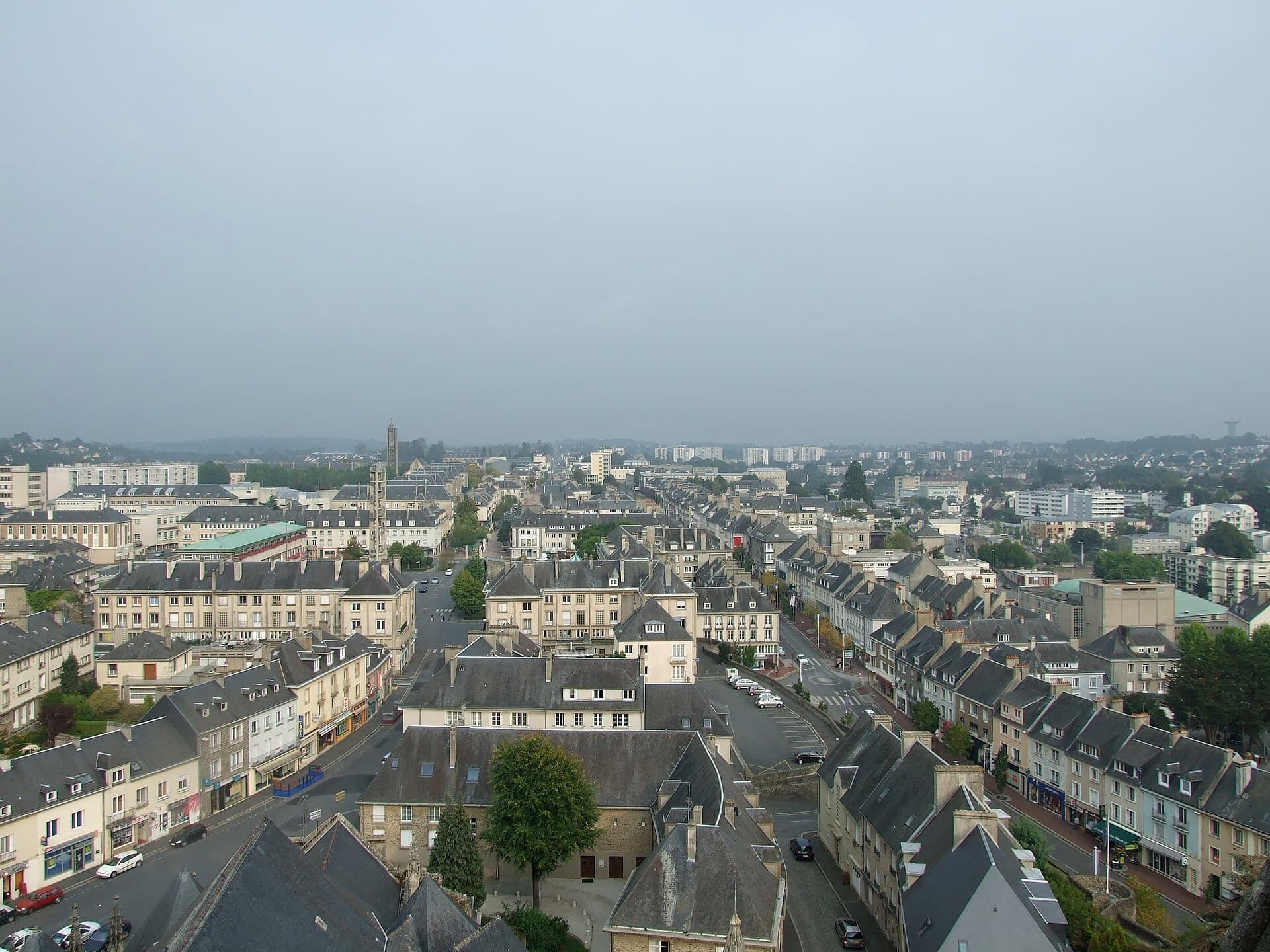 N. Lenoir / CC BY-SA 3.0, via Wikimedia Commons
Tour de audio autoguiado de Saint-Lô — ruta GPS a pie, reproducción offline, narración en 32 idiomas.
“Saint-Lô: Donde la resiliencia está grabada en piedra y espíritu.”
No las postales. Las historias que ni los locales conocen — al oído, justo donde ocurrieron.
Observa de cerca la fachada de la Iglesia de Notre-Dame y notarás una elección arquitectónica deliberada que cuenta una poderosa historia.
Las antiguas murallas de Saint-Lô, que datan de Carlomagno, ofrecían más que solo protección contra los invasores.
Napoleón I estableció la primera yeguada en Saint-Lô en 1806, pero su ubicación inicial podría sorprenderte.
Descubre todos los secretos de Saint-Lô
Cada dirección, cada revelación al completo — a tu oído, justo donde ocurrió.
Eliges tus paradas. Caminas. La voz te revela lo que los demás ignoran.


Tu tour de audioguía por Saint-Lô te espera — elige tus lugares, tu idioma y empieza al llegar.
ComprarLume incluye una guía de realidad aumentada. Levanta el móvil y su cámara muestra la calle que tienes delante, con una flecha luminosa sobre la imagen real que siempre apunta a tu próxima parada — sin mapas que descifrar, sin giros equivocados. Como todo en Lume, funciona completamente sin conexión.
Saint-Lô, la prefectura del departamento de la Mancha en Normandía, Francia, es una ciudad que encarna la resiliencia. A menudo conocida como la "Capital de las Ruinas" después de su casi total destrucción durante la Segunda Guerra Mundial, Saint-Lô ha experimentado una notable transformación, resurgiendo de los escombros para convertirse en un símbolo de la reconstrucción de posguerra y la identidad normanda moderna. Aunque puede que no posea la grandeza medieval de algunos de sus vecinos normandos, Saint-Lô ofrece una mezcla única de historia conmovedora, arquitectura modernista y una próspera cultura ecuestre.
Situada en un promontorio rocoso con vistas al río Vire, la ubicación estratégica de Saint-Lô en un importante cruce de caminos ha moldeado su destino a lo largo de la historia. Hoy en día, sirve como una excelente base para explorar la región más amplia de Normandía, incluidas las playas del desembarco del Día D y el icónico Mont-Saint-Michel, al tiempo que proporciona una experiencia normanda menos concurrida y más auténtica. Ya sea que te atraiga su pasado bélico, su herencia ecuestre o simplemente busques un retiro tranquilo, Saint-Lô invita a los visitantes curiosos a descubrir sus capas de historia y abrazar su encanto contemporáneo.
Más allá de su importancia histórica, Saint-Lô también es reconocida como uno de los centros líderes de Francia para la cría y el entrenamiento de caballos. El compromiso de la ciudad con sus raíces ecuestres es evidente en su famoso Haras Nacional, que alberga numerosos eventos y exhibe la larga tradición francesa de cría de caballos. Esta combinación de una poderosa narrativa histórica y una próspera identidad moderna convierte a Saint-Lô en un destino atractivo para aquellos que buscan una comprensión más profunda del espíritu perdurable de Normandía.
Los orígenes de Saint-Lô se remontan a la época galorromana, cuando era conocida como Briovera. La ciudad fue posteriormente rebautizada en honor a San Laud, un obispo de Coutances del siglo VI. Su posición estratégica en un espolón rocoso con vistas al río Vire la convirtió en un importante centro económico en la Edad Media, conocida por el cuero, los textiles y la orfebrería. A Carlomagno se le atribuye la construcción de las primeras fortificaciones alrededor del año 800 d.C. para proteger la ciudad de las invasiones vikingas. A pesar de estas primeras defensas, los vikingos asediaron Saint-Lô en 889, cortando su suministro de agua y llevando a la rendición de la ciudad. A lo largo de los siglos, las defensas de madera fueron reemplazadas por robustas murallas de piedra que, para el siglo XII, formaban una estructura defensiva crucial. La ciudad desempeñó un papel en la conquista de Inglaterra y, después de 1204, pasó a formar parte de Francia. Durante un período de paz, Saint-Lô floreció, convirtiéndose en la tercera ciudad más grande de Normandía después de Ruan y Caen, e incluso acuñó sus propias monedas hasta 1693.
El papel fundamental de Saint-Lô como centro de transporte, con carreteras que conectaban con destinos clave en toda Normandía, la convirtió en un objetivo estratégico durante la Segunda Guerra Mundial. Tras los desembarcos del Día D el 6 de junio de 1944, las fuerzas estadounidenses tenían como objetivo capturar Saint-Lô como un objetivo interior crucial. Los bombardeos aliados el 6 y 7 de junio de 1944, y durante una semana después, causaron una inmensa destrucción, con hasta el 95% de los edificios de la ciudad reducidos a escombros. Los feroces combates, particularmente la "batalla de los setos", vieron a las fuerzas estadounidenses, incluidas las divisiones de infantería 29 y 35, luchar contra la resistencia alemana durante semanas. La ciudad fue finalmente liberada por las tropas estadounidenses el 18 de julio de 1944, una victoria que allanó el camino para la Operación Cobra, el avance aliado desde la cabeza de playa de Normandía.
El costo humano fue asombroso, con altas bajas militares y civiles. La devastación le valió a Saint-Lô el sombrío apodo de "La Capital de las Ruinas", una frase popularizada por el escritor Samuel Beckett. En reconocimiento a su sufrimiento, Saint-Lô fue condecorada con la Legión de Honor y la Cruz de Guerra en 1948.
La reconstrucción de Saint-Lô después de la guerra fue un esfuerzo monumental, que comenzó en 1948. La revitalización de la ciudad estuvo influenciada por los principios arquitectónicos modernistas, con el objetivo de crear un entorno urbano funcional y estéticamente agradable que combinara su doloroso pasado con un futuro prometedor. Hoy, Saint-Lô se erige como un testimonio de renovación, honrando su historia mientras abraza su identidad como la capital ecuestre de Francia. La ciudad reconstruida presenta una mezcla de hitos históricos y estructuras modernas, lo que refleja su viaje desde la devastación hasta un próspero centro cultural y administrativo.
Comience su exploración en la Iglesia de Notre-Dame, una obra maestra gótica que data de finales del siglo XIII. Aunque gravemente dañada en la Segunda Guerra Mundial, su sensible restauración, incluida una distintiva fachada de esquisto verde en la torre norte, sirve como un poderoso memorial. No se pierda el púlpito gótico exterior, que Victor Hugo dibujó y ayudó a salvar de la demolición. Junto a la iglesia se encuentran las Murallas de Saint-Lô, antiguas fortificaciones con orígenes que se remontan a Carlomagno. Camine por estas históricas murallas para disfrutar de vistas panorámicas del río Vire y el campo circundante desde la Tour des Beaux Regards.
Para los entusiastas de la equitación, el Haras Nacional de Saint-Lô es una importante yeguada nacional, establecida por Napoleón I. Es un centro para la cría, el entrenamiento y los eventos de caballos, incluido el Normandy Horse Show. Las visitas guiadas ofrecen una visión de la tradición ecuestre de Francia. El Musée des Beaux-Arts (Museo de Bellas Artes) alberga una colección de pinturas, esculturas y artes decorativas, incluida una sección dedicada a Saint-Lô durante la Segunda Guerra Mundial, con fotografías y artefactos que documentan la destrucción y reconstrucción de la ciudad. Otros sitios incluyen el Memorial al Martirio de Saint-Lô, que honra a las víctimas civiles de los bombardeos de 1944, y el Memorial Americano, que rinde homenaje a las fuerzas estadounidenses que liberaron la ciudad. Para una perspectiva diferente sobre el costo humano de la guerra, el Cementerio Militar Alemán de Marigny, cerca de Saint-Lô, alberga las tumbas de más de 11.000 soldados alemanes.
Saint-Lô es un destino que se puede disfrutar durante todo el año, pero el clima más agradable para actividades al aire libre suele ser de junio a septiembre. Durante estos meses, las temperaturas diurnas oscilan entre 20°C y 23°C (68°F y 73°F), con días más largos y soleados, alcanzando su punto máximo en junio con un promedio de 7,2 horas de sol. La primavera (mayo) y el otoño ofrecen condiciones agradables con menos multitudes y hermosos colores estacionales. Aunque los inviernos son más fríos, con máximas diurnas alrededor de 9°C (48°F) y mínimas nocturnas alrededor de 4°C (39°F), las decoraciones festivas y los mercados pueden añadir encanto a una visita más tranquila. La lluvia es generalmente más alta en diciembre y más baja en agosto.
Saint-Lô está bien conectada y es accesible, lo que hace que viajar sea relativamente sencillo. Se puede llegar a la ciudad en tren desde los principales centros como París (vía Lison o Bayeux) y Caen, con enlaces directos también disponibles a Coutances y Granville. Si bien viajar en tren es conveniente, conducir ofrece mayor flexibilidad para explorar el campo normando circundante y los sitios históricos. La ciudad está aproximadamente a 3 horas de París y a 1 hora de Caen tanto en tren como en coche.
Dentro de Saint-Lô, hay un servicio de autobús disponible para el transporte urbano, y el alquiler de bicicletas ofrece una forma agradable de explorar la ciudad y sus vías verdes. La Oficina de Turismo de Saint-Lô es un recurso valioso para mapas, información local y orientación sobre atracciones y eventos. Para aquellos interesados en una exploración prolongada, la ubicación central de Saint-Lô la convierte en una base ideal para excursiones de un día a lugares como Bayeux (40 minutos), las playas del desembarco del Día D (menos de 1 hora), Granville (1 hora) y Mont-Saint-Michel (1,5 horas).
Saint-Lô en coreano, en chino o en hebreo — y 29 idiomas más, cada parada narrada por una voz nativa. La mayor variedad de idiomas de cualquier audioguía autoguiada.
Disponible en: