The name 'Saint-Vaast-la-Hougue'
The distinctive name of this coastal town is more than just French; it carries a linguistic echo from a powerful historical presence.
Full story unlocks in the tour
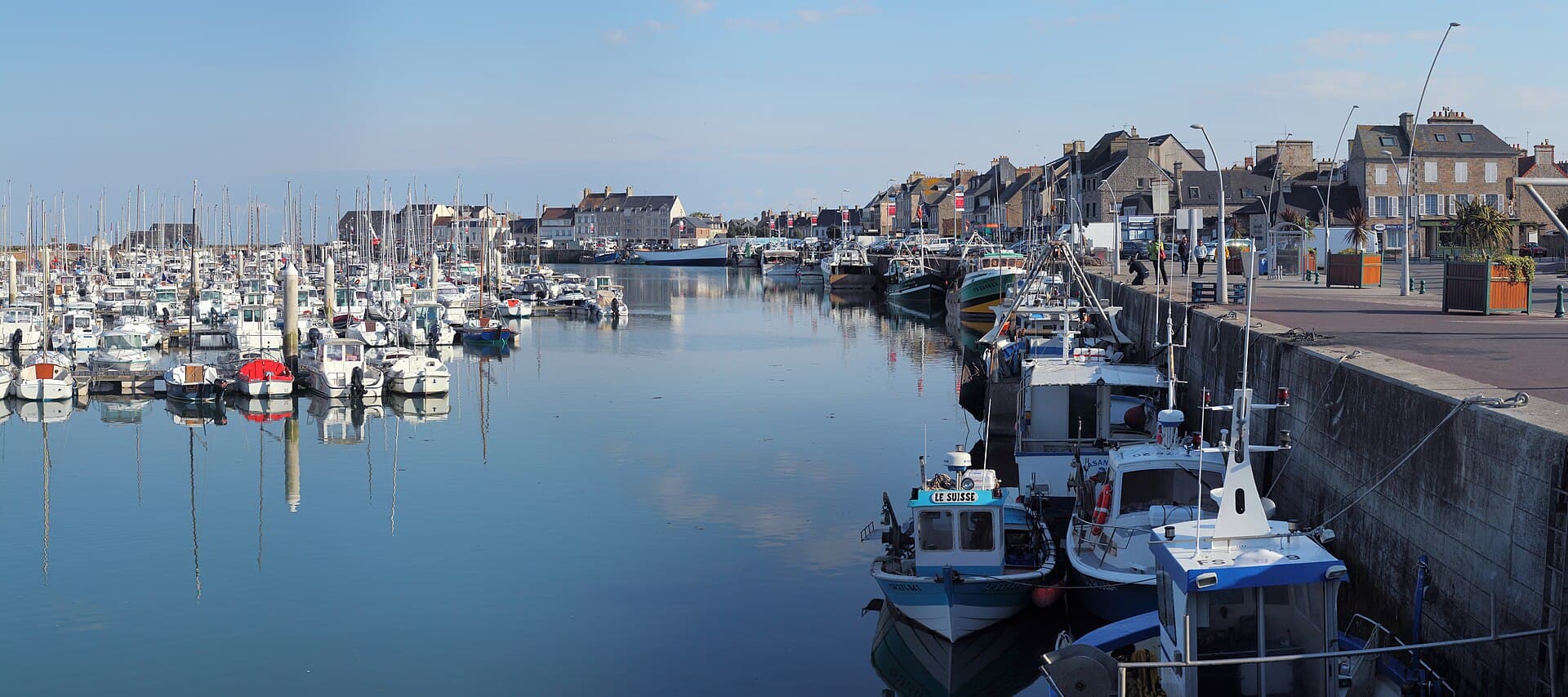 Benh LIEU SONG / CC BY-SA 3.0, via Wikimedia Commons
Self-guided audio walking tour of Saint-Vaast-la-Hougue — GPS route, offline playback, story-driven narration in 32 languages.
“Where the sea's rhythm unveils history and oysters speak of the coast.”
Not the postcards. The stories even locals don't know — whispered in your ear, right where they happened.
The distinctive name of this coastal town is more than just French; it carries a linguistic echo from a powerful historical presence.
Journeying to Tatihou Island offers two distinct paths, one of which is entirely governed by the moon's pull and the sea's ebb.
Beyond its reputation for local delicacies, a particular establishment in Saint-Vaast-la-Hougue gathers a surprising array of goods under one roof.
Discover every secret of Saint-Vaast-la-Hougue
Every address, every reveal in full — in your ear, right where it happened.
You pick your stops. You walk. The voice reveals what the others miss.


Your self-guided audio tour of Saint-Vaast-la-Hougue is ready — pick your landmarks, choose your language, and start the moment you arrive.
BuyLume has a built-in augmented-reality guide. Hold your phone up and its camera shows the street ahead of you, with a glowing arrow laid over the real view that always points to your next stop — no map to puzzle over, no wrong turns. Like everything in Lume, it works fully offline.
Saint-Vaast-la-Hougue is a picturesque fishing and sailing village situated on the northeast tip of the Cotentin peninsula in Normandy, France. This appealing commune, with an estimated population of approximately 1,648 in 2023, functions as a significant fishing port in Lower Normandy and a recognized oyster farming center. Its temperate climate and strategic position have established it as a favored seaside resort, drawing visitors with its maritime heritage and the allure of the nearby Tatihou Island.
In 2019, Saint-Vaast-la-Hougue was honored as 'France's Favorite Village' in a national competition, a testament to its enduring appeal. The town is particularly known for its two grand Vauban towers, which stand as UNESCO World Heritage sites, safeguarding the bay and offering a glimpse into its eventful past. Whether wandering along the active port, exploring the historic fortifications, or savoring the acclaimed local oysters, Saint-Vaast-la-Hougue provides a rich sensory experience that interweaves history, culture, and the rhythms of the sea.
The land surrounding Saint-Vaast-la-Hougue bears a long record of human presence, with archaeological digs at the Fort de la Hougue uncovering evidence from the Mousterian period, dating back between 100,000 and 35,000 years BC. This Middle Paleolithic era witnessed the crafting of diverse stone tools from flint flakes.
In 896, the Norman hero Rollon, regarded as the first Duke of Normandy, established his headquarters in Saint-Vaast-la-Hougue. The town played a role in medieval conflicts, providing twelve warships during the War of Aquitaine in 1296. In 1340, during the Battle of Sluys, several vessels from La Hougue were lost. A pivotal event during the Hundred Years' War was the landing of King Edward III of England with 30,000 men on July 13, 1346, guided by Geoffroy d'Harcourt.
The 17th century brought a defining moment in Saint-Vaast-la-Hougue's chronicle with the Battle of La Hougue in June 1692. Following this defeat of Louis XIV's ships by the Anglo-Dutch fleet, the imperative for coastal defense became paramount. Sébastien Le Prestre de Vauban, Louis XIV's celebrated military engineer, recognized the strategic importance of Saint-Vaast's bay, declaring it 'the best and safest in the kingdom.' In 1693, Vauban urgently requested the construction of two defensive towers to protect the anchorage, with work commencing in 1694 under his student, Benjamin de Combes. These truncated-conical towers, one on the mainland at La Hougue and the other on Tatihou Island, were designed to cross their fires and deter any landings. Rising 20 meters high, they were constructed with observation, sea firing, and signal communication in mind, and were self-sufficient, capable of enduring a siege. In 2008, these two Vauban towers were added to the UNESCO World Heritage List as part of the 'Fortifications of Vauban' network.
Saint-Vaast-la-Hougue offers a blend of maritime appeal and historical significance. The most prominent attractions are the Vauban Towers, one on the mainland at La Hougue and the other on Tatihou Island. These 17th-century fortifications are UNESCO World Heritage sites and provide insights into past military engineering. You can reach Tatihou Island via an amphibious boat, or, at low tide, even walk across the seabed. On the island, explore the botanical garden, the ornithological observatory, and the maritime museum. Back on the mainland, wander along the port de plaisance, which accommodates 700 boats, and observe the activity of one of Lower Normandy's most important fishing ports. The Chapel of the Sailors, an emotional Romanesque chapel dedicated to those lost at sea, is located at the end of Quai Tourville. Observe the oyster beds, visible at low tide, showcasing the town's active oyster farming. For a distinctive shopping experience, visit Maison Gosselin, a historic establishment offering local delicacies and more.
The ideal time to visit Saint-Vaast-la-Hougue for general outdoor activities is from late June to early September, with a peak in late July. During this period, the weather is typically clear and dry, with perceived temperatures between 65°F and 80°F (18°C and 27°C). July generally experiences mild temperatures ranging from 59°F to 67°F (15°C to 19°C), with August being the warmest month. The clearest skies are often present in July. The 'Traversées Tatihou' festival, featuring Celtic music, occurs in August. The 'Festival de Chants Marins' (Sea Shanty Festival) is held on Pentecost weekend.
Saint-Vaast-la-Hougue is readily accessible by car, though it does not possess its own airport. The closest major airport is Caen-Carpiquet Airport (CFR), approximately 75 km distant. Other nearby airports include Jersey Airport (JER) and Le Havre - Octeville Airport (LEH). From major cities like Paris, you can reach Saint-Vaast-la-Hougue by combining train and bus travel. Upon arrival in town, free car parks are available at the harbor for those visiting Tatihou Island. The town itself is compact enough to explore on foot, with many attractions within walking distance. For dining, Saint-Vaast-la-Hougue offers a variety of restaurants, many specializing in fresh seafood and local Norman cuisine, including the celebrated oysters. Options range from traditional bistros to restaurants with sea views. Consider trying 'Le Débarcadère' for generous cuisine or 'L'Estran' for creative dishes.
Saint-Vaast-la-Hougue in Korean, in Chinese or in Hebrew — and 29 more languages, every stop narrated by a native voice. The widest language range of any self-guided audio tour.
Available in: