Plumpungan Stone Inscription
Salatiga's precise birthdate is etched in stone, but the story behind its tax-free status reveals a fascinating ancient pact.
Full story unlocks in the tour
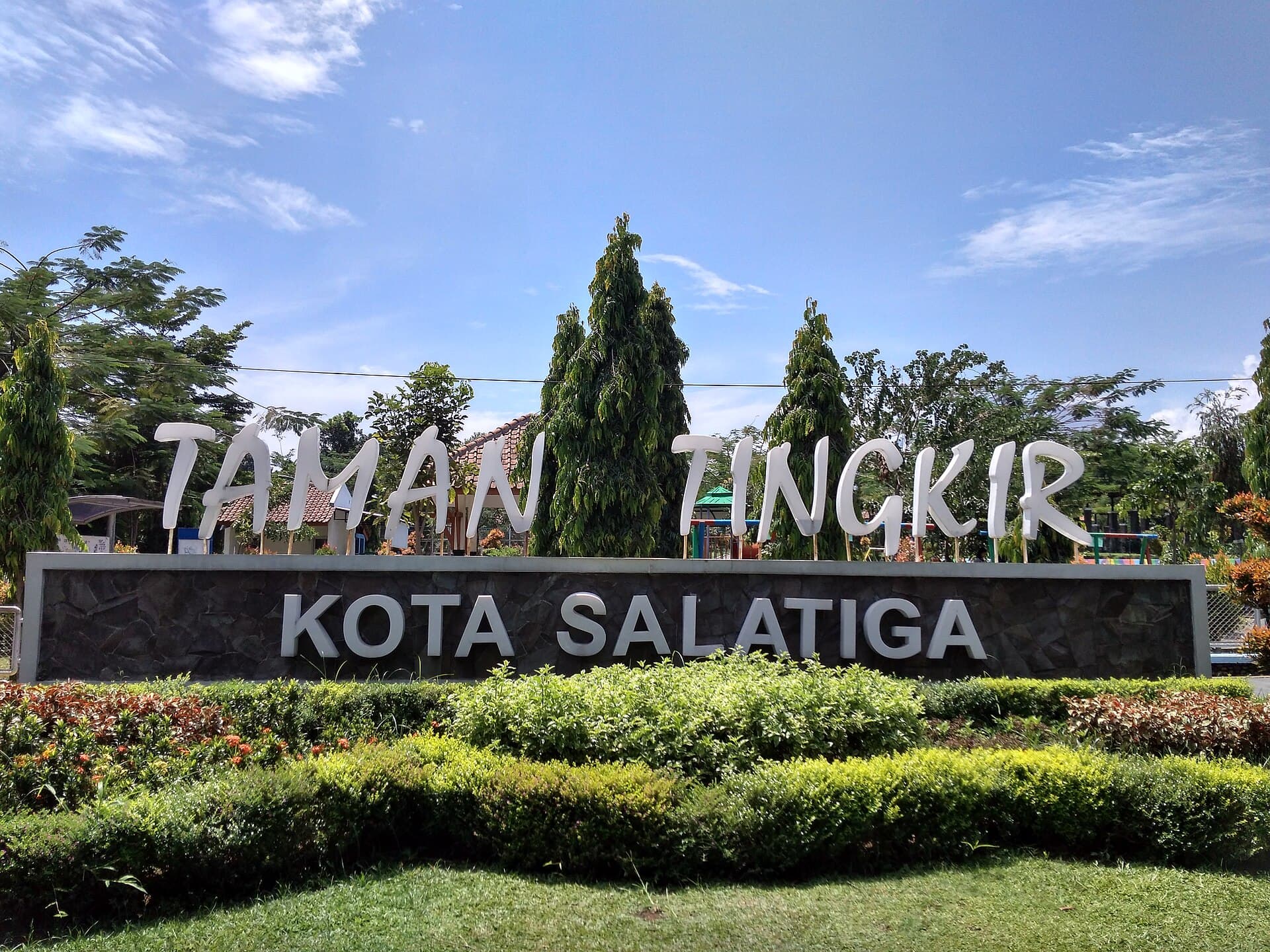 Fandy Aprianto Rohman / CC BY-SA 4.0, via Wikimedia Commons
Self-guided audio walking tour of Salatiga — GPS route, offline playback, story-driven narration in 32 languages.
“Where ancient legends meet cool mountain air and colonial charm.”
Not the postcards. The stories even locals don't know — whispered in your ear, right where they happened.
Salatiga's precise birthdate is etched in stone, but the story behind its tax-free status reveals a fascinating ancient pact.
The city's name holds two intriguing origin stories, one divine and one decidedly more human—and a little mischievous.
During the colonial era, Salatiga earned a beautiful nickname, but its architectural charm wasn't just about aesthetics; it was a deliberate adaptation.
Discover every secret of Salatiga
Every address, every reveal in full — in your ear, right where it happened.
You pick your stops. You walk. The voice reveals what the others miss.


Your self-guided audio tour of Salatiga is ready — pick your landmarks, choose your language, and start the moment you arrive.
BuyLume has a built-in augmented-reality guide. Hold your phone up and its camera shows the street ahead of you, with a glowing arrow laid over the real view that always points to your next stop — no map to puzzle over, no wrong turns. Like everything in Lume, it works fully offline.
Salatiga, a city in Central Java, Indonesia, offers a refreshing escape with its cool mountain air and sweeping views at the foot of Mount Merbabu and Mount Telomoyo. Often referred to as 'Little Holland' during the colonial era, it retains a unique blend of historical architecture and verdant natural landscapes.
With a population of around 200,000, Salatiga is an important administrative center and a dynamic university town, particularly known for Satya Wacana Christian University. This creates a rare harmony between preserved historical buildings and a lively, diverse student population, making it an appealing destination for those seeking authentic Javanese culture, natural splendor, and a peaceful atmosphere.
Salatiga is an independent city enclaved within Semarang Regency, strategically situated between the larger cities of Semarang and Surakarta. Its elevated position, approximately 571 meters (1,873 feet) above sea level, contributes to its milder climate compared to other Javanese cities, making it a comfortable base for exploring Central Java.
## Ancient Origins and Royal Decrees Salatiga proudly claims its status as one of Indonesia's oldest cities, with its history deeply rooted in the Hindu-Buddhist kingdoms of Java. The city's official birthdate is recognized as July 24, 750 AD, a precise date derived from the Plumpungan Stone Inscription (Prasasti Plumpungan). This archaeological find records that a ruler named Bhanu granted the village of Hampra, located within modern-day Salatiga, the special status of "Sima," exempting it from royal taxes in exchange for maintaining a local religious complex. This early status established Salatiga as a significant religious and agrarian center, benefiting from the fertile volcanic soils and strategic position between inland principalities and the north coast.
## Colonial Influence and the "Garden City" The strategic importance of Salatiga was not lost on the Dutch East India Company (VOC), which built the De Hersteller fort in 1746 due to its location at the intersection of Semarang, Surakarta, and Magelang. The 19th century saw Salatiga transform into a center for coffee and rubber plantations. During the mid-19th century, its cool climate led to its development as a popular mountain resort, with European villas and a distinctive urban layout featuring wide boulevards and parks. The city earned the moniker "De Schoonste Stad van Midden-Java" (The Most Beautiful City in Central Java) for its blend of European comfort and tropical adaptation, characterized by the "Indische Empire" architectural style. On July 1, 1917, Salatiga officially gained municipality status (Stadsgemeente) with its own city council.
## Post-Independence and Modern Growth Following Indonesia's independence, Salatiga was confirmed as a city within Central Java province in 1950. A pivotal moment in its modern development was the founding of Satya Wacana Christian University (UKSW) on November 30, 1956, which transformed Salatiga into a significant student hub. In 1992, a government decree expanded the city's administrative status and territorial limits, incorporating surrounding districts to accommodate growth and strengthen its role as a regional trade center. More recently, the opening of the Semarang–Solo toll road section in 2017, including the scenic Gerbang Tol Salatiga exit, further integrated the city into the Trans-Java transport network, boosting its economic potential. Salatiga has also gained national recognition as one of Indonesia's most tolerant cities, a testament to its diverse population and harmonious coexistence.
Salatiga offers a blend of natural beauty, historical sites, and cultural experiences. For sweeping vistas, head to Mount Telomoyo, where you can hike or cycle for panoramic views of the surrounding landscapes. Another popular natural attraction is Rawa Pening Lake, a serene body of water perfect for relaxing boat rides and enjoying the calm atmosphere. Nearby, Bukit Cinta (Hill of Love) provides magnificent panoramic views of Rawa Pening Lake.
History enthusiasts can explore the Plumpungan Stone Inscription, the ancient artifact that marks Salatiga's founding. The city's colonial past is evident in structures like Gedung Nasional Salatiga, a historical building with significant architectural heritage. You can also visit the Ambarawa Railway Museum, which showcases a collection of antique steam locomotives and vintage train carriages. For a glimpse into religious diversity, Salatiga is home to various mosques, churches, and temples.
Do not miss the opportunity to immerse yourself in local life at Salatiga's traditional markets, such as Pasar Raya Salatiga, where you can find fresh produce, spices, traditional snacks, and handmade crafts. For unique souvenirs, look for batik, the traditional Indonesian fabric with intricate patterns.
Salatiga experiences a tropical climate with distinct wet and dry seasons. The dry season, from June to September, is generally considered the best time to visit for warm-weather activities and exploring the city without frequent rain. July and August are particularly ideal for clear skies and minimal precipitation, making them perfect for outdoor excursions like hiking Mount Merbabu. While the wet season (November to April) brings frequent rainfall, the city remains verdant and green, and the rains often offer a refreshing break from the daytime heat. Even in the dry season, evenings can be pleasantly cool, with nighttime temperatures around 20°C.
Salatiga is well-connected by road, making it accessible from nearby major cities like Semarang and Surakarta. While there are no commercial trains directly to Salatiga, public buses operate on long-distance routes to and from the city. The nearest airport is Semarang Achmad Yani (SRG), located approximately 26 miles from Salatiga.
Within the city, local transportation options include ride-hailing services, though it's helpful to have some Indonesian language skills to communicate with drivers due to potentially unreliable maps. For a more immersive experience, exploring local markets and major streets like Jalan Jenderal Sudirman or Jalan Diponegoro on foot or by local transport is recommended.
The local currency is the Indonesian Rupiah (IDR). While Salatiga may not be known for luxury resorts, it offers a range of accommodations and is generally considered safe. Embrace the local pace of life and try traditional Indonesian dishes at angkringan (street food carts) for an authentic culinary experience.
Salatiga in Korean, in Chinese or in Hebrew — and 29 more languages, every stop narrated by a native voice. The widest language range of any self-guided audio tour.
Available in: