Ayuntamiento de Schwabach
El Ayuntamiento de Schwabach, pieza central de la histórica plaza del mercado de la ciudad, guarda un secreto que va más allá de su fachada renacentista.
La historia completa se desbloquea en el tour
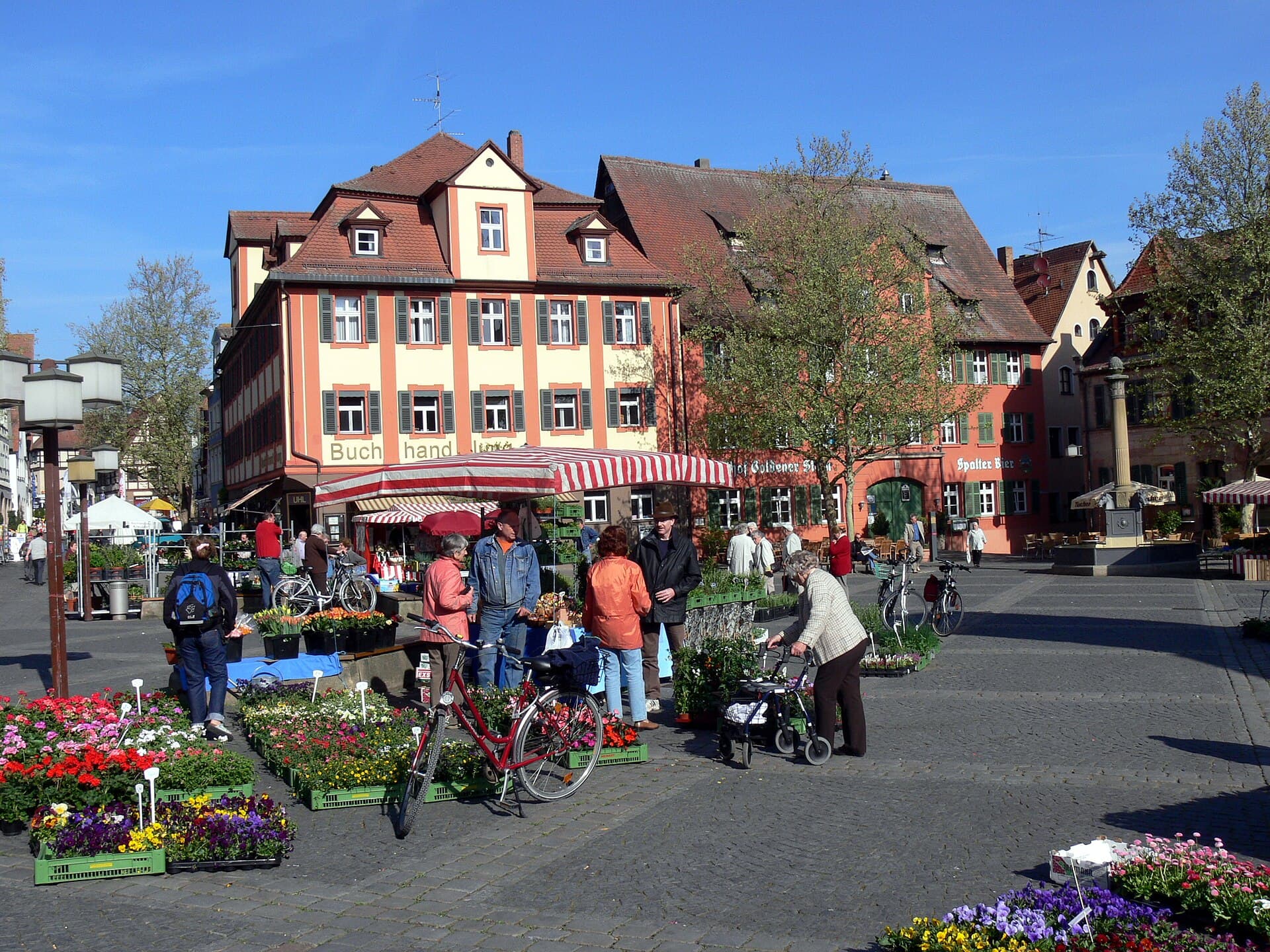 Wolfgang Sauber / CC BY-SA 3.0, via Wikimedia Commons
Tour de audio autoguiado de Schwabach — ruta GPS a pie, reproducción offline, narración en 32 idiomas.
“Schwabach: Donde la historia brilla con el resplandor perdurable del oro.”
No las postales. Las historias que ni los locales conocen — al oído, justo donde ocurrieron.
El Ayuntamiento de Schwabach, pieza central de la histórica plaza del mercado de la ciudad, guarda un secreto que va más allá de su fachada renacentista.
Más allá de sus exposiciones sobre la industria local, el Museo de la Ciudad de Schwabach salvaguarda una colección verdaderamente inesperada.
La 'Schöne Brunnen' (Fuente Hermosa) en la plaza del mercado de Schwabach, inaugurada en 1717, relata una historia más allá de sus figuras mitológicas.
Descubre todos los secretos de Schwabach
Cada dirección, cada revelación al completo — a tu oído, justo donde ocurrió.
Eliges tus paradas. Caminas. La voz te revela lo que los demás ignoran.

Tu tour de audioguía por Schwabach te espera — elige tus lugares, tu idioma y empieza al llegar.
ComprarLume incluye una guía de realidad aumentada. Levanta el móvil y su cámara muestra la calle que tienes delante, con una flecha luminosa sobre la imagen real que siempre apunta a tu próxima parada — sin mapas que descifrar, sin giros equivocados. Como todo en Lume, funciona completamente sin conexión.
Schwabach, una ciudad en la Franconia Media, Baviera, Alemania, despliega su narrativa a lo largo del río Schwabach. Esta comunidad, aunque de tamaño modesto, posee un legado significativo vinculado al arte de la producción de pan de oro, una industria que ha moldeado su identidad y apariencia durante siglos. Los visitantes que llegan aquí encuentran un lugar donde la arquitectura histórica y la habilidad artesanal se entrelazan, creando una atmósfera de tranquila dignidad.
El carácter de la ciudad está definido por su núcleo bien conservado, donde estructuras de diversas épocas se erigen como testimonios de su pasado. La presencia perdurable del oro, no solo como una nota histórica sino como una artesanía continua, otorga a Schwabach una luminosidad particular. Es un destino para aquellos que aprecian el sutil brillo de la tradición y los ecos tangibles de manos expertas en acción.
## Orígenes y Conexiones Imperiales Los orígenes de Schwabach se remontan al siglo VIII, con su primera mención en documentos históricos en 1117. Su posición estratégica a lo largo de las rutas comerciales contribuyó a su crecimiento temprano. En 1371, a Schwabach se le concedieron derechos de mercado, un paso crucial en su desarrollo como centro comercial. La afiliación de la ciudad con el Margraviato de Brandeburgo-Ansbach a partir del siglo XIV influyó profundamente en su trayectoria política y económica. Esta conexión trajo períodos de prosperidad, interrumpidos por los desafíos de diversos conflictos.
## El Auge de la Producción de Pan de Oro El siglo XVI marcó una era fundamental para Schwabach con el establecimiento de la producción de pan de oro. Esta artesanía especializada, que requería inmensa precisión y habilidad, se convirtió rápidamente en la industria definitoria de la ciudad. La técnica implicaba martillar pequeños trozos de oro hasta convertirlos en láminas increíblemente delgadas, utilizadas para dorar y con fines decorativos. La demanda de pan de oro en toda Europa, particularmente para iglesias, palacios y manuscritos iluminados, impulsó el motor económico de Schwabach. Generaciones de artesanos perfeccionaron este intrincado proceso, transmitiendo su experiencia y estableciendo la ciudad como un centro líder para este precioso material.
## Reforma y Resiliencia La Reforma impactó significativamente a Schwabach, como lo hizo en gran parte de Alemania. La ciudad adoptó el protestantismo, una decisión que reconfiguró su paisaje religioso y cultural. A pesar de las convulsiones de la Guerra de los Treinta Años en el siglo XVII, que trajo devastación a muchas partes de Europa, Schwabach demostró una notable resiliencia. Sus industrias establecidas, particularmente la producción de pan de oro, ayudaron en sus esfuerzos de recuperación y reconstrucción. La capacidad de la ciudad para reconstruir y mantener sus fundamentos económicos habla de la fuerza de su comunidad y sus perdurables artesanías.
## Era Moderna y Legado Duradero En el siglo XIX, con la disolución del Sacro Imperio Romano Germánico, Schwabach pasó a formar parte del Reino de Baviera. La revolución industrial trajo nuevos desafíos y oportunidades, pero la industria del pan de oro se adaptó, manteniendo su relevancia incluso a medida que evolucionaban los procesos de fabricación. Hoy en día, Schwabach sigue siendo un importante productor de pan de oro, un testimonio de siglos de tradición e innovación. La ciudad conserva cuidadosamente su patrimonio arquitectónico, permitiendo que su pasado informe su presente, invitando a los visitantes a observar los resultados tangibles de su larga e industriosa historia.
El Ayuntamiento de Schwabach, una estructura renacentista, ancla la plaza central del mercado con sus distintivas torres de tejado dorado, un guiño moderno a la perdurable artesanía de la ciudad. Cerca, la Stadtkirche St. Johannes und St. Martin presenta un sorprendente ejemplo de arquitectura gótica, con su interior que alberga tesoros artísticos y una sensación de tranquila contemplación.
Explore el Stadtmuseum Schwabach, donde las exposiciones detallan el patrimonio industrial de la ciudad, particularmente el intrincado proceso de producción de pan de oro. El museo también alberga una notable colección de huevos, que van desde piezas decorativas hasta especímenes raros. Un paseo por la Königsplatz (Plaza del Mercado) revela la 'Schöne Brunnen' (Fuente Hermosa), cuyos relieves están adornados con pan de oro local, reflejando la identidad de la ciudad. La Goldschlägerhaus, una casa de artesano histórica, ofrece una visión de la vida cotidiana y el trabajo de un batidor de oro.
Schwabach es agradable durante todo el año, pero los meses más cálidos, de mayo a septiembre, ofrecen las condiciones más atractivas para explorar la ciudad a pie. Durante este período, los eventos al aire libre y la cultura de los cafés son más frecuentes. Los meses de otoño traen una belleza suave, mientras que el invierno ofrece un encanto tranquilo, especialmente si hay una ligera capa de nieve.
Schwabach es fácilmente accesible en tren, con conexiones frecuentes a Núremberg, lo que la convierte en una excursión de un día fácil o una base conveniente para explorar la región. El centro de la ciudad es compacto y se explora mejor a pie, lo que permite a los visitantes apreciar su arquitectura y descubrir sus calles más pequeñas. Las opciones de alojamiento incluyen cómodos hoteles y casas de huéspedes. La gastronomía local ofrece especialidades de Franconia, con varios restaurantes y cafés que ofrecen platos y bebidas tradicionales. Se puede encontrar información sobre atracciones y eventos locales en la oficina de información turística cerca de la plaza del mercado.
Schwabach en coreano, en chino o en hebreo — y 29 idiomas más, cada parada narrada por una voz nativa. La mayor variedad de idiomas de cualquier audioguía autoguiada.
Disponible en: