The Corner Room
Before it became a cherished diner, this prominent corner building held a surprising connection to the wider world.
Full story unlocks in the tour
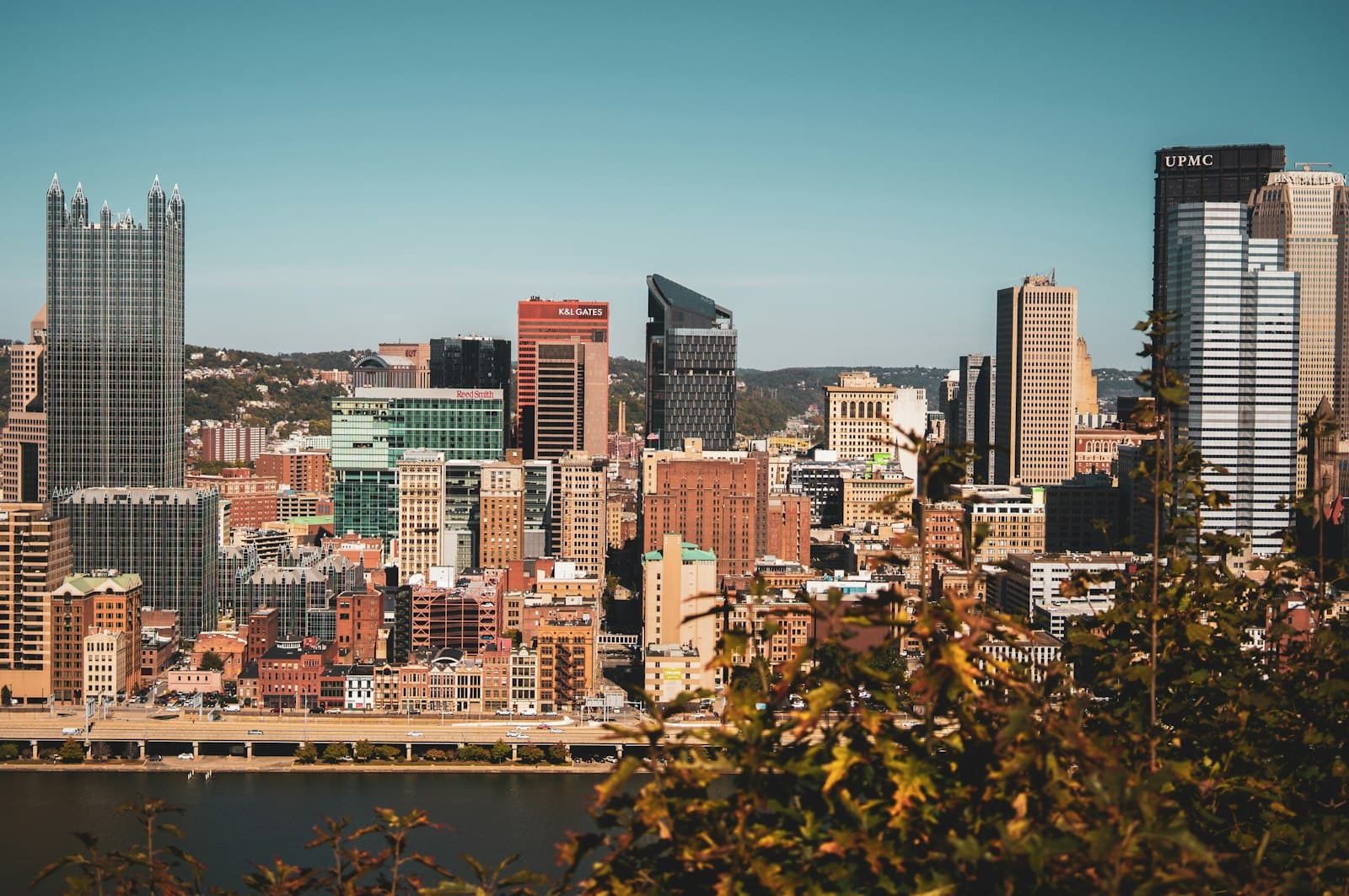 Photo: Eilis Garvey / Unsplash
Self-guided audio walking tour of State College — GPS route, offline playback, story-driven narration in 32 languages.
“Where academic ambition meets Appalachian character.”
Not the postcards. The stories even locals don't know — whispered in your ear, right where they happened.
Before it became a cherished diner, this prominent corner building held a surprising connection to the wider world.
The familiar blue and white were not always the university's chosen hues.
A nearby village lays claim to a significant national observance.
Discover every secret of State College
Every address, every reveal in full — in your ear, right where it happened.
You pick your stops. You walk. The voice reveals what the others miss.


Your self-guided audio tour of State College is ready — pick your landmarks, choose your language, and start the moment you arrive.
BuyLume has a built-in augmented-reality guide. Hold your phone up and its camera shows the street ahead of you, with a glowing arrow laid over the real view that always points to your next stop — no map to puzzle over, no wrong turns. Like everything in Lume, it works fully offline.
State College, Pennsylvania, frequently called "Happy Valley," is a lively borough in Centre County, known primarily as the seat of Pennsylvania State University. This distinct label, "Happy Valley," emerged during the Great Depression, when the expanding university helped shield the area from the severe economic hardships felt elsewhere in the country. The town and the university are profoundly intertwined, with the rhythms of campus life shaping much of the local culture and economy.
Beyond its academic core, State College offers a singular blend of small-town appeal and the diverse cultural experiences of a university community. Surrounded by farmland and the Appalachian Mountains, the area provides opportunities for outdoor recreation alongside its active downtown, which features a variety of shops, eateries, and entertainment venues. Whether drawn by the electric atmosphere of a Penn State football game or the serene beauty of the surrounding natural landscape, visitors will discover a dynamic and welcoming community.
State College's origins are distinct, not growing organically from a trading post or industrial center, but specifically around the establishment of an educational institution. In 1855, ironmaster James Irvin donated 200 acres of land around the Centre Furnace for the creation of the Farmers' High School of Pennsylvania. Despite its somewhat isolated location, the Nittany Valley was chosen for its fertile soil, rich in limestone. The school opened its doors to the first 69 students in 1859.
The settlement that developed around the college initially lacked official status. It was not until 1874, when the Agricultural College of Pennsylvania was renamed The Pennsylvania State College, that the surrounding area began to be commonly known as "State College." The community officially incorporated as a borough on August 29, 1896, driven by residents' desire for improved infrastructure like better streets, lighting, and schools. This incorporation was a significant step in the town's self-governance, with one of the first ordinances authorizing the erection of telephone lines.
Throughout the 20th century, State College continued to grow in tandem with the university. The Great Depression saw the area earn its enduring nickname, "Happy Valley," due to its economic stability compared to the rest of the country, largely thanks to the expanding university. In 1953, the college officially became The Pennsylvania State University. The post-World War II era brought significant expansion to both the university and the borough, with State College annexing land to accommodate its growth. While light industry emerged in the region, Penn State remained the primary economic driver. Today, State College retains its unique character, a blend of academic influence and local community spirit.
Begin your exploration at the core of State College: the Pennsylvania State University (Penn State) campus. Visit Old Main, the university's first significant building completed in 1863, and appreciate its architecture. Be sure to see the Nittany Lion Shrine, the second most photographed landmark in Pennsylvania, a key stop for any visitor. The Palmer Museum of Art, located on campus, offers free admission and a varied collection spanning from Asian ceramics to modern American paintings.
For a taste of local flavor, proceed to the Penn State Creamery, recognized as the largest university creamery in the United States, where you can sample their celebrated ice cream. Stroll through The Arboretum at Penn State, a beautiful collection of gardens that provides a tranquil escape with educational opportunities and a Children's Garden.
Beyond campus, ascend Mount Nittany, an iconic local landmark offering expansive views of the valley. For a truly singular experience, take a boat tour through Penn's Cave, America's only all-water cavern and wildlife park, located a short drive away in Centre Hall. Downtown State College provides a variety of shops, galleries, and restaurants, and is particularly active during events like the Central Pennsylvania Festival of the Arts in July.
The best time to visit State College for warm-weather activities and outdoor exploration is from mid-June to mid-September. During these months, average high temperatures are in the low 80s Fahrenheit, with the most sunshine of the year, making it ideal for hiking and other outdoor pursuits. July is particularly active, hosting the Central Pennsylvania Festival of the Arts. Fall, from September to November, is also a popular time, offering peak foliage in October, pleasant hiking weather, and the lively atmosphere of Penn State football season.
State College is accessible via major highways, though winter travel, especially on the US-322 "Seven Mountains" section, requires caution due to higher elevations and potentially worse road conditions than in the valley. University Park Airport (SCE) offers direct flights to major hubs like Chicago, Philadelphia, and Washington-Dulles, and is just minutes from downtown. For getting around town, the Centre Area Transportation Authority (CATA) operates an extensive bus service, which is free and covers most of the area. While downtown State College is very walkable, a car is recommended for exploring surrounding towns and state forests. Parking can be challenging, particularly on campus and during football weekends, so utilizing public transport or planning ahead is advisable.
State College in Korean, in Chinese or in Hebrew — and 29 more languages, every stop narrated by a native voice. The widest language range of any self-guided audio tour.
Available in: