Smithfield Street Bridge
Diese Brücke birgt ein Geheimnis über ihre Konstruktion, das sie mit einem beständigen Wahrzeichen von New York verbindet.
Die ganze Geschichte wird in der Tour freigeschaltet
 Dllu / CC BY-SA 4.0, via Wikimedia Commons
Selbstgeführte Audio-Walking-Tour durch Pittsburgh — GPS-Route, Offline-Wiedergabe, erzählerische Narration in 32 Sprachen.
“Wo drei Flüsse zusammenfließen, entsteht eine Stadt der Champions.”
Nicht die Postkarten. Die Geschichten, die selbst Einheimische nicht kennen – dir ins Ohr geflüstert, genau dort, wo sie geschahen.
Diese Brücke birgt ein Geheimnis über ihre Konstruktion, das sie mit einem beständigen Wahrzeichen von New York verbindet.
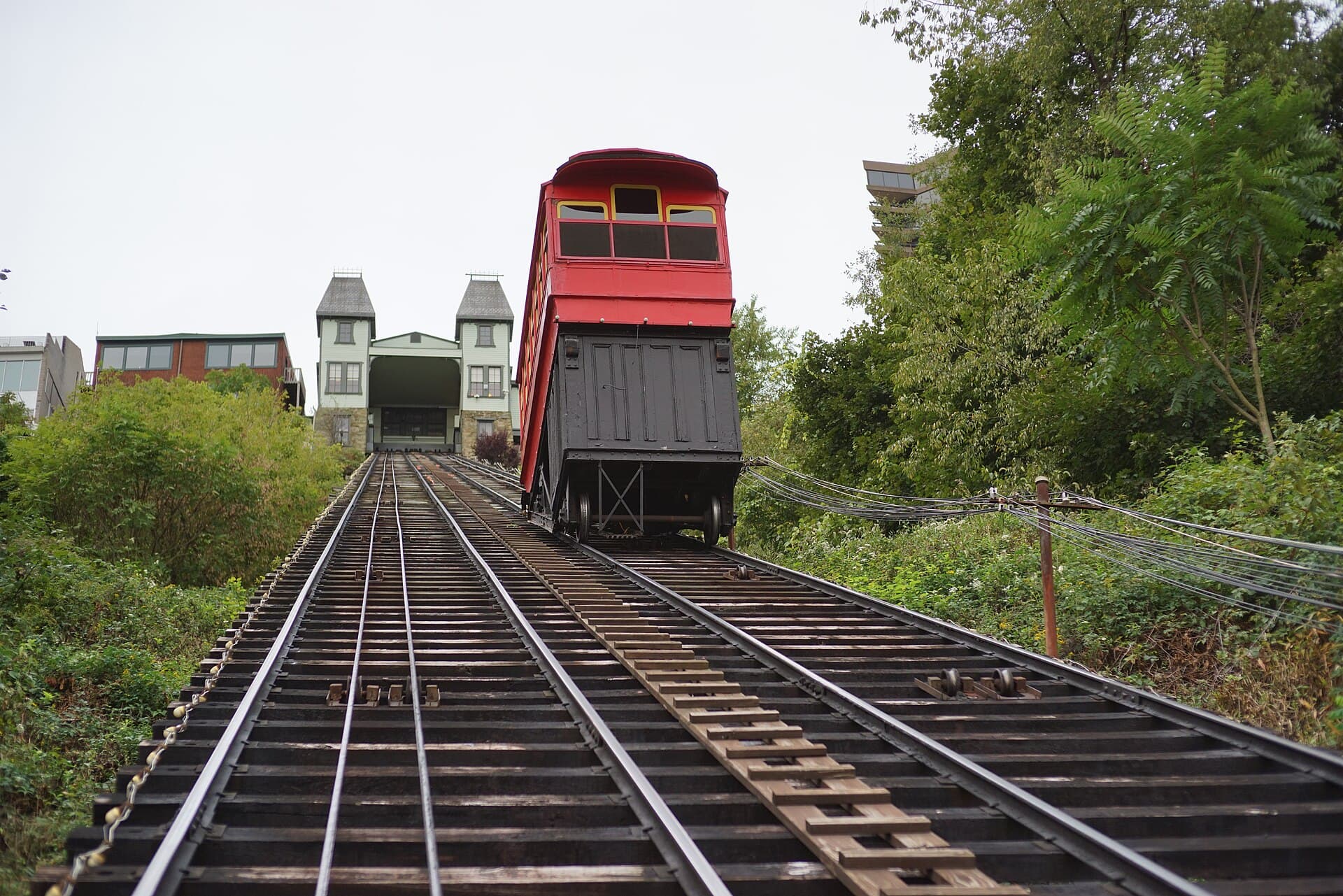
Die charakteristischen Standseilbahnen, die den Mount Washington hinaufführen, wurden ursprünglich nicht für weite Ausblicke oder Freizeitreisende gebaut.
Pittsburghs bekannter Beiname 'Steel City' hatte fast eine viel undurchsichtigere, weniger schmeichelhafte Alternative.
Entdecke jedes Geheimnis von Pittsburgh
Jede Adresse, jede Enthüllung vollständig – in deinem Ohr, genau dort, wo es geschah.
Du wählst deine Stationen. Du gehst. Die Stimme enthüllt, was andere übersehen.
Deine selbstgeführte Audio-Tour durch Pittsburgh ist bereit – wähle deine Sehenswürdigkeiten, deine Sprache und starte, sobald du ankommst.
KaufenLume enthält einen integrierten Augmented-Reality-Guide. Halten Sie Ihr Handy hoch: Die Kamera zeigt die Straße vor Ihnen, mit einem leuchtenden Pfeil über dem echten Bild, der immer auf Ihren nächsten Stopp zeigt — keine Karte zum Rätseln, keine falschen Abzweigungen. Wie alles bei Lume funktioniert es komplett offline.
Pittsburgh, eine Stadt, die von Flüssen und Industrie geprägt ist, bietet eine überzeugende Mischung aus Widerstandsfähigkeit und Einfallsreichtum. Bekannt als die 'Steel City' und die 'Stadt der Brücken', verfügt sie über bemerkenswerte 446 Brücken innerhalb ihrer Stadtgrenzen – mehr als jede andere Stadt weltweit und sogar mehr als Venedig, Italien. Diese einzigartige Topographie, wo der Allegheny und der Monongahela Fluss sich zum Ohio Fluss vereinigen, hat ihre Geschichte, ihren Charakter und ihren beständigen Geist geformt.
Über ihr industrielles Erbe hinaus hat sich Pittsburgh zu einem Zentrum für Bildung, Medizin, Technologie und Forschung neu erfunden. Die einzelnen Stadtteile, von denen viele vor ihrer Eingemeindung als autonome Boroughs existierten, erzählen jeweils eine Geschichte von Migration und Gemeinschaft. Vom lebhaften Strip District bis zum ehrwürdigen Hill District lädt Pittsburgh dazu ein, seine vielfältige Natur und seinen überraschenden Charme zu erkunden.
Die Geschichte von Pittsburgh beginnt mit den Ureinwohner-Zivilisationen, insbesondere den Seneca, die das Gebiet Jaödeogë' nannten. Die strategische Konvergenz des Allegheny und des Monongahela Flusses, die den Ohio Fluss bilden, machte das Territorium in den 1750er Jahren zu einem umkämpften Ort zwischen Frankreich und Großbritannien. Die Briten setzten sich schließlich durch, bauten 1758 Fort Pitt und benannten die umliegende Siedlung nach dem Staatsmann William Pitt in Pittsborough um. Nach der amerikanischen Unabhängigkeit expandierte das Dorf, und bis 1815 produzierte Pittsburgh erhebliche Mengen an Eisen, Messing, Zinn und Glas.
Das 19. Jahrhundert markierte Pittsburghs Verwandlung in eine industrielle Macht. Der Krieg von 1812 belebte die amerikanische Produktion, und in den 1840er Jahren war es eine der größten Städte westlich der Allegheny Mountains. Der Bürgerkrieg kurbelte seine Wirtschaft durch die erhöhte Nachfrage nach Eisen und Waffen weiter an. Ein entscheidender Moment kam 1875 mit der Einführung des Bessemer-Stahlherstellungsverfahrens, was dazu führte, dass Industrielle wie Andrew Carnegie, Henry Clay Frick und George Westinghouse hier ihr Vermögen aufbauten. Bis 1911 produzierte Pittsburgh die Hälfte des Stahls der Nation und verdiente sich damit die bleibende Bezeichnung 'Steel City'.
Der industrielle Aufschwung der Stadt brachte erhebliche Umweltfolgen mit sich, was ihr wegen der starken Umweltverschmutzung den Spitznamen 'Dirty 'Burgh' einbrachte. Nach dem Zweiten Weltkrieg initiierte Pittsburgh jedoch ein städtisches Revitalisierungsprojekt namens 'Renaissance', ein wegweisendes Unterfangen zur Erneuerung einer großen Industriestadt. Diese öffentlich-private Zusammenarbeit zielte darauf ab, die Luft zu reinigen und die Infrastruktur zu verbessern. Während die Stahlindustrie in den 1970er und 80er Jahren einen Niedergang erlebte, hat sich Pittsburgh erfolgreich neu erfunden und konzentriert sich nun auf die Bereiche Gesundheitswesen, Bildung, Technologie und Finanzdienstleistungen. Heute haben Unternehmen wie Google, RAND, PNC und Highmark eine Präsenz aufgebaut, was die heutige Wirtschaftslandschaft der Stadt widerspiegelt.
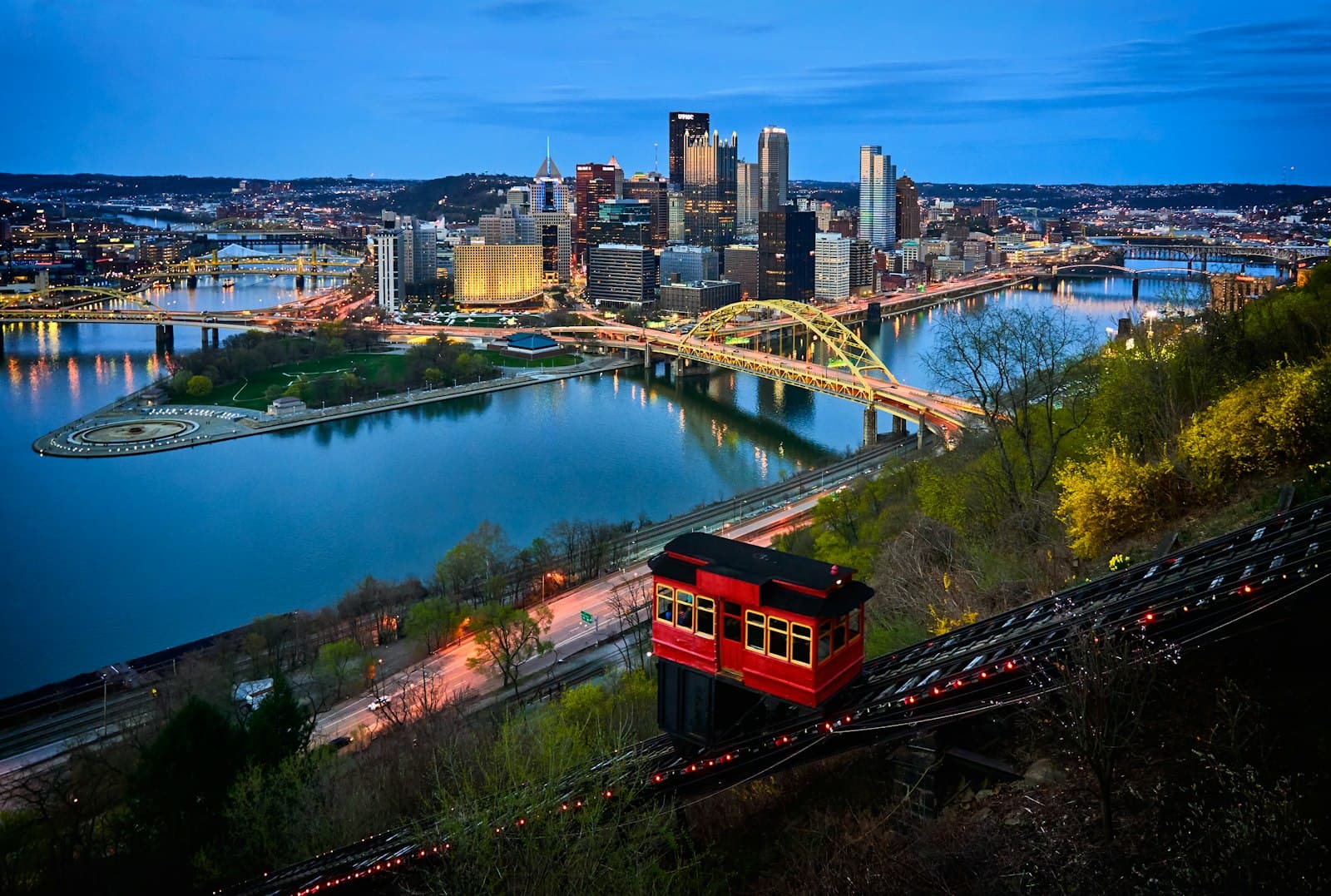
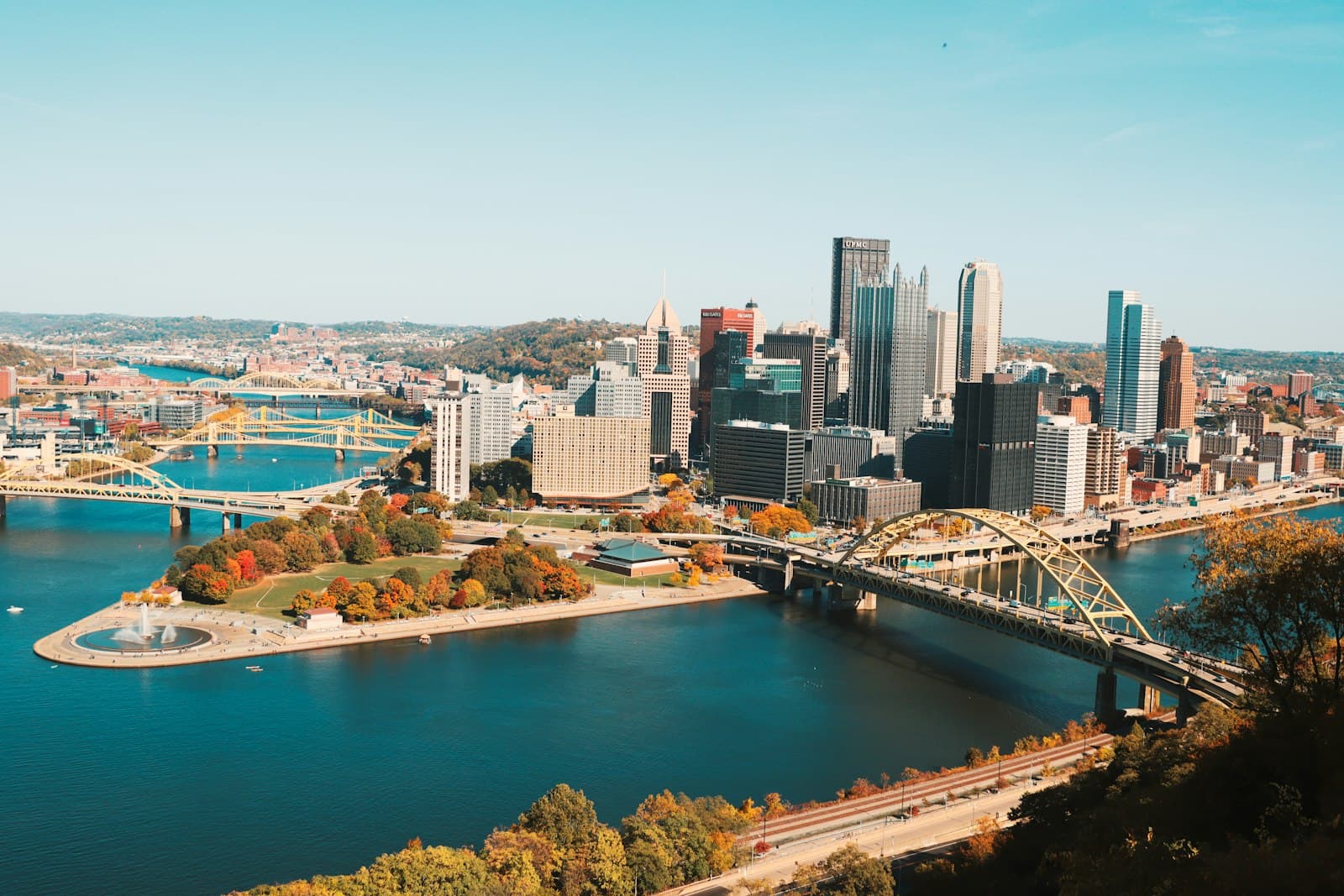
Beginnen Sie Ihre Erkundung im Point State Park, wo der Allegheny und der Monongahela Fluss zusammenfließen, um den Ohio zu bilden. Dieser historische Treffpunkt ist von einem Brunnen markiert und bietet Ausblicke auf die Skyline der Stadt. Für weitreichende Ausblicke steigen Sie eine der historischen Standseilbahnen – die Duquesne oder Monongahela – auf den Mount Washington. Diese Standseilbahnen, die ursprünglich für Industriearbeiter gebaut wurden, bieten heute eine besondere Möglichkeit, die Stadt zu beobachten.
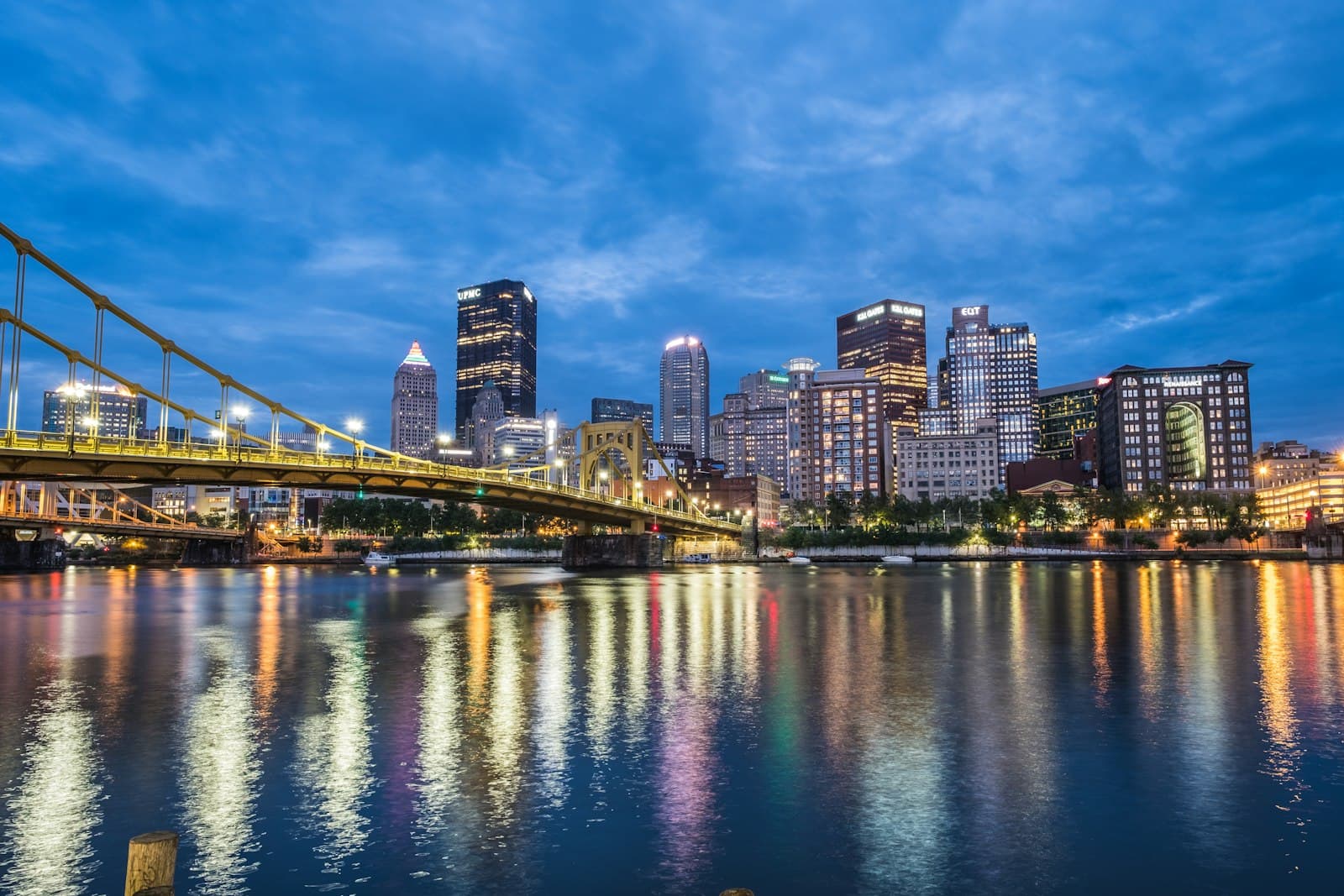
Tauchen Sie ein in Kunst und Wissenschaft in den Carnegie Museums of Pittsburgh, einschließlich des Carnegie Museum of Art, das 1895 als erstes Museum für moderne Kunst der Welt eröffnet wurde. Das Andy Warhol Museum an der North Shore ist das größte Einzelkünstler-Museum Nordamerikas und widmet sich dem in Pittsburgh geborenen Pop-Art-Idol. Erkunden Sie den Strip District, ein lebendiges Viertel, das für seine vielfältigen Lebensmittelmärkte, einzigartigen Geschäfte und seine lebhafte Atmosphäre bekannt ist. Spazieren Sie unbedingt über die ikonische Roberto Clemente Bridge (Sixth Street Bridge), eine der 'Three Sisters'-Brücken, die an Tagen von Pirates-Spielen für den Fahrzeugverkehr gesperrt wird und sich in eine Fußgängerroute zum PNC Park verwandelt.
Pittsburgh erlebt alle vier Jahreszeiten, die jeweils einen besonderen Reiz bieten. Die angenehmste Zeit für Besichtigungen und Outdoor-Aktivitäten ist zwischen Mai und Oktober, wenn das Wetter mild ist und die Stadt zahlreiche Veranstaltungen und Festivals beherbergt. Der Sommer, von Juni bis August, ist die geschäftigste Zeit mit Festivals am Flussufer und Baseballspielen. Der Herbst bringt lebhafte Laubfärbungen und Oktoberfest-Feiern. Für preisbewusste Reisende bieten die Wintermonate (Dezember bis März) reduzierte Unterkunfts- und Flugpreise sowie festliche Weihnachtsmärkte und Eislaufen.
Der Pittsburgh International Airport (PIT) bedient die Stadt mit zahlreichen täglichen Flügen. Um vom Flughafen in die Innenstadt zu gelangen, können Sie den Bus 28X nehmen, der 2,75 $ kostet und etwa 48 Minuten dauert. Taxis und Fahrdienste wie Uber und Lyft sind ebenfalls leicht verfügbar, wobei eine Taxifahrt in die Innenstadt normalerweise etwa 40-50 $ kostet.
Pittsburgh Regional Transit (PRT) betreibt ein umfangreiches öffentliches Nahverkehrssystem, das Busse, die Stadtbahn (die 'T') und die historischen Standseilbahnen umfasst. Eine Einzelfahrt kostet 2,75 $ für unbegrenzte Fahrten innerhalb von drei Stunden. Bei Barzahlung in Bussen ist genaues Wechselgeld erforderlich. Fahrten zwischen Downtown und der North Shore mit dem Stadtbahnsystem sind kostenlos. Die Ready2Ride-App ist hilfreich für den digitalen Ticketkauf und die Routenplanung.
Pittsburgh — Koreanisch, Chinesisch, Hebräisch und 29 weitere Sprachen, jede Station von einer muttersprachlichen Stimme erzählt. Die größte Sprachauswahl aller selbstgeführten Audiotouren.
Verfügbar auf: