Musée Gäuboden
Sous une ville bavaroise moderne, un trésor secret de puissance antique est resté intact pendant des siècles.
L'histoire complète se débloque dans le tour
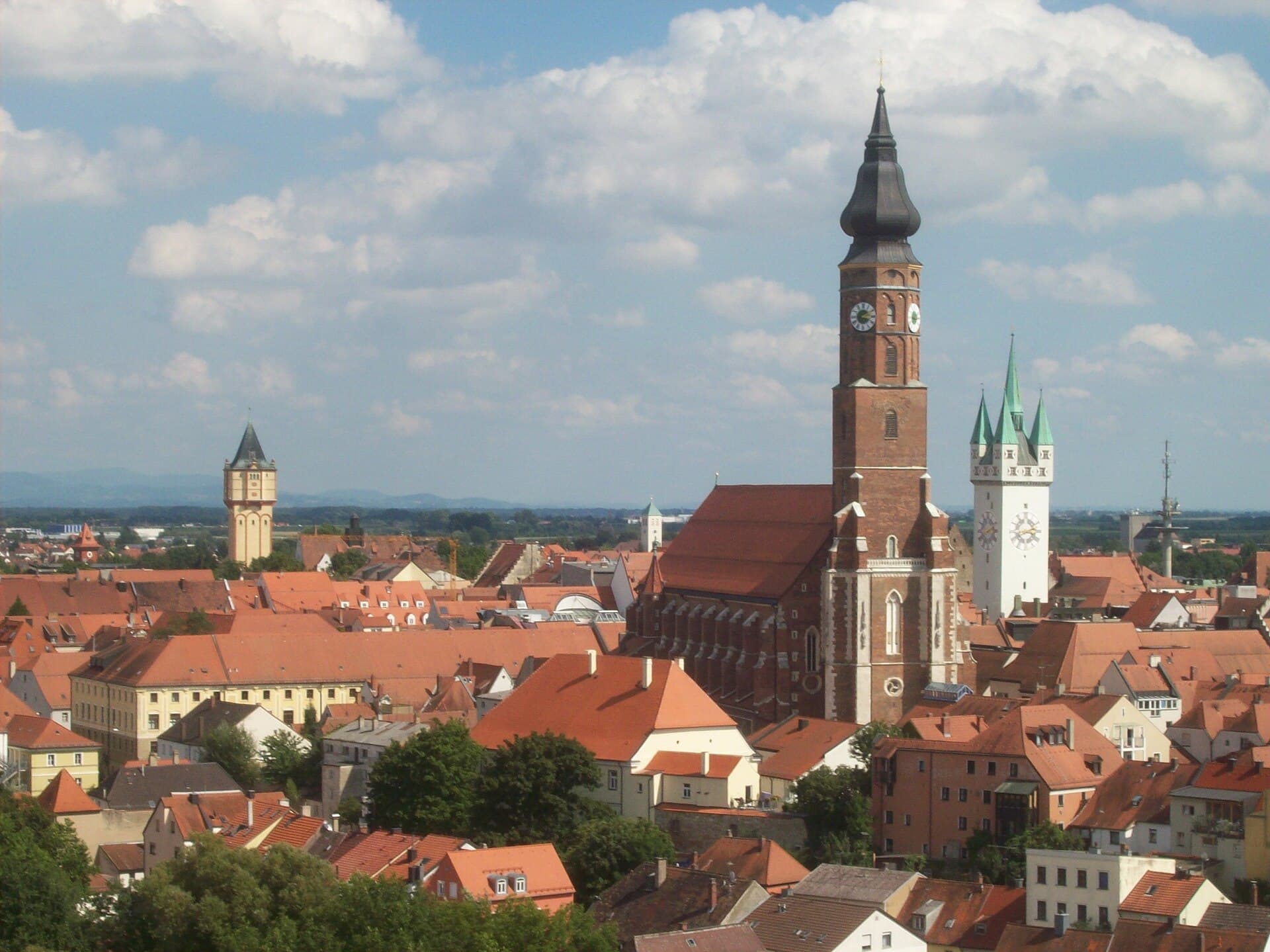 Benutzer:Donaulustig / Public domain, via Wikimedia Commons
Visite audio autoguidée de Straubing — parcours GPS à pied, lecture hors ligne, narration en 32 langues.
“Là où les légions romaines ont défilé et les ducs ont tenu cour, Straubing dévoile les strates de l'histoire bavaroise.”
Pas les cartes postales. Les histoires que même les habitants ignorent — soufflées à l'oreille, là où elles se sont passées.
Sous une ville bavaroise moderne, un trésor secret de puissance antique est resté intact pendant des siècles.
Cette basilique romane recèle un macabre secret artistique au sein de son ancien cimetière.
Un château médiéval sur le Danube cache un lien surprenant avec des terres lointaines.
Découvrez tous les secrets de Straubing
Chaque adresse, chaque révélation en entier — dans ton oreille, là où elle s'est passée.
Tu choisis tes lieux. Tu marches. La voix te révèle ce que les autres ignorent.


Lume intègre un guide en réalité augmentée. Levez votre téléphone : sa caméra montre la rue devant vous, avec une flèche lumineuse posée sur l'image réelle qui pointe toujours vers votre prochain arrêt — aucune carte à déchiffrer, aucun mauvais virage. Comme tout dans Lume, ça fonctionne entièrement hors-ligne.
Straubing, ville située sur le Danube en Basse-Bavière, en Allemagne, offre un voyage à travers des millénaires d'histoire, depuis ses origines en tant que colonie néolithique jusqu'à son rôle de base militaire romaine importante et de siège ducal médiéval. Aujourd'hui, Straubing allie la tranquillité d'une petite ville à une riche vie culturelle, caractérisée par ses rues historiques, ses places et son architecture impressionnante. La ville sert de porte d'entrée à la Forêt bavaroise et est réputée pour son atmosphère bavaroise authentique, où les traditions sont soigneusement préservées.
L'importance historique de Straubing est évidente dans son centre-ville gothique médiéval bien conservé, orné de monuments tels que l'emblématique Tour de la Ville et la Basilique Saint-Jacques. Au-delà de sa beauté architecturale, Straubing est un pôle régional qui entremêle harmonieusement des coutumes séculaires avec des développements modernes, notamment en biotechnologie. Les visiteurs peuvent explorer sa profondeur culturelle, profiter de promenades pittoresques le long du Danube et découvrir l'hospitalité locale qui caractérise cette charmante ville bavaroise.
La fertile région du Gäuboden, où se trouve Straubing, a attiré des colons depuis l'ère néolithique, en faisant l'une des plus anciennes zones habitées en continu de Bavière. Vers 16-14 av. J.-C., les Romains y établissent une présence significative, nommant leur colonie Sorviodurum. Celle-ci sert de base de soutien militaire vitale pendant plus de 400 ans, gardant les frontières de l'empire le long du Danube. L'héritage durable de cette occupation romaine est spectaculairement mis en valeur par le « Trésor romain de Straubing », une collection mondialement célèbre d'armures de parade découverte en 1950 et aujourd'hui conservée au musée Gäuboden.
Après l'effondrement de l'Empire romain, la tribu des Bavarii s'établit dans la région, principalement autour de l'église Saint-Pierre, construite au IXe siècle. Ils nomment la colonie d'après leur chef, Strupinga, qui évolue finalement en Straubing. La période médiévale marque un âge d'or pour Straubing. En 1218, le duc Louis Ier Wittelsbach de Bavière fonde la « nouvelle ville », qui se développe rapidement en un puissant centre régional. Straubing atteint son apogée politique en 1349, devenant la capitale du duché de Bavière-Straubing sous le duc Guillaume Ier. Ce duché, qui dure de 1353 à 1425, s'étend au-delà de la Bavière pour inclure la Hollande, le Hainaut et la Zélande, faisant des ducs de Straubing des souverains exceptionnellement puissants du Saint Empire romain germanique. L'emblématique Stadtturm (Tour de la Ville), dont les fondations sont posées en 1316, symbolise la prospérité de la ville, tandis que le palais ducal sur le Danube sert de siège du gouvernement.
Straubing, en tant que colonie stratégiquement importante sur les routes commerciales et le Danube, a traversé des périodes de conflit, y compris une occupation pendant la guerre de Trente Ans en 1633. En novembre 2016, un incendie a endommagé une partie importante de l'hôtel de ville médiéval, un symbole civique central. Malgré ces défis, Straubing a conservé son caractère historique et continue d'être un centre administratif et économique important pour la région du Gäuboden, connue pour ses terres agricoles fertiles.
Le cœur historique de Straubing offre une exploration à pied de son passé. La Tour de la Ville de Straubing (Stadtturm), une majestueuse tour gothique de 68 mètres datant du XIVe siècle, est un symbole de la ville. Les visiteurs peuvent monter au sommet pour des vues panoramiques sur le centre historique et le Danube.
Le Musée Gäuboden propose une vaste collection détaillant l'histoire de la région de la préhistoire à nos jours. Son exposition la plus célèbre est le Trésor romain de Straubing, présentant une extraordinaire collection d'armures de parade romaines.
L'Église Saint-Pierre, une basilique romane de la fin du XIIe siècle, se distingue par ses portails sculptés et un cimetière historique avec des chapelles de la fin du gothique. À proximité, le Herzogsschloss (Château Ducal), commencé en 1356 par le duc Albert Ier, a servi de résidence bavaroise et de centre administratif. La salle des Chevaliers médiévale bien conservée à l'intérieur du château est utilisée pour divers événements.
La Basilique Saint-Jacques, un chef-d'œuvre de l'architecture gothique en brique, domine l'horizon de Straubing avec ses hautes fenêtres et ses voûtes complexes. Pour une expérience unique, le Tiergarten Straubing est l'un des plus anciens parcs zoologiques de la région, offrant une sortie familiale.
Le temps le plus favorable à Straubing se situe de mai à septembre, avec des températures allant de 20°C à 26°C. Ces conditions douces sont idéales pour explorer les attractions extérieures de la ville et profiter de ses festivals. Juillet est généralement le mois le plus chaud, avec des maximales moyennes d'environ 26°C (79°F) et le plus d'ensoleillement. Bien qu'il y ait des précipitations modérées pendant cette période, elles consistent généralement en des averses fréquentes mais mineures. La ville est particulièrement animée en août lors du Gäubodenvolksfest, le deuxième plus grand festival de la bière de Bavière.
Straubing est une ville compacte, et bon nombre de ses attractions sont facilement accessibles à pied. Pour de plus longues distances, le système de bus local est le principal moyen de transport public, avec des itinéraires couvrant la majeure partie de la ville. Les horaires et les itinéraires de bus sont disponibles en ligne ou dans les centres d'information. Les trains régionaux partant de la gare de Straubing relient les villes voisines comme Ratisbonne et Passau, et plus loin les grands centres comme Munich et Nuremberg. Les taxis sont disponibles mais peuvent être chers. La monnaie officielle est l'euro (EUR), et l'argent peut être échangé dans les banques. Les options d'hébergement vont des maisons d'hôtes bavaroises traditionnelles aux hôtels modernes, le centre-ville historique étant un choix populaire pour sa proximité avec les attractions.
Straubing en coréen, en chinois ou en hébreu — et dans 29 autres langues, chaque étape narrée par une voix native. La plus large gamme de langues de tous les audioguides autoguidés.
Disponible en :