Villa de Nerón (Sublaqueum)
El emperador Nerón, conocido por sus gustos extravagantes, construyó una lujosa villa aquí. Pero, ¿qué pasó con sus impresionantes lagos artificiales?
La historia completa se desbloquea en el tour
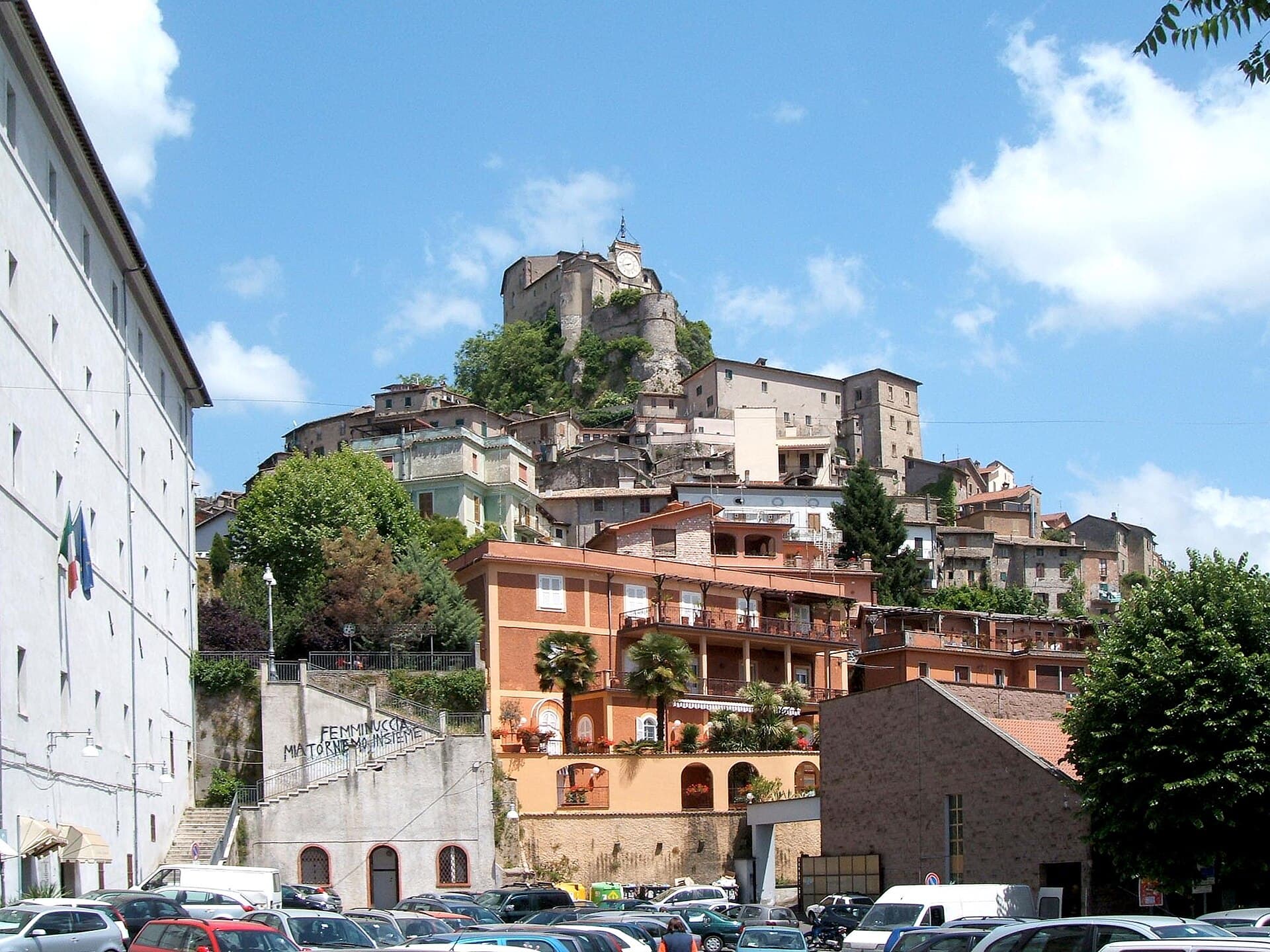 No machine-readable author provided. Pippo-b assumed (based on copyright claims). / Public domain, via Wikimedia Commons
Tour de audio autoguiado de Subiaco — ruta GPS a pie, reproducción offline, narración en 32 idiomas.
“Donde los emperadores buscaron consuelo y los santos encontraron su vocación.”
No las postales. Las historias que ni los locales conocen — al oído, justo donde ocurrieron.
El emperador Nerón, conocido por sus gustos extravagantes, construyó una lujosa villa aquí. Pero, ¿qué pasó con sus impresionantes lagos artificiales?
La 'Cueva Sagrada' alberga un retrato singular de un renombrado santo, pintado durante su vida. ¿Qué lo hace tan inusual?
Este antiguo monasterio desempeñó un papel fundamental en la difusión del conocimiento por toda Italia. ¿Qué evento trascendental ocurrió dentro de sus muros?
Descubre todos los secretos de Subiaco
Cada dirección, cada revelación al completo — a tu oído, justo donde ocurrió.
Eliges tus paradas. Caminas. La voz te revela lo que los demás ignoran.


Tu tour de audioguía por Subiaco te espera — elige tus lugares, tu idioma y empieza al llegar.
ComprarLume incluye una guía de realidad aumentada. Levanta el móvil y su cámara muestra la calle que tienes delante, con una flecha luminosa sobre la imagen real que siempre apunta a tu próxima parada — sin mapas que descifrar, sin giros equivocados. Como todo en Lume, funciona completamente sin conexión.
Subiaco, a una hora en coche al este de Roma, es una cautivadora ciudad donde los ecos de la antigua Roma se encuentran con la profunda espiritualidad del monacato temprano. Situado dentro del Parque Natural Regional de los Monti Simbruini, este pueblo galardonado con la 'Bandera Naranja' ofrece una mezcla única de belleza natural, historia perdurable y significado cultural. El río Aniene fluye por su corazón, esculpiendo un paisaje que una vez atrajo a emperadores en busca de respiro y, más tarde, a santos en busca de soledad.
Más allá de su pintoresco entorno, Subiaco ocupa un lugar especial en la historia italiana. Es reconocida como la cuna del monacato benedictino, donde San Benito de Nursia estableció sus primeras comunidades, y notablemente, el lugar de nacimiento de la imprenta en Italia. Desde las ruinas de la opulenta villa del emperador Nerón hasta los serenos monasterios que se aferran a la ladera de la montaña, Subiaco invita a una exploración más profunda de las capas de su pasado.
## Del Retiro Imperial al Refugio Monástico La historia de Subiaco comienza mucho antes de la era cristiana, con los Ecuos, un pueblo itálico, habitando la región. Para el 304 a.C., los romanos los habían conquistado, reconociendo la importancia estratégica de las aguas del río Aniene. El mismo nombre de la ciudad, 'Sublaqueum' (que significa 'bajo el lago'), se remonta a la extravagante villa del emperador Nerón, construida en el siglo I d.C. Represó el río Aniene para crear tres lagos artificiales, el más grande de los cuales fue considerado la presa más alta del mundo hasta su destrucción en 1305.
Sin embargo, el destino de Subiaco cambió drásticamente con la llegada de San Benito de Nursia alrededor del 494 d.C. Desilusionado con sus estudios en Roma, el joven Benito se retiró a una cueva inaccesible, ahora conocida como el Sacro Speco, para vivir como ermitaño durante tres años. Esta 'Gruta Sagrada' se convirtió en la génesis de la Orden Benedictina, y Benito fundó doce monasterios en el valle circundante. De estos, solo el Monasterio de Santa Escolástica, llamado así por su hermana gemela, ha sobrevivido a los estragos del tiempo, incluyendo terremotos e invasiones sarracenas.
## Una Revolución Impresora e Influencia Papal El siglo XV trajo otro hito cultural significativo a Subiaco. En 1465, dos impresores alemanes, formados por Gutenberg, establecieron la primera imprenta de Italia con tipos móviles dentro del Monasterio de Santa Escolástica. Esta tecnología revolucionaria llevó a la publicación de los primeros libros en Italia, inicialmente textos espirituales y un libro de gramática para niños. La ciudad también vio la influencia de figuras poderosas como Rodrigo Borgia (más tarde Papa Alejandro VI), e incluso se sugiere que sus infames hijos, César y Lucrecia Borgia, nacieron en la Rocca Abbaziale, la imponente fortaleza que aún domina el pueblo.
Subiaco permaneció bajo el control de varias familias nobles y finalmente pasó a formar parte de los Estados Pontificios hasta la unificación de Italia en 1861. Los siglos XIX y principios del XX vieron mejoras en la infraestructura, incluyendo una conexión ferroviaria, una planta hidroeléctrica y un acueducto, integrando aún más a Subiaco en la Italia moderna.
Tu visita a Subiaco girará sin duda en torno a sus dos magníficos monasterios. El Sacro Speco, o Monasterio de San Benito, está construido en la ladera de la montaña, albergando la misma cueva donde San Benito vivió como ermitaño. En su interior, descubrirás dos iglesias superpuestas adornadas con frescos medievales, incluyendo el retrato más antiguo conocido de San Francisco de Asís. No te pierdas el tranquilo Jardín de Rosas, con su intrigante leyenda.
Un corto paseo te llevará al Monasterio de Santa Escolástica, el único de los trece monasterios originales de San Benito que perdura. Esta maravilla arquitectónica ofrece tres claustros distintos —románico, gótico y renacentista—, un imponente campanario y una iglesia neoclásica. Su extraordinaria biblioteca, ahora monumento nacional, alberga preciosos manuscritos iluminados y pergaminos, testimonio de su papel como la primera imprenta de Italia.
Más allá de los monasterios, explora la Rocca Abbaziale, una fortaleza medieval que ofrece vistas panorámicas del pueblo y el paisaje circundante. Pasea por el Pueblo Medieval de los Opifici, caracterizado por sus calles estrechas y sinuosas. Cruza el pintoresco Ponte di San Francesco, un puente jorobado que conduce a la Iglesia y Convento de San Francisco del siglo XIV. Para los entusiastas del aire libre, el Parque Natural Regional de los Monti Simbruini ofrece oportunidades para practicar senderismo, escalada, espeleología, rafting e incluso esquí en invierno en Monte Livata.
La mejor época para visitar Subiaco para disfrutar de un clima agradable y actividades al aire libre es durante los meses de mayo, junio, julio, agosto, septiembre y octubre. Durante este período, las temperaturas promedio oscilan entre los 19°C y los 29°C (66°F y 84°F), ideales para hacer turismo y explorar el parque natural. Julio es el mes más soleado, ofreciendo alrededor de 11.1 horas de sol diarias. El otoño es particularmente recomendable para disfrutar de los vívidos colores de los bosques de Simbruini. Los inviernos son fríos, con máximas diurnas alrededor de 9°C (48°F) en febrero, y el mes más húmedo es noviembre.
Subiaco se encuentra aproximadamente a 65 km (40 millas) al este de Roma y se puede llegar en coche en aproximadamente una hora y media. Alternativamente, puedes tomar la Línea B del Metro de Roma hasta la parada de Ponte Mammolo, y luego tomar un autobús directo a Piazza Falcone en Subiaco. Los autobuses circulan con frecuencia durante todo el día. Los billetes se pueden comprar en la estación o a bordo.
Al visitar los monasterios, recuerda que son lugares de culto activos, así que vístete apropiadamente (hombros y rodillas cubiertos) y mantén una actitud respetuosa. Se recomienda encarecidamente llevar calzado cómodo, ya que caminarás bastante por superficies irregulares y escaleras. Hay visitas guiadas disponibles y a menudo mejoran la experiencia al dar vida a la historia y el arte perdurables. Consulta los horarios de apertura con antelación, ya que pueden variar, especialmente fuera de temporada alta.
Subiaco en coreano, en chino o en hebreo — y 29 idiomas más, cada parada narrada por una voz nativa. La mayor variedad de idiomas de cualquier audioguía autoguiada.
Disponible en: