Piazza Garibaldi
The grand medieval aqueduct, a defining feature of Sulmona's largest piazza, once fulfilled a dual purpose beyond merely channeling water.
Full story unlocks in the tour
 Lorenzo Testa / CC BY-SA 4.0, via Wikimedia Commons
Self-guided audio walking tour of Sulmona — GPS route, offline playback, story-driven narration in 32 languages.
“Where ancient narratives intertwine with the delicate sweetness of tradition, deep in the Abruzzo heartland.”
Not the postcards. The stories even locals don't know — whispered in your ear, right where they happened.
The grand medieval aqueduct, a defining feature of Sulmona's largest piazza, once fulfilled a dual purpose beyond merely channeling water.
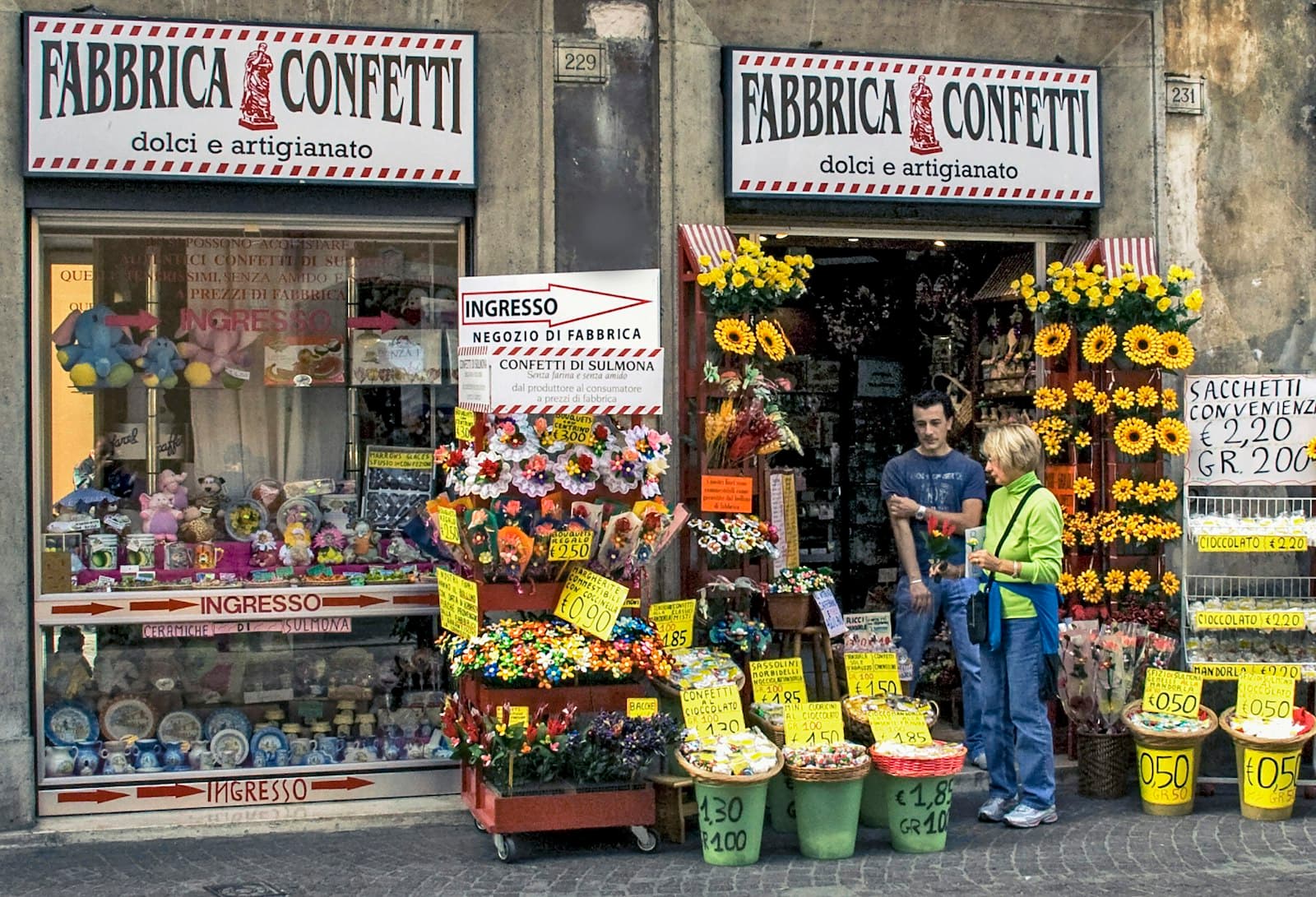
Sulmona's renowned confetti, sugar-coated almonds, share an intriguing lineage with ancient Roman festivities.
The celebrated Roman poet Ovid, a native son of Sulmona, endured a mysterious exile, a decree formally reversed two millennia later.
Discover every secret of Sulmona
Every address, every reveal in full — in your ear, right where it happened.
You pick your stops. You walk. The voice reveals what the others miss.

Your self-guided audio tour of Sulmona is ready — pick your landmarks, choose your language, and start the moment you arrive.
BuyLume has a built-in augmented-reality guide. Hold your phone up and its camera shows the street ahead of you, with a glowing arrow laid over the real view that always points to your next stop — no map to puzzle over, no wrong turns. Like everything in Lume, it works fully offline.
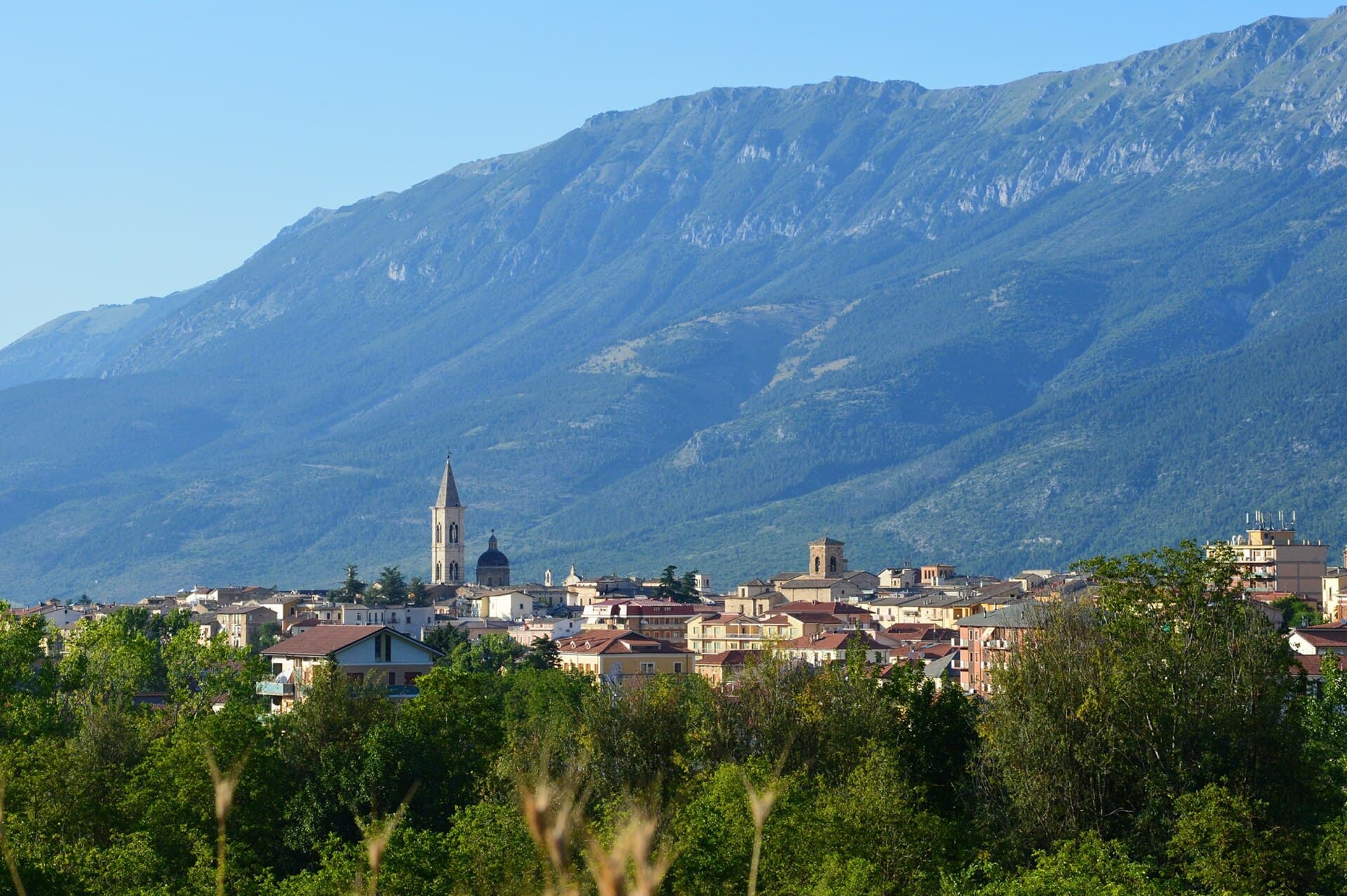
Sulmona, a town in Italy's Abruzzo region, rests in the Valle Peligna, a basin once cradling a prehistoric lake. Encircled by the formidable peaks of the Gran Sasso and Majella massifs, it offers a harmonious blend of history, culture, and natural splendor. The town is recognized for its medieval, Renaissance, and Baroque architectural forms, with a pedestrian-friendly Corso Ovidio inviting unhurried walks past artisan workshops and inviting cafes.
Often referred to as the "confetti capital of Italy," Sulmona is celebrated for its sugar-coated almonds, a tradition reaching back to the 1300s. These colorful confections are a cornerstone of Italian celebrations and are even meticulously crafted into elaborate floral arrangements displayed in shop windows throughout the town. Beyond its sweet renown, Sulmona holds a significant past as the birthplace of the Roman poet Ovid and features a remarkably preserved medieval aqueduct.
## Ancient Foundations and Roman Heritage Sulmona, known in antiquity as Sulmo, stood as a significant urban center for the Paeligni, an Italic tribe. Its story extends to the era before Roman subjugation, with its lands ravaged by Hannibal in 211 BC, though the city itself remained unharmed. In 49 BC, Mark Antony extended Roman protection to Sulmo. The town flourished during the Roman Empire, becoming a holiday spa destination due to its natural springs and mild climate. It is most notably remembered as the birthplace of the Roman poet Publius Ovidius Naso, or Ovid, in 43 BC. Ovid frequently invoked his hometown in his writings, famously declaring, "Sulmo mihi patria est" (Sulmona is my fatherland).
## Medieval Flourishing and Engineering Wonders Christianity likely arrived in Sulmona by the 3rd century, with its first bishop appearing in the 5th. Saint Pamphilus, a converted pagan, assumed the bishopric in the 7th century, and Sulmona Cathedral now bears his name. Under Norman governance, Sulmona evolved into a free commune within the Kingdom of Sicily. The town experienced a period of great prosperity under Frederick II in the 12th and 13th centuries, who commissioned the construction of its impressive medieval aqueduct in 1256. This aqueduct, with its 21 pointed arches, remains a striking landmark and a testament to medieval engineering prowess. Frederick II also designated Sulmona a provincial capital, fostering trade and administration.
## Earthquakes, Diminishment, and Modern Rebirth Despite its medieval expansion and the addition of fortified city walls in the 14th century, Sulmona endured periods of decline due to internal conflicts, plague, and destructive earthquakes in 1349, 1456, and 1706. The 1706 earthquake reshaped the town, ushering in Baroque reconstruction, although some medieval structures like the Church of Santa Maria della Tomba and Palazzo Annunziata survived. By the late 19th century, Sulmona reclaimed importance as a railway junction connecting Rome to the Adriatic coast, stimulating economic growth. While the 20th century brought damage from World War II, the town has since recovered, diligently restoring its historical buildings and reinvigorating cultural traditions. Today, Sulmona is recognized for its carefully preserved historic core and its enduring customs, particularly the creation of confetti.
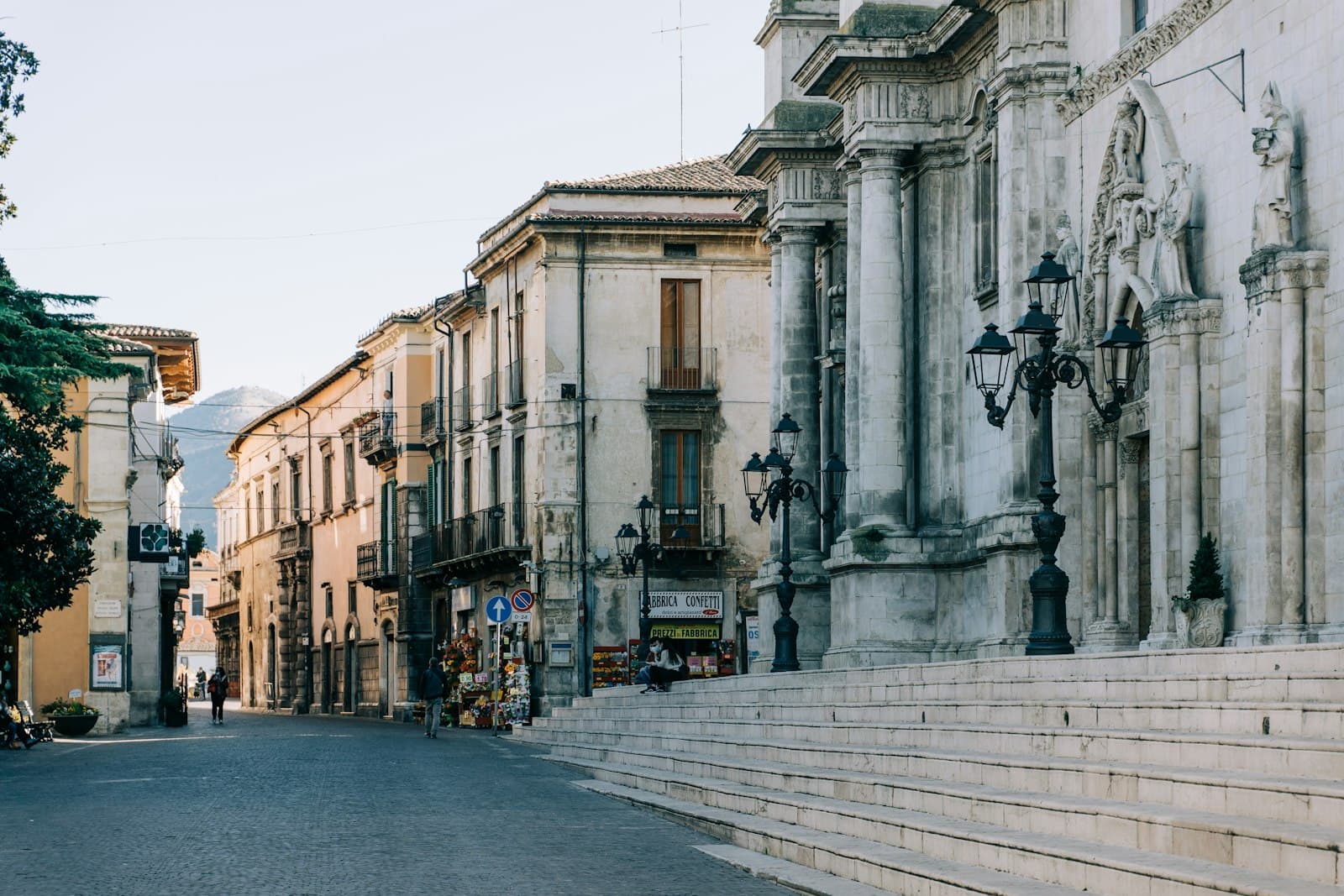
Begin your exploration in Piazza Garibaldi, Sulmona's expansive main square, where the 13th-century Gothic aqueduct dramatically spans the space. This square comes alive with a bustling market on Wednesdays and Saturdays, offering local produce, cheeses, and the celebrated red garlic.
Amble along Corso Ovidio, the town's central artery, which links the aqueduct to the cathedral. This pedestrian-friendly avenue is lined with artisan workshops, cafes, and historical sites. You will discover numerous shops displaying Sulmona's renowned confetti (sugar-coated almonds), often arranged in intricate floral designs.
Visit the Confetti Mario Pelino Factory and Museum of the Art & Technology of Confectionery to delve into the history and creation of these iconic sweets. Just off Corso Ovidio, Piazza XX Settembre features a bronze likeness of Sulmona's most famous citizen, the poet Ovid.
Other notable destinations include the Cattedrale di San Panfilo, established in 1075 and rebuilt after seismic events, displaying both Romanesque and Baroque influences, and the Palazzo Annunziata, a grand Renaissance edifice. For those who appreciate the outdoors, the nearby Majella National Park provides opportunities for hiking and biking amidst striking landscapes.
The most agreeable weather in Sulmona arrives during spring (April to June) and autumn (September to October), offering mild temperatures and fewer visitors. Spring brings blossoming landscapes and is ideal for exploring the town and its outdoor attractions. April holds particular significance for the annual Madonna che Scappa procession on Easter Sunday. Summers (July and August) are warm and suitable for outdoor pursuits, with July being the warmest month. The Sulmona Confetti Festival in July also presents a distinctive cultural experience. Winters are cold but offer vistas of snow-dusted mountains.
Sulmona is reachable by train from Rome (approximately 2.5 hours) and Pescara (about 1 hour). If traveling by car from Rome, the journey takes about 1.5 hours via the Autostrada A25. Parking within the old town is not encouraged; utilize the lot near the fire station (Vigili del Fuoco) for convenient access to the historic center. The local currency is the Euro, and credit cards are widely accepted in most establishments, though carrying some cash for smaller shops and markets is advisable.
When visiting churches and religious sites, modest attire is recommended. Tipping is not obligatory but is appreciated for commendable service. Sulmona is generally considered a secure destination, but customary precautions, such as safeguarding your belongings in crowded areas, are always prudent. The Sulmona Tourist Office, situated in the Annunziata di Sulmona building on Corso Ovidio, can provide additional travel information.
Sulmona in Korean, in Chinese or in Hebrew — and 29 more languages, every stop narrated by a native voice. The widest language range of any self-guided audio tour.
Available in: