Amphithéâtre Romain
Ce grand amphithéâtre romain recèle un détail curieux sur sa construction, le distinguant des autres arènes monumentales.
L'histoire complète se débloque dans le tour
 Fiat 500e / CC BY-SA 4.0, via Wikimedia Commons
Visite audio autoguidée de Sutri — parcours GPS à pied, lecture hors ligne, narration en 32 langues.
“Là où les pierres ancestrales murmurent des histoires oubliées, sculptées au cœur même de la terre.”
Pas les cartes postales. Les histoires que même les habitants ignorent — soufflées à l'oreille, là où elles se sont passées.
Ce grand amphithéâtre romain recèle un détail curieux sur sa construction, le distinguant des autres arènes monumentales.
Sous une modeste façade d'église se cache un espace sacré antérieur au culte chrétien, révélant des couches de dévotion.
La colline au-delà de Sutri est parsemée de nombreuses tombes, pourtant leur but originel pourrait vous surprendre étant donné leur apparence actuelle.
Découvrez tous les secrets de Sutri
Chaque adresse, chaque révélation en entier — dans ton oreille, là où elle s'est passée.
Tu choisis tes lieux. Tu marches. La voix te révèle ce que les autres ignorent.


Votre visite audioguidée de Sutri vous attend — choisissez vos lieux, votre langue, et lancez-vous dès votre arrivée.
AcheterLume intègre un guide en réalité augmentée. Levez votre téléphone : sa caméra montre la rue devant vous, avec une flèche lumineuse posée sur l'image réelle qui pointe toujours vers votre prochain arrêt — aucune carte à déchiffrer, aucun mauvais virage. Comme tout dans Lume, ça fonctionne entièrement hors-ligne.
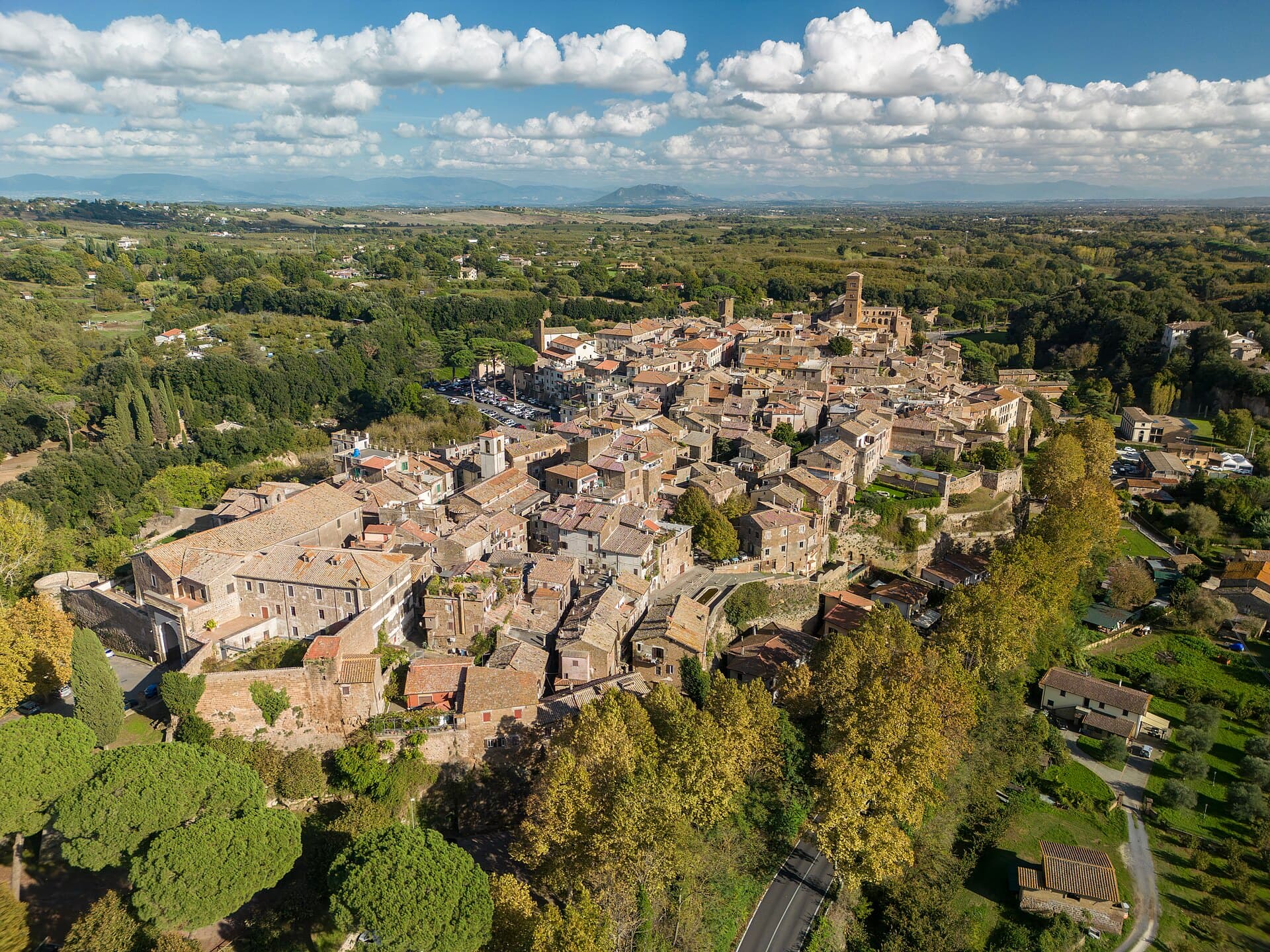
Située sur une mince colline de tuf, embrassée par des ravins spectaculaires, Sutri est une ville ancienne de la région du Latium en Italie, à environ 50 kilomètres au nord de Rome. Cette destination captivante, reconnue comme l'un des I Borghi più belli d'Italia (les plus beaux villages d'Italie), offre un voyage profond à travers des millénaires de présence humaine.
Le paysage de Sutri est défini par sa roche de tuf volcanique, à partir de laquelle de nombreuses de ses structures antiques les plus remarquables ont été sculptées plutôt que construites. Cette caractéristique singulière confère une atmosphère presque mystique à son parc archéologique, qui comprend un amphithéâtre romain saisissant, une nécropole étrusque et un Mithraeum. À moins d'une heure de Rome, Sutri offre une expérience italienne authentique, mêlant fondations antiques et paysages pittoresques.
Au-delà de ses merveilles archéologiques, le centre médiéval de Sutri invite à l'exploration avec ses ruelles étroites, ses murs anciens et ses charmantes piazzas. Elle a servi d'étape cruciale sur la route de pèlerinage de la Via Francigena, et son importance historique s'étend à être le lieu de naissance des États Pontificaux. Sutri est une petite ville d'une immense importance historique, mais elle reste remarquablement épargnée par le tourisme de masse, offrant une expérience tranquille et immersive.
## D'une Forteresse Étrusque à une Colonie Romaine Sutri, connue dans l'Antiquité sous le nom de Sutrium, retrace ses origines à la préhistoire, avec des preuves de premiers établissements datant de l'âge du bronze. Elle a prospéré en tant qu'importante ville étrusque, stratégiquement positionnée à l'extrémité sud de l'Étrurie et connue comme la "Porte de l'Étrurie". Les artisans étrusques sont crédités d'avoir sculpté l'emblématique amphithéâtre de la ville dans la roche de tuf.
La situation stratégique de Sutri le long de la Via Cassia, une route vitale vers l'Étrurie, en a fait un point de discorde entre les Étrusques et la République romaine naissante. Après la chute de Veii, Sutri devint une possession romaine, d'abord capturée en 396 av. J.-C. puis recolonisée en tant que colonie latine vers 383 av. J.-C. Sous la domination romaine, elle se développa en un centre agricole et artisanal florissant, conservant son importance le long de la principale artère de transit et de commerce vers et depuis Rome.
## Importance Médiévale et Genèse des États Pontificaux Avec le déclin de l'Empire romain, Sutri se retrouva au carrefour des luttes de pouvoir, disputée entre les Lombards et les Byzantins. Un moment charnière de son histoire, et même de l'histoire de l'Italie, se produisit en 728 après J.-C. avec la Donation de Sutri. Le roi lombard Liutprand fit don de Sutri et de plusieurs autres villes au pape Grégoire II, un acte largement reconnu comme le début formel du pouvoir temporel des papes et la formation initiale des États Pontificaux. Cet événement consolida l'importance de Sutri en tant qu'évêché.
Tout au long du Moyen Âge, Sutri continua de jouer un rôle important, en particulier en tant qu'étape cruciale le long de la Via Francigena, la route de pèlerinage reliant Canterbury à Rome. La ville fut le théâtre d'autres événements historiques, notamment le Synode de Sutri en 1046, où le pape Grégoire VI renonça à sa charge, et le Traité de Sutri en 1111. Cependant, une période de déclin s'installa après le XIVe siècle, exacerbée par un incendie dévastateur en 1433 et le déplacement des routes commerciales par la puissante famille Farnèse. Malgré ces défis, la profonde histoire de Sutri, de ses origines étrusques à sa proéminence médiévale, reste gravée de manière vivante dans ses monuments taillés dans la roche et ses charmantes rues.
Les sites les plus fascinants de Sutri sont concentrés dans son Parc Archéologique, témoignage de son passé antique. L'Amphithéâtre Romain est une structure remarquable, notable pour être entièrement sculptée dans la roche de tuf volcanique. À proximité, la Nécropole Étrusque présente des dizaines de tombes taillées dans la roche, certaines visibles directement depuis la route, offrant un aperçu des pratiques funéraires antiques.
Un autre site singulier est l'Église de la Madonna del Parto, qui intègre un ancien Mithraeum dans sa crypte, affichant des couches d'histoire religieuse. Montez au cœur médiéval de la ville pour explorer la Co-Cathédrale de Santa Maria Assunta, une structure romane avec une crypte fascinante présentant vingt colonnes différentes. Promenez-vous dans le charmant centre historique, avec ses ruelles étroites, ses bâtiments en pierre et ses petites places. Ne manquez pas la Villa Savorelli, qui offre un magnifique jardin à l'italienne et des vues panoramiques, y compris une perspective unique sur l'amphithéâtre. Pour ceux intéressés par la culture locale, le Musée du Palais Doebbing raconte l'histoire étrusque et romaine de Sutri à travers des sarcophages, des sculptures et des incunables.
Les périodes les plus agréables pour visiter Sutri sont le printemps (avril à juin) et l'automne (septembre à octobre). Pendant ces saisons intermédiaires, le temps est doux et agréable pour explorer les sites archéologiques et les rues médiévales, et le nombre de visiteurs est généralement plus faible. Bien que l'été (juillet à août) soit également populaire, offrant des événements culturels et des activités par temps chaud, il peut être plus fréquenté. Les hivers sont plus frais et plus nuageux, avec des précipitations plus élevées. Les jours de semaine offrent généralement une expérience plus tranquille que les week-ends.
Sutri est située à environ 50 kilomètres de Rome et à 30 kilomètres au sud de Viterbe. Si vous voyagez depuis Rome, vous pouvez prendre un train régional jusqu'à la gare de Capranica-Sutri, puis un court trajet en bus ou en taxi jusqu'au centre-ville. Alternativement, la voiture prend environ une heure par la Via Cassia. La ville est suffisamment compacte pour être explorée à pied, en particulier le centre historique et le parc archéologique.
Des billets sont requis pour l'amphithéâtre et le Mithraeum, avec des options combinées disponibles pour un meilleur rapport qualité-prix. Portez des chaussures confortables, car vous marcherez sur des terrains inégaux et des sites antiques. Bien que certains habitants parlent un anglais de base, en particulier dans les zones touristiques, apprendre quelques phrases italiennes peut enrichir votre expérience. L'Office de Tourisme est situé Piazza del Comune, 45, et est ouvert tous les jours sauf le lundi.
Sutri en coréen, en chinois ou en hébreu — et dans 29 autres langues, chaque étape narrée par une voix native. La plus large gamme de langues de tous les audioguides autoguidés.
Disponible en :