Areos Square
The grand equestrian statue of Theodoros Kolokotronis in Areos Square holds a secret beneath its bronze facade.
Full story unlocks in the tour
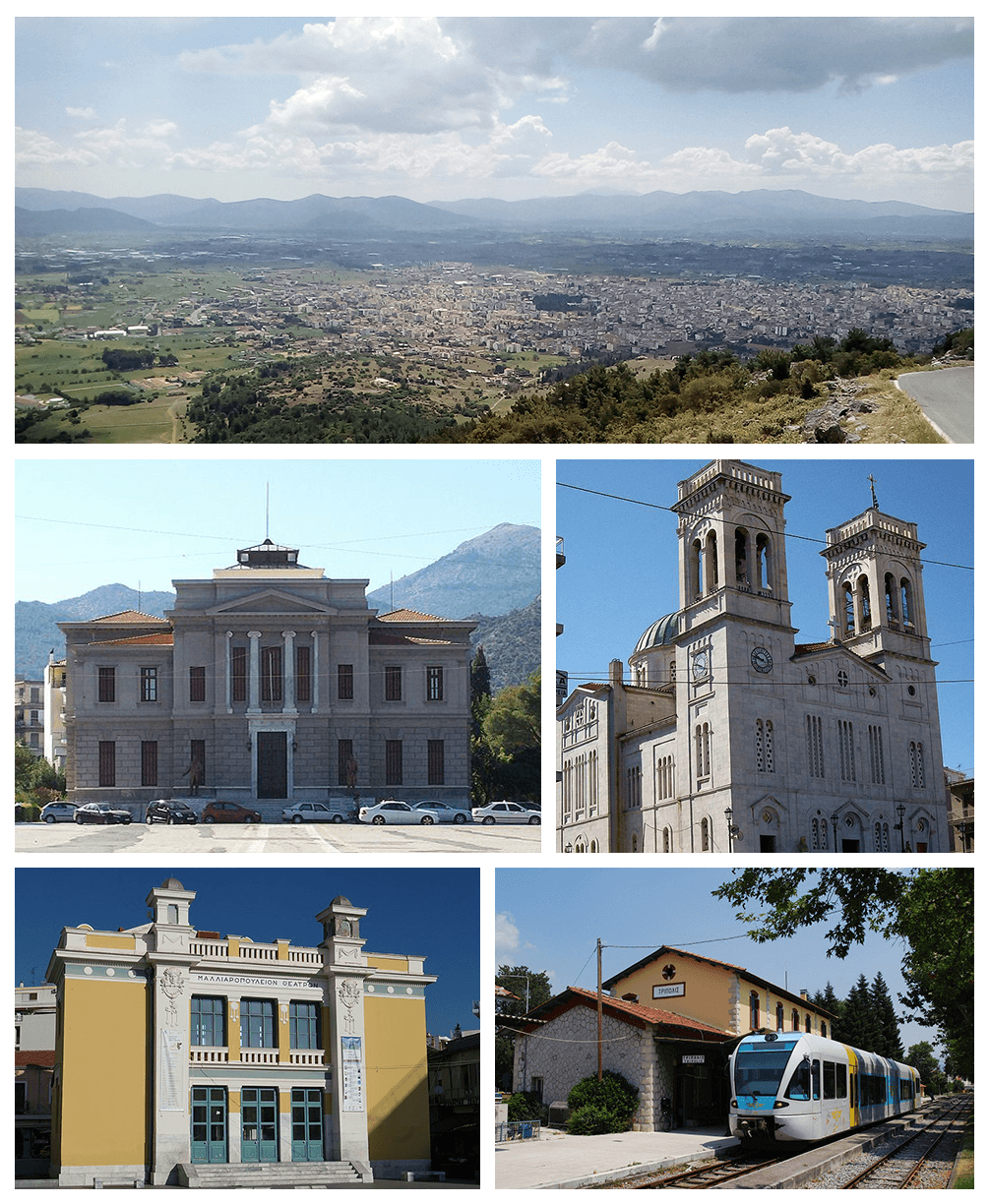 SilentResident (compilation, sources to attribute see above; if any of the sources used in the Montage are removed from Wikimedia Commons, or better ones are found, please inform its creator so that they can update it. You can contact the creator by leaving a message here: [1]) / CC BY-SA 3.0, via Wikimedia Commons
Self-guided audio walking tour of Tripoli — GPS route, offline playback, story-driven narration in 32 languages.
“Where ancient echoes meet the pulse of modern life.”
Not the postcards. The stories even locals don't know — whispered in your ear, right where they happened.
The grand equestrian statue of Theodoros Kolokotronis in Areos Square holds a secret beneath its bronze facade.
This prominent cathedral in Tripoli's central square has a foundation that tells a story of shifting powers.
Beyond the city, an ancient gate stands as a testament to formidable defenses, with a surprising detail in its construction.
Discover every secret of Tripoli
Every address, every reveal in full — in your ear, right where it happened.
You pick your stops. You walk. The voice reveals what the others miss.


Your self-guided audio tour of Tripoli is ready — pick your landmarks, choose your language, and start the moment you arrive.
BuyLume has a built-in augmented-reality guide. Hold your phone up and its camera shows the street ahead of you, with a glowing arrow laid over the real view that always points to your next stop — no map to puzzle over, no wrong turns. Like everything in Lume, it works fully offline.
Tripoli, the capital of Arcadia in the Peloponnese, is a city that often escapes the typical tourist path, yet offers a compelling blend of history, culture, and natural splendor. Situated at an altitude of approximately 650 meters on the verdant Mantineian plateau, it serves as a central hub for exploring the wider region. Surrounded by the imposing mountain ranges of Artemisio, Parthenio, and Mainalo, Tripoli enjoys a cooler summer climate than coastal areas, making it an appealing retreat. The city's strategic location has shaped its identity, transitioning from a significant administrative and military center during the Ottoman period to a symbol of the modern Greek state.
While Tripoli may not reveal ancient ruins within its immediate urban core, its surrounding landscape is abundant with archaeological sites and picturesque villages. The city itself presents a mosaic of neoclassical buildings, traditional architecture, and lively squares, reflecting its layered past and ongoing role as a regional capital. Visitors can experience an authentic slice of inland Greek life, from exploring historical museums to savoring local gastronomy and wines, particularly the renowned Moschofilero variety produced in the nearby vineyards.
The area where Tripoli stands today has been inhabited since the early 14th century, though the modern city itself is a creation of the late Byzantine and early Ottoman periods. Originally known as Tripolitsa (or Dropolitsa), it rose to prominence under Ottoman rule, becoming the absolute administrative and military center of the Peloponnese, then called Morea. It served as the seat of the Pasha of Morea and was heavily fortified, making it a crucial target during any revolutionary actions.
Tripoli's most pivotal role in history came during the Greek War of Independence. The city became a primary objective for Greek insurgents, led by figures like Theodoros Kolokotronis. After a months-long siege, Greek revolutionary forces captured Tripolitsa on October 17, 1821. This victory was a decisive turning point and carried significant symbolic momentum for the revolutionary cause, establishing Tripoli's connection with the birth of the modern Greek state.
However, the city's liberation was followed by a tragic massacre of its Muslim and Jewish populations, an event that remains a contested part of the independence movement's historiography. In 1825, Ibrahim Pasha recaptured and devastated Tripolitsa, but the city was eventually reborn from its ashes. Following Greece's independence in 1830, the old Ottoman structures, including the city walls, were demolished, and Tripoli was rebuilt on a neoclassical grid plan. It was renamed and developed as a major city of the new Kingdom of Greece, serving as the capital of the Arcadia district and becoming an administrative, economic, commercial, and transportation hub for the central and southern Peloponnese throughout the 19th and 20th centuries.
Begin your exploration in Areos Square, one of Greece's largest central squares. Here, you'll find the impressive equestrian statue of Theodoros Kolokotronis, a hero of the Greek War of Independence. Nearby, the Cathedral of Saint Vasilios stands as an architectural landmark. The War Museum of Tripolis, a branch of the War Museum of Athens, offers a deep dive into modern Greek history, with exhibits including weapons, uniforms, and photographs from the 1821 Revolution and World War II.
For a glimpse into Arcadia's ancient past, the Archaeological Museum of Tripoli houses over 7,000 artifacts from the Neolithic to Roman periods, with significant findings from ancient cities like Tegea and Mantineia. Just a short drive from the city, the Kapsia Cave captivates with its intricate stalactite formations. The surrounding region also offers numerous opportunities for day trips to important archaeological sites such as Ancient Tegea and Ancient Mantineia, both significant in classical Greek history. For nature enthusiasts, the St. George Grove provides a green urban oasis with an amphitheater, while the nearby Mainalon Ski Resort offers winter sports.
Tripoli welcomes visitors year-round, but the most pleasant weather for sightseeing and outdoor activities typically occurs in spring (March, April, May) and autumn (September, October, November). These shoulder seasons offer mild temperatures and lively natural colors. Summers (June to August) are warm due to the city's altitude, making it a comfortable escape from coastal heat, with average highs around 31°C (88°F) in August. Winters (December to February) are cold, with average lows around 1°C (34°F) in January, and snow is possible.
Tripoli is approximately 160 kilometers southwest of Athens and is easily accessible via the modern Athens–Tripoli–Kalamata highway (A7). Regular bus services from Athens' KTEL Kifissos terminal take about 2.5 hours. While public transport connects major cities, renting a car is highly recommended for exploring the archaeological sites and mountain villages of the Peloponnese region around Tripoli. The city itself is walkable, with central squares like Areos and Kolokotroni serving as social hubs with cafés, shops, and restaurants. Accommodations range from hotels to guesthouses, often at more affordable prices than coastal destinations. Consider a stay of two to three days to combine city exploration with excursions to nearby attractions.
Tripoli in Korean, in Chinese or in Hebrew — and 29 more languages, every stop narrated by a native voice. The widest language range of any self-guided audio tour.
Available in: