Oak Hall Hotel (ahora Ayuntamiento de Tryon)
Antes de convertirse en la sede del gobierno local, este gran hotel albergó a algunas de las mentes más innovadoras de América.
La historia completa se desbloquea en el tour
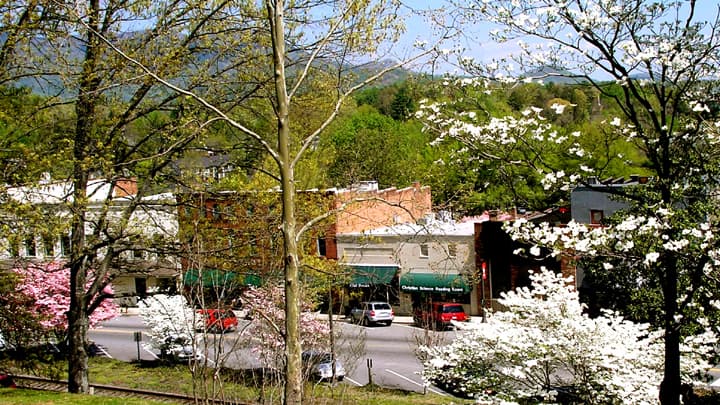 Janet Gray / cc by-sa 3.0, via Wikimedia Commons
Tour de audio autoguiado de Tryon — ruta GPS a pie, reproducción offline, narración en 32 idiomas.
“Donde la brisa de Blue Ridge susurra historias de artistas, jinetes y leyendas inesperadas.”
No las postales. Las historias que ni los locales conocen — al oído, justo donde ocurrieron.
Antes de convertirse en la sede del gobierno local, este gran hotel albergó a algunas de las mentes más innovadoras de América.
El centro de Tryon tiene una mascota, un caballo, pero no es un caballo cualquiera.
Hoy, Tryon es conocida por su floreciente región vinícola, pero esta no es la primera vez que las uvas prosperan aquí.
Descubre todos los secretos de Tryon
Cada dirección, cada revelación al completo — a tu oído, justo donde ocurrió.
Eliges tus paradas. Caminas. La voz te revela lo que los demás ignoran.


Tu tour de audioguía por Tryon te espera — elige tus lugares, tu idioma y empieza al llegar.
ComprarTryon, Carolina del Norte, un pequeño pueblo con una población de aproximadamente 1,500-1,700 habitantes, se encuentra en el condado de Polk, en la base de la escarpa de Blue Ridge. Conocida como "El pueblo más amigable del Sur", ofrece una combinación única de belleza natural, un clima templado y una animada escena cultural. La ubicación del pueblo dentro de la región del "Cinturón Térmico" contribuye a sus inviernos moderados y brisas frescas de verano, lo que lo convierte en un destino atractivo durante todo el año.
El encanto de Tryon reside en su mezcla ecléctica de individuos, incluidos artistas, autores, músicos y ejecutivos jubilados, que han sido cautivados por su ambiente sereno y su atmósfera acogedora. El centro, con muchos edificios históricos que datan de antes de 1900, presenta una selección de tiendas, galerías de arte y restaurantes. Ya sea que le atraiga su herencia ecuestre, sus esfuerzos artísticos o simplemente el encanto de las estribaciones de Blue Ridge, Tryon presenta una experiencia distintiva y atractiva.
La tierra que ahora es Tryon fue originalmente el coto de caza del pueblo Cherokee, con evidencia que sugiere habitación humana en los valles de los ríos durante más de 11,000 años. Los Cherokee desarrollaron pueblos con gobiernos democráticos, cultivaron cosechas y fueron artesanos hábiles.
El pueblo y Tryon Peak llevan el nombre de William Tryon, quien fue Gobernador de Carolina del Norte de 1765 a 1771 y fue honrado por su papel en un tratado de paz con los Cherokee después de la Guerra Francesa e India.
La historia moderna de Tryon comenzó a finales del siglo XIX con la construcción de la línea ferroviaria entre Spartanburg, Carolina del Sur, y Asheville, Carolina del Norte. El pueblo se incorporó en 1885 y rápidamente se convirtió en una parada popular para los viajeros que buscaban el clima moderado y la belleza natural de las montañas, evolucionando hacia una comunidad turística. La estación de tren actual, la tercera construida en el lugar, data de 1922.
A principios del siglo XX, Tryon comenzó a atraer a autores, artistas y figuras prominentes que la eligieron como un lugar de escape o un hogar permanente. El legado ecuestre del pueblo se afianzó con la formación del Tryon Riding and Hunt Club (TRHC) en 1925 por Carter P. Brown, un empresario visionario y jinete. El TRHC ha sido fundamental para preservar cientos de millas de senderos para montar y ha albergado el renombrado Block House Steeplechase anualmente desde 1946. La escena ecuestre de Tryon se expandió aún más con el establecimiento de organizaciones como los Tryon Hounds y el Foothills Equestrian Nature Center (FENCE). El área obtuvo reconocimiento internacional con la apertura del Tryon International Equestrian Center (TIEC) en 2014, que albergó los Juegos Ecuestres Mundiales de la FEI en 2018.
Más allá de sus actividades ecuestres, Tryon tiene una notable herencia artística y literaria. El famoso poeta Sidney Lanier pasó sus últimos días aquí en 1881, y el dramaturgo William Gillette, conocido por su interpretación de Sherlock Holmes, produjo su versión teatral del detective en Tryon. El pueblo es también el lugar de nacimiento de la legendaria música y activista por los derechos civiles Nina Simone. Esta mezcla de importancia histórica, encanto natural y una próspera comunidad cultural continúa definiendo a Tryon hoy.
Comience su exploración en el centro de Tryon, donde los edificios históricos bordean Trade Street, albergando una variedad de tiendas, galerías de arte y restaurantes. Vea una película en el encantador y renovado Tryon Theatre o disfrute de una actuación en el Tryon Fine Arts Center. El Upstairs Artspace, una galería de arte contemporáneo, exhibe artistas regionales y alberga un Escenario Abierto Literario para escritores.
Para un toque de fantasía local, busque a Morris el Caballo, la querida mascota de la ciudad de veintidós manos de altura. Una visita a la Plaza Nina Simone, dedicada a la célebre hija nativa de Tryon, presenta una estatua de la renombrada música y activista por los derechos civiles.
Los entusiastas del aire libre encontrarán mucho para disfrutar. Pearson's Falls and Glen ofrece una cascada de 90 pies de propiedad privada y una serena belleza natural. El Vaughn Creek Greenway ofrece un sendero fácil para caminar con vistas al bosque y cascadas. Harmon Field, un parque de 36 acres a lo largo del río Pacolet, ofrece campos de béisbol, canchas de tenis e instalaciones ecuestres. Realice un pintoresco recorrido por las fincas de caballos en Hunting Country Road o a lo largo de la Pacolet River Scenic Byway (Hwy 176).
Sumérjase en el mundo ecuestre de Tryon visitando el Tryon International Equestrian Center (TIEC) en la cercana Mill Spring, una instalación de clase mundial que alberga eventos y ofrece restaurantes y tiendas. Para aquellos interesados en las bebidas locales, explore la tradición vinícola reavivada de la zona en uno de los varios viñedos en funcionamiento.
El clima moderado de Tryon lo hace atractivo durante todo el año, pero ciertas estaciones destacan. La primavera (marzo-mayo) ofrece un clima agradable, paisajes florecientes y una atmósfera activa, pero no abarrotada, ideal para hacer senderismo y eventos ecuestres tempranos. El otoño (septiembre-noviembre) a menudo se considera el mejor para escapadas románticas, con temperaturas más frescas, follaje vívido y un ritmo más lento. Las actividades de clima cálido se disfrutan mejor desde mediados de mayo hasta mediados de junio y desde mediados de agosto hasta principios de octubre. Julio es el mes más caluroso, con una máxima promedio de 87-88°F, mientras que enero es el más frío, con una mínima promedio de 32-34°F. Los cielos más despejados suelen ser en octubre.
Tryon se encuentra aproximadamente a cuatro millas al oeste de la Interestatal 26 (Salida 67) en la US Highway 176/NC Highway 108. La ciudad en sí es relativamente pequeña, de aproximadamente dos millas cuadradas. Generalmente hay estacionamiento disponible y muchas atracciones del centro son accesibles a pie. Para aquellos que visiten el Tryon International Equestrian Center, este se encuentra a unas 13 millas al este del centro de Tryon en Mill Spring.
Para información local y reservas comunitarias de instalaciones como Harmon Field, comuníquese con el Ayuntamiento de Tryon. Las facturas de servicios públicos se envían mensualmente y los pagos se pueden realizar por correo, en persona en el Ayuntamiento o en línea. Si encuentra problemas en las calles dentro de los límites de la ciudad, comuníquese con el Ayuntamiento; para carreteras fuera, use el formulario de contacto del NCDOT. Recuerde que verter grasa por los desagües puede causar obstrucciones.
Tryon en coreano, en chino o en hebreo — y 29 idiomas más, cada parada narrada por una voz nativa. La mayor variedad de idiomas de cualquier audioguía autoguiada.
Disponible en: