Rue de la Tour de Maïsse
Some of Tulle's oldest streets bear a curious architectural feature, a testament to ingenuity in a city built on inclines.
Full story unlocks in the tour
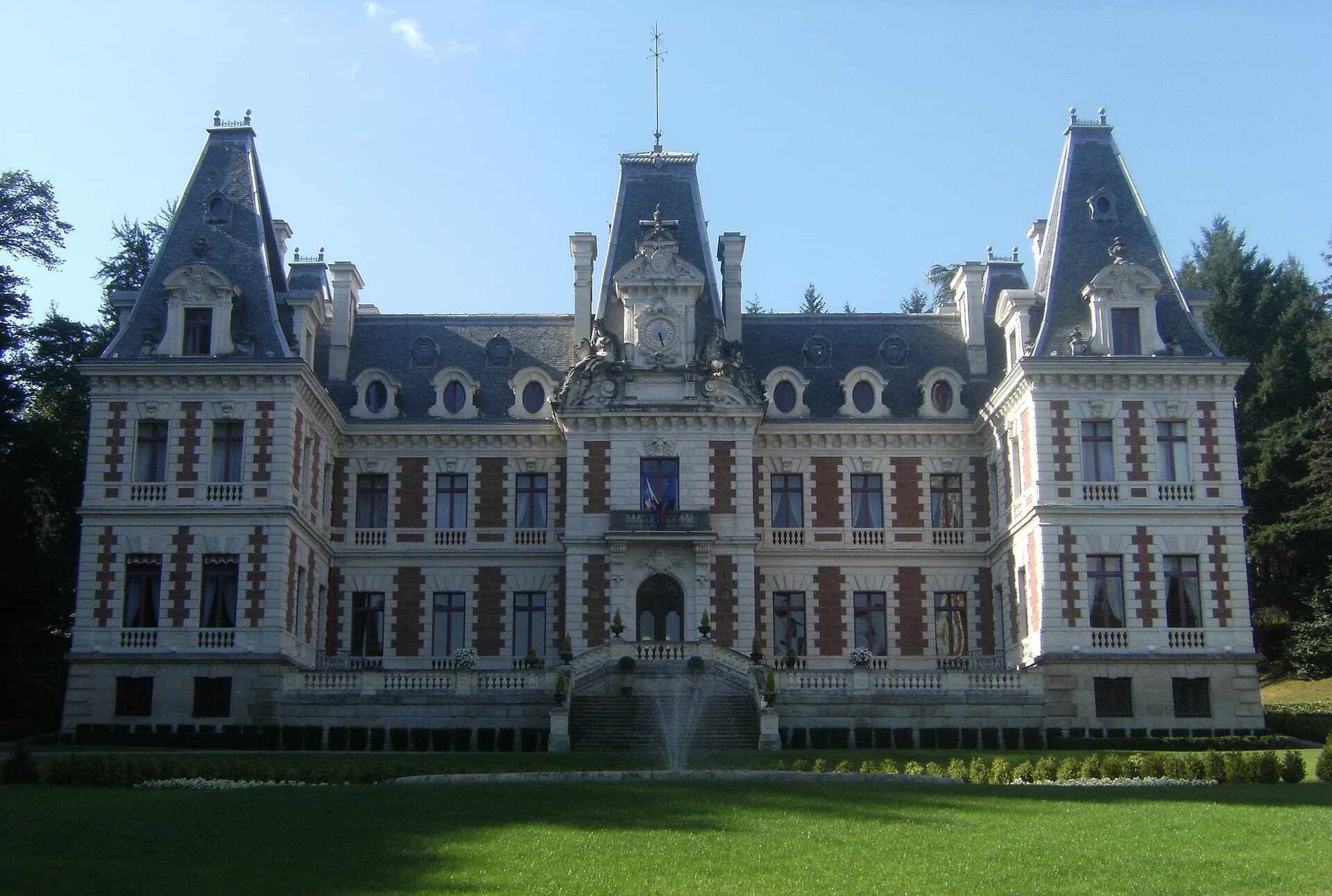 F. Lavie / CC BY-SA 3.0, via Wikimedia Commons
Self-guided audio walking tour of Tulle — GPS route, offline playback, story-driven narration in 32 languages.
“Where delicate lace meets the resonant hum of accordions.”
Not the postcards. The stories even locals don't know — whispered in your ear, right where they happened.
Some of Tulle's oldest streets bear a curious architectural feature, a testament to ingenuity in a city built on inclines.
The accordion, a symbol of Tulle, once faced an uncertain future, but a surprising hero stepped in to save its most historic manufacturer.
Tulle's long history of arms manufacturing holds a lesser-known connection to early American military history.
Discover every secret of Tulle
Every address, every reveal in full — in your ear, right where it happened.
You pick your stops. You walk. The voice reveals what the others miss.



Your self-guided audio tour of Tulle is ready — pick your landmarks, choose your language, and start the moment you arrive.
BuyLume has a built-in augmented-reality guide. Hold your phone up and its camera shows the street ahead of you, with a glowing arrow laid over the real view that always points to your next stop — no map to puzzle over, no wrong turns. Like everything in Lume, it works fully offline.
Tulle, the capital of the Corrèze department in central France, is a city sculpted by the deep, narrow valley of the Corrèze River and crowned by seven hills. Known for its historic industries of lace, firearms, and accordions, Tulle offers a distinctive blend of heritage and natural beauty. The city's old neighborhoods, with their steep streets and houses clinging to the hillsides, invite exploration.
Often called 'the town on seven hills,' Tulle's identity is deeply intertwined with its craft traditions and its role as an administrative and cultural hub. From the intricate 'poinct de Tulle' lace to the melodious accordions of Maison Maugein, the city's past resonates in its present. Visitors can wander through the medieval district of Le Trech, discover architectural elements, and experience a city that, despite its industrial past, maintains a verdant setting along the river.
Tulle's history stretches back to ancient times, with its first documented mentions appearing around the 10th century. It began as a fortress, playing a role in protecting France. During the Middle Ages, Tulle gained recognition for its skilled lace-making, a craft that has continued for centuries. The city's name is even given to 'tulle,' a fine silk net fabric.
The 17th century marked the beginning of Tulle's significant arms manufacturing industry. A royal arms factory was established in 1777, building on a history of gunmaking that had existed since the early 1600s. This factory became one of France's most important weapons manufacturers, producing various rifles and, later, specializing in automatic weapons. The Manufacture Nationale d'Armes de Tulle (MAT) remained a major employer in the region until the 1980s.
The 19th century brought considerable changes to Tulle's landscape, including the opening of a railway station in 1871, connecting the town to the national network. New industries emerged, with the firearms factory being nationalized in 1886 and relocating to a new district, powered by a hydroelectric plant.
During World War II, Tulle was a significant location for the French Resistance. However, the city also endured a tragic event, the Tulle massacre in June 1944, when 99 male civilians were hanged by the 2nd SS Panzer Division Das Reich in retaliation for Resistance actions. Many others were sent to forced labor camps.
Beyond its industrial heritage, Tulle also became known as the 'accordion capital.' The Maugein accordion factory, founded in 1919, is the oldest accordion factory in France and has contributed significantly to the city's cultural identity. The city continues to celebrate this musical legacy with festivals like the 'Nuits de Nacre' (now 'Tulle Remet le Son'), which brings the town alive with accordion music.
Begin your exploration in the historic heart of Tulle, the district of Le Trech. Here, the Notre-Dame Cathedral of Tulle, a Romanesque and Gothic masterpiece dating from the 12th to 14th centuries, stands as an emblematic monument. Its slender bell tower is the tallest in the Limousin region. Adjacent to the cathedral, the 13th-century Gothic cloister, a remnant of an old Benedictine monastery, offers a peaceful medieval garden and a chapterhouse adorned with 14th-century mural paintings. The Cloister Museum within the west gallery presents collections related to the history of Bas-Limousin, including religious art and examples of 'poinct de Tulle' lace.
Stroll through the stepped alleyways of the old town, such as Rue Riche, Rue des Portes Chanac, and Rue de la Tour de Maïsse, to discover medieval and Renaissance architecture, including houses with ornate balconies and carved doorways. Do not miss the Maison Loyac, a 16th-century house with a richly decorated façade and corner turrets, and the Maison Lauthonie with its magnificent Renaissance door.
For a deeper dive into Tulle's industrial legacy, visit the Cité de l'accordéon et des patrimoines, which opened in April 2024. Located in the former Banque de France building, this cultural space highlights the history of the accordion, 'poinct de Tulle' lace, and the Arms Factory. You can also visit Maison Maugein, France's oldest accordion manufacturer, to learn about the craft. The banks of the Corrèze River provide pleasant walking paths. For expansive views of the city, explore the higher reaches of Tulle, which is known as the 'city of seven hills'.
The best time to visit Tulle for warm-weather activities is from late June to early September. During these months, the average daily high temperature is above 71°F (21°C), with July being the warmest month, averaging 77°F (25°C). Skies are also clearest in July, and precipitation is at its lowest. The shoulder seasons of May and June, and September to November, also offer pleasant weather and fewer crowds, with temperatures ranging from 55 to 70°F (13 to 21°C). These periods are ideal for enjoying outdoor activities and local festivals. Tulle hosts the 'Tulle Remet le Son' accordion festival at the end of June.
Tulle is the prefecture of the Corrèze department, making it an administrative and commercial center. The city is well-connected by train, with Tulle station offering regional services towards Bordeaux, Brive-la-Gaillarde, and Ussel. Direct trains from Paris Austerlitz to Brive-la-Gaillarde can then connect to Tulle. Local bus services, operated by TuT, cover the Tulle area with three lines and 111 stops. Exploring the historic center on foot is highly recommended, as many of its attractions are concentrated in the old town.
For exploring the wider Corrèze region, a car is recommended. Tulle offers a variety of dining options, with restaurants often featuring local specialties such as Limousin beef, duck, charcuterie, and potato dishes. Booking in advance is advisable, especially on weekend evenings and during festivals. The city also hosts markets on Wednesday and Saturday mornings, offering local produce.
Tulle in Korean, in Chinese or in Hebrew — and 29 more languages, every stop narrated by a native voice. The widest language range of any self-guided audio tour.
Available in: