Vernon's Coat of Arms
The town's official emblem features an unexpected vegetable, a direct gift from a revered French king.
Full story unlocks in the tour
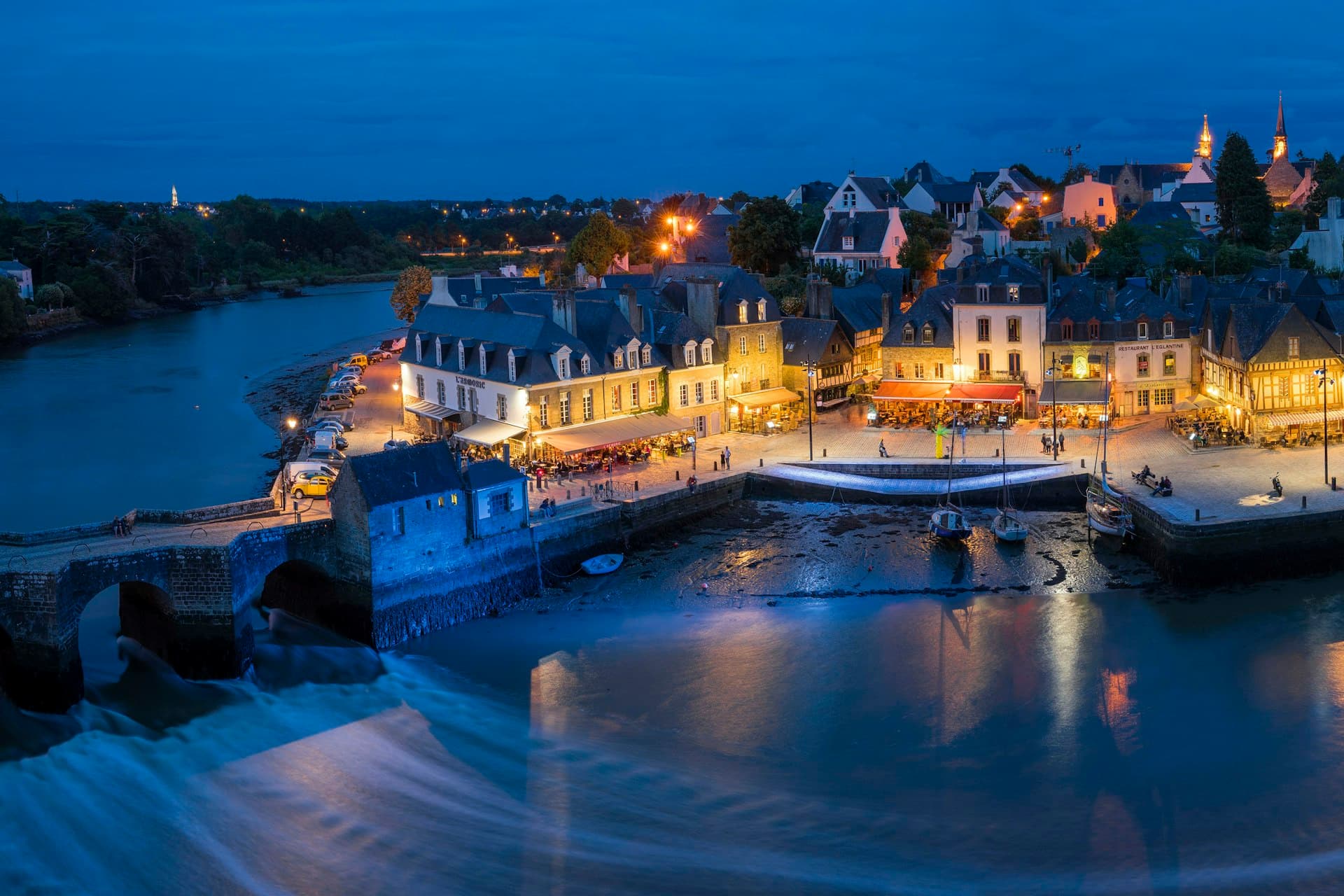 Photo of Trouville-sur-Mer, via Wikimedia Commons
Self-guided audio walking tour of Vernon — GPS route, offline playback, story-driven narration in 32 languages.
“Beyond Monet's gardens, a medieval Norman town recounts tales of kings, battles, and artistic inspiration.”
Not the postcards. The stories even locals don't know — whispered in your ear, right where they happened.
The town's official emblem features an unexpected vegetable, a direct gift from a revered French king.
One of Vernon's oldest and most picturesque buildings once served a very different purpose than its current role.
Despite significant damage during World War II, parts of Vernon's old town offer a surprising glimpse into its distant past.
Discover every secret of Vernon
Every address, every reveal in full — in your ear, right where it happened.
You pick your stops. You walk. The voice reveals what the others miss.


Your self-guided audio tour of Vernon is ready — pick your landmarks, choose your language, and start the moment you arrive.
BuyLume has a built-in augmented-reality guide. Hold your phone up and its camera shows the street ahead of you, with a glowing arrow laid over the real view that always points to your next stop — no map to puzzle over, no wrong turns. Like everything in Lume, it works fully offline.
Vernon, a Norman town along the tranquil River Seine, serves as a captivating gateway to the world-renowned gardens of Claude Monet in Giverny. Yet, to overlook Vernon itself would be to miss a deep well of history, art, and authentic French character. Just an hour's train ride from Paris, this commune in the Eure department offers a delightful detour for those seeking a deeper connection with Normandy's past and present.
Beyond its reputation as a transit point, Vernon invites visitors to wander its medieval streets, explore its ancient architecture, and absorb the serene riverside atmosphere that has inspired artists for centuries. With roots stretching back to Roman times, Vernon's strategic location along the Seine has shaped its identity as a historically significant military town and, more recently, a peaceful cultural haven.
## From Roman Outpost to Royal Town Vernon's history stretches back to prehistoric, Celtic, Gallo-Roman, and Merovingian eras, indicating its long-standing importance. Its strategic position along the Seine made it a crucial military town, particularly after the establishment of the Duchy of Normandy. Richard de Reviers, Captain of Vernon, even participated in the Battle of Hastings in 1066.
The town played a significant political and military role during the prolonged rivalry between the Capetians and Plantagenets. In 1196, Vernon was attached to the French kingdom by Philippe Auguste, even before the rest of Normandy in 1204. It was Philippe Auguste who commissioned the construction of Vernon Castle, whose keep and one tower still stand today, alongside the beautifully preserved Château des Tourelles.
## Saint-Louis and the Watercress King Saint-Louis frequently visited Vernon, often meeting his friend Eudes Rigaud, the archbishop of Rouen. He was a benefactor to the town, founding and richly endowing the Hôtel-Dieu (now Saint-Louis Hospital). The town's coat of arms, featuring three bunches of watercress, is a direct result of Saint-Louis being offered the refreshing greens after a long journey.
## A Town of Artistic and Military Significance By the 18th century, Vernon, like other towns in the region, was transferred by Louis XV to the Count of Belle-Isle. After his death, it reverted to the crown and was later granted to the Duke of Bourbon-Penthièvre. In the 19th century, Vernon transitioned into a peaceful agricultural and cultural town, becoming a popular holiday destination for Parisians.
Vernon's connection to Impressionism is profound, largely due to its proximity to Giverny, where Claude Monet lived for over 40 years. Monet immortalized several of Vernon's landmarks in his paintings, including the Collégiale Notre-Dame and the Old Mill. The town also holds memories of heroic battles, particularly in 1870 and during World War II, when local resistance groups fought against occupation and even engaged German tanks during its liberation in 1944.
Begin your exploration in Vernon's historic center, where narrow lanes are lined with classic Norman half-timbered houses, many dating back to the 15th and 16th centuries. Don't miss the Maison du Temps Jadis, a particularly photogenic 14th-century building that now houses the Tourist Office. The Collégiale Notre-Dame de Vernon, a magnificent church with elements from the 11th to 17th centuries, features a striking Flamboyant Gothic west façade and a notable rose window.
A short stroll will lead you to the banks of the Seine and the Le Vieux-Moulin (Old Mill), a 14th-century timber house balanced on the remains of a medieval bridge, a scene famously captured by Monet. Nearby, you'll find the Château des Tourelles, a remarkably preserved 12th-century defensive structure built by Philippe Auguste. For a touch of regal elegance, visit the Château de Bizy, often dubbed 'Little Versailles,' with its grand architecture, elegant gardens, and deep history. The Vernon Museum (Musée Alphonse-Georges Poulain) offers a diverse collection, including Impressionist works and local archaeological finds. For those interested in the town's fortifications, the Tour des Archives is the keep of the former castle, dating back to 1123.
Of course, no visit to Vernon is complete without acknowledging its proximity to Giverny. A 10-minute drive or bike ride will take you to Claude Monet's House and Gardens, a world-famous pilgrimage site for art lovers.
The best times to visit Vernon are late spring (April to June) and early autumn (September). During these months, the weather is mild, and Giverny's gardens are at their most flourishing, with tulips in late April, irises and roses in June, and dahlias and asters in September. Summer (July and August) is lively but can be busier, with average highs around 74°F (23°C). While Vernon itself is open year-round, Monet's house and gardens in Giverny close from November 1 to March 31, so plan accordingly if Giverny is a key part of your itinerary.
Vernon is conveniently located about 75 km west of Paris and is easily accessible by train. Direct trains from Paris Saint-Lazare to Vernon-Giverny station take approximately 45 minutes to an hour. The Vernon-Giverny train station is about a 15-minute walk from the town center. From the station, shuttle buses to Giverny are available from April to November, taking about 10 minutes and costing around €10 round trip. Bike rentals are also available at the station for a scenic 15-minute ride to Giverny.
If driving, take the A13 motorway and exit at junction 16 (Vernon), a roughly 1-hour drive from Paris. Vernon offers ample parking, with several free and paid car parks near the town center. The town is easily explored on foot, with a tourist discovery circuit that takes about an hour. The local currency is the Euro (EUR).
Vernon in Korean, in Chinese or in Hebrew — and 29 more languages, every stop narrated by a native voice. The widest language range of any self-guided audio tour.
Available in: