Vire's Town Centre
Though much of Vire was reconstructed after extensive damage during World War II, an intriguing architectural blend emerged.
Full story unlocks in the tour
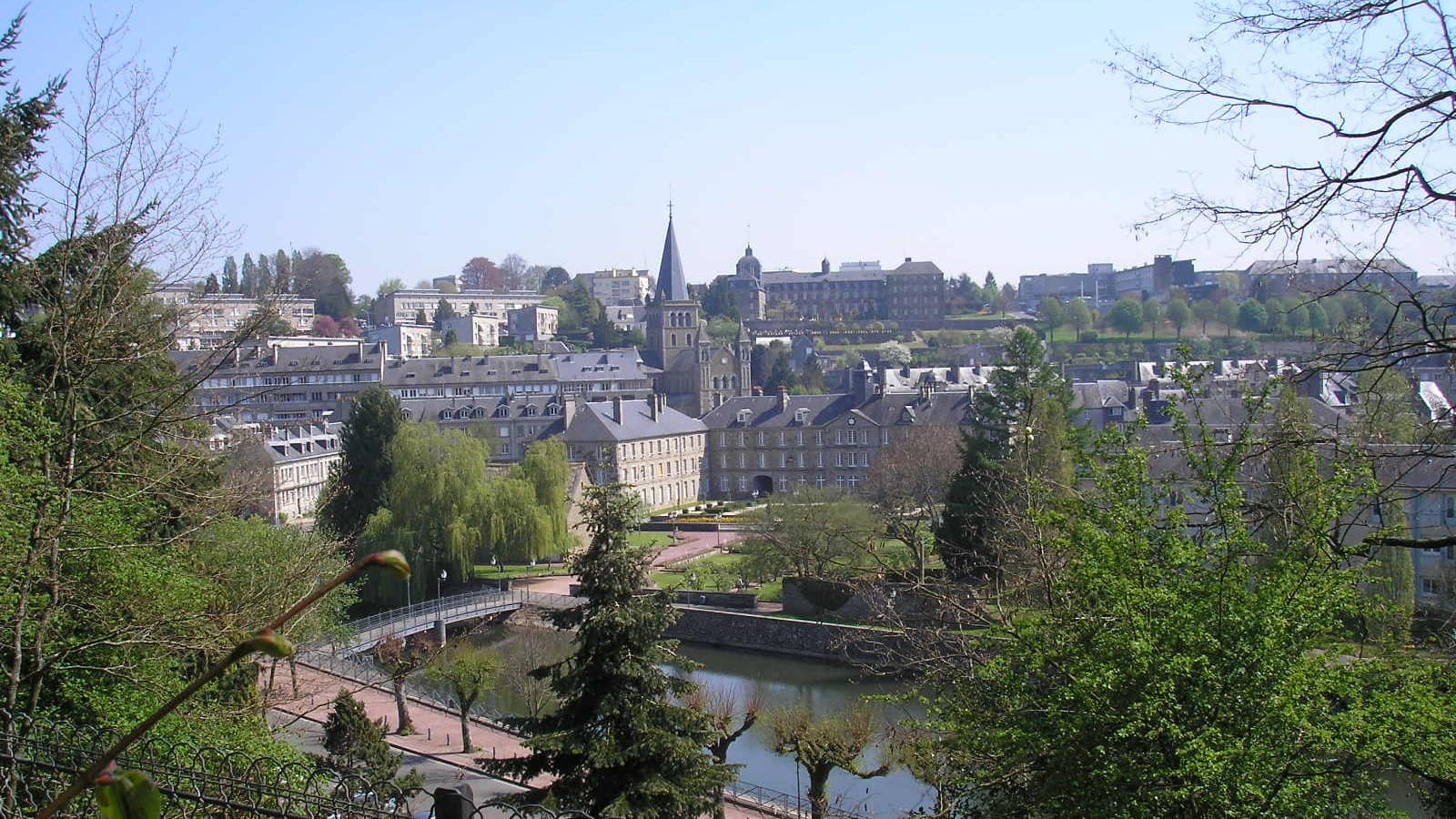 Ikmo-ned / CC BY-SA 3.0, via Wikimedia Commons
Self-guided audio walking tour of Vire — GPS route, offline playback, story-driven narration in 32 languages.
“Vire: Where medieval fortitude meets a flavorful resurgence.”
Not the postcards. The stories even locals don't know — whispered in your ear, right where they happened.
Though much of Vire was reconstructed after extensive damage during World War II, an intriguing architectural blend emerged.
This distinguished clock tower, a symbol of Vire, once served a far more utilitarian, and perhaps less charming, purpose.
Vire's most celebrated culinary export, a distinctive smoked sausage, traces its origins to a grandmother's recipe.
Discover every secret of Vire
Every address, every reveal in full — in your ear, right where it happened.
You pick your stops. You walk. The voice reveals what the others miss.
Your self-guided audio tour of Vire is ready — pick your landmarks, choose your language, and start the moment you arrive.
BuyLume has a built-in augmented-reality guide. Hold your phone up and its camera shows the street ahead of you, with a glowing arrow laid over the real view that always points to your next stop — no map to puzzle over, no wrong turns. Like everything in Lume, it works fully offline.
Vire, a historic market town in the gentle hills of Normandy's Calvados department, presents a compelling fusion of medieval resilience and contemporary energy. Situated on the banks of the River Vire, this inland destination is recognized for its deep historical foundations, hearty cuisine, and a strong sense of local identity. It offers a tranquil and authentic glimpse into Norman life, away from the more crowded coastal areas, making it an ideal location for those seeking to explore the heart of the French countryside.
The town's past is inscribed into its very architecture, with fragments of its formidable medieval fortifications standing as a testament to its strategic significance. While much of Vire was tragically damaged during World War II, it has been thoughtfully reconstructed, preserving its character while embracing a new identity. Today, visitors can discover a harmonious blend of old and new, alongside a lively weekly market and welcoming cafés.
Surrounded by the picturesque Bocage Normand—a landscape of small fields, hedgerows, rivers, and hills—Vire is a haven for walkers, cyclists, and food enthusiasts. It is also the birthplace of the celebrated Andouille de Vire, a traditional smoked pork sausage that is both cherished and debated across France. With its combination of history, nature, and gastronomy, Vire promises a rewarding encounter for anyone interested in Normandy's enduring heritage and spirit.
## Medieval Origins and Fortifications Vire's history extends to the Middle Ages, when it was established as a vital stronghold on a rocky promontory overlooking the River Vire. The town was heavily fortified to safeguard its inhabitants from the frequent invasions and conflicts that troubled the region. The imposing Château de Vire, constructed in the 11th century, served as a formidable defensive structure. While only fragments of its medieval walls remain today, these ancient stones still hint at a past filled with sieges and battles. King Louis IX of France ordered the existing stonework to be supplemented with exterior ramparts in the early 13th century, with the second precinct completed in the early 14th century. Key surviving medieval landmarks include the Porte Horloge, a striking 13th-century clock tower that once served as the main entrance to the walled town, and remnants of the original castle keep.
## Renaissance Flourishing and Economic Shifts By the Renaissance, Vire had transformed into a bustling economic center. The town gained renown for its production of linen and leather goods, which were highly sought after throughout France. Trade and craftsmanship flourished, and elegant mansions and timber-framed houses began to appear, reflecting the prosperity of the era. The Église Notre-Dame de Vire, an exquisite Gothic church built in the 13th century and expanded in later years, stands as a compelling example of the architectural heritage from this period. However, the 19th century brought a significant recession as Vire struggled to adapt to the Industrial Revolution.
## The Impact of World War II and Reconstruction One of the darkest chapters in Vire's history occurred during World War II. On June 6, 1944, during the Allied invasion of Normandy, the town was heavily bombed by British forces. An estimated 95% of Vire was destroyed, with much of the town reduced to rubble and countless historical structures lost. The bombing was so extensive that one of the two target-marking flare groups was misaligned, causing much of the destruction to fall across the town itself. Despite the devastation, the indomitable spirit of its citizens led to a determined reconstruction effort in the years that followed. Vire was sensitively rebuilt in granite and slate by 1963, a process that took 18 years, preserving its character while embracing a new identity. This reconstruction created a distinctive blend of old and new architecture visible throughout the town center today.
Begin your exploration at the Remains of Vire Castle (Donjon de Vire), where the 12th-century keep and sections of the curtain wall offer insights into the town's defensive past and and provide compelling views of the River Vire. Next, visit the iconic Porte Horloge, a substantial 13th-century medieval gateway surmounted by a 15th-century clock tower, which once served as the primary entrance to the fortified town. Explore the Place du Château and Town Centre, a pleasant open square with cafés, shops, and remnants of ancient ramparts, displaying a mix of traditional Norman granite architecture and post-war reconstruction.
The Church of Notre-Dame, dating from the 13th to 16th centuries, features elements from different periods, mostly in the Gothic style. For a deeper dive into local history, the Musée de Vire (Vire Museum), housed in a former Benedictine convent, offers a captivating journey through the town's past. Just a short drive from Vire, Lac de la Dathée provides a peaceful setting for walking, birdwatching, and water-based recreation, with a sailing club and boat hire available in summer. Adjacent to the lake, the Golf de Vire – La Dathée offers an 18-hole course with scenic countryside views. For adventure, the Viaduc de Souleuvre, an old railway line conceived by Gustave Eiffel, now hosts bungee jumping, tree climbing, and tobogganing. Do not miss the weekly market every Friday morning, filling the town center with local produce and regional specialties.
Vire is a year-round destination, but the most pleasant times to visit are spring (April–June) and early autumn (September–October). During these months, the weather is mild, and the countryside is at its most beautiful. Summer (July and August) offers longer days and occasional festivals, with July being the warmest month with average daytime highs of 23°C (73°F). However, summer, especially August, can see larger crowds as French residents go on vacation. Winter is quieter, though December features festive markets. For comfortable weather and fewer crowds, late May or September are often recommended. The Fête de l'Andouille in October is a particularly lively time to experience local culture.
Vire is readily accessible by train, with direct services from Caen (around 1 hour) and connections to Paris via Argentan or Caen (approximately 2.5 hours total). By car, Vire is about 1 hour 15 minutes from Caen and 1 hour 45 minutes from the D-Day beaches, making it a convenient stop between coastal sites and Mont-Saint-Michel, which is about 1 hour 30 minutes away. Caen Carpiquet Airport is 50 km from Vire. Local bus services, such as Réseau Nomad Car (Lignes de Normandie), connect Vire to nearby towns like Caen.
Accommodation options in Vire include hotels such as Hôtel de France Vire, Campanile Vire, and CIT'HOTEL Saint-Pierre, offering comfortable stays with varying amenities. There are also vacation rentals available, including houses and apartments, some with private pools. The town center is compact and easily explored on foot. For local information and guided historical walks, visit the Tourist Office of Pays de Vire. Vire also offers initiatives for hiring electric bikes and cars for a small fee, with pick-up points at the train station.
Vire in Korean, in Chinese or in Hebrew — and 29 more languages, every stop narrated by a native voice. The widest language range of any self-guided audio tour.
Available in: