Willibrordi Cathedral
The Willibrordi Cathedral stands as a testament to Wesel's resilience, but a unique detail within its walls speaks to a much darker period.
Full story unlocks in the tour
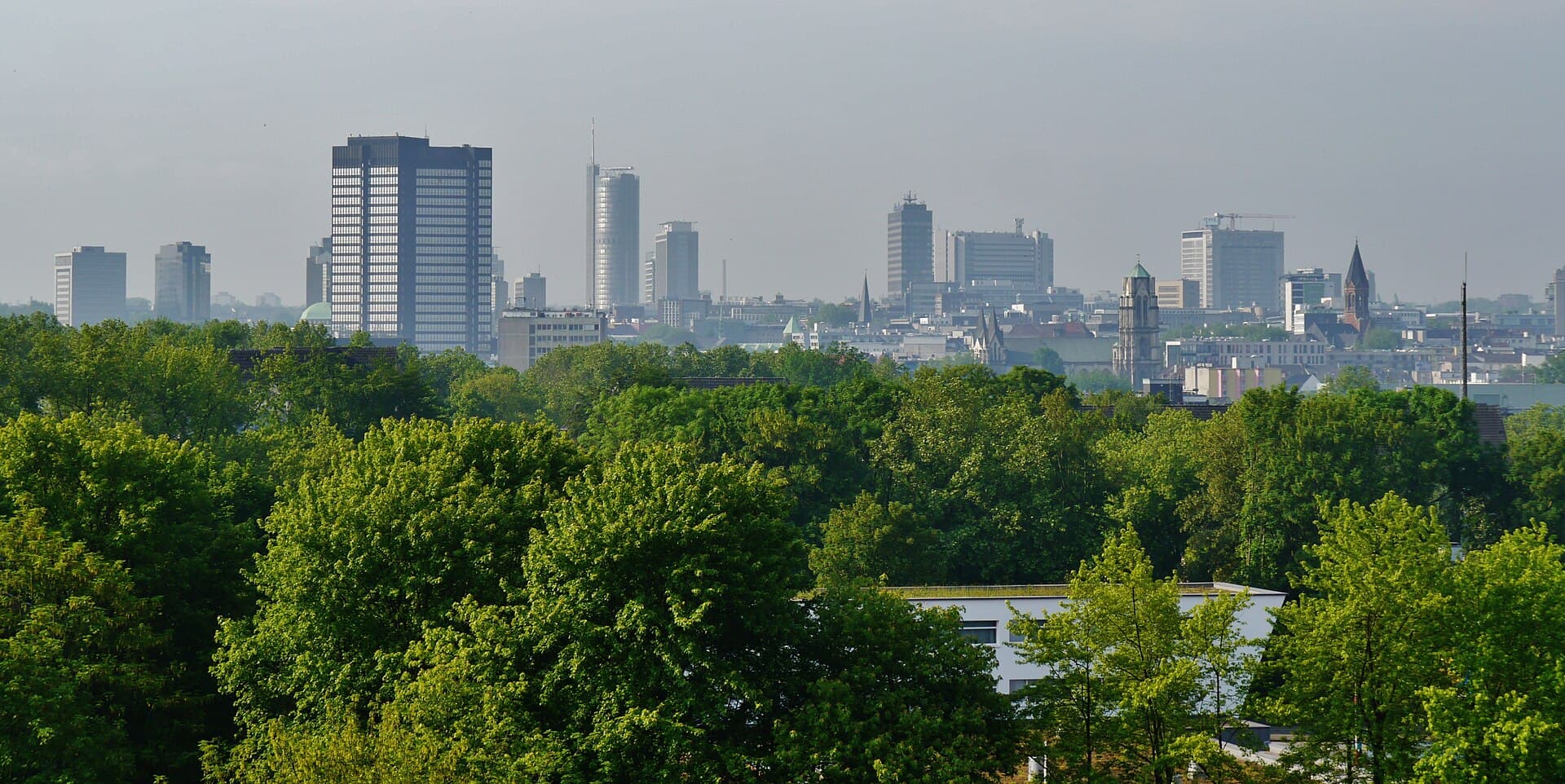 Photo of Essen, via Wikimedia Commons
Self-guided audio walking tour of Wesel — GPS route, offline playback, story-driven narration in 32 languages.
“Where Hanseatic history meets Prussian might on the Lower Rhine.”
Not the postcards. The stories even locals don't know — whispered in your ear, right where they happened.
The Willibrordi Cathedral stands as a testament to Wesel's resilience, but a unique detail within its walls speaks to a much darker period.
Wesel's impressive star-shaped Citadel was once a formidable military stronghold, but its story took an unexpected turn after World War I.
Strolling through Wesel, you will encounter numerous life-size donkey statues, each uniquely adorned. There is a playful reason behind this unusual public art.
Discover every secret of Wesel
Every address, every reveal in full — in your ear, right where it happened.
You pick your stops. You walk. The voice reveals what the others miss.
Your self-guided audio tour of Wesel is ready — pick your landmarks, choose your language, and start the moment you arrive.
BuyLume has a built-in augmented-reality guide. Hold your phone up and its camera shows the street ahead of you, with a glowing arrow laid over the real view that always points to your next stop — no map to puzzle over, no wrong turns. Like everything in Lume, it works fully offline.
Wesel, a city on the Lower Rhine, offers a journey through centuries of European narrative. Its geographical position, at the confluence of the Rhine and Lippe rivers, made it a strategic point for trade and defense, shaping its identity as a significant member of the Hanseatic League. The city's architecture and layout still bear the marks of its medieval prosperity and later military importance.
The urban landscape of Wesel invites exploration, revealing layers of its past. From the solemn grandeur of its cathedral to the remnants of its formidable fortifications, the city speaks of enduring spirit. Visitors can trace the contours of history, observing how the city has repeatedly rebuilt itself, maintaining its character while adapting to the currents of time.
## Medieval Origins and Hanseatic Flourishing Wesel's story begins in the 8th century, growing from a small Franconian settlement into a significant trading post. By the 12th century, it was a thriving market town, benefiting immensely from its location at the intersection of major trade routes. In 1407, Wesel joined the Hanseatic League, a powerful confederation of merchant guilds and market towns, which propelled its economic and cultural development. During this period, the city constructed its impressive Willibrordi Cathedral, a testament to its prosperity and religious devotion.
## Prussian Influence and Military Significance From the 17th century onwards, Wesel became increasingly important as a Prussian fortress city. The construction of the massive Citadel in the late 17th century transformed Wesel into a formidable military stronghold, designed to protect the Prussian territories on the Lower Rhine. This era brought significant military presence and strategic importance, influencing the city's growth and architecture. The city endured numerous sieges and conflicts, playing a pivotal role in various European wars.
## World Wars and Reconstruction The 20th century brought immense devastation to Wesel. During World War II, the city suffered catastrophic damage, particularly from Allied bombings in 1945, which destroyed nearly 97% of its buildings. The post-war period was dominated by the immense task of reconstruction. The citizens of Wesel embarked on a decades-long effort to rebuild their city, meticulously restoring historic structures and creating new urban spaces. This period of rebuilding reflects the profound resilience of the community, honoring its heritage while forging a new future.
Begin your exploration at the Willibrordi Cathedral, a striking example of Gothic architecture. Its interior offers a quiet space for reflection, with details that speak to centuries of worship and rebuilding. Next, visit the Citadel, a star-shaped fortification. While much of its original military structure was dismantled, the remaining grounds and reconstructed elements provide insight into Wesel's past as a Prussian stronghold. The Prussian Museum Wesel within the Citadel offers deeper context to this military heritage. Stroll through the city center to discover the numerous donkey statues, a playful nod to local folklore. Consider a walk along the Rhine promenade, offering views of the river that has long shaped the city's identity.
The spring and autumn months offer pleasant weather for exploring Wesel's historical sites and riverfront. The mild temperatures are ideal for walking and outdoor activities. Summer brings warmer days, suitable for enjoying the Rhine. Winter, while cooler, provides a quieter experience of the city's enduring character.
Wesel is accessible by train, with regular connections to larger German cities. The city center is compact and easily navigable on foot, allowing for a relaxed pace of discovery. Local buses provide connections to areas slightly outside the immediate core. English is generally understood in tourist-oriented establishments, but learning a few basic German phrases can enhance your experience. Accommodation options range from hotels in the city center to guesthouses. Dining choices include traditional German cuisine and international flavors.
Wesel in Korean, in Chinese or in Hebrew — and 29 more languages, every stop narrated by a native voice. The widest language range of any self-guided audio tour.
Available in: