The Grand Canyon Railway Depot
This train station, a point of departure for the Grand Canyon, holds an architectural secret literally foundational to Arizona.
Full story unlocks in the tour
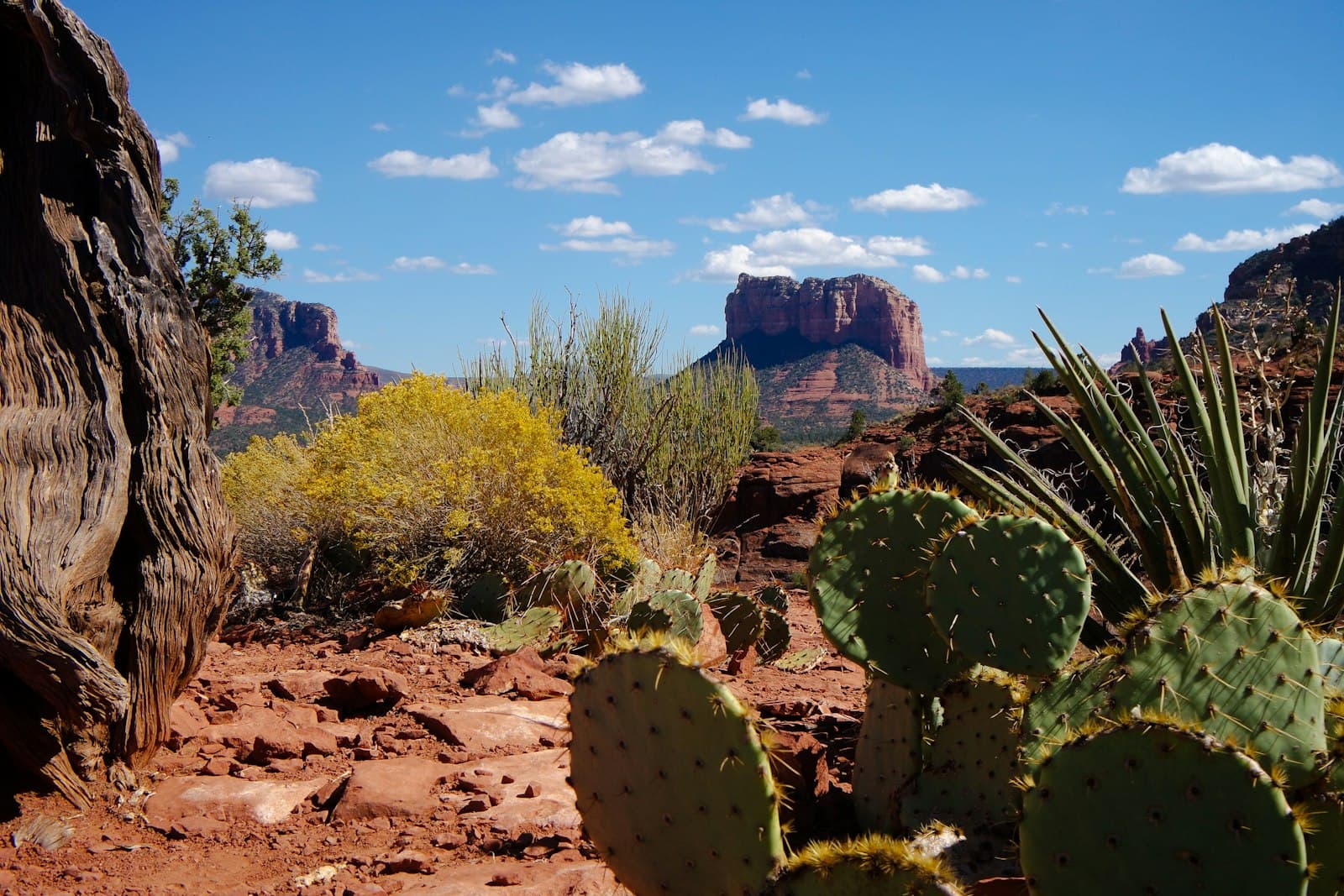 Photo: Michaela / Unsplash
Self-guided audio walking tour of Williams — GPS route, offline playback, story-driven narration in 32 languages.
“Where the spirit of Route 66 meets the wild lands of Arizona.”
Not the postcards. The stories even locals don't know — whispered in your ear, right where they happened.
This train station, a point of departure for the Grand Canyon, holds an architectural secret literally foundational to Arizona.
Beyond the neon signs and classic cars, the very thoroughfare in Williams holds a significant, yet often overlooked, place in the history of the Mother Road.
One of Williams' historic inns possesses a past far more colorful than its charming exterior suggests.
Discover every secret of Williams
Every address, every reveal in full — in your ear, right where it happened.
You pick your stops. You walk. The voice reveals what the others miss.


Your self-guided audio tour of Williams is ready — pick your landmarks, choose your language, and start the moment you arrive.
BuyWilliams, Arizona, often called the "Gateway to the Grand Canyon," occupies a unique space where the allure of the Old West, the iconic history of Route 66, and the grandeur of one of the world's natural wonders converge. Standing at an elevation of approximately 6,770 feet within the Kaibab National Forest, the city offers a distinct high-country climate, a welcome change from Arizona's lower desert regions. With a population of around 3,200 residents, Williams maintains a charming small-town atmosphere while serving as a lively hub for millions of tourists annually.
Beyond its role as a launching point for Grand Canyon adventures, Williams invites visitors to linger and explore its own rich array of attractions. The historic downtown district, recognized on the National Register of Historic Places, functions as a living museum of classic Americana, complete with vintage storefronts, neon signs, and a palpable sense of nostalgia. Whether drawn by the call of the open road, the whistle of a historic train, or the promise of outdoor exploration, Williams offers a memorable experience that blends history, natural beauty, and genuine small-town character.
Williams was established in 1881, named after William Sherley "Old Bill" Williams, a renowned trapper, trader, scout, and mountain man who frequented the area in the early 19th century. A statue of "Old Bill" stands in Monument Park, and the prominent Bill Williams Mountain to the south also bears his name. The city was officially incorporated on July 9, 1901.
The arrival of the Santa Fe Railroad in 1882 was a pivotal moment for Williams, transforming it into a bustling center for the railroad, ranching, and lumber industries. The town quickly gained a reputation as a lively, and at times rowdy, settlement with numerous saloons, bordellos, and gambling houses, primarily concentrated along Railroad Avenue's "Saloon Row." The true turning point, however, came in 1901 when the Santa Fe Railroad completed a 64-mile spur line from Williams to the Grand Canyon, solidifying the town's identity as the "Gateway to the Grand Canyon." This railway, which still operates today as the Grand Canyon Railway, revolutionized tourism by replacing a grueling two-day stagecoach journey.
In 1926, US Highway 66, the legendary "Main Street of America," was constructed through Williams, bringing a new wave of automobile tourists to the town. For decades, Williams flourished as an essential stop on the Mother Road, with its motels, gas stations, and diners becoming iconic symbols of American travel. However, the construction of Interstate 40 in the latter half of the 20th century posed a significant threat to many Route 66 towns. Williams famously became the last city on Historic Route 66 to be bypassed by I-40, a delay caused by lawsuits that ultimately concluded with the interstate's completion on October 13, 1984. Newspapers at the time reported the "essential end of US 66," and the route was decommissioned the following year. Despite the bypass, Williams demonstrated remarkable resilience. The reopening of the Grand Canyon Railway in 1989, combined with a growing nostalgia for Route 66, sparked a renaissance for the town, ensuring its continued prosperity as a tourist destination. The Williams Historic Business District and Urban Route 66, Williams, were both added to the National Register of Historic Places in the 1980s, preserving their unique character.
Williams offers a blend of historic charm and adventure, making it more than just a stopover. Begin by strolling the six-block Historic Downtown District, a well-preserved stretch of Historic Route 66. Here, you’ll find vintage storefronts, diners, and shops, perfect for soaking in classic Americana. Don't miss Pete's Route 66 Gas Station Museum for a glimpse of classic cars and memorabilia.
The Grand Canyon Railway is a quintessential Williams experience. Board a vintage train at the Williams Depot for a scenic 65-mile journey to the South Rim of the Grand Canyon, complete with onboard entertainment and potential "train robbers." For wildlife encounters, Bearizona Wildlife Park offers a drive-through experience to see North American animals like bears, wolves, and bison in natural habitats, plus a walk-through section with smaller creatures. The Grand Canyon Deer Farm allows for close-up interactions, including hand-feeding deer and seeing other exotic animals.
For outdoor enthusiasts, Bill Williams Mountain offers hiking trails and a scenic drive to its summit, providing expansive views. The surrounding Kaibab National Forest provides opportunities for hiking, fishing in its seven lakes, and even an alpine ski area. Thrill-seekers can visit Canyon Coaster Adventure Park, home to Arizona's only mountain coaster, offering twists and turns through the pine trees.
Williams experiences four distinct seasons due to its high elevation, making the best time to visit dependent on your preferred activities. The most comfortable weather for warm-weather activities typically runs from mid-June to late August, with July being the warmest month, averaging highs around 81-84°F (27-29°C). Spring (March-May) and Fall (September-November) offer mild temperatures, fewer crowds, and ideal conditions for sightseeing, hiking, and enjoying the changing foliage. Winter (December-February) brings cold temperatures and snowfall, transforming Williams into a scenic mountain town, perfect for snow play, skiing at nearby Arizona Snowbowl, or a quieter Route 66 experience. August is typically the wettest month, while January sees the most snowfall.
Williams is located just off Interstate 40, west of Flagstaff, making it easily accessible by car. The town is approximately 58 miles south of the Grand Canyon's South Rim, and serves as the southern terminus for the Grand Canyon Railway. While driving to the Grand Canyon is an option, the historic train journey offers a unique and entertaining alternative. The Williams-Kaibab National Forest Visitor Center, located in a historic 1901 train depot, is an excellent first stop for maps, visitor guides, and information on local history and outdoor activities. The town offers a variety of lodging options, including motels, RV parks, and several restaurants, along with Native American jewelry and curio shops. Williams is surrounded by the Kaibab National Forest, offering numerous recreational opportunities.
Williams in Korean, in Chinese or in Hebrew — and 29 more languages, every stop narrated by a native voice. The widest language range of any self-guided audio tour.
Available in: