Telaga Warna (Lac Coloré)
Les teintes changeantes de Telaga Warna sont plus qu'un simple jeu de lumière ou une anomalie géologique.
L'histoire complète se débloque dans le tour
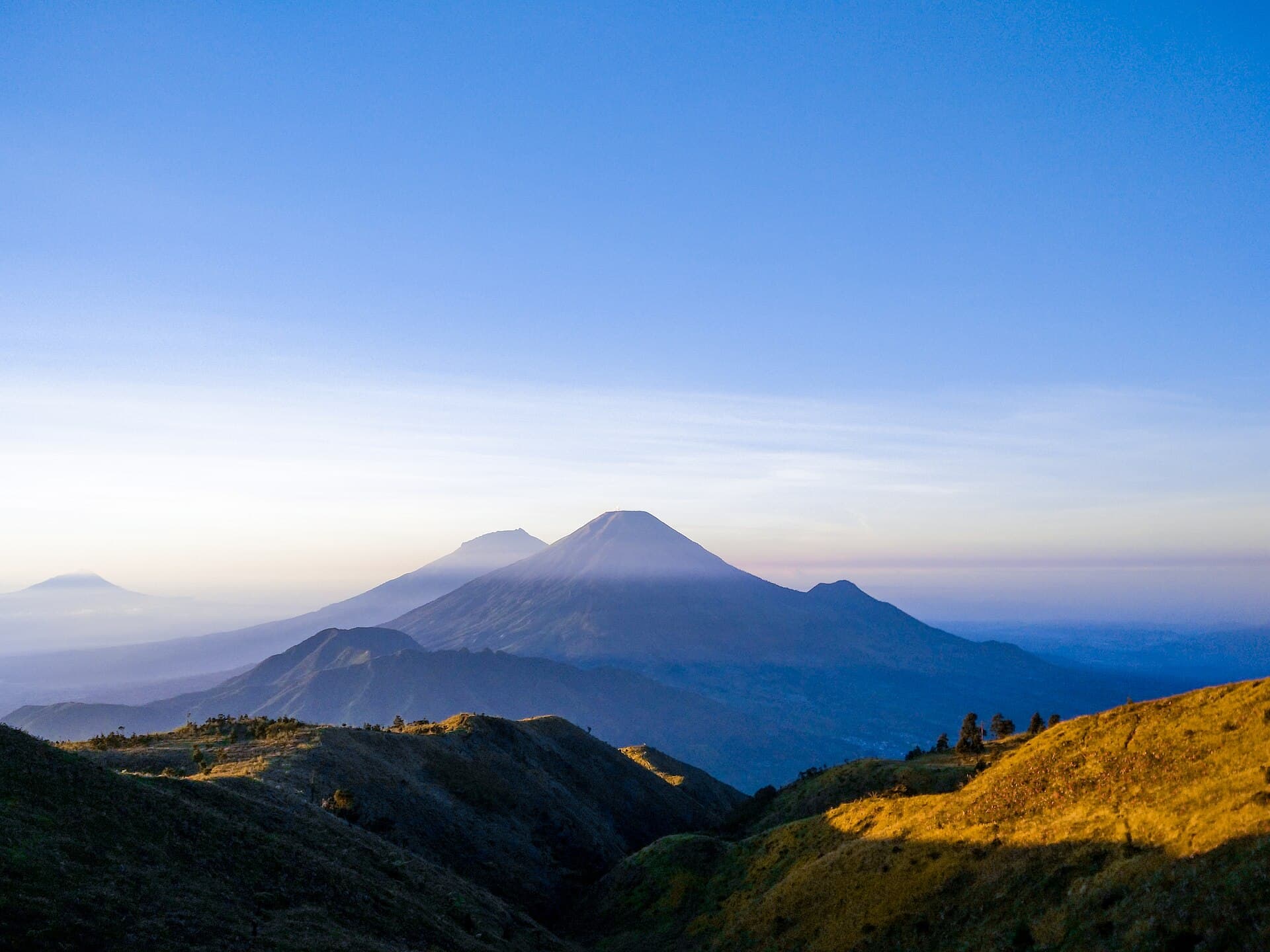 Anggowidhi / CC BY-SA 4.0, via Wikimedia Commons
Visite audio autoguidée de Wonosobo — parcours GPS à pied, lecture hors ligne, narration en 32 langues.
“Là où les sommets volcaniques rencontrent les mythes anciens et l'air parfumé au thé.”
Pas les cartes postales. Les histoires que même les habitants ignorent — soufflées à l'oreille, là où elles se sont passées.
Les teintes changeantes de Telaga Warna sont plus qu'un simple jeu de lumière ou une anomalie géologique.
Une histoire circule d'un village prospère dans les montagnes de Dieng qui a entièrement disparu au milieu du XXe siècle.
Les enfants du plateau de Dieng possèdent parfois un trait physique distinctif et naturel.
Découvrez tous les secrets de Wonosobo
Chaque adresse, chaque révélation en entier — dans ton oreille, là où elle s'est passée.
Tu choisis tes lieux. Tu marches. La voix te révèle ce que les autres ignorent.


Votre visite audioguidée de Wonosobo vous attend — choisissez vos lieux, votre langue, et lancez-vous dès votre arrivée.
AcheterLume intègre un guide en réalité augmentée. Levez votre téléphone : sa caméra montre la rue devant vous, avec une flèche lumineuse posée sur l'image réelle qui pointe toujours vers votre prochain arrêt — aucune carte à déchiffrer, aucun mauvais virage. Comme tout dans Lume, ça fonctionne entièrement hors-ligne.
Wonosobo, une régence du centre de Java, en Indonésie, offre un voyage rafraîchissant dans un monde d'air frais de montagne, de paysages volcaniques spectaculaires et d'un profond héritage culturel. Située entre les imposants monts Sindoro et Sumbing, la ville elle-même se trouve à plus de 700 mètres d'altitude, et certaines de ses attractions les plus captivantes atteignent des altitudes dépassant les 2 000 mètres. Cette élévation confère à Wonosobo un climat constamment frais et souvent humide, un contrepoint bienvenu à la chaleur tropicale typique que l'on trouve ailleurs en Indonésie.
La région sert de porte d'entrée au mystique plateau de Dieng, une étendue de haute altitude parsemée d'anciens temples hindous, de cratères volcaniques bouillonnants et de lacs sereins aux couleurs changeantes. Au-delà de son attrait naturel, Wonosobo offre une fenêtre sur la vie javanaise authentique, avec ses villages traditionnels, ses marchés locaux et un paysage culinaire qui reflète son abondance agricole. Que vous soyez attiré par le défi d'une randonnée au lever du soleil, la tranquillité d'une plantation de thé ou l'intrigue du folklore ancien, Wonosobo promet une expérience mémorable qui entremêle l'aventure et l'immersion culturelle.
Le nom Wonosobo lui-même, dérivé du sanskrit 'Vanasabha' (signifiant 'lieu de rassemblement dans la forêt'), témoigne du lien profond de la région avec son environnement naturel. Cette zone a été un point focal de la civilisation humaine pendant des millénaires, avec des preuves archéologiques indiquant la présence de cultures hindoues primitives. Les anciens temples du plateau de Dieng témoignent de cette longue histoire, considérés comme les plus anciens temples hindous de l'île de Java, antérieurs même à ceux trouvés à Bali.
La régence de Wonosobo a été officiellement établie le 24 juillet 1825, en tant que district sous le Sultanat de Yogyakarta, suite à une bataille significative pendant la guerre de Diponegoro. Pendant la période coloniale néerlandaise, la beauté naturelle et le climat frais de la région lui ont valu le surnom de 'Paris van Java', un témoignage de son charme et de son attrait perçus. L'influence néerlandaise est également apparente dans le paysage agricole ; l'usine de thé de Tambi, par exemple, date de 1865.
La géographie de Wonosobo a été profondément sculptée par son environnement volcanique. Positionnée entre les monts Sindoro et Sumbing, et englobant des portions du plateau de Dieng, le sol volcanique fertile de la région a longtemps soutenu une économie agricole florissante, particulièrement reconnue pour ses cultures de tabac, de thé et de légumes divers. Cette activité volcanique donne également naissance à des phénomènes naturels uniques, tels que le lac Telaga Warna aux couleurs changeantes et le cratère bouillonnant de Sikidang. Le mélange d'histoire ancienne, de vestiges coloniaux et de puissantes forces naturelles continue de définir le caractère distinctif de Wonosobo.
Le paysage de Wonosobo offre une variété de sites, des sommets montagneux brumeux aux lacs sereins et aux reliques anciennes.
Commencez votre exploration sur le plateau de Dieng, un complexe volcanique de haute altitude. Ici, vous pouvez observer le complexe de temples d'Arjuna, certains des plus anciens temples hindous de Java. À proximité, le cratère de Sikidang révèle un paysage volcanique actif avec des mares de boue bouillonnantes et des fumées sulfureuses. Ne manquez pas le Telaga Warna (Lac Coloré), un lac de cratère dont les eaux changent de teinte en raison de sa forte teneur en soufre, et son voisin tranquille, le Telaga Pengilon.
Pour une expérience vraiment mémorable, montez sur la colline de Sikunir pour assister à un 'lever de soleil doré' sur une mer de nuages, avec des vues imprenables sur les volcans environnants. D'autres attractions naturelles incluent la grande cascade de Sikarim et la vaste plantation de thé de Tambi, où vous pourrez en apprendre davantage sur la production de thé. Pour une perspective unique, visitez Maha Sky Batu Angkruk Dieng, offrant des vues panoramiques et un pont de verre.
Dans le centre-ville, l'Alun-alun Wonosobo offre une fenêtre sur la vie locale, surtout tôt le matin. Pour une expérience plus hors des sentiers battus, explorez la forêt de pins de Purwojiwo, souvent comparée à un paysage fantastique.
Le moment idéal pour visiter Wonosobo est pendant la saison sèche, qui s'étend généralement de mai à septembre. Pendant ces mois, le temps est généralement agréable avec moins de jours de pluie, ce qui est parfait pour les activités de plein air comme la randonnée et l'exploration du plateau de Dieng. Août offre souvent le temps global le plus confortable. Sachez que juillet et août peuvent apporter des températures étonnamment froides, voire du gel, dans les hautes altitudes comme le plateau de Dieng, en particulier de minuit à l'aube. Bien que la saison sèche soit la période de pointe touristique, les intersaisons de mars et novembre peuvent offrir un bon équilibre entre un temps agréable et une affluence moindre.
Wonosobo est une ville relativement calme, dont la plupart des activités se terminent en début de soirée. La langue locale est le javanais, bien que l'indonésien (Bahasa Indonesia) soit largement parlé. L'anglais n'est pas courant, il peut donc être utile d'apprendre quelques phrases indonésiennes de base. La monnaie locale est la roupie indonésienne (IDR), et il est conseillé d'avoir de l'argent liquide, surtout en dehors des grands établissements.
Pour se déplacer en ville, les options de transport public incluent les Angkot (minibus) et les Dokar (charrettes tirées par des chevaux). Les itinéraires des Angkot sont centrés autour de Pasar Induk Wonosobo (le principal marché traditionnel). Pour une plus grande flexibilité dans l'exploration des attractions naturelles environnantes, envisagez de louer une voiture ou une moto. Lors de la visite de sites religieux, une tenue modeste est recommandée.
Parmi les plats locaux à savourer, citons le Mie Ongklok (un plat de nouilles), le Tempe Kemul (tempeh frit) et le Carica (un fruit unique de type papaye du plateau de Dieng).
Wonosobo en coréen, en chinois ou en hébreu — et dans 29 autres langues, chaque étape narrée par une voix native. La plus large gamme de langues de tous les audioguides autoguidés.
Disponible en :