Le Camp du Diable (Chyortovo Gorodishche)
Le monument le plus ancien de la ville, une tour de pierre solitaire surplombant la Kama, porte un nom qui évoque un passé plus sombre et malicieux.
L'histoire complète se débloque dans le tour
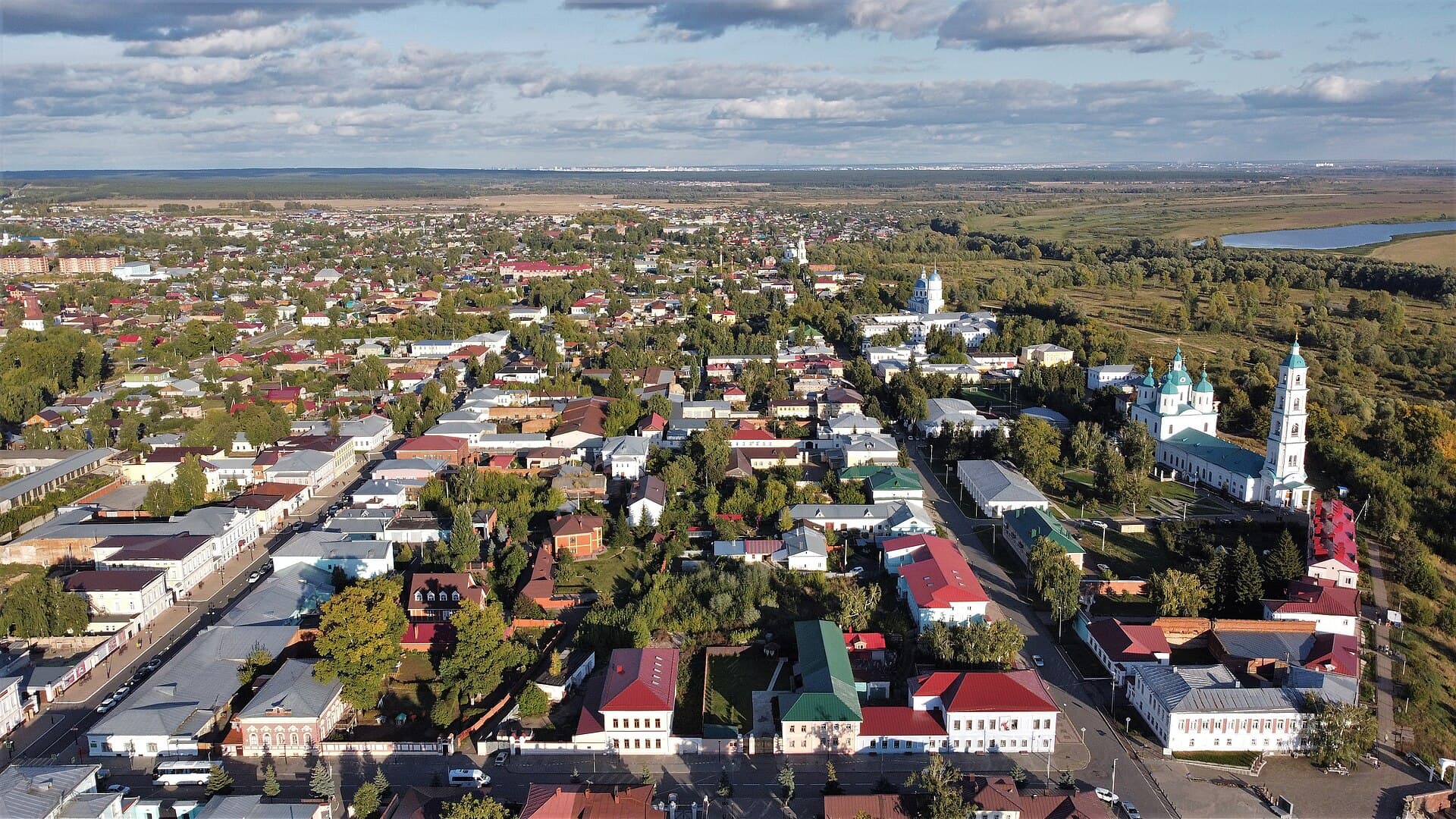 Vyacheslav Bukharov / CC BY-SA 4.0, via Wikimedia Commons
Visite audio autoguidée de Ielabouga — parcours GPS à pied, lecture hors ligne, narration en 32 langues.
“Là où les légendes anciennes rencontrent l'inspiration artistique sur les rives de la Kama.”
Pas les cartes postales. Les histoires que même les habitants ignorent — soufflées à l'oreille, là où elles se sont passées.
Le monument le plus ancien de la ville, une tour de pierre solitaire surplombant la Kama, porte un nom qui évoque un passé plus sombre et malicieux.
Le nom même d'Yelabuga, 'Alabuga', possède deux origines distinctes et plutôt colorées, l'une impliquant une créature de force et l'autre un poisson commun.
L'emblématique tour de pierre du Camp du Diable, symbole d'Yelabuga, doit sa rénovation au XIXe siècle à une figure surprenante : le père d'un artiste russe renommé.
Découvrez tous les secrets de Ielabouga
Chaque adresse, chaque révélation en entier — dans ton oreille, là où elle s'est passée.
Tu choisis tes lieux. Tu marches. La voix te révèle ce que les autres ignorent.


Votre visite audioguidée de Ielabouga vous attend — choisissez vos lieux, votre langue, et lancez-vous dès votre arrivée.
AcheterYelabuga, une ville de la République du Tatarstan en Russie, offre un voyage dans le temps, où des siècles d'histoire se mêlent aux héritages artistiques et littéraires. Située sur la pittoresque rive droite de la rivière Kama, à son confluent avec la Toyma, cette ancienne colonie, qui a officiellement célébré son millénaire en 2007, est une destination captivante pour ceux qui recherchent un rythme plus lent et un lien plus profond avec le patrimoine russe.
La ville est réputée pour ses demeures de marchands du XIXe siècle remarquablement préservées, ses grandes cathédrales et l'emblématique forteresse d'Yelabuga (du Diable), un monument archéologique millénaire offrant des vues imprenables sur la Kama. Yelabuga revêt également une importance culturelle significative en tant que lieu de naissance du célèbre peintre paysagiste Ivan Shishkin et dernier lieu de repos de la poétesse Marina Tsvetaeva. Son charmant centre historique, en particulier la rue Kazanskaya, sert de musée à ciel ouvert, invitant les visiteurs à explorer son caractère unique.
L'histoire d'Yelabuga remonte à plus de mille ans, ses origines se situant au début du XIe siècle. On pense qu'une colonie y fut fondée par l'émir Ibragim I ben Mukhamad des Bulgares de la Volga, un peuple turc nomade. La date de fondation officielle est souvent citée comme étant 1007. Pendant cette période, une mosquée fortifiée fut construite sur une hauteur surplombant la rivière Kama, dont les ruines sont aujourd'hui connues sous le nom de Camp d'Yelabuga (ou du Diable). Cet ancien site servit de forteresse aux Bulgares de la Volga dans la région orientale de la Kama.
Après la conquête du Khanat de Kazan par Ivan le Terrible en 1552, la colonie fut connue sous le nom de Tryokhsvyatskoe, peut-être en l'honneur d'une icône. Au XVIIIe siècle, sous l'édit de Catherine la Grande en 1780, Yelabuga fut officiellement établie comme ville et centre de son district au sein du Gouvernorat de Viatka. La ville prospéra alors en tant que ville marchande, et une grande partie de son architecture distinctive du XIXe siècle, caractérisée par des demeures en pierre, reste magnifiquement préservée aujourd'hui.
Le développement d'Yelabuga fut considérablement influencé par d'éminentes familles de marchands, telles que les Stakheyev, qui financèrent la construction d'églises, d'institutions éducatives et d'infrastructures essentielles comme le premier système d'approvisionnement en eau et d'éclairage électrique de la ville. Le riche passé de la ville est en outre lié aux vies de figures notables, notamment le célèbre peintre paysagiste Ivan Shishkin, qui y est né, et la légendaire 'demoiselle de la cavalerie' Nadezhda Durova, qui passa plus de trois décennies de sa vie à Yelabuga. Tragiquement, Yelabuga devint également le dernier refuge de la poétesse Marina Tsvetaeva, qui s'y suicida en 1941. Aujourd'hui, le patrimoine historique et culturel de la ville est méticuleusement préservé par le Musée-Réserve Historique-Architectural et Artistique d'État d'Yelabuga, qui supervise de nombreux musées et monuments.
Commencez votre exploration par la forteresse d'Yelabuga (du Diable), le monument le plus emblématique de la ville. Montez les 300 marches jusqu'à l'ancienne tour de pierre pour des vues imprenables sur la rivière Kama et les paysages environnants. Ensuite, promenez-vous le long de la rue Kazanskaya, le cœur historique d'Yelabuga, où de magnifiques demeures de marchands du XIXe siècle sont alignées, parsemées de monuments fantaisistes dédiés aux professions du quotidien.
Plongez dans l'art au Musée-Maison Ivan Shishkin, situé dans la maison d'enfance de l'artiste, offrant un aperçu de sa vie et de son œuvre, et mettant en valeur son lien profond avec la nature locale. À proximité, le Parc des Étangs Shishkin offre un cadre pittoresque pour une promenade tranquille. Pour une expérience poignante, visitez le Complexe Mémorial Marina Tsvetaeva, qui comprend son musée littéraire et la maison où elle a passé ses derniers jours tragiques. Plongez dans un pan d'histoire unique au Musée-Domaine Nadezhda Durova, dédié à la première femme officier de Russie. Ne manquez pas le Musée de la médecine de comté V.M. Bekhterev, une institution unique en Russie, ou l'intéressant Musée Portomoinya, une ancienne buanderie offrant un aperçu de la vie quotidienne prérévolutionnaire.
La période la plus agréable pour visiter Yelabuga est pendant les mois d'été chauds de mai, juin, juillet et août. Juillet est généralement le mois le plus chaud, avec des températures diurnes moyennes d'environ 26°C (79°F). Août offre également un temps agréable, avec des maximales moyennes de 23°C (73°F). Ces mois sont idéaux pour les activités de plein air et l'exploration des sites historiques de la ville. Bien que l'automne puisse être magnifique pour profiter des paysages, sachez que les hivers (de décembre à février) sont longs et très froids, avec des minimales moyennes de -14°C (7°F) en janvier.
Yelabuga est desservie par l'aéroport de Begishevo (NBC), à environ 22 km, avec des liaisons en taxi et en bus. Alternativement, l'aéroport international de Kazan (KZN) est à environ 173 km, nécessitant plus de correspondances. La gare la plus proche est à Naberezhnye Chelny, à 19,3 km d'Yelabuga, accessible en bus ou en taxi.
À Yelabuga, les transports en commun se composent principalement de bus et de taxis collectifs. La ville est compacte, et de nombreuses attractions de la 'ville basse' historique sont accessibles à pied depuis la rue Kazanskaya. Envisagez de séjourner près de cette zone pour plus de commodité. Les hôtels sont limités, il est donc conseillé de réserver à l'avance. La monnaie locale est le rouble russe (RUB), et les cartes bancaires 'Mir' sont largement acceptées. Apprendre quelques phrases de base en russe sera utile. N'oubliez pas que la plupart des musées sont fermés le lundi.
Ielabouga en coréen, en chinois ou en hébreu — et dans 29 autres langues, chaque étape narrée par une voix native. La plus large gamme de langues de tous les audioguides autoguidés.
Disponible en :