Żary Castle and Promnitz Palace complex
Two grand residences stand side-by-side, but one was built to overshadow the other.
Full story unlocks in the tour
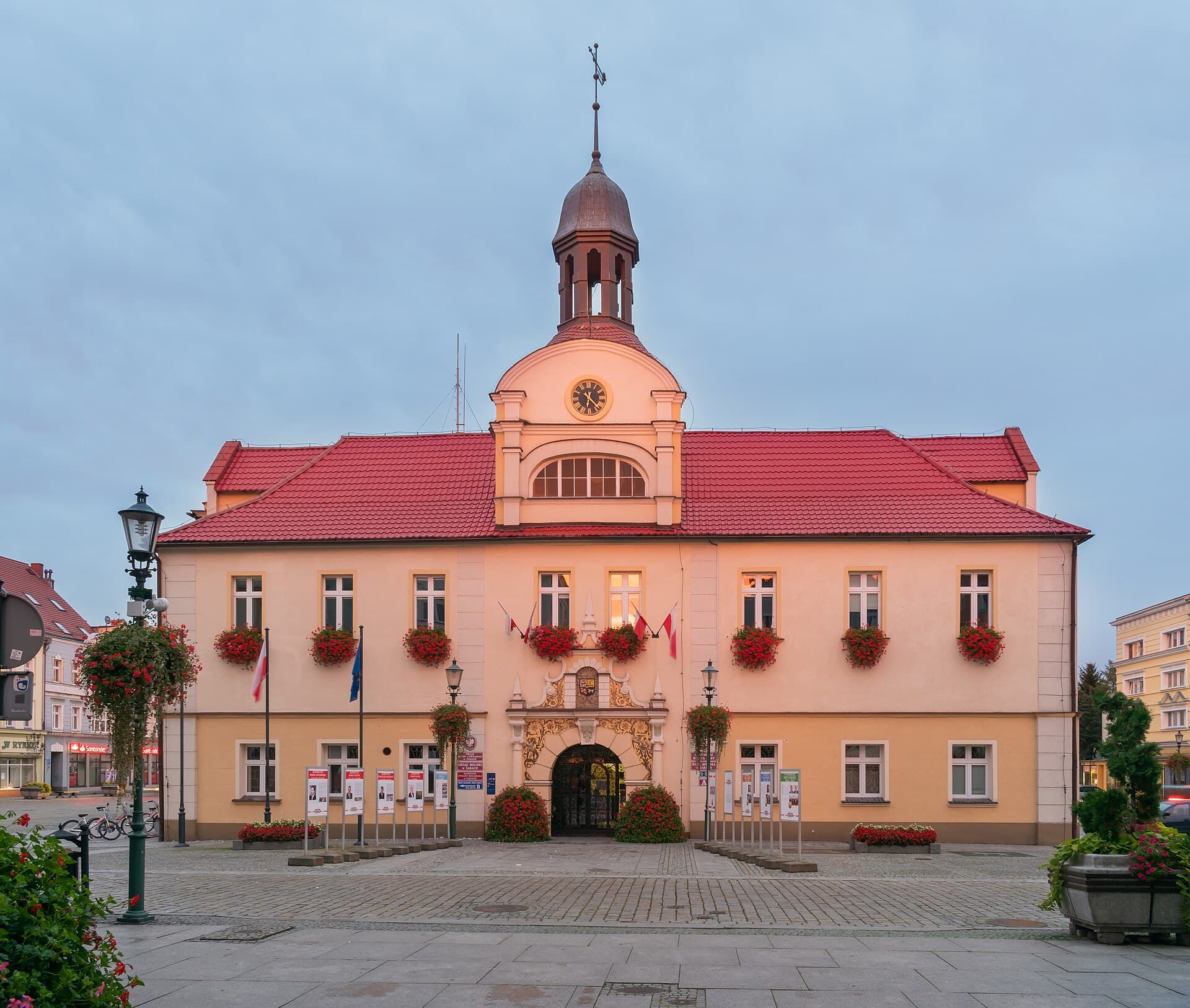 Krzysztof Golik / CC BY-SA 4.0, via Wikimedia Commons
Self-guided audio walking tour of Żary — GPS route, offline playback, story-driven narration in 32 languages.
“Where centuries of shifting borders and grand patrons left an indelible mark on stone and spirit.”
Not the postcards. The stories even locals don't know — whispered in your ear, right where they happened.
Two grand residences stand side-by-side, but one was built to overshadow the other.
This Gothic church has seen more than just religious changes over the centuries.
Beneath its Renaissance facade, the Town Hall holds a secret from a time when justice was swift and public.
Discover every secret of Żary
Every address, every reveal in full — in your ear, right where it happened.
You pick your stops. You walk. The voice reveals what the others miss.
Your self-guided audio tour of Żary is ready — pick your landmarks, choose your language, and start the moment you arrive.
BuyLume has a built-in augmented-reality guide. Hold your phone up and its camera shows the street ahead of you, with a glowing arrow laid over the real view that always points to your next stop — no map to puzzle over, no wrong turns. Like everything in Lume, it works fully offline.
Żary, a town in western Poland's Lubusz Voivodeship, offers a compelling journey through a thousand years of history. Located on the Żary Plateau, between the Bóbr and Nysa Łużycka rivers, it holds the unofficial title of the capital of Polish Lusatia. Its strategic location at the crossroads of historical trade routes has shaped its identity, leaving behind architectural styles from Gothic to Baroque.
Today, Żary is a regional center, balancing its industrial roots with a growing focus on tourism and cultural events. Visitors can explore medieval castles, grand palaces, and historic churches, all while experiencing the town's contemporary life. With its deep heritage and natural surroundings, including the nearby Żagań Forest, Żary provides a unique blend of historical discovery and opportunities for outdoor activities.
## From Ancient Settlements to a Thriving Trade Hub Żary's origins stretch back to prehistoric times, with the earliest mention of the 'Zara' tribe appearing in 1007 in the chronicles of Thietmar of Merseburg, after Bolesław I Chrobry of Poland conquered the Żary land. The town's strategic position on the 'Salt Route,' a vital trade artery connecting Leipzig and Wrocław, fueled its early development. In 1260, Żary was granted Magdeburg law, a significant step in its urban and economic growth, leading to the construction of defensive walls and prominent landmarks like the parish church and town gates.
## Shifting Allegiances and the 'Golden Age' Over centuries, Żary's affiliation shifted between various powers, including the Silesian Piasts, Bohemian kings, and Saxon electors. A pivotal moment arrived in 1558 when the Promnitz family took ownership, ushering in an 18th-century 'Golden Age.' Under Erdmann II Promnitz, the town experienced significant prosperity, becoming a center for clothing, cloth-manufacturing, and brewing, even minting its own coins. This era also saw the construction of the opulent Baroque Promnitz Palace, designed to complement the older Dewin-Biberstein Castle.
## Industrialization, War, and Modern Revival The 19th century brought Żary under Prussian rule, leading to rapid industrialization, particularly in textiles. However, the 20th century cast a shadow with World War II, during which a branch of the Focke-Wulf aircraft factory was located here, making it a target for Allied bombing that destroyed parts of the Old Town in 1944. After the war, Żary became part of Poland and saw a significant resettlement of Poles from former Eastern territories. Today, Żary has diversified its economy beyond manufacturing and services, embracing its historical and natural assets to become an attractive destination for visitors.
Begin your exploration at the Market Square (Rynek), the historic heart of Żary, surrounded by traditional Gothic-style townhouses and featuring the impressive Town Hall with its Renaissance portal. Adjacent to the square, discover the Sacred Heart Church, a Gothic edifice with parts dating back to the 13th century, and its nearby rectory and old commissariat, now housing a museum. Seek out the remnants of the medieval defensive walls and the Lower Gate (Brama Dolna), offering glimpses into the town's past fortifications.
Head to the northwestern part of the city to marvel at the Dewin-Biberstein Castle, a grand 13th-century structure later rebuilt in Renaissance style. Next to it stands the magnificent Baroque Promnitz Palace, an 18th-century masterpiece designed by Giovanni Simonetti, which once hosted Polish kings. The palace complex also includes a geometric park and the elegant Blue Gate. For nature lovers, the Żagań Forest and the Green Forest offer opportunities for hiking and enjoying the natural beauty, with the latter featuring the Promnitz observation tower.
Żary is a year-round destination, but the best time to visit depends on your interests. For pleasant weather and outdoor activities like hiking and cycling in the Żagań Forest, late spring to early autumn (May to September) is ideal. If you're interested in cultural events, consider visiting during the annual International Festival of Organ Music, which draws musicians from across Europe. The town also hosts the 'Braking Bad' extreme sports and graffiti art event, typically attracting youth and artists.
Żary is well-connected by road and rail, making it accessible from other regional centers in Poland and Germany. The town is approximately 10 km from truck road no. 18 and at the crossroads of strategic roads no. 12 and 27. While Żary is not a major international tourist hub, it offers a range of accommodations, from hotels to guesthouses. Local visitor information is available, and post offices are located within the town for any postal needs. Most businesses operate on a typical weekday schedule, with reduced hours on weekends. Public transportation within the town is available, but many attractions are within walking distance in the historic center.
Żary in Korean, in Chinese or in Hebrew — and 29 more languages, every stop narrated by a native voice. The widest language range of any self-guided audio tour.
Available in: