St. Annenkirche
La grandiosa iglesia gótica de Annaberg-Buchholz guarda un sutil detalle que dice mucho sobre los orígenes de la ciudad.
La historia completa se desbloquea en el tour
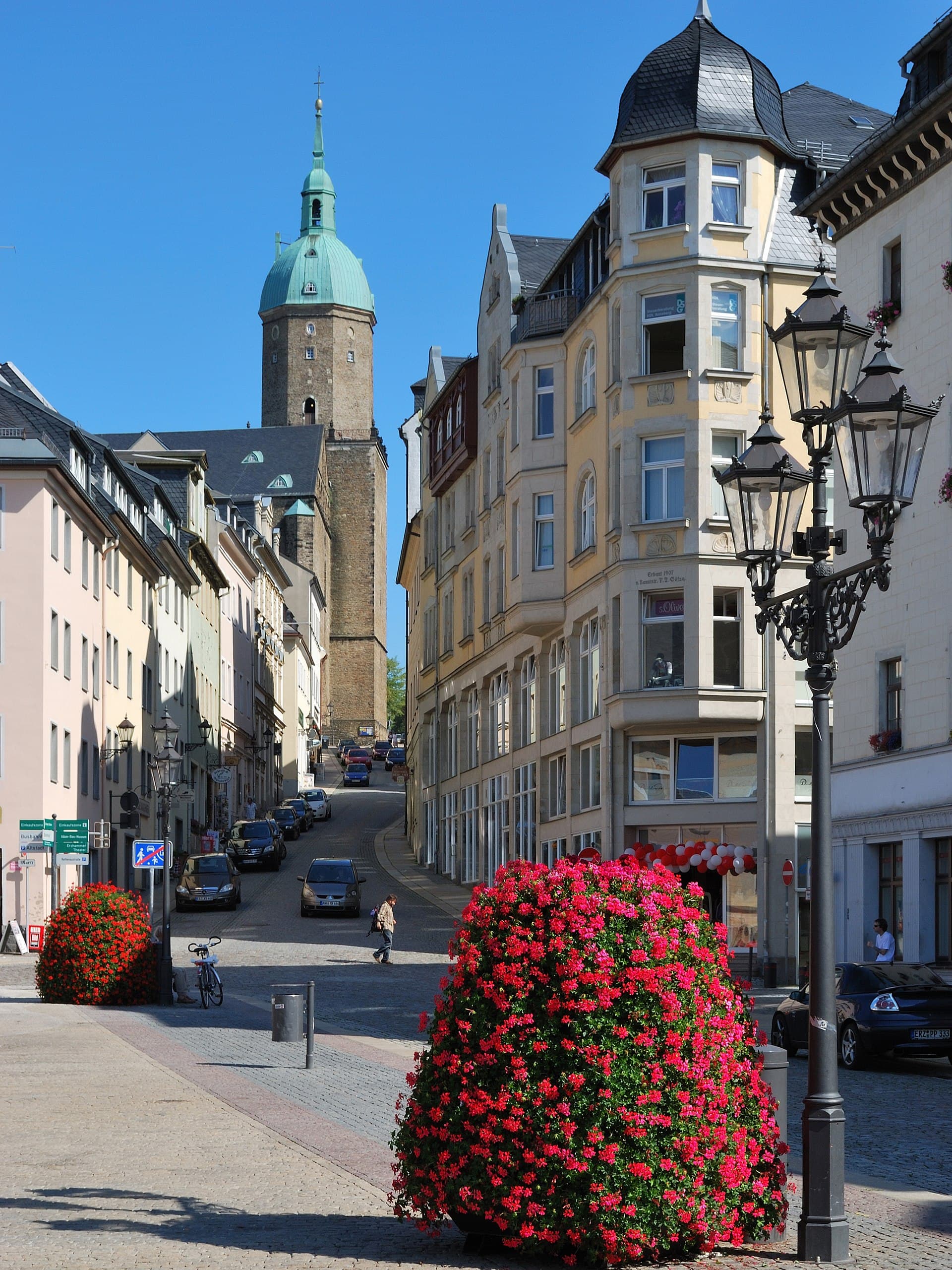 Harke / CC BY-SA 3.0, via Wikimedia Commons
Tour de audio autoguiado de Annaberg-Buchholz — ruta GPS a pie, reproducción offline, narración en 32 idiomas.
“Donde la plata una vez fluyó, la tradición ahora brilla.”
No las postales. Las historias que ni los locales conocen — al oído, justo donde ocurrieron.
La grandiosa iglesia gótica de Annaberg-Buchholz guarda un sutil detalle que dice mucho sobre los orígenes de la ciudad.
Este histórico molino de martillos, ahora un museo, tiene una sorprendente conexión con las demandas reales más allá de su propósito industrial.
Entre los puestos festivos, un artículo artesanal específico refleja una tradición local única que va más allá de las típicas decoraciones navideñas.
Descubre todos los secretos de Annaberg-Buchholz
Cada dirección, cada revelación al completo — a tu oído, justo donde ocurrió.
Eliges tus paradas. Caminas. La voz te revela lo que los demás ignoran.


Tu tour de audioguía por Annaberg-Buchholz te espera — elige tus lugares, tu idioma y empieza al llegar.
ComprarLume incluye una guía de realidad aumentada. Levanta el móvil y su cámara muestra la calle que tienes delante, con una flecha luminosa sobre la imagen real que siempre apunta a tu próxima parada — sin mapas que descifrar, sin giros equivocados. Como todo en Lume, funciona completamente sin conexión.
Annaberg-Buchholz, una ciudad en Sajonia, Alemania, se encuentra en las pintorescas montañas de los Montes Metálicos (Erzgebirge), una región reconocida como Patrimonio de la Humanidad por la UNESCO por su historia minera. La ciudad misma se formó en 1945 por la unión de Annaberg (fundada en 1497) y Buchholz (fundada en 1501), ambas establecidas debido a importantes descubrimientos de plata. Este legado minero ha moldeado profundamente su arquitectura, cultura y tradiciones, convirtiéndola en un destino atractivo para aquellos interesados en la historia, la artesanía y un ambiente festivo.
Rodeada de colinas ondulantes y bosques, Annaberg-Buchholz ofrece una mezcla de profundidad cultural y belleza natural. El centro histórico de la ciudad, con sus edificios bien conservados, refleja la prosperidad generada durante su fiebre de la plata a finales de los siglos XV y XVI, cuando se convirtió en la segunda ciudad más grande de Sajonia. Hoy en día, mantiene una fuerte identidad arraigada en el folclore de Erzgebirge, evidente en sus artesanías tradicionales de madera y, sobre todo, en su encantador mercado de Navidad.
La historia de Annaberg-Buchholz está inextricablemente ligada a los abundantes depósitos de plata descubiertos en los Montes Metálicos. Los orígenes de la ciudad se remontan a 1491, cuando Caspar Nietzelt hizo un importante hallazgo de plata, lo que llevó a un 'gran grito minero' que atrajo a colonos de tierras circundantes. Esta afluencia llevó a la fundación de Annaberg en 1496 y Buchholz en 1501, ambas emergiendo como prósperos asentamientos mineros de plata. La inmensa prosperidad generada por estas minas impulsó a Annaberg a convertirse en la segunda ciudad más grande de Sajonia durante el siglo XVI.
A medida que la minería florecía, también lo hacía la vida cultural e intelectual de la ciudad. El matemático alemán Adam Ries, conocido por publicar uno de los primeros textos de aritmética ampliamente disponibles, residió en Annaberg-Buchholz a partir de 1522, donde su antigua casa es ahora un museo. Otra figura influyente fue Barbara Uthmann, una viuda emprendedora que, en el siglo XVI, estableció un negocio de fabricación de encajes, proporcionando ingresos a muchas esposas de mineros y contribuyendo a la reconocida artesanía de la región. Su estatua se encuentra ahora en la plaza del mercado de Annaberg.
Aunque la minería de plata finalmente declinó en el siglo XVI, la ciudad se adaptó. La industria del encaje de bolillos se introdujo en 1561, convirtiéndose en una industria principal junto con manufacturas relacionadas. El siglo XIX trajo otro auge económico con la industria textil, apoyado aún más por la introducción del libre comercio y la construcción de una conexión ferroviaria con Chemnitz y Bohemia. Annaberg y Buchholz se convirtieron en centros de producción de pasamanería, con sus productos exportados globalmente. Las dos ciudades se fusionaron oficialmente en 1945. Hoy en día, la profunda conexión de la ciudad con la minería no es meramente histórica, sino una cultura viva, preservada y celebrada en sus museos, festivales y vida cotidiana, y reconocida como parte del sitio del Patrimonio Mundial de la UNESCO de la Región Minera de los Montes Metálicos/Krušnohoří.
Comience su exploración en la St. Annenkirche (Iglesia de Santa Ana), una iglesia de salón gótica tardía construida entre 1499 y 1525. Se erige como la más grande de su tipo en los Montes Metálicos de Sajonia y es un testimonio de la prosperidad pasada de la ciudad gracias a la minería de plata. En su interior, admire el intrincado altar del minero y las bóvedas elevadas, y considere subir a la torre para disfrutar de vistas panorámicas.
Adéntrese en el pasado industrial de la ciudad en el Frohnauer Hammer, un histórico molino de martillos y el museo de herrería más antiguo de Alemania, ahora Patrimonio de la Humanidad por la UNESCO. Sea testigo de la tecnología original en acción durante una visita guiada, experimentando el potente ruido de los martillos. El museo también cuenta con una galería de arte popular que exhibe tallas de madera tradicionales de los Montes Metálicos.
Para una comprensión más profunda de la minería, visite el Museo de los Montes Metálicos (Erzgebirgsmuseum) con su mina de visitantes 'Im Gößner'. Esto ofrece una visión de la minería de plata del siglo XVI, permitiéndole aventurarse bajo tierra. Alternativamente, la Mina de Visitantes Markus-Röhling-Stolln ofrece una experiencia distinta, transportando a los visitantes 600 metros dentro de la mina en un pequeño tren, con equipo de protección y un saludo de '¡Glück Auf!' (¡Buena suerte!).
Explore la 'Fábrica de los Sueños' (Manufaktur der Träume), un museo ubicado en una majestuosa mansión en la plaza del mercado. Ofrece un viaje interactivo a través del mundo del arte popular de los Montes Metálicos, con criaturas de cuentos de hadas, animales, mineros y juguetes históricos.
No se pierda el Museo Adam Ries, dedicado al renombrado matemático, ubicado en su antigua casa, donde podrá aprender sobre sus métodos aritméticos.
Annaberg-Buchholz ofrece experiencias distintas a lo largo del año. La ciudad realmente cobra vida durante la temporada de Adviento, desde finales de noviembre hasta justo antes de la Nochebuena, con su encantador Mercado de Navidad y el Gran Desfile de Mineros. Espere multitudes durante esta época mágica. La primavera y el otoño son más tranquilos, ideales para paseos panorámicos y visitas a museos, con paisajes florecientes en primavera. Los veranos, particularmente julio y agosto, son cómodos para actividades al aire libre, con temperaturas máximas diarias promedio superiores a 17 °C (63 °F). Los inviernos ofrecen oportunidades para deportes de nieve en los cercanos Montes Metálicos, aunque las temperaturas pueden ser gélidas y nevadas.
Annaberg-Buchholz es accesible por carretera y ferrocarril, siendo Chemnitz la ciudad principal más cercana, a aproximadamente una hora en tren regional. Si conduce, la carretera B95 ofrece una ruta escénica desde Leipzig o Dresde, ambas a unos 90 minutos. Para viajeros internacionales, el Aeropuerto de Dresde (DRS) está a aproximadamente 1,5 horas en coche, y el Aeropuerto de Leipzig/Halle (LEJ) está a unas 2 horas. FlixBus también ofrece servicios diarios de autobús a Annaberg-Buchholz desde varias ubicaciones, incluida Praga.
Una vez en Annaberg-Buchholz, los sitios históricos y las encantadoras calles de la ciudad se exploran mejor a pie. Hay aparcamientos públicos disponibles cerca del casco antiguo, incluido el garaje 'Altstadt' y junto a la St. Annenkirche, aunque el estacionamiento puede ser limitado durante la temporada del mercado de Navidad y los festivales. La mayoría de los lugares en el centro de la ciudad son de pago. La moneda local es el Euro (€), y el alemán es el idioma oficial.
Annaberg-Buchholz en coreano, en chino o en hebreo — y 29 idiomas más, cada parada narrada por una voz nativa. La mayor variedad de idiomas de cualquier audioguía autoguiada.
Disponible en: