Centro storico di Görlitz
Passeggiare per Görlitz sembra di salire su un set cinematografico, e un edificio in particolare ha dato vita vivida a un film stravagante di Wes Anderson.
La storia completa si sblocca nel tour
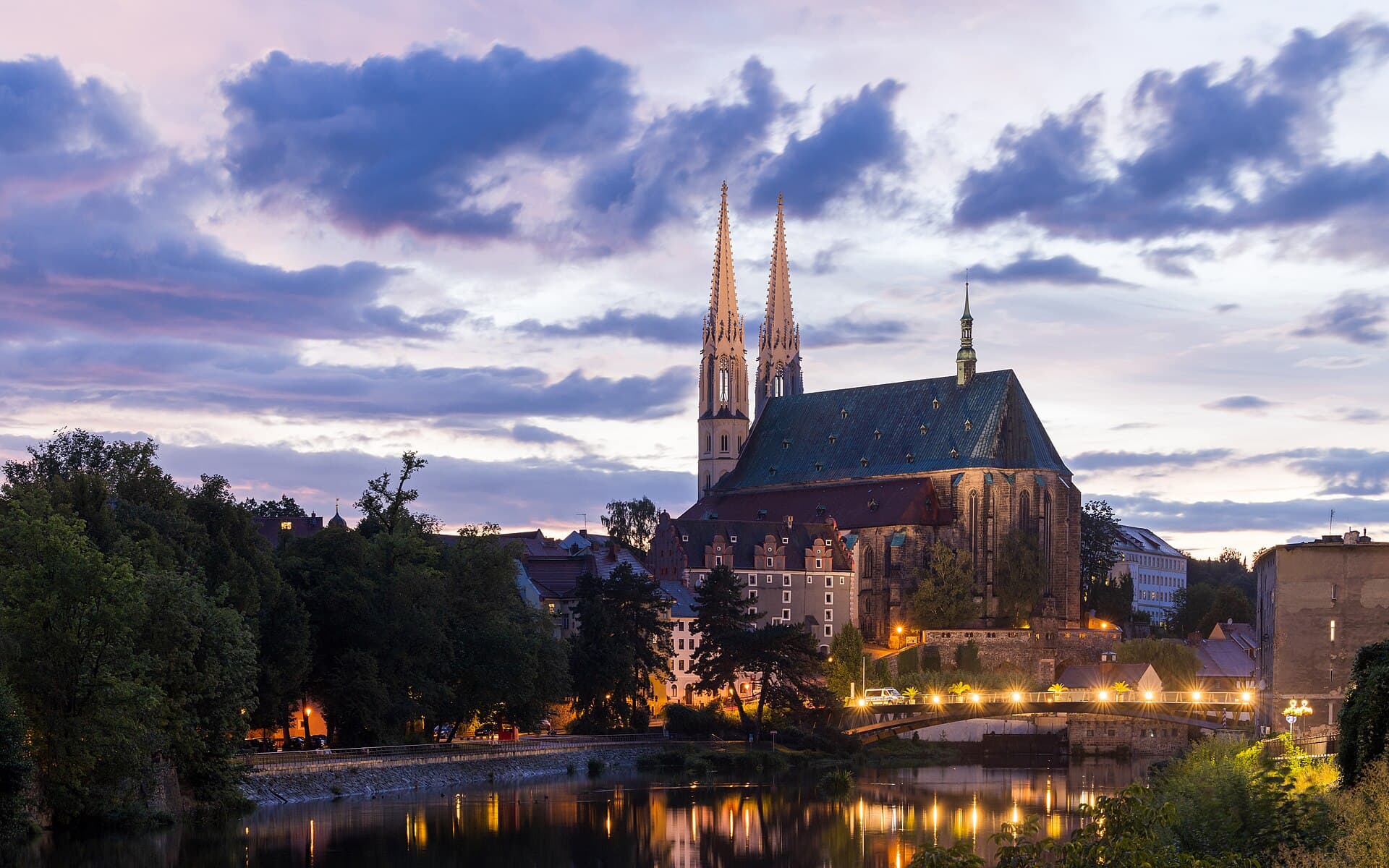 Martin Kraft / CC BY-SA 4.0, via Wikimedia Commons
Tour audio autoguidato di Görlitz — percorso GPS a piedi, riproduzione offline, narrazione coinvolgente in 32 lingue.
“Dove il fascino cinematografico incontra mille anni di storia, al confine orientale d'Europa.”
Non le cartoline. Le storie che nemmeno i locali conoscono — sussurrate nel tuo orecchio, proprio dove sono accadute.
Passeggiare per Görlitz sembra di salire su un set cinematografico, e un edificio in particolare ha dato vita vivida a un film stravagante di Wes Anderson.
Questo ponte fa più che attraversare un fiume; attraversa un ex confine, collegando due nazioni che un tempo erano un'unica città.
C'è un luogo preciso a Görlitz dove, per una parte significativa dell'Europa, il tempo stesso ha inizio.
Scopri ogni segreto di Görlitz
Ogni indirizzo, ogni rivelazione completa — nel tuo orecchio, proprio dove è accaduta.
Scegli le tue tappe. Cammini. La voce rivela ciò che gli altri perdono.

Il tuo tour audio autoguidato di Görlitz è pronto — scegli i tuoi punti di interesse, seleziona la tua lingua e inizia nel momento in cui arrivi.
AcquistaLume include una guida in realtà aumentata. Alza il telefono: la fotocamera mostra la strada davanti a te, con una freccia luminosa sovrapposta all'immagine reale che punta sempre verso la tua prossima tappa — nessuna mappa da decifrare, nessuna svolta sbagliata. Come tutto in Lume, funziona completamente offline.
Görlitz, la città più orientale della Germania, è un museo architettonico vivente, che racchiude oltre 4.000 edifici storici protetti che spaziano dagli stili Gotico, Rinascimentale, Barocco e Art Nouveau. A differenza di molte città tedesche, Görlitz uscì dalla Seconda Guerra Mondiale in gran parte indenne, preservando il suo esteso tessuto storico. Il suo centro storico straordinariamente intatto, con i suoi vicoli lastricati in pietra e le sue imponenti case mercantili, le è valso il soprannome di 'Görliwood', attirando numerose produzioni cinematografiche internazionali.
Situata sul fiume Neisse, Görlitz condivide una distintiva identità transfrontaliera con la sua controparte polacca, Zgorzelec. Quella che un tempo era una città unificata, divisa dopo il 1945, fiorisce ora come Città Europea, dimostrando un notevole spirito di cooperazione. I visitatori possono passeggiare facilmente attraverso l'Altstadtbrücke per sperimentare entrambe le culture in un'unica visita.
Görlitz, inizialmente un insediamento slavo noto come Gorelić, fu documentata per la prima volta nel 1071. La sua posizione strategica all'incrocio della Via Regia, un'antica rotta commerciale che collegava Kiev a Santiago de Compostela, e della Via del Sale, che collegava Praga al Mar Baltico, alimentò la sua crescita iniziale. La città ottenne i privilegi urbani nel 1303 dal Re di Boemia, che le permise di coniare monete, immagazzinare sale e guado, e produrre birra.
Nel 1346, Görlitz si unì alla Lega delle Sei Città dell'Alta Lusazia, una potente alleanza con Bautzen, Löbau, Zittau, Kamenz e Lauban, istituita per garantire le rotte commerciali. Questa lega, durata fino al 1815, contribuì in modo significativo alla ricchezza di Görlitz, con oltre mille carri che passavano quotidianamente dai suoi mercati. La città conobbe periodi di prosperità, in particolare grazie al commercio di tessuti nel tardo Medioevo. Nel corso dei secoli, Görlitz passò sotto il dominio boemo, austriaco e sassone, prima di diventare parte della Prussia nel 1815 dopo il Congresso di Vienna.
Sorprendentemente, Görlitz sfuggì in gran parte alla distruzione durante la Seconda Guerra Mondiale. Tuttavia, la ridefinizione dei confini del dopoguerra nel 1945 divise la città, con i suoi distretti orientali che divennero la città polacca di Zgorzelec. Durante l'era della Germania dell'Est, Görlitz fu una città di confine con interazioni transfrontaliere limitate, e molti dei suoi edifici storici caddero in rovina. Dopo la riunificazione tedesca e l'adesione della Polonia all'UE, significativi investimenti, inclusa una sostanziale donazione anonima, hanno ridato vita alla città, restaurando i suoi tesori architettonici. Oggi, Görlitz, insieme a Zgorzelec, forma l'Euro Città di Görlitz/Zgorzelec, un simbolo di cooperazione transfrontaliera e una testimonianza della sua duratura importanza storica e culturale.
Inizia la tua esplorazione nell'Untermarkt (Mercato Inferiore), considerato una delle piazze più belle della Germania, con lo storico Rathaus (Municipio) e il suo orologio astronomico, e l'inconfondibile Arco Sussurrante. Nelle vicinanze, lo Schönhof, la più antica casa privata rinascimentale della Germania, ospita ora il Museo della Slesia, che offre spunti sulla storia della regione. Passeggia lungo la Brüderstraße, parte dell'antica rotta commerciale Via Regia.
Prosegui verso l'Obermarkt (Mercato Superiore), una grande piazza fiancheggiata da edifici barocchi e sede della Reichenbacher Turm, che offre ampie viste sulla città. La Peterskirche (Chiesa di San Pietro e Paolo), con le sue imponenti torri gemelle che dominano il fiume Neisse, ospita il magnifico Organo del Sole, noto per i suoi 17 soli e la capacità di imitare i suoni degli animali. Per un'esperienza tranquilla, visita il Cimitero di Nikolai, il più antico cimitero della città, con monumenti gotici. Non perdere l'opportunità di attraversare semplicemente l'Altstadtbrücke fino a Zgorzelec, Polonia, vivendo due paesi in pochi istanti. Gli appassionati di cinema possono seguire il 'Walk of Görliwood' per scoprire le location di film come 'Grand Budapest Hotel' e 'Bastardi senza gloria'.
Il periodo migliore per visitare Görlitz è da maggio a settembre, quando il clima è generalmente piacevole per visite turistiche e attività all'aperto, con temperature medie diurne comprese tra 19°C e 25°C. La primavera offre fioriture e meno folla, mentre l'estate offre lunghe serate e concerti all'aperto. L'autunno porta un'atmosfera dorata e mercati del raccolto. Dicembre è anche un buon momento per visitare, poiché le piazze si trasformano con un magico mercatino di Natale. Sebbene gli inverni siano più tranquilli e freddi, con temperature intorno ai 3°C, possono essere bellissimi per una pausa tranquilla in città.
Görlitz è facilmente raggiungibile in treno dalle principali città tedesche come Dresda (da 1,5 a 2 ore) e Berlino (da 3 a 4 ore con cambi). La stazione ferroviaria di Görlitz si trova a circa 10 minuti a piedi dal centro storico. L'aeroporto di Dresda (DRS) è il più vicino, a circa 90 km di distanza, con altri aeroporti internazionali a Breslavia (Polonia) e Berlino anch'essi opzioni valide. All'interno di Görlitz, il centro storico è interamente percorribile a piedi. I trasporti pubblici includono autobus e tram. La valuta locale è l'Euro, ma avere qualche Złoty polacco è utile se si prevede di attraversare il confine con Zgorzelec. Si noti che molti esercizi commerciali a Görlitz sono chiusi il lunedì.
Per informazioni ai visitatori, l'Ufficio Turistico di Görlitz si trova a un'estremità della piazza Obermarkt.
Görlitz — coreano, cinese, ebraico e altre 29 lingue, ogni tappa narrata da una voce madrelingua. La più ampia scelta di lingue tra i tour audio autoguidati.
Disponibile in: