The Zevgoli Tower
This 17th-century Venetian tower, a prominent landmark, holds a secret about its ownership, reflecting Naxos's turbulent past.
Full story unlocks in the tour
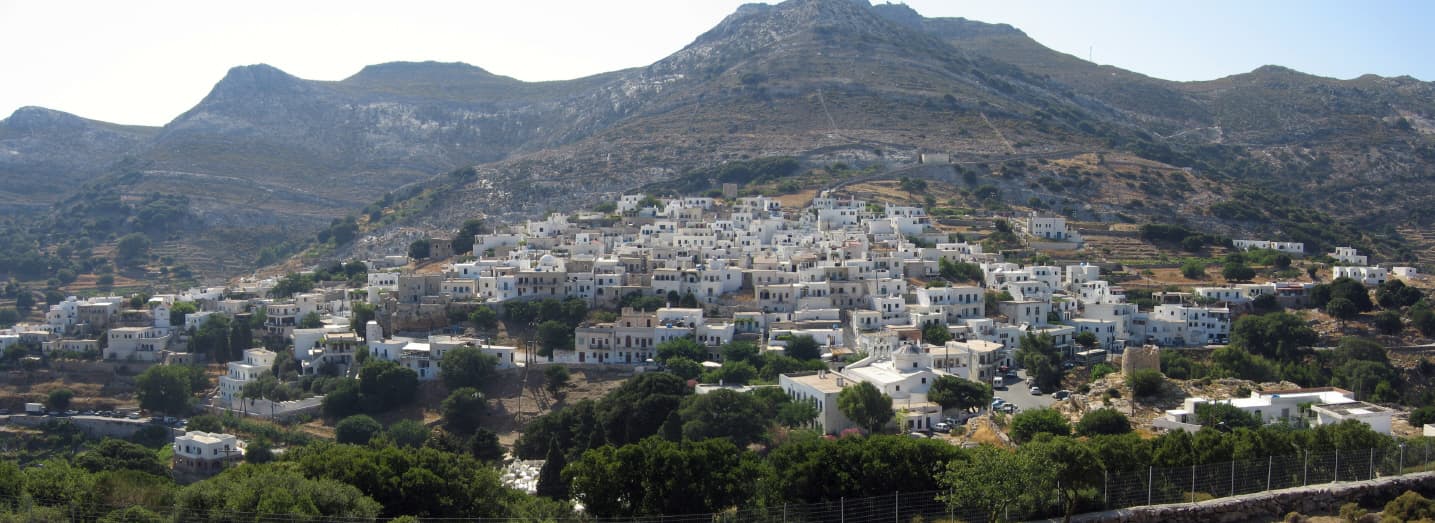 Yiannis Z. at English Wikipedia / CC BY-SA 3.0, via Wikimedia Commons
Self-guided audio walking tour of Apeiranthos — GPS route, offline playback, story-driven narration in 32 languages.
“Where marble streets echo ancient Crete and the resolve of heroes.”
Not the postcards. The stories even locals don't know — whispered in your ear, right where they happened.
This 17th-century Venetian tower, a prominent landmark, holds a secret about its ownership, reflecting Naxos's turbulent past.
The language spoken in Apeiranthos sounds distinctly different from other Naxian villages, hinting at a surprising origin.
Among its impressive collection of minerals and rocks, this museum houses a surprising relic from Naxos's ancient past.
Discover every secret of Apeiranthos
Every address, every reveal in full — in your ear, right where it happened.
You pick your stops. You walk. The voice reveals what the others miss.


Your self-guided audio tour of Apeiranthos is ready — pick your landmarks, choose your language, and start the moment you arrive.
BuyLume has a built-in augmented-reality guide. Hold your phone up and its camera shows the street ahead of you, with a glowing arrow laid over the real view that always points to your next stop — no map to puzzle over, no wrong turns. Like everything in Lume, it works fully offline.
Apeiranthos, also known as 'Aperathou' by its residents, is a mountain village on Naxos, distinct from other Cycladic settlements. Resting on the slopes of Mount Fanari at an elevation of 600 meters, it offers expansive views of the Naxian mountain ranges. The village's architecture, characterized by stone houses and alleys paved with marble, preserves a character that dates back to the Venetian era.
Often called the "marble village" due to the extensive use of local Naxian marble in its construction, Apeiranthos presents a striking visual. Its unique cultural identity, including a distinct dialect and customs, sets it apart, creating an atmosphere that locals describe as more akin to a northern mainland Greek village than a typical Cycladic island. This authenticity is evident in its lively squares, traditional cafes, and the everyday sight of villagers using mopeds and donkeys in the narrow, winding alleys.
Apeiranthos is also known for its significant cultural contributions, having been the birthplace of prominent Greek figures like Manolis Glezos, a hero of the World War II National Resistance, and Petros Protopapadakis, a former Prime Minister of Greece. The village is a hub of arts and letters, maintaining the largest library in the Cyclades, the Nikos Glezos library, and a remarkable five museums within its bounds.
Apeiranthos is believed to have been established by Cretans in the 10th century, a theory supported by the distinct Cretan dialect and traditions still practiced by its inhabitants. The first historical mention of the village dates to 1420, in the travel book Liber insularum archipelagi by Italian traveler Cristoforo Buondelmonti. Its modern identity was further shaped during the Byzantine and Venetian periods. The village's architectural style, with its stone houses, marble-paved alleys, and defensive towers, largely retains its Venetian-era form.
Apeiranthos has a history marked by both resilience and intellectual flourishing. It is the birthplace of Manolis Glezos (1922-2020), a revered figure in modern Greek history. On May 31, 1941, Glezos, along with Lakis Santas, famously climbed the Acropolis and removed the Nazi flag, an act of defiance that became one of the first significant acts of resistance during World War II. Glezos later faced imprisonment and exile for his left-wing political beliefs. He also served as president of the community in the 1980s, initiating the creation of the Traditional Art Cooperative of the Women of Apeiranthos in 1987.
The village has also produced other notable figures, including Petros Protopapadakis, a former Prime Minister of Greece. Apeiranthos is recognized for its strong cultural heritage, often referred to as the cultural capital of Naxos. It is home to the largest library in the Cyclades and a remarkable number of museums for its size. The art of hand-weaving continues to thrive, with the Apeiranthos Women's Traditional Craft Cooperative showcasing authentic textiles made on traditional looms.
Wander through the marble-paved alleys, known as kalderimia, and beneath the overhead stone archways, or stegadia, that connect many of the village's finely chiseled stone houses. The 17th-century Zevgoli Tower, a prominent Venetian defensive structure, stands at the village entrance. Apeiranthos is home to five museums, offering a concentrated dose of history and culture. The Archaeological Museum, founded in 1963, displays finds from the Early Cycladic period and prehistoric rock carvings, including unique plaques with hammered representations from "the Peak of Aroni." The Folklore Museum, re-opened in 1987, offers a glimpse into traditional Apeiranthian life with exhibits of household items, tools, and textiles donated by villagers. The Geological Museum, established in 1964, showcases a rich collection of minerals, rocks, and paleontological findings from Naxos and the wider Aegean, including evidence of the island's emery mines. The Natural History Museum, founded in 1966, features local flora and fauna, including skeletons of dolphins and a sperm whale, as well as an extensive shell collection. Finally, the Museum of Fine Arts, opened in 2008, exhibits works by sculptors, painters, and potters from Apeiranthos and other Greek artists. For a spiritual diversion, the 9th-century Church of Agia Kyriaki, one of Naxos's most significant monuments, contains abstract wall paintings, including birds with ribbons around their necks in the sanctuary's arch.
The best time to visit Apeiranthos is during the shoulder seasons of April, May, early June, September, and October. During these months, the weather is warm and pleasant, ideal for exploring the village and its surroundings, and the crowds are more manageable than in peak summer. While July and August offer guaranteed beach weather and a lively atmosphere, they are also the busiest and most expensive months. Many of the museums are open daily during the summer.
Apeiranthos is approximately 26 to 28 kilometers from Naxos Chora (Naxos Town). Reaching the village by rental car offers a scenic drive through the island's interior. Alternatively, the Naxos KTEL buses provide regular daily services from Chora to Apeiranthos, with more frequent routes during the summer months. Parking is available at the village entrance. Once in Apeiranthos, the village is best explored on foot, navigating its marble-paved alleys. While some museums offer wheelchair accessibility, the uneven terrain of the village may present challenges. The village offers a variety of tavernas, cafes, and mini-markets. The nearest beach, Moutsouna, is about 11 kilometers away, offering sandy coves and seaside tavernas.
Apeiranthos in Korean, in Chinese or in Hebrew — and 29 more languages, every stop narrated by a native voice. The widest language range of any self-guided audio tour.
Available in: