Le Kastro de Chora
La partie la plus ancienne de la capitale de Folegandros n'a pas toujours été la vision blanchie à la chaux que l'on voit aujourd'hui.
L'histoire complète se débloque dans le tour
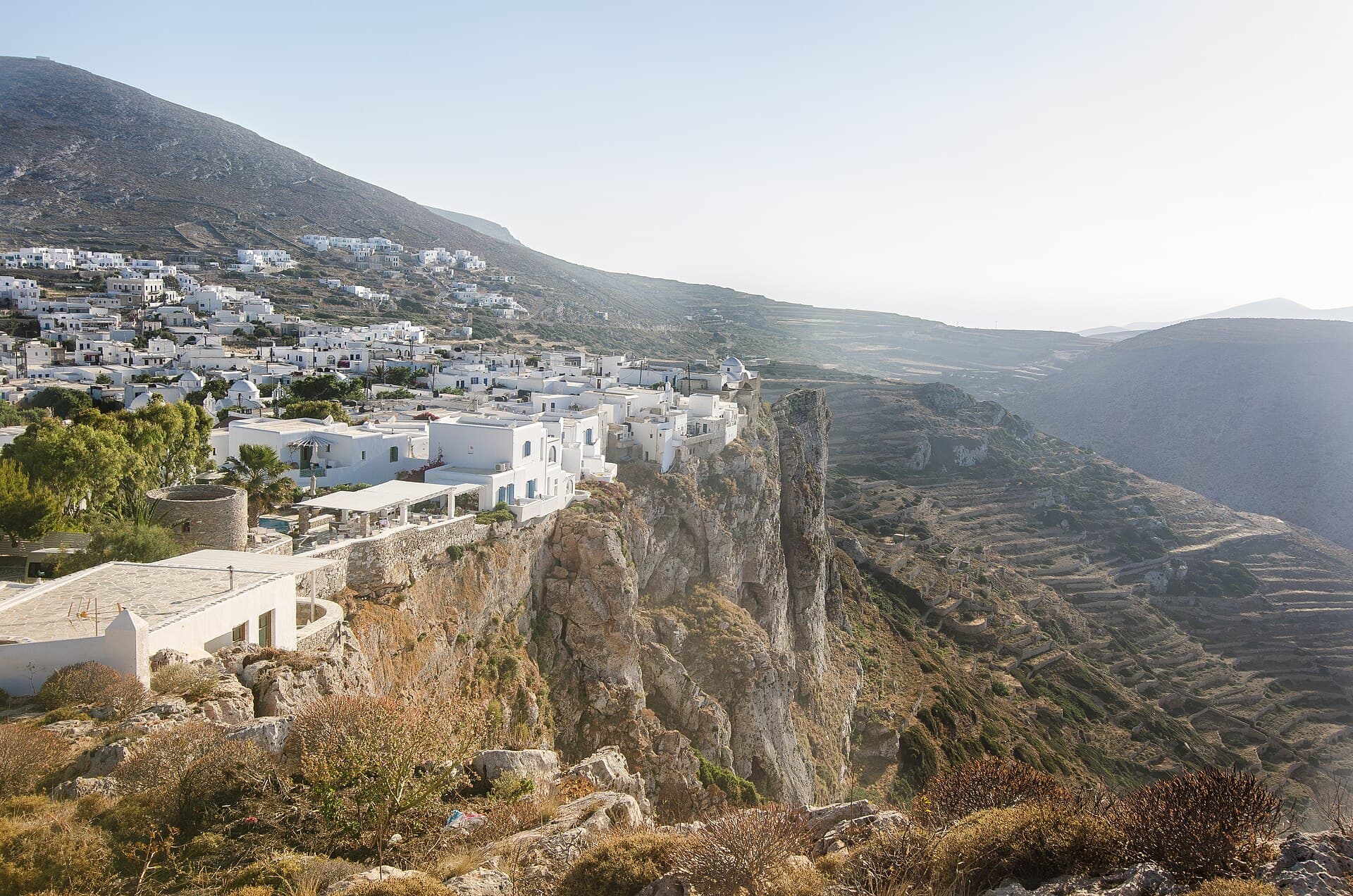 Etienne O. Dallaire / CC BY 4.0, via Wikimedia Commons
Visite audio autoguidée de Folégandros — parcours GPS à pied, lecture hors ligne, narration en 32 langues.
“Là où la beauté sauvage de la mer Égée rencontre un charme discret et authentique.”
Pas les cartes postales. Les histoires que même les habitants ignorent — soufflées à l'oreille, là où elles se sont passées.
La partie la plus ancienne de la capitale de Folegandros n'a pas toujours été la vision blanchie à la chaux que l'on voit aujourd'hui.
Le nom même de l'île pourrait avoir une double origine, l'une ancrée dans la mythologie et l'autre dans son paysage austère.
The very name of the island may have a dual origin, one rooted in mythology and another in its stark landscape.
Découvrez tous les secrets de Folégandros
Chaque adresse, chaque révélation en entier — dans ton oreille, là où elle s'est passée.
Tu choisis tes lieux. Tu marches. La voix te révèle ce que les autres ignorent.


Votre visite audioguidée de Folégandros vous attend — choisissez vos lieux, votre langue, et lancez-vous dès votre arrivée.
AcheterLume intègre un guide en réalité augmentée. Levez votre téléphone : sa caméra montre la rue devant vous, avec une flèche lumineuse posée sur l'image réelle qui pointe toujours vers votre prochain arrêt — aucune carte à déchiffrer, aucun mauvais virage. Comme tout dans Lume, ça fonctionne entièrement hors-ligne.
Folegandros, une petite île grecque de la mer Égée, fait partie de l'archipel des Cyclades, située entre Milos et Santorin. Avec une population d'environ 700 habitants, elle offre une atmosphère plus préservée et traditionnelle que ses voisines plus célèbres. L'île se caractérise par sa topographie spectaculaire, avec de hautes falaises, des collines escarpées et une captivante Chora (capitale) construite au bord d'une falaise de 200 mètres de haut.
Folegandros a conservé une grande partie de son caractère authentique, avec un développement touristique modéré lui permettant de maintenir sa physionomie unique. C'est une destination pour ceux qui recherchent la beauté sans l'agitation, offrant un rythme lent qui invite à une déconnexion immédiate. La petite taille de l'île la rend facilement explorable, que vous soyez attiré par ses plages immaculées, ses vues panoramiques ou le charme de ses villages traditionnels.
L'histoire de Folegandros remonte à la préhistoire, les Cariens d'Asie Mineure étant considérés comme les premiers habitants de l'île. Ils furent suivis par les Crétois, menés par un personnage nommé Folegandros, d'après qui l'île aurait été nommée. Plus tard, les Doriens s'installèrent sur l'île, et des inscriptions trouvées par les archéologues le confirment. Au 5ème siècle avant J.-C., Folegandros passa sous domination athénienne, payant une taxe annuelle de 2 000 drachmes attiques à Athènes. Durant cette période, les habitants vénéraient Artémis et Apollon, des vestiges d'un sanctuaire d'Artémis ayant été retrouvés à Chora.
En 1207, le Vénitien Marco Sanudo conquit Folegandros, la plaçant sous domination vénitienne pendant plus de trois siècles. Pendant cette période, en 1212, Sanudo construisit une grande forteresse au point culminant de Chora. L'île resta sous contrôle vénitien jusqu'en 1566, date à laquelle elle fut prise par les Turcs ottomans. La domination ottomane connut des périodes de difficultés, y compris une attaque en 1715 par Kapoudan Passas Tzanoum Hotza, qui asservit de nombreux habitants en représailles de leur soutien perçu aux pirates.
Folegandros fut libérée de la domination turque en 1828 et intégrée au nouvel État grec en 1830. Au 20ème siècle, de 1900 à 1970, l'île servit de lieu d'exil pour les prisonniers politiques, notamment pendant le régime du 4 août (1936-1941). Ces prisonniers exilés s'engageaient souvent dans des travaux utiles et entretenaient des relations cordiales avec les habitants, participant même aux foires et festivals locaux avec leurs compétences en sculpture sur bois. Il est à noter que Folegandros n'a reçu l'électricité qu'il y a environ 30 ans, et sa seule route goudronnée, longue de 18 kilomètres, a été achevée au cours des deux dernières décennies.
Folegandros offre un mélange de beauté naturelle et de charme cycladique traditionnel. La capitale de l'île, Chora, est un labyrinthe sans voitures de rues étroites et pavées qui s'ouvrent sur des places accueillantes. Ici, vous pouvez explorer le Kastro, la partie la plus ancienne de Chora, qui a été continuellement habitée depuis sa fondation en 1215. Le Kastro comprend deux rues piétonnes étroites avec des passages en forme de tunnel, situées entre la ville et les falaises maritimes.
Une expérience recommandée est la promenade jusqu'à l'église de Panagia (Vierge Marie), une église blanchie à la chaux perchée sur une colline au-dessus de Chora. Le chemin en zigzag prend environ 15 minutes et offre des vues imprenables sur l'île et la mer Égée, ce qui en fait un endroit populaire pour le coucher du soleil. L'église elle-même serait construite sur les ruines d'un ancien temple, avec des parties en marbre et des inscriptions de la structure originale encore visibles.
Au-delà de Chora, visitez Ano Meria, la deuxième plus grande localité de l'île. Ce village traditionnel offre un aperçu d'un mode de vie agricole, avec des maisons étalées pour former des 'Themonies'. Vous y trouverez le Musée Écologique et Folklorique, installé dans une habitation agricole traditionnelle, présentant d'anciennes installations comme un four à bois, une étable et un pressoir à olives.
Pour les amateurs de plein air, Folegandros propose de nombreux sentiers de randonnée, dont un sentier panoramique entre Ano Meria et Chora. Le littoral de l'île présente également des criques et des plages isolées, dont beaucoup sont accessibles à pied ou en bateau. La plage de Katergo, avec ses galets blancs et ses eaux turquoise, est considérée comme l'une des plus belles de l'île et peut être atteinte en bateau-taxi depuis Karavostasis ou par un sentier de randonnée escarpé.
Folegandros est à visiter de mai à octobre, lorsque le temps est agréable et l'eau est chaude. Juillet et août sont les mois les plus fréquentés, avec des températures autour de 25-30°C (77-86°F), mais aussi les prix et la foule les plus élevés. Pour une expérience plus paisible avec des températures confortables pour la randonnée et la baignade, envisagez les saisons intermédiaires de mai-juin ou septembre-octobre. Pendant ces mois, les températures sont douces à chaudes, 18-25°C (64-77°F), et les vents Meltemi sont moins fréquents. L'hiver (novembre-avril) offre une expérience locale authentique avec très peu de touristes et des prix plus bas, bien que de nombreuses entreprises puissent être fermées et les liaisons par ferry soient limitées.
Folegandros n'a pas d'aéroport, le seul moyen de s'y rendre est donc en ferry. L'option la plus pratique depuis l'étranger est de prendre un vol pour Santorin (JTR) puis de prendre un ferry rapide, ce qui prend environ 50 minutes à une heure. Alternativement, vous pouvez prendre un vol pour Athènes et prendre un ferry depuis le port du Pirée, les ferries rapides prenant environ 4 heures et les navires standard 7 à 9 heures.
Se déplacer à Folegandros peut se faire via un service de bus public limité reliant Chora, Karavostasis (le port) et la plage d'Agali. Cependant, de nombreux voyageurs recommandent de louer un quad, un scooter ou une voiture pour plus de flexibilité afin d'explorer le terrain accidenté de l'île et les endroits isolés. Des taxis sont également disponibles, mais il est conseillé de réserver à l'avance, surtout en haute saison. Pour les plages inaccessibles par la route, des bus maritimes ou des taxis nautiques sont disponibles depuis Karavostasis ou Agali.
Folégandros en coréen, en chinois ou en hébreu — et dans 29 autres langues, chaque étape narrée par une voix native. La plus large gamme de langues de tous les audioguides autoguidés.
Disponible en :