Casa de Louis Pasteur
El renombrado científico Louis Pasteur, quien revolucionó nuestra comprensión de la fermentación y desarrolló vacunas, consideraba Arbois más que un simple retiro de verano.
La historia completa se desbloquea en el tour
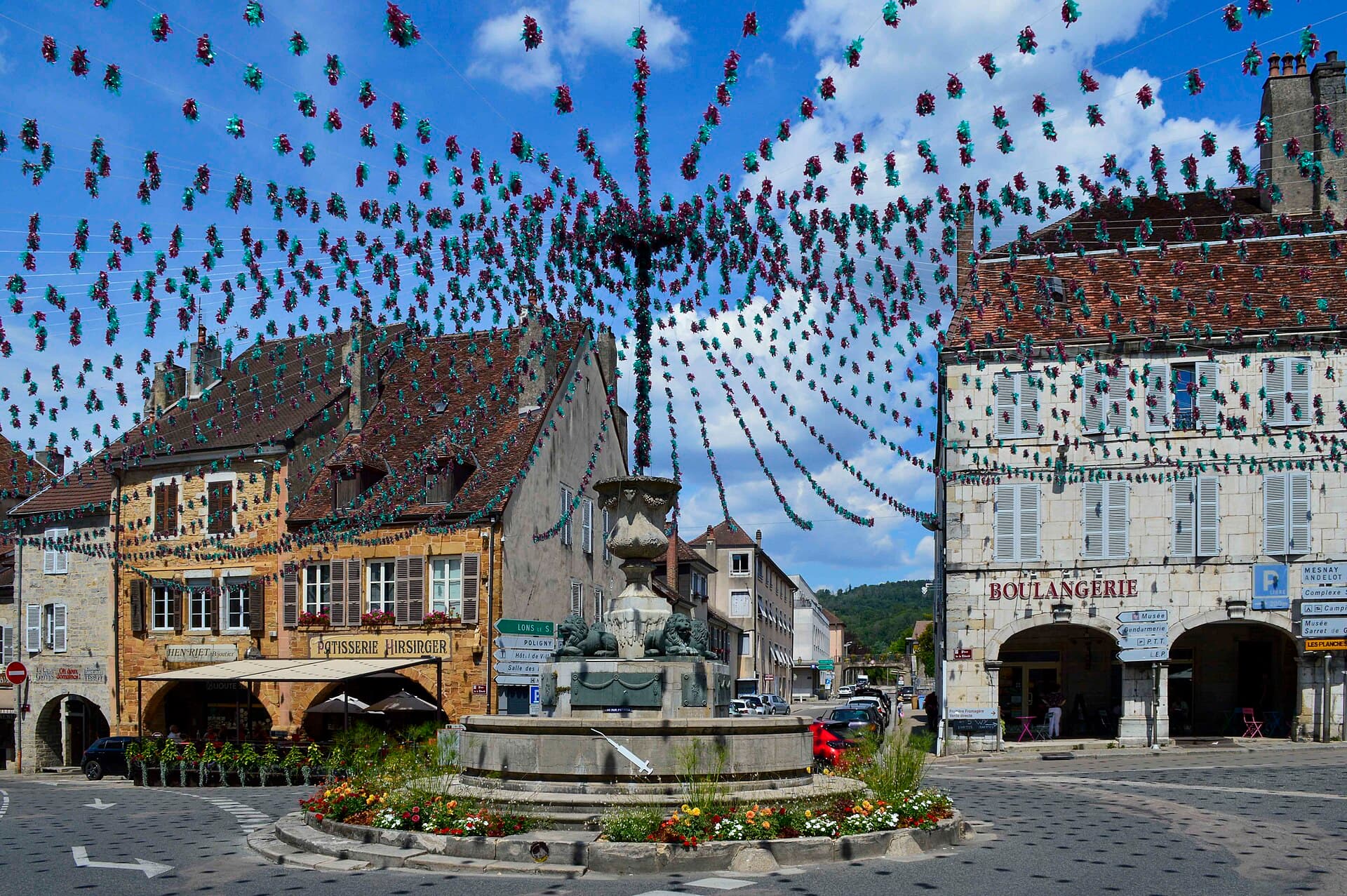 Wikipedro / CC BY-SA 4.0, via Wikimedia Commons
Tour de audio autoguiado de Arbois — ruta GPS a pie, reproducción offline, narración en 32 idiomas.
“Donde la ciencia se encontró con la vid, y la historia fluye como el vino.”
No las postales. Las historias que ni los locales conocen — al oído, justo donde ocurrieron.
El renombrado científico Louis Pasteur, quien revolucionó nuestra comprensión de la fermentación y desarrolló vacunas, consideraba Arbois más que un simple retiro de verano.
Mientras que regiones como Borgoña y Champaña son globalmente sinónimo de vino francés, Arbois ostenta una distinción única y pionera en el sistema de apelaciones del país.
El imponente campanario de la Iglesia de Saint-Just de Arbois, un punto de referencia prominente, alguna vez aspiró a una altura aún mayor.
Descubre todos los secretos de Arbois
Cada dirección, cada revelación al completo — a tu oído, justo donde ocurrió.
Eliges tus paradas. Caminas. La voz te revela lo que los demás ignoran.

Tu tour de audioguía por Arbois te espera — elige tus lugares, tu idioma y empieza al llegar.
ComprarLume incluye una guía de realidad aumentada. Levanta el móvil y su cámara muestra la calle que tienes delante, con una flecha luminosa sobre la imagen real que siempre apunta a tu próxima parada — sin mapas que descifrar, sin giros equivocados. Como todo en Lume, funciona completamente sin conexión.
Arbois, una cautivadora ciudad en la región del Jura en Francia, presenta un paisaje donde edificios de piedra de tonos dorados bordean el serpenteante río Cuisance, reflejando siglos de herencia vitivinícola. Conocida como el corazón histórico de los vinos del Jura, Arbois es celebrada por sus distintivas variedades y fue una de las regiones inaugurales de Appellation d'Origine Contrôlée (AOC) de Francia.
Más allá de su renombre vitivinícola, Arbois tiene una profunda conexión con la historia científica como el hogar y laboratorio de Louis Pasteur. La fusión de profundidad cultural, arquitectura histórica y un notable entorno natural —que abarca viñedos, bosques y cascadas— la convierte en un destino atractivo para quienes buscan tanto el descubrimiento intelectual como la serena belleza.
La historia de Arbois se remonta a la época romana, cuando sus fértiles tierras ya eran reconocidas por la viticultura. Se cree que el nombre de la ciudad deriva del celta, que significa 'tierra fértil', o del latín 'Arbores vicus', que significa 'pueblo rodeado de árboles', lo que subraya su abundancia natural. En la Edad Media, la elaboración de vino se intensificó bajo la influencia de los monasterios, y el vino local ganó reconocimiento más allá de la región de Franche-Comté durante el Renacimiento.
Originalmente una ciudad sin defensas hasta 1260, Arbois fue fortificada con murallas en la década siguiente. Soportó siete asedios durante su tiempo como parte del Ducado de Borgoña, enfrentando asaltos de figuras como Carlos I de Amboise e incluso resistiendo durante tres semanas a las 25.000 tropas de Enrique IV. Luis XIV más tarde ordenó el desmantelamiento de su castillo en 1678 después de conquistar Franche-Comté.
Un momento crucial en la historia moderna de Arbois llegó en mayo de 1936, cuando se convirtió en una de las primeras seis regiones de Appellation d'Origine Contrôlée (AOC) de Francia, consolidando su reputación como cuna de los vinos del Jura. El legado científico de la ciudad es igualmente profundo, en gran parte debido a Louis Pasteur, quien mantuvo su única casa y laboratorio privado aquí desde 1827 hasta 1839. Fue en Arbois donde Pasteur realizó experimentos pioneros sobre la fermentación del vino, sentando las bases de la enología moderna y desarrollando el proceso de pasteurización.
Comience su exploración en la Maison de Louis Pasteur, la casa y laboratorio conservados del científico, donde podrá adentrarse en su mundo privado y observar dónde realizó su trabajo fundamental sobre la fermentación y la pasteurización.
Pasee a lo largo del río Cuisance, admirando los edificios de piedra de color ocre y las casas tradicionales de los viticultores. Visite la Iglesia de Saint-Just, una estructura gótica romana del siglo XII, notable por su campanario de 60 metros de altura, que ofrece amplias vistas de los viñedos y la ciudad cuando es accesible en julio y agosto.
Descubra la herencia vitivinícola de la región en el Musée de la Vigne et du Vin du Jura, ubicado dentro del Château Pécauld. Explore la plaza central porticada de la ciudad y sus numerosas bodegas, donde podrá degustar los distintivos vinos del Jura, incluidos el célebre Vin Jaune y el Vin de Paille.
Fuera de la ciudad, la espléndida naturaleza del Jura le espera. La Reculée des Planches, un desfiladero de piedra caliza, presenta acantilados, manantiales de aguas cristalinas y la cascada Cascade des Tufs. El cercano Mirador de Fer à Cheval ofrece vistas panorámicas del valle de Arbois.
Los momentos ideales para visitar Arbois para disfrutar de un clima agradable y actividades al aire libre van desde finales de junio hasta principios de septiembre. Julio y agosto ofrecen temperaturas cálidas, con máximas promedio alrededor de 26°C (79°F) y mínimas alrededor de 14°C (57°F), aunque estos meses pueden ser más concurridos. La primavera (abril-junio) y el otoño (septiembre-noviembre) ofrecen un clima más suave y menos multitudes, siendo el otoño particularmente atractivo durante la temporada de cosecha y por su rico follaje.
Se puede acceder a Arbois en tren, con servicio TGV a Dole seguido de un tren regional a Arbois. Para una mayor flexibilidad al explorar los viñedos y sitios naturales circundantes, se recomienda alquilar un coche, especialmente si llega por la autopista A39 desde Dijon o Lyon. Los aeropuertos principales más cercanos son Ginebra (a 2 horas) y Lyon (a 2,5 horas).
Aunque se habla inglés en las zonas turísticas, aprender algunas frases básicas en francés puede mejorar su experiencia, especialmente al interactuar con los viticultores locales. Arbois es conocida por sus tradiciones culinarias, incluidos quesos locales como Comté y Morbier, y platos como el coq au vin jaune. Asegúrese de verificar los horarios de apertura de las atracciones y bodegas, ya que pueden variar según la temporada.
Arbois en coreano, en chino o en hebreo — y 29 idiomas más, cada parada narrada por una voz nativa. La mayor variedad de idiomas de cualquier audioguía autoguiada.
Disponible en: