The Pingelhus
This appealing little house, a town landmark, once played a crucial role in Aurich's bustling port life, but its lower level has vanished.
Full story unlocks in the tour
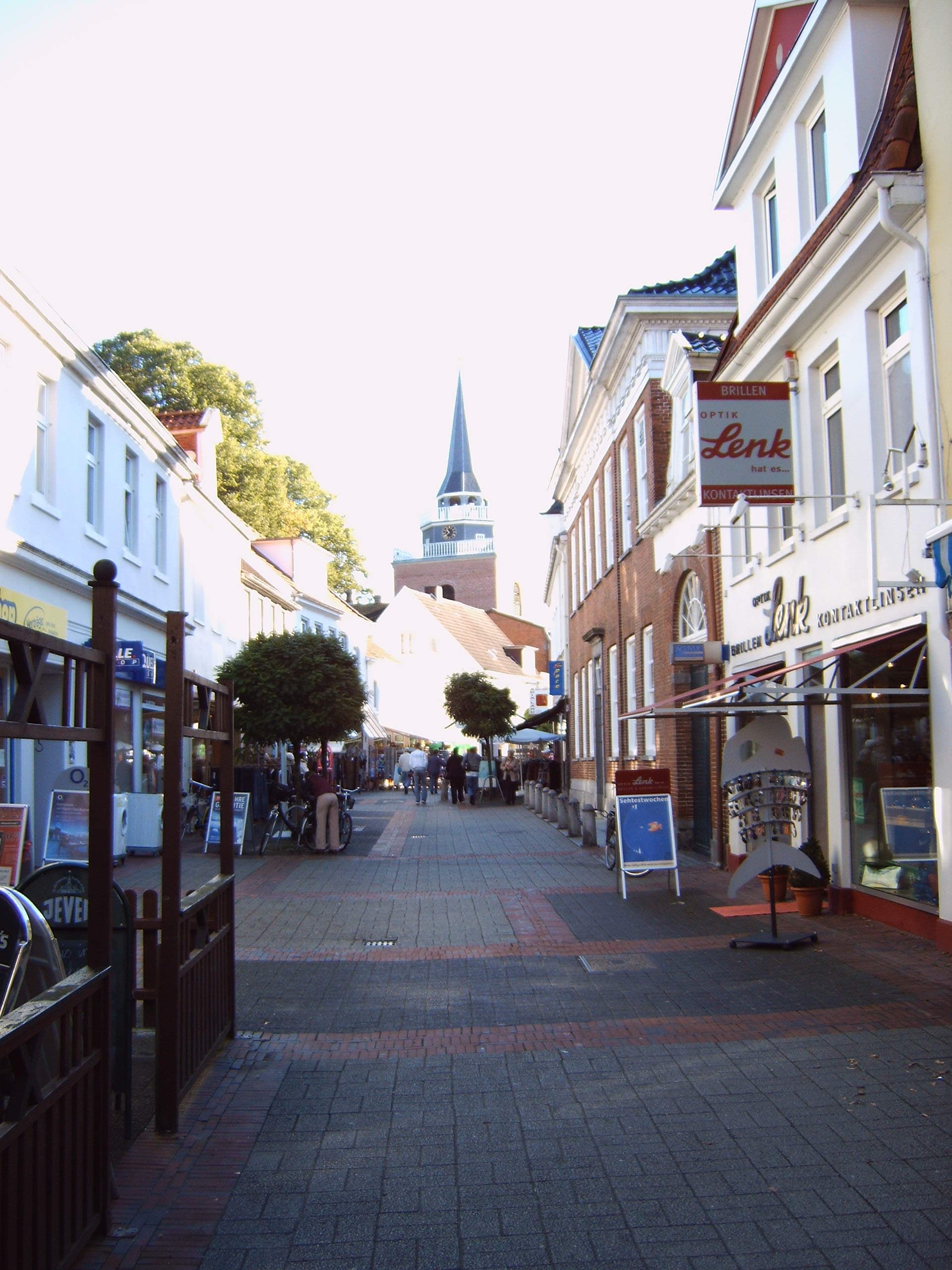 No machine-readable author provided. Olaf2 assumed (based on copyright claims). / CC BY-SA 3.0, via Wikimedia Commons
Self-guided audio walking tour of Aurich — GPS route, offline playback, story-driven narration in 32 languages.
“Where ancient Frisian spirit meets Baroque elegance, and every corner holds a whisper of centuries past.”
Not the postcards. The stories even locals don't know — whispered in your ear, right where they happened.
This appealing little house, a town landmark, once played a crucial role in Aurich's bustling port life, but its lower level has vanished.
Aurich was home to a significant Jewish community for centuries, but their presence was tragically erased.
In the heart of Aurich's market square stands a historic building with a distinctly Dutch flair, now serving a surprising modern purpose.
Discover every secret of Aurich
Every address, every reveal in full — in your ear, right where it happened.
You pick your stops. You walk. The voice reveals what the others miss.


Your self-guided audio tour of Aurich is ready — pick your landmarks, choose your language, and start the moment you arrive.
BuyLume has a built-in augmented-reality guide. Hold your phone up and its camera shows the street ahead of you, with a glowing arrow laid over the real view that always points to your next stop — no map to puzzle over, no wrong turns. Like everything in Lume, it works fully offline.
Aurich, the second-largest city in East Frisia, Germany, offers a captivating blend of historical depth and natural beauty. This district capital in Lower Saxony is characterized by its flat landscapes, ideal for cycling through surrounding moors and polders. The city gracefully lies along the Ems-Jade Canal, a waterway that connects Emden and Wilhelmshaven, providing a picturesque backdrop and opportunities for leisure activities.
Aurich's origins trace back to the 13th century, with the first mention of the settlement "Aurechove" in a Frisian document in 1276. Today, its well-preserved historic town center invites exploration, with appealing architecture and a lively market square that serves as a hub of local life. Beyond its urban core, Aurich is surrounded by diverse natural landscapes, including extensive forests and nature reserves like the Kollrunger Moor and the Ewige Meer.
## From Frisian Settlement to Regional Capital Aurich's story begins in the 13th century, first documented as "Aurechove" in the Frisian Brokmerbrief in 1276. The interpretation of its name is debated, possibly referring to a person named Affo and his property, or to waterworks on the fertile lowlands of the Aa River. The town's early development saw it become a significant center in East Frisia. In 1517, Count Edzard from the House of Cirksena initiated the town's rebuilding after an attack, establishing the town center that largely remains today.
## Shifting Powers and Prussian Influence By 1539, Aurich solidified its status as the county capital, and later, the capital of East Frisia, a role it maintained even when the region was inherited by the Kingdom of Prussia in 1744. This Prussian influence shaped much of Aurich's administrative and architectural character. However, its strategic location also made it a prize in European power struggles. Following the defeat of the Prussian Army in 1807, Aurich briefly became part of the Kingdom of Holland in 1808. Napoleon's ambitions further impacted the town when the Kingdom of Holland was annexed by France in 1810, making Aurich the capital of the Ems-Oriental department of the First French Empire.
## Post-Napoleonic Era and World War II After Napoleon's defeat in 1814, Aurich reverted to German control, passing to the Kingdom of Hanover in 1815, and then being annexed by Prussia again in 1866 as part of the Province of Hanover. The 20th century brought darker times. From October to December 1944, a Nazi concentration camp, a subcamp of Neuengamme, was established in Aurich. After World War II, Aurich became part of the newly formed state of Lower Saxony. The post-war period also saw a significant increase in population due to refugees and later, industrialization, particularly with the establishment of the wind turbine manufacturer Enercon, which became the largest private employer.
## A Legacy of Culture and Progress Today, Aurich continues to be an important administrative center, home to numerous authorities and the East Frisian Landscape. The town proudly embraces its Frisian heritage, with bilingual place name signs in Standard German and East Frisian Low German permitted since 2004. Its history is preserved in its museums, historic buildings, and the enduring spirit of its people.
Begin your exploration at the Marktplatz, Aurich's central market square, a lively pedestrian zone where you can witness daily life and admire historic structures like the "Knodtsche Haus," a beautiful Dutch late Baroque building now serving as a school. Nearby, the Lamberti Church, built between 1832 and 1835, houses a remarkable late Gothic carved altar from the former Ihlow monastery. For a far-reaching view of Aurich and its surrounding landscapes, climb the Stiftsmühle, a five-story gallery windmill that stands as the second-highest mill in East Frisia.
Delve into the town's past at the Historical Museum, which offers extensive collections on Aurich's prehistory and early history. Do not miss the iconic Pingelhus, a historic harbor watchman's house that is one of Aurich's landmarks, where you can even experience a traditional East Frisian tea ceremony. For a unique cultural experience, visit the Moor Museum Moordorf, an open-air museum that authentically reconstructs the challenging living and working conditions of moor colonization in East Frisia. Just outside the town, the Ihlow Forest holds the archaeological park and a striking wood-steel sculpture reconstruction of the former Cistercian monastery church, once the largest church between Bremen and Groningen. You can also visit Upstalsboom, a simple stone pyramid symbolizing Frisian freedom. For a relaxing experience on the water, consider a canal cruise from Aurich's harbor on the Ems-Jade Canal.
The best time to visit Aurich for pleasant weather and outdoor activities is from May through September. During these months, temperatures are generally comfortable, with July being the warmest, averaging highs of 70°F (21°C) and lows of 55°F (12°C). Spring (April-June) and autumn (September-October) offer a balanced experience with good weather and fewer crowds. While the summer months are active with festivals, they also see higher visitor numbers. Winters (November-March) are cold, with average daily high temperatures below 46°F (8°C), and can be quite cloudy, but offer a quieter, more tranquil experience.
Aurich is well-connected within the local bus network, with the Aurich Central Bus Station serving as a central point for transportation. While there is no regular passenger transport on the Abelitz-Aurich railway, buses offer connections to various areas, including nearby cities like Leer. For greater flexibility in exploring the East Frisian region, renting a car is recommended, as Aurich is characterized by flat landscapes ideal for driving and cycling. Accommodation options in Aurich range from cozy guesthouses and vacation apartments to hotels, including options like Hotel am Schloss Aurich and Köhlers Forsthaus Wellness & Genuss Hotel. German is the official language, but the local dialect, Plattdütsch, is also spoken. The currency used is the Euro (€).
Aurich in Korean, in Chinese or in Hebrew — and 29 more languages, every stop narrated by a native voice. The widest language range of any self-guided audio tour.
Available in: