Le musée du thé Bünting
La Frise orientale consomme plus de thé que de nombreuses nations pourtant réputées pour cette boisson. Il existe un rituel spécifique pour savourer pleinement leur breuvage chéri.
L'histoire complète se débloque dans le tour
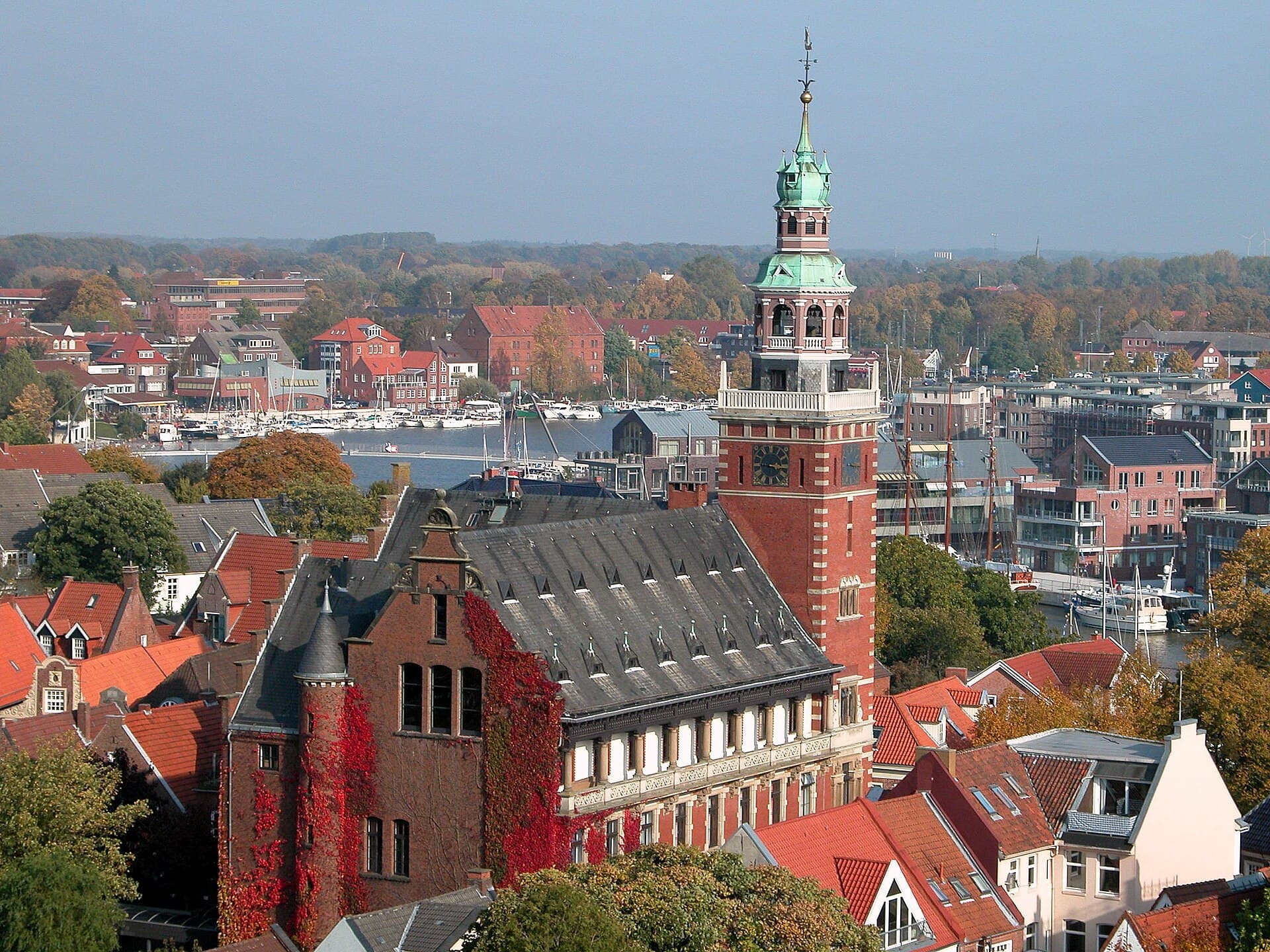 Benutzer:Brunswyk / CC BY-SA 3.0 de, via Wikimedia Commons
Visite audio autoguidée de Leer — parcours GPS à pied, lecture hors ligne, narration en 32 langues.
“Là où l'histoire infuse chaque tasse, et le passé coule comme la Leda.”
Pas les cartes postales. Les histoires que même les habitants ignorent — soufflées à l'oreille, là où elles se sont passées.
La Frise orientale consomme plus de thé que de nombreuses nations pourtant réputées pour cette boisson. Il existe un rituel spécifique pour savourer pleinement leur breuvage chéri.
Ce grand château, érigé à l'origine au XVIIe siècle, a subi une transformation spectaculaire au XIXe siècle. Les raisons de sa refonte radicale étaient plus pratiques qu'esthétiques.
Le nom de cette charmante ville de Frise orientale, « Leer », peut sembler peu engageant en anglais. Cependant, sa véritable signification est tout le contraire, faisant allusion à son importance historique.
Découvrez tous les secrets de Leer
Chaque adresse, chaque révélation en entier — dans ton oreille, là où elle s'est passée.
Tu choisis tes lieux. Tu marches. La voix te révèle ce que les autres ignorent.


Votre visite audioguidée de Leer vous attend — choisissez vos lieux, votre langue, et lancez-vous dès votre arrivée.
AcheterLume intègre un guide en réalité augmentée. Levez votre téléphone : sa caméra montre la rue devant vous, avec une flèche lumineuse posée sur l'image réelle qui pointe toujours vers votre prochain arrêt — aucune carte à déchiffrer, aucun mauvais virage. Comme tout dans Lume, ça fonctionne entièrement hors-ligne.
Leer, souvent appelée la « Porte de la Frise orientale », est une ville tranquille située dans la région de Basse-Saxe, au nord-ouest de l'Allemagne. Nichée sur la rivière Leda, un affluent de l'Ems, elle offre un mélange de patrimoine culturel et de splendeur naturelle. Avec une population d'environ 35 000 habitants, Leer est la troisième plus grande ville de Frise orientale, reconnue pour ses traditions maritimes et sa culture du thé distinctive.
La situation stratégique de la ville, près de la frontière néerlandaise et son accès fluvial, en ont fait historiquement un important centre commercial et maritime. Aujourd'hui, Leer maintient son lien avec la mer, servant de port efficace et de plaque tournante importante pour le transport fluvial. C'est également un lieu significatif pour les compagnies maritimes allemandes, avec près de 20 % de la flotte marchande allemande enregistrée ici.
Les visiteurs de Leer peuvent explorer sa vieille ville soigneusement préservée, admirer les maisons de marchands historiques et découvrir l'atmosphère animée du port. L'attachement de la ville à son patrimoine est évident dans ses musées et le rythme quotidien de sa cérémonie du thé unique de Frise orientale. Leer est également bien desservie par le chemin de fer et l'autoroute, ce qui en fait une destination accessible et intrigante pour ceux qui cherchent à découvrir le charme de la Frise orientale.
## Des chefs aux droits de cité L'histoire de Leer remonte à plus de 1 200 ans, avec ses origines en tant que peuplement au confluent des rivières Leda et Ems. La ville a été documentée pour la première fois au milieu du IXe siècle. Aux XIVe et XVe siècles, Leer abritait l'influente famille Ukena, l'une des dynasties de chefs les plus puissantes de Frise orientale. La ville a prospéré grâce au commerce avec la Ligue hanséatique, ce qui a conduit à la construction de la forteresse de Leerort en 1435.
Un moment significatif dans le développement de Leer s'est produit en 1508 lorsque le comte Edzard a accordé à la ville le droit officiel d'organiser un marché, initiant la tradition de la foire annuelle de Gallimarkt, qui reste aujourd'hui l'une des plus grandes foires du nord-ouest de l'Allemagne.
## La domination prussienne et les connexions modernes La Frise orientale, y compris Leer, est passée sous la domination prussienne en 1744 sous Frédéric le Grand. Les privilèges de la ville ont été officiellement accordés en 1823 par George IV, roi de Hanovre. Le XIXe siècle a vu l'intégration de Leer dans des réseaux de transport plus larges. En 1854, elle a obtenu une connexion ferroviaire à Emden et Rheine, faisant partie de la région industrielle de la Ruhr, et en 1856, la Westbahn l'a reliée au réseau ferroviaire allemand central.
Contrairement à Emden, Leer a subi des dommages minimes lors des bombardements alliés pendant la Seconde Guerre mondiale, et les troupes canadiennes ont occupé la ville le 28 avril 1945. Le 1er octobre 1955, Leer a obtenu le statut de ville indépendante.
## Un pôle maritime et culturel Aujourd'hui, Leer poursuit son héritage en tant que lieu maritime vital. Elle fonctionne comme un port important et un centre fluvial, jouant un rôle crucial dans le commerce et les transports. La ville est également un centre pour les compagnies maritimes allemandes, avec une partie substantielle de la flotte marchande du pays y étant enregistrée.
Au-delà de son importance économique, Leer est reconnue pour sa culture du thé distinctive de Frise orientale, une tradition qui a été reconnue par l'UNESCO comme patrimoine culturel. L'architecture historique de la ville, y compris sa vieille ville et ses divers châteaux, reflète son riche passé et en fait une destination fascinante pour les visiteurs intéressés par l'histoire et les coutumes locales.
Commencez votre exploration dans la Altstadt (Vieille Ville) de Leer, où des maisons de marchands séculaires bordent les rues et les canaux. Le Rathaus (Hôtel de Ville), un bâtiment de style Renaissance au cœur de la Vieille Ville, est remarquable pour ses peintures au plafond et ses sols en mosaïque. Adjacent à la Vieille Ville se trouve le Port de Leer, une zone animée avec des bateaux, des cafés au bord de l'eau et des vues panoramiques. Ne manquez pas le Nessebrücke, un pont piétonnier offrant des vues pittoresques et un point de vue unique pour observer les bateaux.
Une visite au Château d'Evenburg est un voyage dans le passé aristocratique de la région. Ce château d'eau néo-gothique, entouré de douves et de vastes jardins paysagers à l'anglaise, propose des visites guidées et des expositions sur la vie de la famille royale. Pour une immersion plus profonde dans les traditions locales, le Musée du thé Bünting offre un aperçu de la culture, de la production et de la préparation du thé, avec des expositions détaillant la culture du thé unique de la Frise orientale. Vous pouvez même participer à une cérémonie du thé traditionnelle de Frise orientale.
Parmi les autres sites historiques notables, citons le Château de Haneburg, un bâtiment Renaissance du XVe siècle qui a servi à diverses fins au fil des siècles, et la Festung Leerort (Forteresse de Leerort), un château fluvial de la fin du Moyen Âge d'une grande importance historique pour la Frise orientale. Pour une expérience unique, envisagez une excursion en bateau sur la rivière Leda ou explorez la campagne plate environnante à vélo, car Leer a été élue la localité la plus propice au cyclisme en Basse-Saxe en 2002.
La meilleure période pour visiter Leer et profiter des activités par temps chaud est de fin juin à fin août, lorsque les températures quotidiennes moyennes sont agréables. Le printemps (avril-mai) offre un temps doux idéal pour l'exploration à pied et la combinaison de visites de musées avec des activités de plein air dans les parcs et les voies navigables de la ville. L'automne (septembre-octobre) crée une atmosphère chaleureuse, parfaite pour se plonger dans la culture du thé, avec des températures allant de 6°C (43°F) en janvier à 23°C (73°F) en juillet. Les hivers sont généralement doux, ce qui les rend propices aux attractions intérieures.
Leer est située sur la rivière Leda, près de la frontière avec les Pays-Bas, et est bien desservie par le chemin de fer et l'autoroute, ce qui la rend accessible depuis des villes comme Groningue, Emden et Brême. L'aéroport international le plus proche est l'aéroport international de Brême. À Leer, il est facile de se déplacer, avec un système de transport public comprenant des bus et des trains. La ville est également très propice au cyclisme.
Les options d'hébergement vont des maisons d'hôtes confortables aux hôtels modernes. La monnaie locale est l'euro (€). Bien que l'allemand soit la langue principale, l'anglais est souvent compris dans les zones touristiques. Prévoyez environ 1,5 à 2 heures pour explorer entièrement le musée du thé Bünting, plus longtemps si vous participez à une dégustation de thé. De nombreuses attractions, y compris la vieille ville et le château d'Evenburg, offrent un accès sans obstacle.
Leer en coréen, en chinois ou en hébreu — et dans 29 autres langues, chaque étape narrée par une voix native. La plus large gamme de langues de tous les audioguides autoguidés.
Disponible en :