Sala de Audiencias del Castillo de Jever
Más allá de sus imponentes muros de piedra, el Castillo de Jever resguarda una maravilla inesperada en su cámara más grandiosa.
La historia completa se desbloquea en el tour
 Christoph Wilhelms (Christoph73) / CC BY-SA 3.0, via Wikimedia Commons
Tour de audio autoguiado de Jever — ruta GPS a pie, reproducción offline, narración en 32 idiomas.
“Donde el legado frisón converge con una cerveza famosa por su carácter.”
No las postales. Las historias que ni los locales conocen — al oído, justo donde ocurrieron.
Más allá de sus imponentes muros de piedra, el Castillo de Jever resguarda una maravilla inesperada en su cámara más grandiosa.
La renombrada Jever Pilsener es célebre por su carácter distintivamente amargo, pero el origen de este sabor característico va más allá del lúpulo.
Jever es ocasionalmente conocida como "Marienstadt" (Ciudad de María), una designación que tiene un peso histórico concreto.
Descubre todos los secretos de Jever
Cada dirección, cada revelación al completo — a tu oído, justo donde ocurrió.
Eliges tus paradas. Caminas. La voz te revela lo que los demás ignoran.


Tu tour de audioguía por Jever te espera — elige tus lugares, tu idioma y empieza al llegar.
ComprarLume incluye una guía de realidad aumentada. Levanta el móvil y su cámara muestra la calle que tienes delante, con una flecha luminosa sobre la imagen real que siempre apunta a tu próxima parada — sin mapas que descifrar, sin giros equivocados. Como todo en Lume, funciona completamente sin conexión.
Jever, una ciudad en Baja Sajonia, Alemania, es quizás más reconocida por la Pilsener asertivamente amarga que lleva su nombre. Sin embargo, este asentamiento frisón ofrece más que solo su célebre cerveza. Con una población proyectada de aproximadamente 14,971 habitantes en 2026, Jever sirve como la capital del distrito de Frisia, teniendo importancia para la región en general.
Los viajeros descubrirán una ciudad fácil de recorrer a pie, que cuenta con un encantador casco antiguo, edificios venerables y un patrimonio cultural singular. Desde sus orígenes medievales hasta sus períodos bajo diversas administraciones, el pasado de Jever está grabado en su arquitectura y tradiciones perdurables.
La génesis del Castillo de Jever, un hito central, se remonta a una fortificación del siglo XIV construida alrededor de 1370 por Edo Wiemken el Viejo. Este baluarte inicial sentó las bases de la ciudad. A lo largo de los siglos, el castillo evolucionó, notablemente bajo Edo Wiemken el Joven a finales del siglo XV, cuando se transformó en una residencia permanente.
Una era fundamental en la historia de Jever llegó en el siglo XVI con María de Jever, una poderosa regente que supervisó las renovaciones del castillo al estilo renacentista. Su influencia sigue siendo evidente en los ornamentados techos artesonados de la sala de audiencias y las defensas fortificadas. María de Jever también otorgó a la ciudad su estatus de ciudad en 1536, lo que llevó a que Jever a veces fuera llamada informalmente "Marienstadt" en su honor. Tras su fallecimiento en 1575, el castillo pasó por varias manos nobles, convirtiéndose finalmente en parte del Gran Ducado de Oldenburg en el siglo XIX.
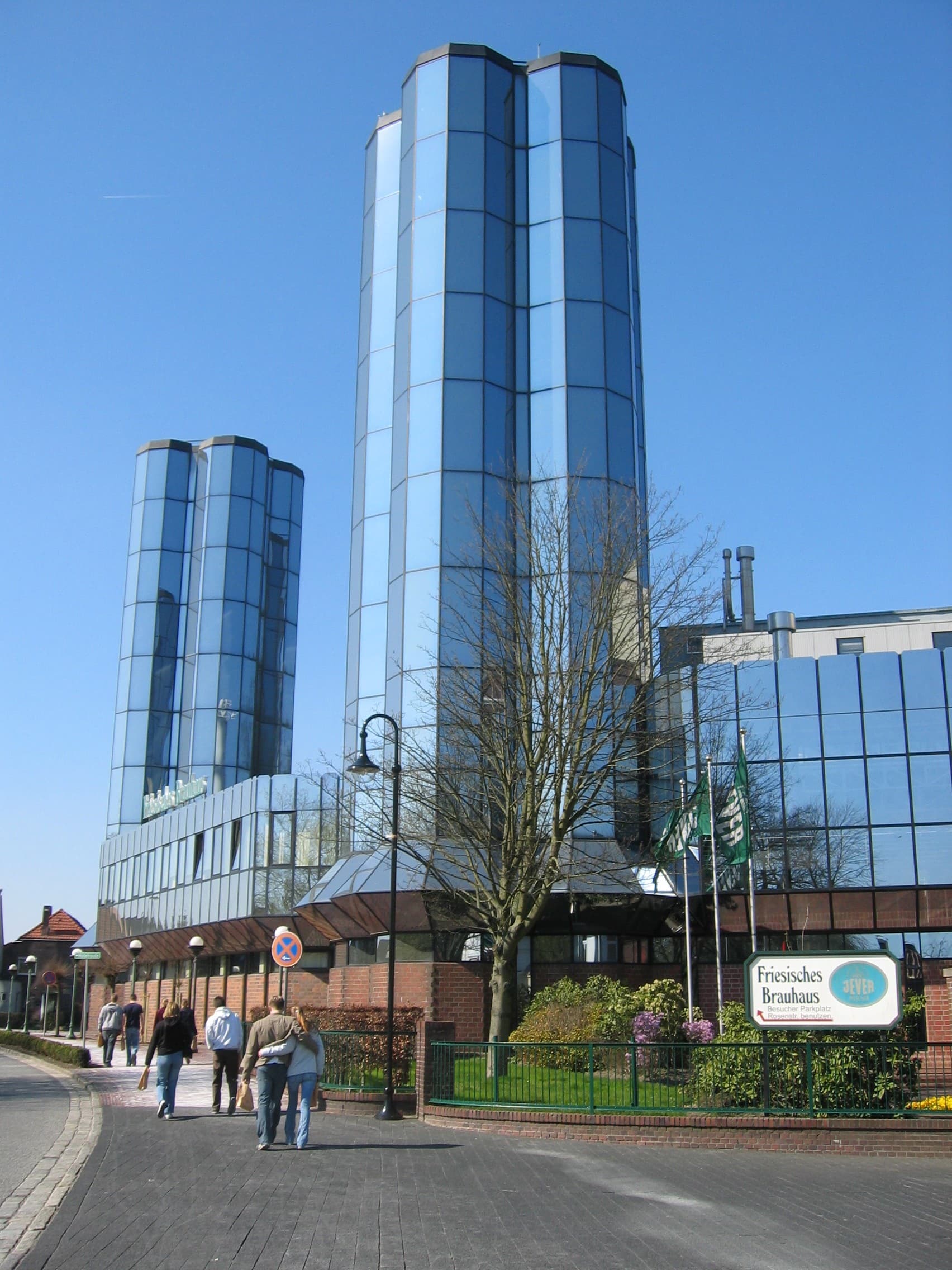
El siglo XIX también marcó el comienzo del legado cervecero de Jever. Diedrich König estableció la Friesisches Brauhaus zu Jever en 1848. Aunque inicialmente fue una entre muchas cervecerías, creció en prominencia. Después de la muerte de König en 1867, Theodor Fetköter asumió el control, desarrollando la pequeña empresa familiar en una operación más grande e introduciendo botellas y publicidad distintivas. La cervecería fue vendida a Bavaria-St. Pauli Brewery en Hamburgo en 1923, y en 1934, el maestro cervecero Ernst Böhme comenzó a elaborar la distintivamente amarga Jever Pilsener conocida hoy. La cervecería, con su moderna planta y torres de 32 metros de altura, sigue siendo un hilo significativo en la identidad de la ciudad.
Jever presenta una convergencia de sitios históricos y encuentros culturales. La atracción más destacada es el Castillo de Jever (Schloss Jever), un castillo de cuatro alas que comenzó como una fortificación del siglo XIV. Los visitantes pueden explorar el museo del castillo, que alberga colecciones de historia cultural, folclore y arqueología de la región de Jever, incluyendo salas de época fielmente recreadas. Durante los meses más cálidos, la torre del castillo de 67 metros de altura es accesible para escalar, ofreciendo amplias vistas de la costa frisona. Los terrenos del castillo, con un jardín inglés, también están abiertos para paseos tranquilos.
Otra parada singular es el Taller de Impresión Azul (Blaudruckerei), donde se demuestra la impresión textil tradicional utilizando patrones históricos en un almacén que data de 1822. Por supuesto, una visita a Jever estaría incompleta sin reconocer su exportación más celebrada: Jever Pilsener. La Friesisches Brauhaus zu Jever ofrece visitas guiadas a su moderna instalación de producción y alberga un museo cervecero. La ciudad también cuenta con un encantador casco antiguo con calles empedradas y casas tradicionales frisonas, ideal para caminar y descubrir tiendas y cafeterías locales.
El momento ideal para experimentar Jever para actividades de clima cálido es desde principios de julio hasta finales de agosto, cuando las temperaturas máximas diarias promedio superan los 18 °C (65 °F). Julio suele ser el mes más cálido, con una máxima promedio de 21 °C (70 °F) y una mínima de 13 °C (55 °F). Los cielos suelen estar más despejados en julio. Si bien septiembre ofrece temperaturas ligeramente frescas con máximas promedio de 18 °C (65 °F) y mínimas de 12 °C (54 °F), también conlleva una probabilidad moderada de lluvia. Los inviernos son largos, trayendo condiciones muy frías y mayormente nubladas.
Jever es una ciudad fácil de recorrer a pie, y su centro urbano compacto se presta bien a la exploración caminando o en bicicleta. Las conexiones de transporte público unen Jever con centros regionales más grandes, facilitando un descubrimiento más amplio de Baja Sajonia. La moneda local es el Euro. El alemán es el idioma oficial. Las opciones de alojamiento en Jever van desde acogedoras casas de huéspedes y posadas tradicionales hasta hoteles contemporáneos. La ciudad tiene una población estimada de aproximadamente 14,971 habitantes en 2026. Los servicios de emergencia están fácilmente disponibles. Muchos restaurantes, pubs, cafeterías y cervecerías al aire libre ofrecen oportunidades para experimentar el ambiente frisón y la cocina local.
Jever en coreano, en chino o en hebreo — y 29 idiomas más, cada parada narrada por una voz nativa. La mayor variedad de idiomas de cualquier audioguía autoguiada.
Disponible en: