Château de Plön
Cette grande bâtisse, autrefois résidence ducale et académie militaire, a aujourd'hui une vocation contemporaine surprenante.
L'histoire complète se débloque dans le tour
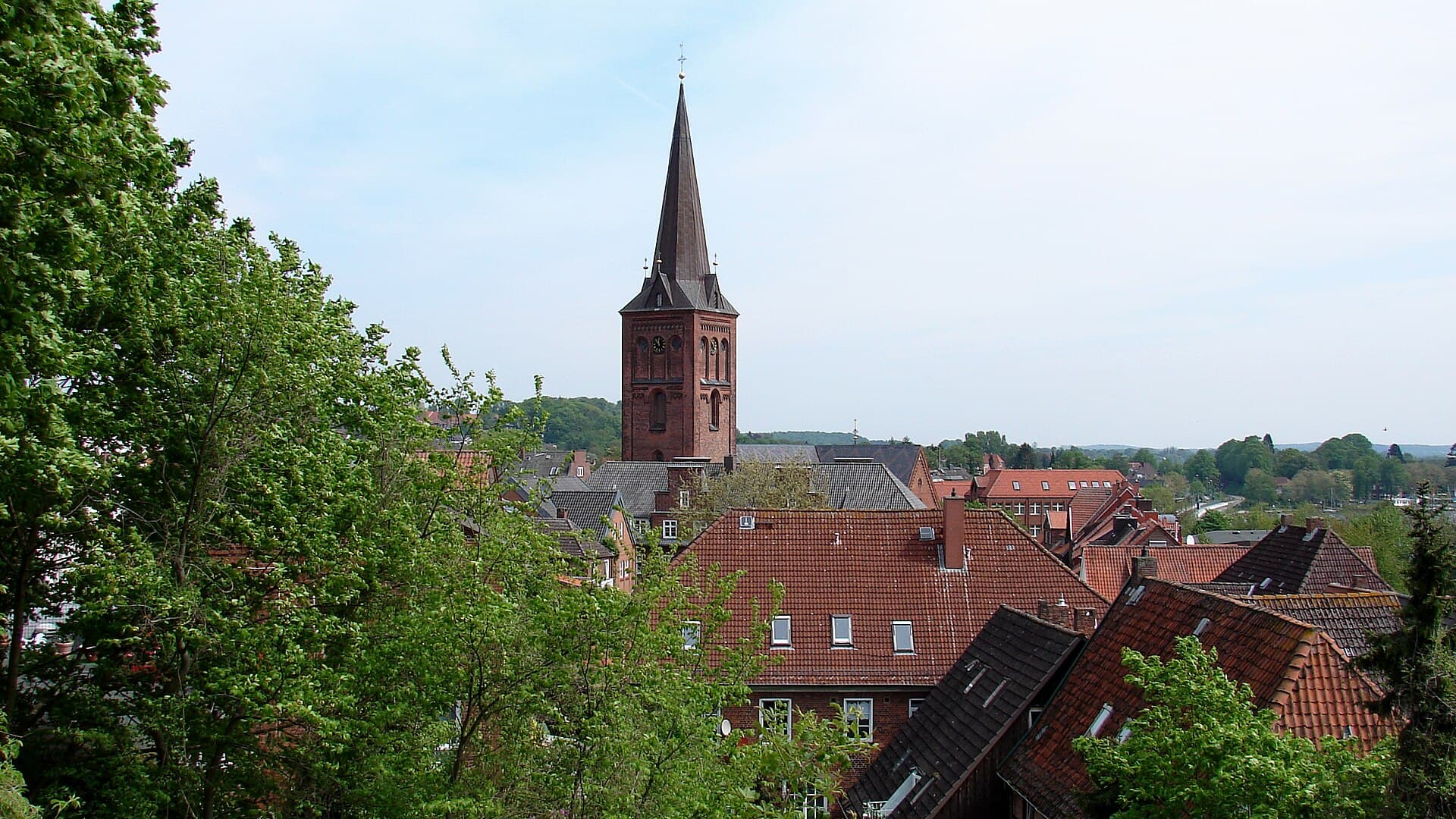 Filzstift at German Wikipedia. / CC BY-SA 3.0, via Wikimedia Commons
Visite audio autoguidée de Plön — parcours GPS à pied, lecture hors ligne, narration en 32 langues.
“Là où l'eau vaste reflète des siècles d'endurance tranquille.”
Pas les cartes postales. Les histoires que même les habitants ignorent — soufflées à l'oreille, là où elles se sont passées.
Cette grande bâtisse, autrefois résidence ducale et académie militaire, a aujourd'hui une vocation contemporaine surprenante.
Une île tranquille du Grand Lac de Plön conserve un lien avec la royauté allemande qui perdure à ce jour.
Sous la surface calme des nombreux lacs de Plön se cache une histoire plus sombre et moins connue, impliquant le travail forcé.
Découvrez tous les secrets de Plön
Chaque adresse, chaque révélation en entier — dans ton oreille, là où elle s'est passée.
Tu choisis tes lieux. Tu marches. La voix te révèle ce que les autres ignorent.


Votre visite audioguidée de Plön vous attend — choisissez vos lieux, votre langue, et lancez-vous dès votre arrivée.
AcheterLume intègre un guide en réalité augmentée. Levez votre téléphone : sa caméra montre la rue devant vous, avec une flèche lumineuse posée sur l'image réelle qui pointe toujours vers votre prochain arrêt — aucune carte à déchiffrer, aucun mauvais virage. Comme tout dans Lume, ça fonctionne entièrement hors-ligne.
Plön, chef-lieu du district de Plön dans le Schleswig-Holstein, en Allemagne, est une ville intimement façonnée par l'eau. Elle est située directement sur les rives du Grand Lac de Plön (Großer Plöner See), le plus grand lac du Schleswig-Holstein, et est encerclée par plusieurs lacs plus petits. Cette étreinte aquatique confère à Plön un caractère distinctif, parfois décrit comme ayant un 'air de Venise' lorsqu'on l'explore en canoë. Le nom de la ville lui-même proviendrait du mot slave 'plun', signifiant 'eau' ou 'marais', reflétant les schémas de peuplement historiques de la région.
Au-delà de sa beauté aquatique naturelle, Plön est marquée par son grand château du XVIIe siècle, qui s'élève sur une colline dominant la ville. Ce monument, ainsi qu'une charmante vieille ville avec ses bâtiments historiques et ses petits cafés de rue, contribuent à l'attrait de Plön en tant que destination pour des escapades urbaines actives ou des vacances paisibles. La situation de la ville au sein du district lacustre vallonné et boisé de la Suisse holsteinoise renforce encore sa position dans l'industrie du tourisme.
L'histoire de Plön remonte au Xe siècle avec une fortification défensive slave appelée Plune, située sur l'île d'Olsborg dans le lac de Plön. Cette première colonie, dont le nom signifiait 'eau libre de glace', fut détruite en 1139 par le comte Adolf II de Schauenburg, marquant la fin de l'influence slave dans la région. Un nouveau château fut établi sur le Bischofsberg, le site de l'actuel château de Plön, au XIIe siècle. Sous la protection de ce château, une ville marchande saxonne émergea lentement, recevant finalement les droits de ville selon le droit de Lübeck en 1236.
La position stratégique de Plön sur un étroit isthme entre ses lacs et la rivière Schwentine en fit un centre important pour le comté de Holstein. De 1561 à 1729, Plön fut la capitale du duché de Schleswig-Holstein-Sonderburg-Plön, issu d'une succession au sein de la maison royale danoise. L'actuel château de Plön de style Renaissance fut commandé par le duc Joachim Ernst pendant la guerre de Trente Ans et achevé en seulement trois ans, entre 1633 et 1636. Bien qu'il ne soit jamais devenu un centre de pouvoir politique, il prospéra comme centre culturel, abritant une vaste bibliothèque et des instruments scientifiques. Le château connut une revitalisation culturelle sous le dernier duc, Frédéric Charles, qui fit redessiner son intérieur dans le style rococo et ajouta des bâtiments comme le Marstall, le Reithaus et le charmant Prinzenhaus.
À la mort de Frédéric Charles sans héritiers mâles en 1761, le duché revint à la couronne danoise, et Plön resta sous domination danoise jusqu'à la Seconde Guerre des Duchés en 1864. Après être tombé aux mains des Prussiens, le château de Plön fut transformé en académie militaire en 1868, servant à cette fin jusqu'à la fin de la Première Guerre mondiale. Il est à noter que les fils de l'empereur allemand Guillaume II y furent éduqués. Pendant l'ère nazie, il devint un Institut d'éducation politique nationale. Remarquablement, le château a survécu aux deux guerres mondiales sans dommage. De 1946 à 2001, il a fonctionné comme internat d'État. Après d'importantes rénovations, le château de Plön fut vendu à l'Académie Fielmann en 2002 et rouvert en 2006 en tant que centre de formation pour opticiens, un rôle qu'il continue de remplir aujourd'hui.
Le monument le plus emblématique de Plön est son château blanc de style Renaissance, le Schloss Plön, qui domine la ville et le Grand Lac de Plön. Bien qu'il soit principalement un centre de formation en optométrie, des visites guidées spéciales du château sont disponibles, offrant un aperçu de son histoire et de son architecture. Adjacente au château, la Prinzenhaus (Maison des Princes) dans les jardins du château propose également des visites guidées.
La vieille ville historique invite à l'exploration avec ses rues étroites, ses bâtiments historiques et ses petits cafés de rue. La Nikolaikirche (Église Saint-Nicolas), avec sa tour de 60 mètres de haut, est un élément central de la vieille ville. Pour des vues imprenables sur Plön et ses paysages lacustres et forestiers environnants, montez à la Tour Parnass, une tour d'observation construite en 1888 et ouverte d'avril à octobre. Le Kreismuseum (Musée du district) offre un aperçu culturel supplémentaire de la région.
Étant donné l'abondance de lacs à Plön, les activités nautiques sont un attrait majeur. Le Grand Lac de Plön, le plus grand du Schleswig-Holstein, offre des possibilités de baignade, de voile et de promenades en bateau. De nombreux lacs de Plön sont interconnectés, ce qui les rend idéaux pour le canoë et le kayak, avec des locations facilement disponibles. Le Sentier planétaire de Plön, un sentier de 2,8 kilomètres au bord du Großer Plöner See, présente des modèles de planètes à l'échelle 1:2 milliards. Pour une évasion naturelle paisible, visitez l'Île des Princes (Prinzeninsel), une plage naturelle dans le Grand Lac de Plön, accessible à pied, à vélo ou en bateau d'excursion.
La période idéale pour visiter Plön pour les activités par temps chaud s'étend de fin juin à fin août. Pendant ces mois, les étés sont confortables et partiellement nuageux, avec des températures diurnes moyennes allant de 30°F à 71°F, dépassant rarement 81°F. Juillet est généralement le mois le plus chaud, avec une moyenne maximale de 70°F (23°C), et connaît également les ciels les plus clairs. Juin est le mois le plus ensoleillé, avec une moyenne de 8,0 heures d'ensoleillement par jour.
Pour ceux qui préfèrent éviter les foules et potentiellement trouver des prix d'hébergement plus bas, envisagez de visiter en dehors de la haute saison. Bien que la saison des pluies dure généralement de fin mai à mi-mars, les précipitations sont les plus élevées en août. Les hivers à Plön sont longs, venteux, très froids et principalement nuageux, le mois le plus froid étant février, avec une moyenne minimale de 30°F (0°C).
Plön est suffisamment petite pour être facilement parcourue à pied ou à vélo. Les options de transport en commun, y compris les trains et les bus, relient Plön aux villes voisines comme Kiel, Lübeck et Neumünster. Si vous voyagez en voiture, dirigez-vous vers Kiel ou Neumünster et suivez la route fédérale B76 ou B430. Les aéroports les plus proches sont Hambourg et Lübeck, bien que Lübeck gère principalement des routes européennes.
En ce qui concerne les paiements, les cartes de crédit sont acceptées dans la plupart des magasins, mais l'argent liquide est encore largement utilisé en Allemagne, en particulier pour le stationnement, les distributeurs de billets et certains cafés. Il est conseillé d'avoir de l'argent liquide sur soi. L'eau du robinet en Allemagne est potable, donc apporter une bouteille d'eau réutilisable est un choix durable et économique. La monnaie locale est l'euro. La population de Plön est d'environ 8 844 habitants en 2024. Le district de Plön, cependant, a une population d'environ 130 609 habitants en 2024.
Plön en coréen, en chinois ou en hébreu — et dans 29 autres langues, chaque étape narrée par une voix native. La plus large gamme de langues de tous les audioguides autoguidés.
Disponible en :