Bắc Hà Market
The Sunday market is a kaleidoscope of color and commerce, yet a specific corner conducts its exchanges with quiet resolve, separate from the main throngs.
Full story unlocks in the tour
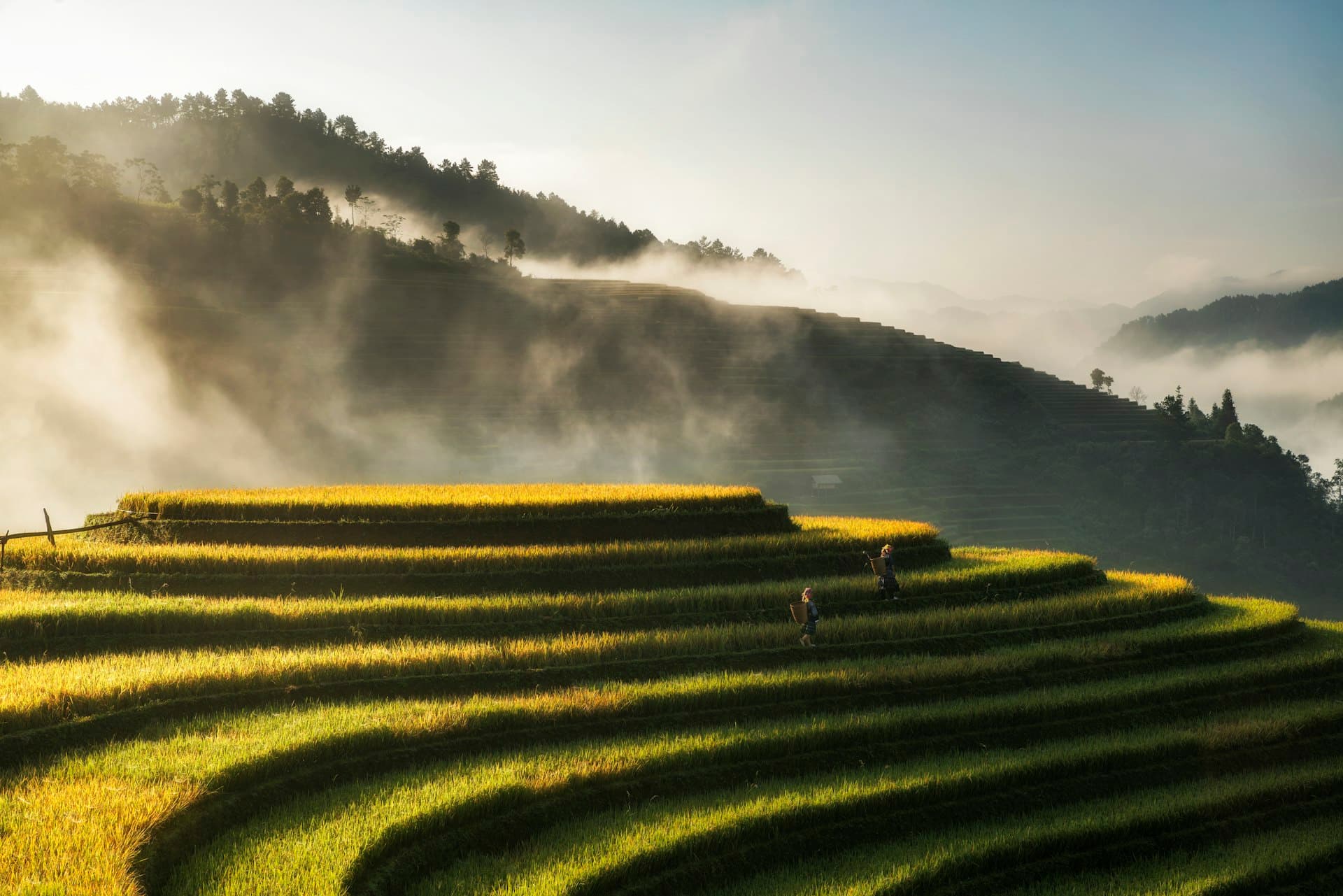 Photo of Sa Pa, via Wikimedia Commons
Self-guided audio walking tour of Bắc Hà — GPS route, offline playback, story-driven narration in 32 languages.
“Where the 'White Plateau' unfurls its ancient traditions.”
Not the postcards. The stories even locals don't know — whispered in your ear, right where they happened.
The Sunday market is a kaleidoscope of color and commerce, yet a specific corner conducts its exchanges with quiet resolve, separate from the main throngs.
This grand residence, a fusion of Eastern and Western design, conceals a story about its genesis that extends beyond mere architectural blueprints.
The annual horse race is more than just a spectacle; its return after decades of absence connects surprisingly to national events.
Discover every secret of Bắc Hà
Every address, every reveal in full — in your ear, right where it happened.
You pick your stops. You walk. The voice reveals what the others miss.


Your self-guided audio tour of Bắc Hà is ready — pick your landmarks, choose your language, and start the moment you arrive.
BuyBắc Hà, a district in Vietnam's northern highlands, extends an engaging invitation into the lively cultures of its varied ethnic communities. Frequently known as the 'White Plateau' for its profusion of plum blossoms in spring, this appealing town, situated approximately 100 kilometers from Lào Cai City, retains a distinct rural character. Here, traditional ways of life endure, visible in the colorful markets and the daily rhythms of its inhabitants.
Less frequented than its neighbor Sapa, Bắc Hà provides a more genuine and peaceful experience. The landscape unfolds as a mosaic of rolling hills, terraced fields, and traditional villages, home to a rich array of ethnic groups including the Hmong (especially the Flower Hmong), Tay, Dao, Nung, and Phù Lá. Travelers are drawn to Bắc Hà for its natural splendor, historical sites, and the chance to immerse themselves in unique cultural traditions.
Bắc Hà's past is deeply woven with its strategic location in the northern highlands, a nexus for various ethnic groups and trade routes. The very name, stemming from the Tày language 'Pạc kha,' meaning 'one hundred bundles of kunai grass,' hints at the region's natural abundance. During the French colonial era, the area was recognized as 'Pakha,' eventually evolving into the Vietnamese 'Bắc Hà.'
For centuries, Bắc Hà has served as a central point for ethnic minorities. From 1954 onward, it has functioned as the capital of the Flower Hmong region, one of Vietnam's 54 recognized minority groups. The town's importance as a trading post is reflected in its lively markets, which have been gathering places for communities from surrounding villages for generations. These markets were not merely for trade but also for social and cultural exchange, a tradition that continues to this day.
One of Bắc Hà's most significant historical structures is the Hoàng A Tưởng Palace, erected between 1914 and 1921. This impressive mansion served as the residence of Hoàng Yến Chao, a powerful Tay ethnic leader who, with French colonial backing, wielded considerable influence and trade monopolies in the region. The palace's distinctive blend of French colonial and traditional Asian architectural styles stands as a testament to the complex historical forces that shaped Bắc Hà in the early 20th century. In 1999, the mansion received recognition as a national architectural and artistic relic.
The region also bears a connection to the opium trade, with poppy cultivation occurring in some mountainous areas between 1985 and 1996. However, with government prohibition, these areas have since transformed, now flourishing with plum blossoms, contributing to Bắc Hà's poetic 'White Plateau' appellation.
More recently, Bắc Hà has garnered acclaim for its traditional horse racing festival. After a period of inactivity, the festival was formally reinstated in 2007, becoming an annual event that celebrates the unique cultural and sports traditions of the local ethnic minorities. In May 2021, the festival was recognized as a national intangible cultural heritage, further solidifying Bắc Hà's profound cultural legacy.
Bắc Hà's allure resides in its authentic cultural encounters and picturesque landscapes. The Bắc Hà Sunday Market is undeniably the primary attraction, a bustling spectacle where various ethnic groups, particularly the Flower Hmong in their elaborate garments, converge to exchange goods, socialize, and share meals. Arrive early to experience the full energy of the market, from lively textile stalls to the distinctive livestock section.
Beyond the Sunday market, explore Hoàng A Tưởng Palace, sometimes referred to as the 'Hmong King's Palace.' This architectural wonder displays a compelling fusion of French colonial and traditional Asian designs, offering glimpses into the region's past elite.
For those seeking natural beauty, embark on treks through nearby ethnic villages such as Bản Phố, Trung Đô, and Na Hối. These journeys provide opportunities to observe traditional daily life, witness local handicrafts, and relish the serene mountain scenery and terraced fields. Make sure to sample Bản Phố's celebrated corn wine.
If your visit aligns with the Bắc Hà Horse Racing Festival, typically held in the sixth lunar month, you are in for a thrilling display of horsemanship by local farmers.
Other notable attractions include the Động Tiên (Fairy Cave), a beautiful cave system often likened to a miniature Ha Long Bay, and the Bắc Hà Temple, dedicated to a local hero.
Bắc Hà enjoys a temperate climate throughout the year due to its elevation. The most favorable times to visit are during spring (March to May) and autumn (September to November). Spring unveils blooming plum and pear blossoms, transforming the hills into a 'White Plateau,' and hosts various local festivals. Autumn marks the harvest season, offering magnificent views of golden terraced rice fields. While summer (June to August) is verdant, it can also bring occasional rains. Winter (December to January) is cool and misty, with opportunities to witness a 'sea of clouds' and experience Hmong New Year celebrations.
Reaching Bắc Hà typically involves an overnight train or sleeper bus from Hanoi to Lào Cai City, an 8-hour journey. From Lào Cai, it is approximately a 2 to 2.5-hour drive by local bus or taxi. Private transfers are also available for greater comfort. Within Bắc Hà, the town center is walkable, but motorbikes or local taxis are suggested for exploring surrounding villages and markets like Cán Cấu.
Cash is paramount in Bắc Hà, as credit cards are not widely accepted, especially in smaller shops and markets. ATMs are available but may not always be dependable, so carry sufficient Vietnamese Dong. While Vietnamese is the local language, many ethnic minority groups also speak their own languages like Hmong and Tay; English is not broadly spoken, so a few basic Vietnamese phrases can be beneficial.
Accommodation options range from budget guesthouses to mid-range hotels and homestays, offering a more authentic local experience. Respect local customs and traditions, and consider engaging a local guide to deepen your understanding of the region and support the local economy.
Bắc Hà in Korean, in Chinese or in Hebrew — and 29 more languages, every stop narrated by a native voice. The widest language range of any self-guided audio tour.
Available in: