Área Recreativa Estatal de Yachats
Una formación rocosa aparentemente ordinaria en el Área Recreativa Estatal de Yachats esconde un secreto que habla del poder puro del Pacífico.
La historia completa se desbloquea en el tour
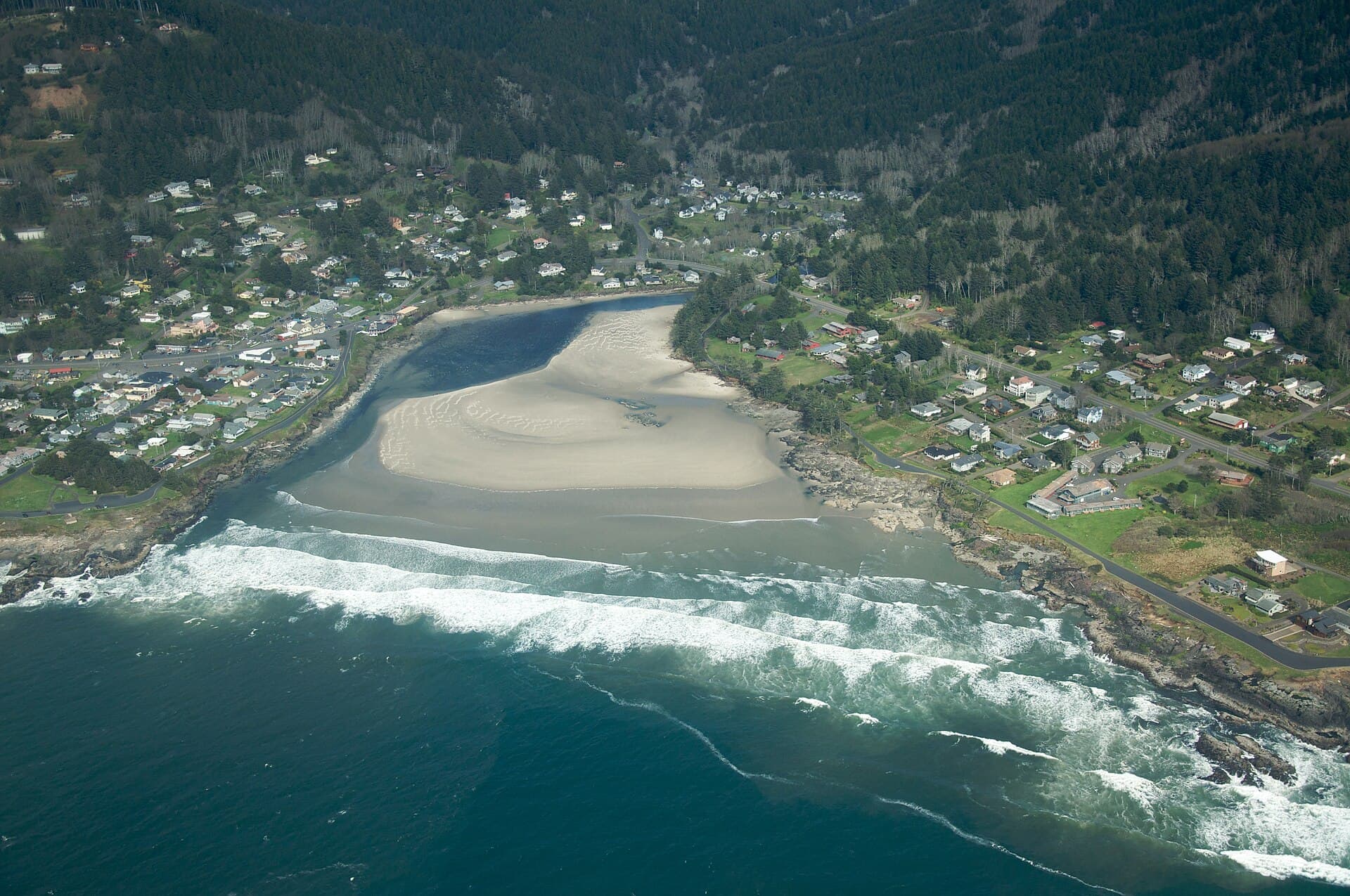 Sam Beebe, Ecotrust / CC BY 2.0, via Wikimedia Commons
Tour de audio autoguiado de Yachats — ruta GPS a pie, reproducción offline, narración en 32 idiomas.
“Donde los bosques ancestrales se encuentran con una costa dramática esculpida en basalto.”
No las postales. Las historias que ni los locales conocen — al oído, justo donde ocurrieron.
Una formación rocosa aparentemente ordinaria en el Área Recreativa Estatal de Yachats esconde un secreto que habla del poder puro del Pacífico.
Una escalera rota en el Área Recreativa Estatal de Yachats no es simplemente una reliquia; es un testimonio de la fuerza implacable del océano.
Los acantilados de tierra blanda cerca del Parque Estatal Neptune ocultan capas blancas que narran una historia que abarca siglos, incluso milenios.
Descubre todos los secretos de Yachats
Cada dirección, cada revelación al completo — a tu oído, justo donde ocurrió.
Eliges tus paradas. Caminas. La voz te revela lo que los demás ignoran.


Tu tour de audioguía por Yachats te espera — elige tus lugares, tu idioma y empieza al llegar.
ComprarYachats, Oregón, una pequeña ciudad costera con menos de 1,000 residentes, es un lugar donde el antiguo Bosque Nacional Siuslaw converge con la dramática costa del Pacífico, esculpida en basalto. Este pueblo, cuyo nombre se pronuncia "YAH-hahts" y deriva del idioma Siletz, que significa "agua oscura al pie de la montaña" o "donde el sendero abandona la playa", es un destino para aquellos que buscan una conexión más profunda con la naturaleza.
Este tranquilo pueblo costero ofrece una mezcla única de belleza natural agreste y una atmósfera relajada, un marcado contraste con algunas de las ciudades costeras más bulliciosas. Aquí, encontrará una costa compuesta principalmente de roca basáltica negra, resultado de antiguas coladas de lava, en lugar de extensas playas de arena. Esta base geológica da lugar a un paisaje de pozas de marea, abismos turbulentos y una poderosa acción de las olas, todo al alcance del centro de la ciudad.
El área de Yachats ha estado habitada durante al menos 1,500 años, con estudios arqueológicos que datan restos de casas-pozo aproximadamente en el año 570 d.C. Durante miles de años, los nativos americanos, principalmente la Tribu Alsea y la banda Yahuch, vivieron a lo largo de este tramo de costa como cazadores-recolectores, migrando entre campamentos estacionales. El mismo suelo de Yachats está construido sobre concheros y numerosas tumbas dejadas por estos antiguos habitantes. Las excavaciones para edificios y la construcción de la Ruta 101 de EE. UU. desenterraron una gran cantidad de esqueletos y artefactos, la mayoría de los cuales lamentablemente se convirtieron en parte del relleno de la carretera y la ciudad.
La llegada de los europeos trajo enfermedades devastadoras como la viruela y la tuberculosis, que diezmaron a la población indígena. Para 1860, la banda Yahuch estaba extinta. Principios y mediados del siglo XIX marcan un período particularmente sombrío en la historia de Yachats, lleno de atrocidades contra las tribus locales Coos, Lower Umpqua y Alsea. A principios de la década de 1860, el ejército de EE. UU. marchó por la fuerza a los indios Coos y Lower Umpqua 80 millas al norte hasta la reserva de la Sub-Agencia de Alsea en Yachats. Tratados como prisioneros de guerra, muchos murieron durante esta reubicación. Una historia particularmente conmovedora es la de Amanda DeCuis, una mujer Coos ciega capturada 80 millas al sur de Yachats y obligada a caminar hasta la sub-agencia, dejando atrás a su pequeña hija. El Sendero Amanda, una caminata de 9.7 millas, ahora conmemora esta trágica historia.
A pesar del trato horrible, a algunos nativos americanos sobrevivientes se les permitió establecer parcelas agrícolas en el Valle del Río Yachats en la década de 1870, cultivando con éxito. Sin embargo, en un giro cruel, el gobierno de EE. UU. abrió el área para la colonización en 1875, obligándolos a mudarse nuevamente. Los colonos utilizaron estas granjas y senderos establecidos. La primera oficina de correos, inicialmente llamada Oceanview, se estableció en 1892 y se renombró Yachats en 1917. El turismo comenzó a surgir alrededor de 1905 con la conversión de un almacén de corteza de chittum en el primer hotel. La construcción de la Carretera Conmemorativa Roosevelt (ahora Carretera 101) en 1931, excavada en la roca de Cape Perpetua, mejoró significativamente el acceso a Yachats, conectándola con Florence y más allá.
Yachats ofrece una gran cantidad de maravillas naturales y experiencias únicas. Comience su exploración a lo largo del Sendero 804, un camino de 1.7 millas que ofrece vistas panorámicas de la costa, las pozas de marea y la vegetación nativa. En el Sitio de Recreación Estatal Smelt Sands, parte del Sendero 804, puede explorar las pozas de marea con la marea baja, revelando estrellas de mar y anémonas aferradas a las rocas. Al sur de la ciudad, el Área Escénica de Cape Perpetua se eleva 803 pies sobre el nivel del mar como el punto más alto directamente en la costa de Oregón. Aquí, encontrará características geológicas dramáticas como el Pozo de Thor, un sumidero turbulento donde las mareas entrantes parecen drenar en un pozo sin fondo, y el Churn del Diablo, un estrecho abismo donde las olas explotan en rocío. Ambos se ven mejor de forma segura con la marea alta. El Sendero Amanda ofrece una caminata más desafiante con vistas costeras, honrando la reubicación forzada de los nativos americanos. Para una perspectiva diferente, el Sendero Ya'Xaik serpentea a través de un denso bosque costero, conmemorando a los pueblos nativos de la zona. No se pierda el pintoresco Faro de Heceta Head, a unos 20 minutos al sur, uno de los faros más fotografiados de la costa de Oregón. Para hallazgos locales únicos, visite el Mercado de Agricultores de Yachats. También puede explorar el Parque Comunitario y Humedales de Yachats para la observación de aves y enormes abetos Sitka.
Yachats experimenta un clima costero templado durante todo el año, con veranos cómodos y secos e inviernos frescos y húmedos. La mejor época para visitar para disfrutar de un clima agradable y actividades al aire libre es de julio a mediados de septiembre, cuando las temperaturas son suaves (máximas promedio en los 18-20 grados Celsius), la lluvia es escasa y hay abundante sol. Sin embargo, la niebla oceánica puede aparecer por las mañanas o las noches, por lo que siempre es buena idea llevar varias capas de ropa.
El invierno, de noviembre a enero, trae cielos dramáticos, olas potentes y oportunidades para observar tormentas y mareas vivas, ofreciendo una belleza diferente y melancólica. La observación de ballenas también es una actividad popular durante las temporadas de migración.
Yachats es un pueblo pequeño, y necesitará un coche para transportarse y explorar completamente el área y sus atracciones circundantes. El servicio de telefonía celular puede ser poco confiable en muchas áreas dentro y alrededor de Yachats, y el Wi-Fi del hotel no siempre es robusto. Al explorar la costa rocosa y las pozas de marea, siempre esté atento a las mareas y nunca dé la espalda al océano debido a las olas errantes. Las rocas pueden ser muy resbaladizas, así que proceda con precaución. Muchos restaurantes y atracciones pueden estar cerrados de lunes a miércoles durante la temporada baja, por lo que es aconsejable verificar con antelación. Para las áreas dentro del Bosque Nacional Siuslaw, como Cape Perpetua, necesitará un pase diario de $5 o un pase interinstitucional como America the Beautiful. Las tablas de mareas están disponibles en la ciudad en las oficinas de los parques estatales, centros de visitantes y muchas tiendas y hoteles.
Yachats en coreano, en chino o en hebreo — y 29 idiomas más, cada parada narrada por una voz nativa. La mayor variedad de idiomas de cualquier audioguía autoguiada.
Disponible en: