Jewish Quarter (Judiaria)
For centuries, families in Belmonte kept their faith a profound secret, a practice born of necessity during the Inquisition.
Full story unlocks in the tour
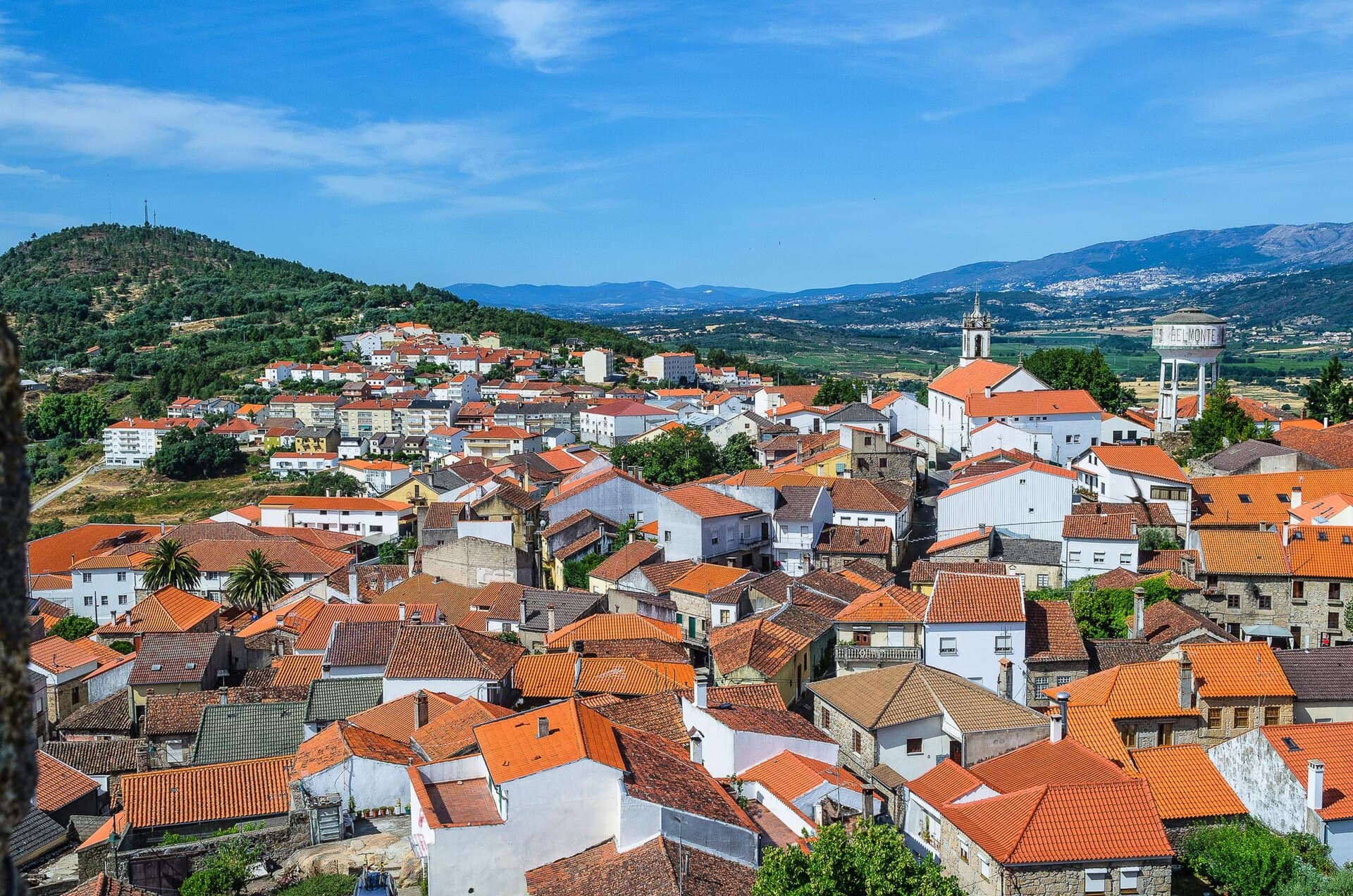 Turismoenportugal / CC BY-SA 4.0, via Wikimedia Commons
Self-guided audio walking tour of Belmonte — GPS route, offline playback, story-driven narration in 32 languages.
“Where ancient walls echo tales of knights and narrow streets whisper secrets of a enduring faith.”
Not the postcards. The stories even locals don't know — whispered in your ear, right where they happened.
For centuries, families in Belmonte kept their faith a profound secret, a practice born of necessity during the Inquisition.
Look closely at the sausages hanging in some windows; they tell a story of ingenious survival.
The synagogue you see today is a relatively recent addition, but its presence marks the culmination of a centuries-long journey.
Discover every secret of Belmonte
Every address, every reveal in full — in your ear, right where it happened.
You pick your stops. You walk. The voice reveals what the others miss.


Your self-guided audio tour of Belmonte is ready — pick your landmarks, choose your language, and start the moment you arrive.
BuyLume has a built-in augmented-reality guide. Hold your phone up and its camera shows the street ahead of you, with a glowing arrow laid over the real view that always points to your next stop — no map to puzzle over, no wrong turns. Like everything in Lume, it works fully offline.
Belmonte, a captivating town in central Portugal, offers a profound journey through centuries of history, from its medieval origins to its enduring Jewish heritage. Situated in the Beira Interior region, amidst the rolling hills and near the Serra da Estrela mountains, Belmonte presents an authentic slice of Portuguese life, far removed from the bustling coastal cities. It's a place where every stone and alleyway seems to hold a story, inviting visitors to explore at a leisurely pace.
This tranquil spot is celebrated for its well-preserved medieval castle, its unique and enduring Jewish Quarter, and an atmosphere of unhurried provincial charm. Belmonte is particularly cherished by those seeking a deeper understanding of Portugal's cultural soul, researchers of Jewish history, and admirers of genuine architecture. The town's main attractions are clustered around the castle and the old town, making it ideal for walking tours and quiet contemplation.
Beyond its historical landmarks, Belmonte is a living testament to resilience and cultural preservation. It's a town where the past is not merely remembered but actively lived, offering a unique glimpse into one of Europe's most poignant and lesser-known historical chapters.
## From Roman Outpost to Medieval Fortress Belmonte's history stretches back to prehistoric times, with archaeological findings revealing megalithic sites and ancient fortified settlements in the surrounding mountains. During the Roman era, Belmonte was a key outpost, benefiting from its mineral and agricultural wealth and its position on a road connecting important cities like Mérida and Guarda.
In 1199, Belmonte was officially established as a municipality, receiving its first charter from King Sancho I and the Bishop of Coimbra. This act aimed to populate and restore the region, ensuring political control by the Portuguese crown. Towards the end of the 12th century, Belmonte Castle was constructed on Monte da Esperança, forming a crucial part of a defensive line against invasions from León and Castile, alongside other castles like Sortelha and Vila do Touro.
## The Age of Discovery and the Cabral Legacy By the 15th century, Belmonte Castle transitioned from a purely defensive structure into a fortified manor house, becoming the residence of the influential Cabral family. It was within these walls that Pedro Álvares Cabral, the celebrated Portuguese explorer who discovered Brazil in 1500, was born in 1467. The family's coat of arms, featuring two goats, can still be seen on a Manueline window of the castle, a granite work of art that also incorporates the armillary sphere, a symbol of King Manuel I.
## A Enduring Faith Revealed Perhaps Belmonte's most compelling historical chapter is that of its Jewish community. Jewish presence in Belmonte dates back to at least the 13th century, with an inscribed granite reliquary from the town's first synagogue dating to 1297. Following the expulsion of Jews from Spain in 1492 and forced conversions in Portugal in 1497, many Jews either left the Iberian Peninsula or publicly converted to Christianity. However, a unique group in Belmonte chose isolation, secretly maintaining their Jewish traditions for centuries, becoming known as 'Crypto-Jews' or 'Marranos'. They practiced their faith in utmost secrecy, believing they were the last Jews in the world.
This enduring community remained largely undiscovered until 1917, when Polish-Portuguese mining engineer Samuel Schwarz stumbled upon their secret. It wasn't until the 1970s that the descendants of these Crypto-Jews began to openly reconnect with the global Jewish community, culminating in the inauguration of the Bet Eliahu Synagogue in 1996. Today, Belmonte stands as a powerful symbol of Jewish perseverance and identity, home to one of Portugal's best-preserved Jewish quarters and an active Jewish community.
Belmonte offers a concentrated experience of history and culture, easily explored on foot. Begin at the Belmonte Castle, a 12th-century fortress offering panoramic views of the surrounding countryside and the Serra da Estrela mountains. Look for the distinctive Manueline window with the Cabral family coat of arms.
Adjacent to the castle, visit the Igreja de Santiago, a Roman-Gothic church that houses the Cabral family pantheon. Descend into the Jewish Quarter (Judiaria), a labyrinth of narrow lanes where you can still see subtle stone engravings on doorframes, remnants of a centuries-old secret community.
The Jewish Museum of Belmonte, the first of its kind in Portugal, provides a poignant insight into the history of Crypto-Judaism and the community's remarkable resilience. Nearby, the Bet Eliahu Synagogue stands as a powerful symbol of the community's re-emergence.
For a deeper dive into maritime history, the Discoveries Museum uses interactive exhibits to tell the story of Pedro Álvares Cabral and Portugal's Age of Discovery. Other notable museums include the Olive Oil Museum and the Zêzere Eco-Museum. Do not miss the mysterious Roman ruins of Centum Cellas in Colmeal da Torre, a short drive away.
The ideal time to visit Belmonte is during spring (May–June) and autumn (September–October). During these months, the weather is mild, and the tourist crowds are typically sparser, allowing for a more peaceful exploration of the town's historical sites. Summers (July-August) can be hot, especially for the uphill walk to the castle, while winters are generally cool and rainy. Spring also brings the country into bloom, and autumn offers pleasant temperatures with fewer visitors.
Belmonte, with a population of approximately 3,500, is a safe town with virtually no crime. While Portuguese is the main language, English or Spanish is often spoken in museums and guesthouses. The town center is compact and walkable, though some streets are steep. For exploring the wider region, renting a car is recommended as there is no direct train service to Belmonte; the nearest rail connections are in Covilhã. Buses connect Belmonte to nearby towns and cities. The closest international airports are Lisbon (LIS), about a 2.5-hour drive, and Porto (OPO), approximately 3 hours away. Local etiquette values quiet and tranquility, with loud talking and flash photography discouraged in religious sites. Evening life winds down early, with cafés typically closing by 10 PM.
Belmonte in Korean, in Chinese or in Hebrew — and 29 more languages, every stop narrated by a native voice. The widest language range of any self-guided audio tour.
Available in: