Torre de Lucano (Clock Tower)
Look closely at the top of Monsanto's iconic Clock Tower, and you'll find a curious silver rooster.
Full story unlocks in the tour
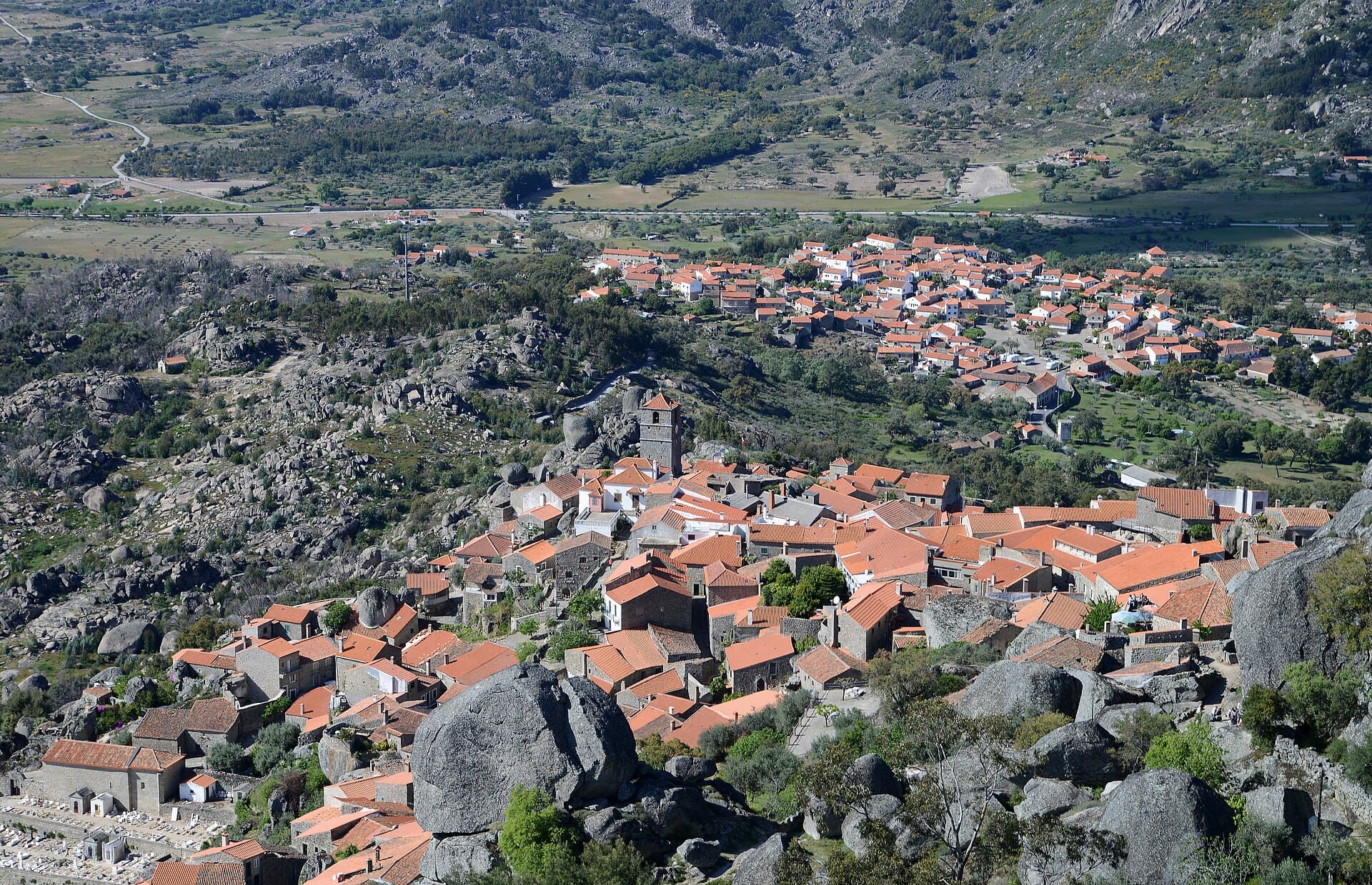 Alvesgaspar / CC BY-SA 4.0, via Wikimedia Commons
Self-guided audio walking tour of Monsanto — GPS route, offline playback, story-driven narration in 32 languages.
“Where colossal boulders cradle homes and history echoes in granite.”
Not the postcards. The stories even locals don't know — whispered in your ear, right where they happened.
Look closely at the top of Monsanto's iconic Clock Tower, and you'll find a curious silver rooster.
The formidable Monsanto Castle, now in ruins, met a surprisingly abrupt end, not from a siege, but from an internal disaster.
Among Monsanto's boulder-integrated homes, one stands out for its single, massive 'tile.'
Discover every secret of Monsanto
Every address, every reveal in full — in your ear, right where it happened.
You pick your stops. You walk. The voice reveals what the others miss.


Lume has a built-in augmented-reality guide. Hold your phone up and its camera shows the street ahead of you, with a glowing arrow laid over the real view that always points to your next stop — no map to puzzle over, no wrong turns. Like everything in Lume, it works fully offline.
Atop a granite hill in central Portugal, Monsanto is a village that seems to defy gravity and conventional architecture. Here, colossal boulders are not merely part of the landscape; they are integral to the very fabric of the homes and streets. This ancient settlement, often referred to as 'the Most Portuguese Village of Portugal,' offers a journey back in time, where winding paths lead to houses built between, under, and even on top of massive rocks.
Exploring Monsanto is an immersive experience, a dialogue between human ingenuity and nature's raw power. The village's unique character, with its red-tiled roofs contrasting against the gray granite, has captivated visitors for centuries. It's a place where every turn reveals a new perspective, a new integration of stone and dwelling, inviting you to wander and discover its many facets.
The human presence on Monsanto's 'sacred mountain' (Mons Sanctus in Latin) dates back to the Paleolithic era, with evidence of early Stone Age inhabitants. Traces of Roman, Visigothic, and Arab occupations have also been found, underscoring its long and strategic importance.
In the 12th century, following the Christian Reconquista, King Afonso I of Portugal conquered Monsanto from the Moors. In 1165, he granted the land to the Order of the Knights Templar, who, under the direction of Grand Master Gualdim Pais, began constructing the formidable Monsanto Castle at the hill's summit. This fortress played a crucial role in defending the newly established Portuguese kingdom, particularly against incursions from neighboring León and later Spain.
Monsanto's most distinctive accolade came in 1938 when it won a government-sponsored competition, earning the title of 'the Most Portuguese Village of Portugal.' This distinction, while seemingly paradoxical given its unique architecture, was part of a broader effort to romanticize rural life. The award brought with it strict regulations on development, ensuring that Monsanto's medieval character and its extraordinary integration with the granite boulders remained largely unchanged.
Throughout the Middle Ages, Monsanto was an important regional trade center. However, it gradually lost its prominence, though its defensive value remained until the 19th century. The medieval castle, a testament to Templar engineering, met an unfortunate end in 1815 when an explosion in its ammunition depot left it in ruins. Despite this, the village's 'living museum' status and its captivating blend of natural and man-made structures continue to draw visitors, offering a tangible link to Portugal's layered past.
Begin your exploration at the Castle of Monsanto, at the highest point. Though largely in ruins, its walls and remaining towers, like the Pião Tower, offer incredible panoramic views stretching across the plains and even into Spain on a clear day.
Wander through the village's narrow, winding streets, where granite houses are seamlessly integrated with massive boulders. Seek out the Casa de Uma Só Telha, a house famously roofed by a single, enormous slab of rock.
Visit the Torre de Lucano, also known as the Clock Tower, easily identifiable by the silver rooster weather vane at its summit—a replica of Monsanto's 'Most Portuguese Village' trophy.
Explore the Capela de São Miguel, a medieval chapel surrounded by ancient rock-cut graves, some dating back over a thousand years before the chapel's construction.
Don't miss the various viewpoints, such as Miradouro do Forno or Praça dos Canhões Viewpoint, which provide perspectives of the village's red roofs among the boulders and the vast surrounding landscape.
For fans of fantasy, look for the spots where 'House of the Dragon' was filmed, transforming Monsanto into the fictional Dragonstone.
Monsanto is a year-round destination, but spring (April-June) and autumn (September-October) are ideal. The weather is mild, wildflowers bloom in spring, and autumn leaves add color to the granite. Summer can be hot, with average highs around 84°F (29°C) in July and August, but the elevation provides cooler evenings. Winter is quiet and can be mystical with fog or a dusting of snow.
The easiest way to reach Monsanto is by car, a roughly 3-hour drive from Lisbon or 2.5 hours from Coimbra. Limited bus service is available from Castelo Branco to Monsanto Relva, with a taxi or walk needed for the final stretch to the historic village. Parking is available down the hill from the main village entrance; aim to arrive early for closer spots, as cars are not permitted in the narrow, cobbled streets. Monsanto is very hilly, so comfortable walking shoes are essential. The village can be explored in a single day, but an overnight stay allows for a quieter, more atmospheric experience after day-trippers depart, offering magical sunsets and sunrises from the castle.
Monsanto in Korean, in Chinese or in Hebrew — and 29 more languages, every stop narrated by a native voice. The widest language range of any self-guided audio tour.
Available in: