Bernburg Castle's Eulenspiegelturm
This formidable tower, among Germany's largest keeps, holds a secret tied to a famed medieval prankster.
Full story unlocks in the tour
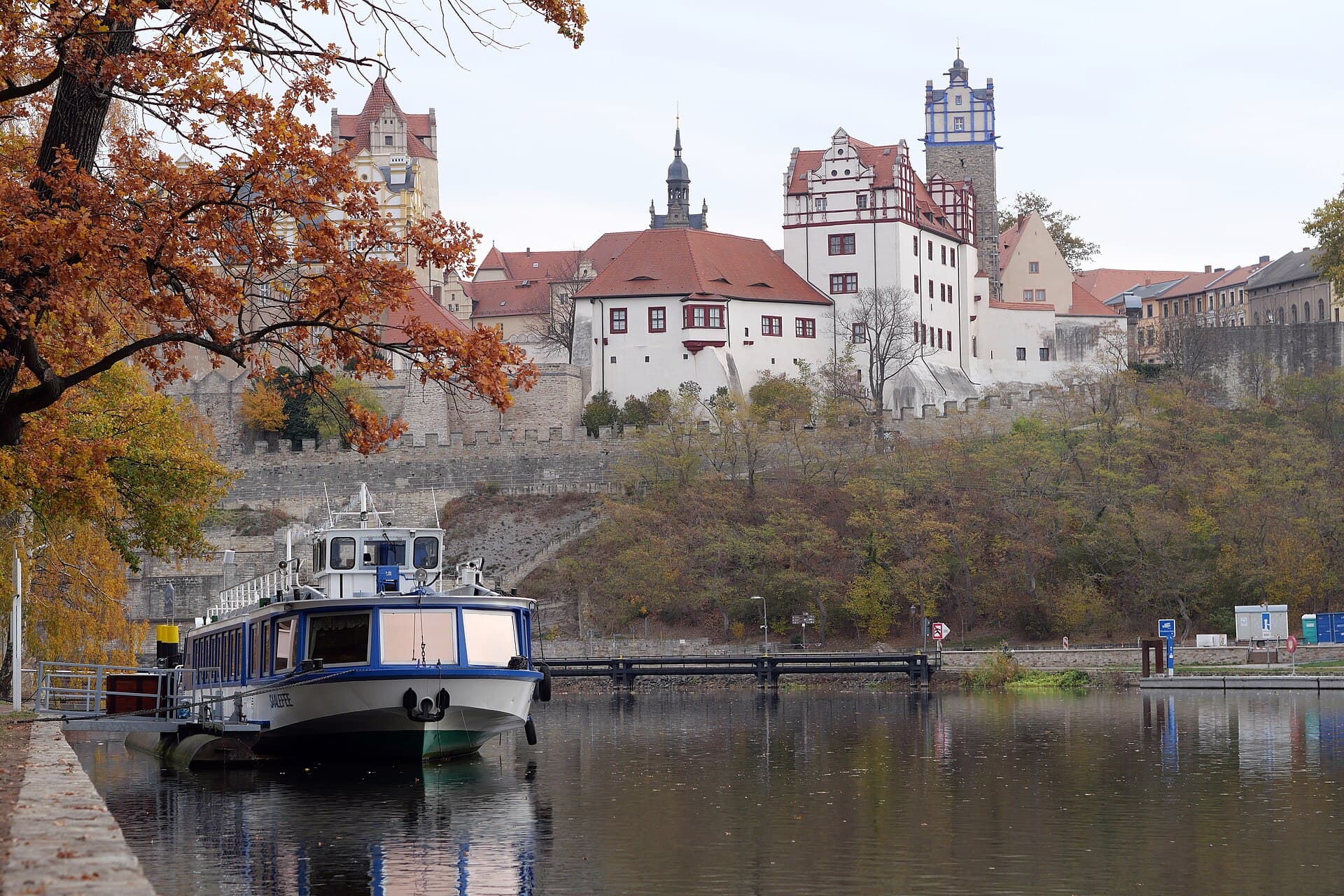 FrankBothe / CC BY-SA 4.0, via Wikimedia Commons
Self-guided audio walking tour of Bernburg — GPS route, offline playback, story-driven narration in 32 languages.
“Where Renaissance stone meets the river's slow current, and the spirit of a legendary trickster still dances in the air.”
Not the postcards. The stories even locals don't know — whispered in your ear, right where they happened.
This formidable tower, among Germany's largest keeps, holds a secret tied to a famed medieval prankster.
Once a defensive trench, this area sheltered an unexpected and cherished resident for over a century.
A half-timbered house on the market square appears to lack a fundamental architectural feature.
Discover every secret of Bernburg
Every address, every reveal in full — in your ear, right where it happened.
You pick your stops. You walk. The voice reveals what the others miss.
Your self-guided audio tour of Bernburg is ready — pick your landmarks, choose your language, and start the moment you arrive.
BuyLume has a built-in augmented-reality guide. Hold your phone up and its camera shows the street ahead of you, with a glowing arrow laid over the real view that always points to your next stop — no map to puzzle over, no wrong turns. Like everything in Lume, it works fully offline.
Bernburg, a city in Saxony-Anhalt, Germany, offers a compelling journey through a thousand years of history, culture, and natural splendor. Situated on the Saale River, approximately 40 kilometers south of Magdeburg, this former residence of the Anhalt-Bernburg princes is dominated by its grand Renaissance castle, often called the 'Crown of Anhalt'.
The town divides into distinct 'Bergstadt' (Mountain Town) and 'Talstadt' (Valley Town) sections, each revealing layers of its past. Bernburg's strategic location on an ancient trade route and its fertile surroundings have shaped its development from early settlements to a thriving university town today.
Beyond its architectural scale, Bernburg is a place where legends awaken, from the playful tales of Till Eulenspiegel to the more somber reflections of its role in darker historical periods. It's a destination that invites discovery, offering a blend of historical insights, scenic river landscapes, and a glimpse into unique local narratives.
## A Millennia of Settlement and Sovereignty Bernburg's origins stretch back over 1,050 years, with its first recorded mention as 'civitas Brandanburg' in a 961 deed issued by King Otto I of Germany. However, archaeological evidence points to human activity much earlier, with the area serving as a center for the mid-Neolithic Walternienburg-Bernburg and Baalberger cultures around 3200 to 2800 BC, thanks to its fertile loess soil. The present-day borough of Waldau, now part of Bernburg, received an even earlier mention in a 782 deed.
By 1138, the castle, then known as 'Berneburch,' was a possession of the Ascanian prince Albert the Bear and was set ablaze during conflicts. The rebuilt castle became the residence of Prince Bernhard I of Anhalt-Bernburg in 1252. Bernburg's significance grew in the Middle Ages due to its position on an important trade route. The town was historically separated into two distinct communities, the 'Bergstadt' and 'Talstadt,' both chartered in 1311 and eventually united in 1561.
## Ducal Residence and Industrial Hub Bernburg Castle underwent substantial transformation into a Renaissance-style chateau beginning in the 16th century, serving as the residence for the dukes when the town was the capital of the duchy of Anhalt-Bernburg. This period saw the construction of impressive structures like the Wolfgangbau and the Langhaus within the castle complex. The duchy of Anhalt-Bernburg existed until the death of Duke Alexander Carl in 1863, after which it was united with Anhalt-Dessau to form the Duchy of Anhalt.
In the 20th century, Bernburg gained recognition as a center for the chemical industry. However, this era also brought a dark chapter in the town's history. During the Nazi regime, a wing of the local mental hospital was tragically used as one of six central killing centers for the 'Aktion T4' euthanasia program, where approximately 15,000 people were murdered. Today, a memorial stands as a solemn remembrance of these atrocities.
The undisputed heart of Bernburg is Bernburg Castle, rising majestically above the Saale River from a sandstone cliff. Explore its Renaissance architecture, visit the castle museum, and ascend the impressive Eulenspiegelturm (Eulenspiegel Tower) for sweeping views. The castle grounds also famously once contained a bear pit in its former moat.
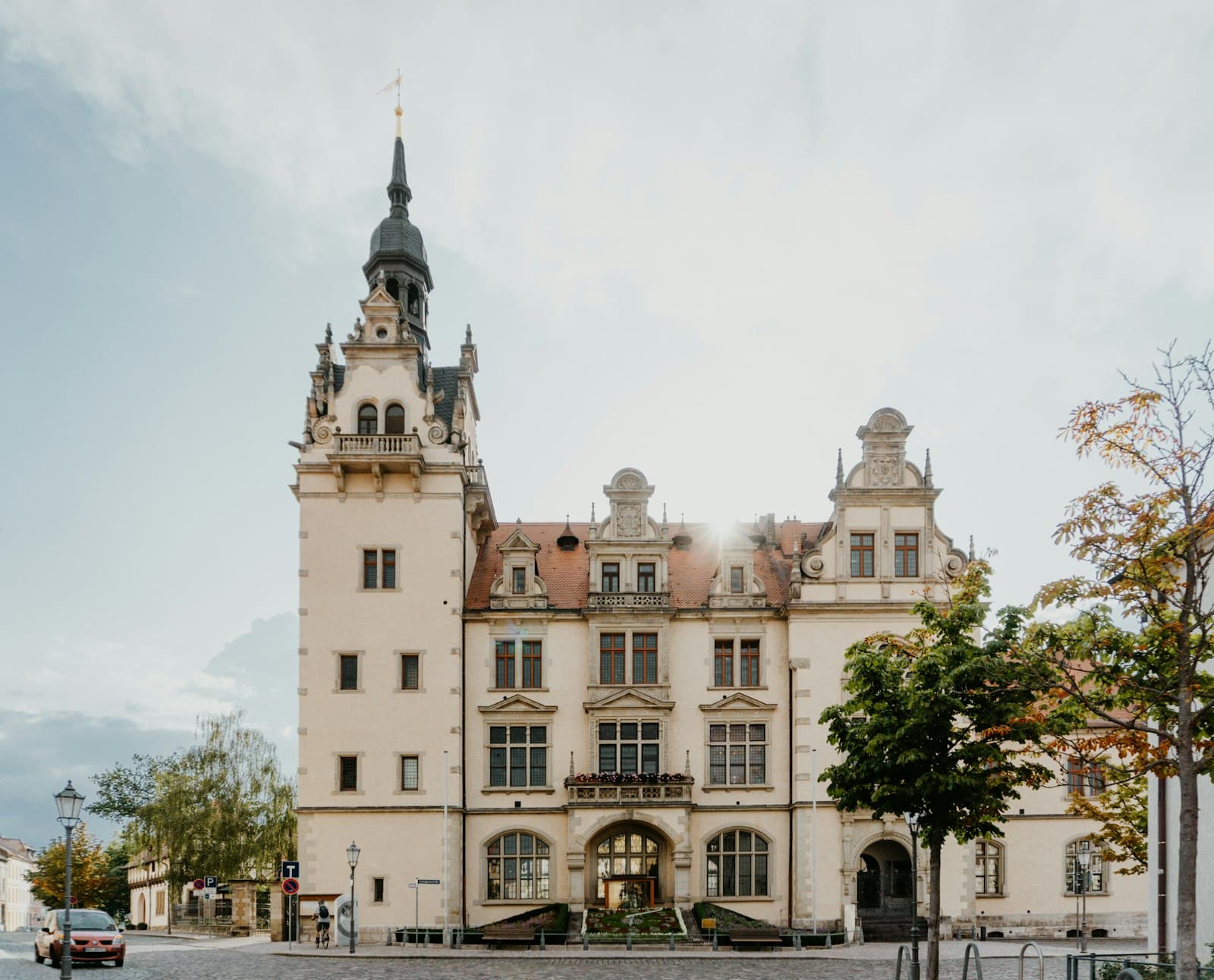
Walk through the historic Old Town, with its appealing half-timbered houses and narrow passages. Do not miss St. Martin's Church, one of the region's oldest churches, noted for its Gothic architecture. The Bernburg Town Hall is remarkable for its unique flower clock and geographic-astronomical art clock. For a cultural pause, the Carl-Maria-von-Weber-Theater, a ducal playhouse dating back to 1827, continues to host performances.
Those who appreciate nature can enjoy the Saale River, with options for boat trips on the MS Saalefee. The surrounding area, part of the Lower Saale Valley Nature Park, is ideal for cycling, with routes like the Saale Cycle Path passing through. The Bernburg Zoo (Tiergarten Bernburg) is another popular attraction, particularly for families.
The ideal time to visit Bernburg for comfortable weather and outdoor activities stretches from May through September. July is typically the warmest month, with average highs around 75°F (24°C). For fewer crowds and potentially better value, consider visiting during the cooler months from December through March, which offer a quieter experience. Spring is also recommended for its blooming flowers and excellent cycling conditions along the Saale.
Bernburg is located in Saxony-Anhalt, approximately 40 kilometers from Magdeburg and 35-40 kilometers from Halle. The nearest airports are Leipzig Halle, Berlin Brandenburg, and Hannover. Bernburg is well-connected by train, with regional services to Aschersleben, Dessau, Calbe, and Magdeburg from Bernburg Hauptbahnhof. Long-distance bus services also operate to the city.
Within Bernburg, the city center is best explored on foot. Public transport, including numerous bus lines, serves the city and its surroundings. For those arriving by car, Bernburg is located on the A14 highway. The town lies on the scenic Romanesque Road, making it a convenient stop for those exploring this tourist route.
Bernburg in Korean, in Chinese or in Hebrew — and 29 more languages, every stop narrated by a native voice. The widest language range of any self-guided audio tour.
Available in: