The Castle of Buitrago del Lozoya
The courtyard of this medieval fortress holds a surprising secret, far removed from its original defensive purpose.
Full story unlocks in the tour
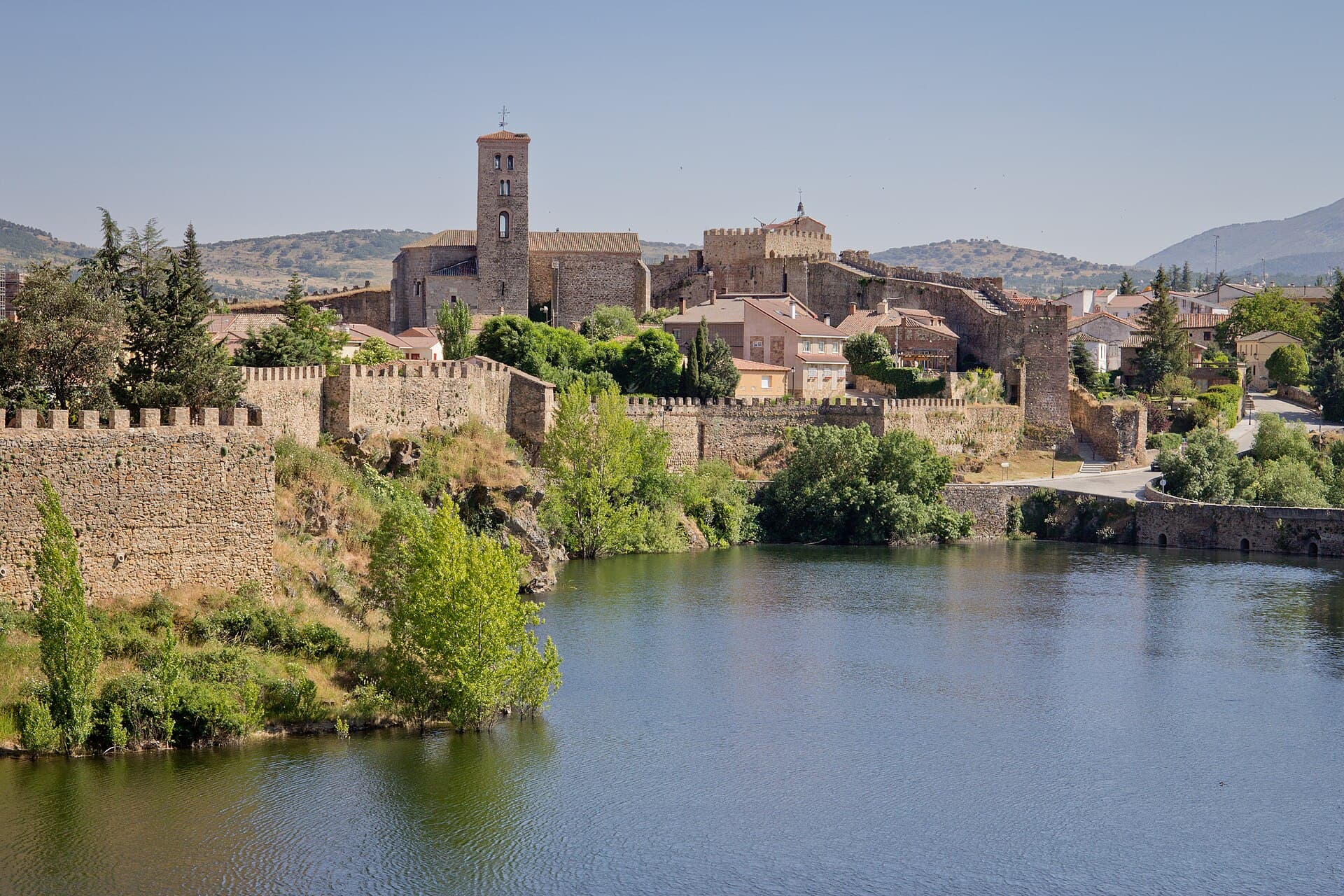 Carlos Delgado / cc by-sa 3.0, via Wikimedia Commons
Self-guided audio walking tour of Buitrago del Lozoya — GPS route, offline playback, story-driven narration in 32 languages.
“Where ancient walls embrace a river's bend, and Picasso's spirit lingers.”
Not the postcards. The stories even locals don't know — whispered in your ear, right where they happened.
The courtyard of this medieval fortress holds a surprising secret, far removed from its original defensive purpose.
Look closely at the church's interior, and you'll find an unexpected artistic influence from a distant land.
The existence of a Picasso museum in this small town is a testament to a unique and lasting friendship.
Discover every secret of Buitrago del Lozoya
Every address, every reveal in full — in your ear, right where it happened.
You pick your stops. You walk. The voice reveals what the others miss.


Your self-guided audio tour of Buitrago del Lozoya is ready — pick your landmarks, choose your language, and start the moment you arrive.
BuyLume has a built-in augmented-reality guide. Hold your phone up and its camera shows the street ahead of you, with a glowing arrow laid over the real view that always points to your next stop — no map to puzzle over, no wrong turns. Like everything in Lume, it works fully offline.
Buitrago del Lozoya, a medieval town in the Sierra Norte of Madrid, offers a journey back in time. It is uniquely situated on a peninsula, almost entirely encircled by a bend in the Lozoya River, which acts as a natural moat. This strategic location made it a significant defensive stronghold throughout history. The town's most striking feature is its remarkably well-preserved medieval wall, a testament to its long and complex past.
Beyond its imposing fortifications, Buitrago del Lozoya reveals a charming historic center with traditional stone houses, where the echoes of centuries past are still palpable. It's a place where history, art, and nature converge, offering a distinct experience just an hour's drive from Madrid. The town's cultural offerings, including a museum dedicated to Picasso, further enrich its appeal as a captivating destination.
Buitrago del Lozoya has been recognized for its historical significance, declared a Historic-Artistic Site and an Asset of Cultural Interest since 1993, with its wall holding the status of a National Monument since 1931.
The history of Buitrago del Lozoya stretches back to pre-Roman times, with references by Titus Livius to a Celtiberian fortress named Litabrum. It came under Roman rule centuries before the Christian era and was later expanded by the Visigoths. The Muslims further fortified the settlement, and its strategic location, surrounded by the Lozoya River, made it a crucial defensive point between two plateaus.
Christian sources first mention Buitrago shortly before Alfonso VI's conquest of Toledo in 1085. In the 11th century, Alfonso VI's troops reconquered the town from the Muslims, initiating a period of repopulation. The town then entered its zenith under the Trastámara dynasty, closely linked to the powerful Mendoza family through a system of entailed estates.
The iconic medieval wall, a blend of Muslim, Castilian, and Christian influences, is arguably Buitrago's most defining feature. While its origins may date back to the mid-10th century, it was significantly reinforced and expanded over time. The wall, which is 800 meters long, is considered the best-preserved walled enclosure in the Community of Madrid. The Castle of Buitrago del Lozoya, also known as the Alcázar, was built in the Gothic-Mudéjar style between the 14th and 15th centuries under the patronage of the Mendoza family. This rectangular castle, with its seven distinct towers, played a significant role in the town's history.
Buitrago del Lozoya faced significant challenges during the Napoleonic incursions, being occupied in 1808. French troops used the castle as barracks for four years, causing serious damage before their withdrawal in 1813. The Spanish Civil War in the 20th century also left its mark, destroying the Church of San Juan and the Hospital of San Salvador, and damaging the Parish Church of Santa María del Castillo. Despite these setbacks, the town's historical integrity has been recognized and protected. In 1993, Buitrago del Lozoya was declared a "Bien de Interés Cultural" (Asset of Cultural Interest), largely due to its well-preserved walled enclosure.
The most prominent sight in Buitrago del Lozoya is its medieval walled enclosure, which almost completely encircles the historic center along a meander of the Lozoya River. Visitors can walk along parts of the wall, with the lower walkway being free to access, offering unique perspectives of the town and river.
Within the walls stands the Castle of Buitrago del Lozoya, also known as the Alcázar. This 15th-century Gothic-Mudéjar fortress, originally built by the Mendoza family, is a central feature of the town. While partially preserved, its courtyard is occasionally used for cultural events.
The Church of Santa María del Castillo, dating from 1321, is the sole surviving church of the four Buitrago once possessed. Though restored after the Spanish Civil War, its Mudéjar bell tower is original, and the interior features a 15th-century coffered ceiling.
A unique cultural attraction is the Picasso Museum – Eugenio Arias Collection. This small museum houses a collection of works by Pablo Picasso, gifted to his barber and friend, Eugenio Arias, a native of Buitrago. The collection includes drawings, ceramics, lithographs, and posters, many with personal dedications.
Outside the walls, the Puente del Arrabal, believed to date from the 15th century, is the oldest bridge in the area and provides excellent views of the walled town. For nature enthusiasts, the surrounding area offers several hiking and cycling routes along the Lozoya River and near the Riosequillo reservoir.
The best time to visit Buitrago del Lozoya for pleasant weather and outdoor activities is during the months of May, June, July, August, and September. During this period, average temperatures range from 20°C to 29°C (68°F to 84°F), with lower rainfall, making it ideal for sightseeing and exploring the town's medieval charm. For hot-weather activities like visiting the Riosequillo Recreation Area's large swimming pool, early July to mid-August is recommended. While November offers a different, colder experience with temperatures between 2°C and 12°C (36°F and 53°F), the town still provides cultural events and attractions.
Buitrago del Lozoya is located approximately 74 to 80 kilometers (45 to 50 miles) north of Madrid. It is easily accessible by car, with a journey time of about 45 minutes to an hour via the A-1 highway. Public transportation is also available; bus number 191 departs from the Plaza de Castilla interchange in Madrid, with a travel time of about 1 hour and 40 minutes.
For visitor information, the town hall in Buitrago can provide useful local details. The town offers a range of restaurants serving traditional dishes, and various accommodations, including hotels and rural houses. Many of the town's attractions, such as the lower walkway of the wall, are free to visit, while others, like the south walkway, may have a small fee.
Buitrago del Lozoya in Korean, in Chinese or in Hebrew — and 29 more languages, every stop narrated by a native voice. The widest language range of any self-guided audio tour.
Available in: