Before roads traversed the Mekong Delta, the river served as the primary thoroughfare, and markets drifted upon its surface. How did vendors announce their goods from a distance?
[//commons.wikimedia.org/wiki/User:Trantuonglam Trantuonglam] / CC BY-SA 4.0, via Wikimedia CommonsCần Thơ
Self-guided audio walking tour of Cần Thơ — GPS route, offline playback, story-driven narration in 32 languages.
“Where the river is the road, and life flows with the current.”
Cần Thơ, as no one tells it.
Not the postcards. The stories even locals don't know — whispered in your ear, right where they happened.
For over two centuries, families in Thuan Hung have refined the craft of making rice paper. Yet, despite generations of practice, no two households share an identical recipe.
Imagine wandering through a fruit orchard, plucking ripe durian, mangosteen, or rambutan directly from the branch. What makes some of Can Tho's orchards particularly inviting?
Discover every secret of Cần Thơ
Every address, every reveal in full — in your ear, right where it happened.
You pick your stops. You walk. The voice reveals what the others miss.


How long do you have in Cần Thơ?
Your self-guided audio tour of Cần Thơ is ready — pick your landmarks, choose your language, and start the moment you arrive.
BuyThe story of Cần Thơ
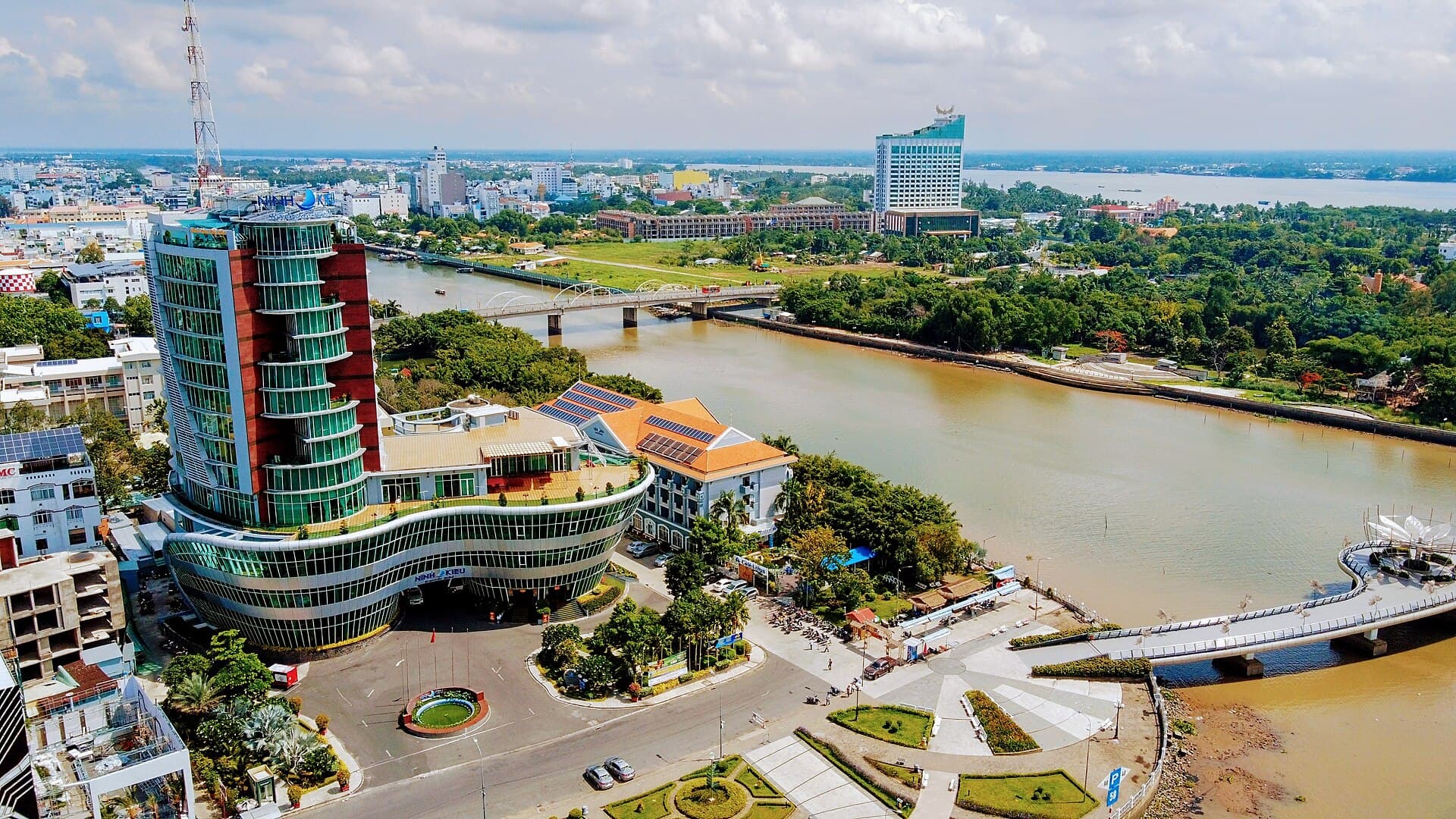
Cần Thơ, frequently called the "capital of the Mekong Delta," is a city where daily existence is deeply interwoven with the intricate dance of its waterways. Situated approximately 170 kilometers southwest of Ho Chi Minh City, it functions as the region's economic, cultural, and educational core.
This lively city invites travelers to encounter an authentic facet of Vietnam, far removed from the clamor of larger urban centers. Here, the rhythm of daily life is dictated by the river, from the active floating markets that stir at dawn to the serene canals that meander through verdant fruit orchards. Cần Thơ is a place where enduring customs persist, offering a glimpse into a resilient culture shaped by the Mekong's generous embrace.
The story of Cần Thơ is profoundly rooted in the fertile lands of the Mekong Delta, with early settlements tracing back to the Khmer kingdoms. However, the region's substantial development commenced with the arrival of the Vietnamese people.
By 1739, the area appeared on Vietnamese maps under the designation Tran Giang. The city's strategic position on the Hậu River, a significant distributary of the Mekong, and its abundant natural resources allowed it to evolve from a modest settlement into a pivotal economic and cultural center.
Cần Thơ has consistently been a multicultural city, with Kinh (Vietnamese), Khmer, and Hoa (Chinese) communities coexisting for centuries, each contributing to its distinctive architecture, cuisine, and traditions. The economy historically relied on the river for agriculture, fishing, and water-borne commerce.
During the French colonial era, Cần Thơ county was established in 1876, and its administrative boundaries largely endured until the French defeat in 1954. A notable moment in its modern narrative occurred on January 1, 2004, when Cần Thơ was elevated to the status of a centrally-governed city, solidifying its role as the Mekong Delta's foremost hub. The inauguration of the Cần Thơ Bridge in April 2010, one of Southeast Asia's longest cable-stayed bridges, further augmented its connectivity and economic significance.
A journey to Cần Thơ is incomplete without experiencing its characteristic floating markets. The Cai Rang Floating Market, a national intangible cultural heritage, is an active wholesale market specializing in fruits and vegetables. Arriving between 5:30 AM and 6:30 AM reveals the most energetic scene, and a "floating breakfast" of Bun Rieu or Hu Tieu provides a memorable experience. Another notable market is Phong Dien Floating Market.
Beyond the markets, explore the quiet beauty of Cần Thơ's fruit gardens, particularly plentiful in the Phong Dien and Cai Rang districts. Many offer the opportunity to select and taste seasonal fruits like rambutan, mangosteen, and durian directly from the trees. Consider visiting My Khanh Tourist Village or Con Son Islet for a blend of fruit orchards, folk culture, and local activities.
For a glimpse into the past, the Binh Thuy Ancient House, constructed by the Duong family in 1870 with French architectural influences, stands as an important historical site. Ninh Kieu Wharf, a symbol of Cần Thơ, provides a pleasant riverside park and serves as a departure point for boat excursions. The Thuan Hung Rice Paper Village, recognized as a national intangible cultural heritage, offers insight into a traditional craft that has flourished for over two centuries.
Cần Thơ experiences a tropical climate with two primary seasons: a dry season from December to April and a rainy season from May to November.
The dry season, particularly from December to February, is considered the optimal time to visit. During these months, the weather is typically sunny with comfortable temperatures ranging from 25°C to 32°C (77°F to 89.6°F) and lower humidity, ideal for outdoor pursuits and exploring the floating markets. While March and April remain dry, temperatures can become quite high.
For those who appreciate fruit, the peak fruit season extends from June to August, offering an abundance of tropical fruits to enjoy directly from the orchards. The rainy season brings daily afternoon downpours and higher humidity, but these are often brief, followed by sunshine, and the landscape appears lush and green.
Cần Thơ International Airport (VCA) provides direct flights to major Vietnamese cities like Hanoi and Da Nang. From Ho Chi Minh City, express buses offer a popular and economical option, taking approximately 3-4 hours. Reputable bus companies include Mai Linh, Hoang Long, and Phuong Trang.
Within Cần Thơ, taxis are readily available, and motorbike rentals provide flexibility for exploring outlying areas. Bicycles are well-suited for navigating the flat paths of the islets. River travel is essential for experiencing the floating markets and canals; private boats can be arranged at Ninh Kieu Wharf, or you can join an organized tour.
When visiting religious sites or local homes, dress modestly, ensuring shoulders and knees are covered, and remove your shoes before entering. Politeness is valued; negotiate prices with a smile in markets and accept items with both hands. Avoid swimming in the Hau River due to currents and boat traffic, and always consume bottled or boiled water.
- Is Cần Thơ worth visiting?
- Yes, Cần Thơ is highly recommended for an authentic Mekong Delta experience, offering active floating markets, verdant canals, and a relaxed pace of life.
- How many days are recommended for a visit to Cần Thơ?
- A visit of 3-4 days is recommended to explore the floating markets, city highlights, and nearby islets at a relaxed pace.
- What are the main attractions in Cần Thơ?
- Key attractions include the Cai Rang Floating Market, Phong Dien Floating Market, Ninh Kieu Wharf, various fruit gardens, the Binh Thuy Ancient House, and Ong Pagoda.
- What local dishes should I try in Cần Thơ?
- Be sure to try Banh Xeo (crispy Vietnamese pancakes), Banh Cong (deep-fried mung bean cake), Lau Mam (fermented fish hotpot), and Hu Tieu (noodle soup).
- Is Cần Thơ safe for solo travelers?
- Cần Thơ is generally safe for solo travelers. Joining a group tour can also be an excellent way to connect with others while exploring.
- What is the currency used in Cần Thơ?
- The currency used in Cần Thơ, and throughout Vietnam, is the Vietnamese Dong (VND).