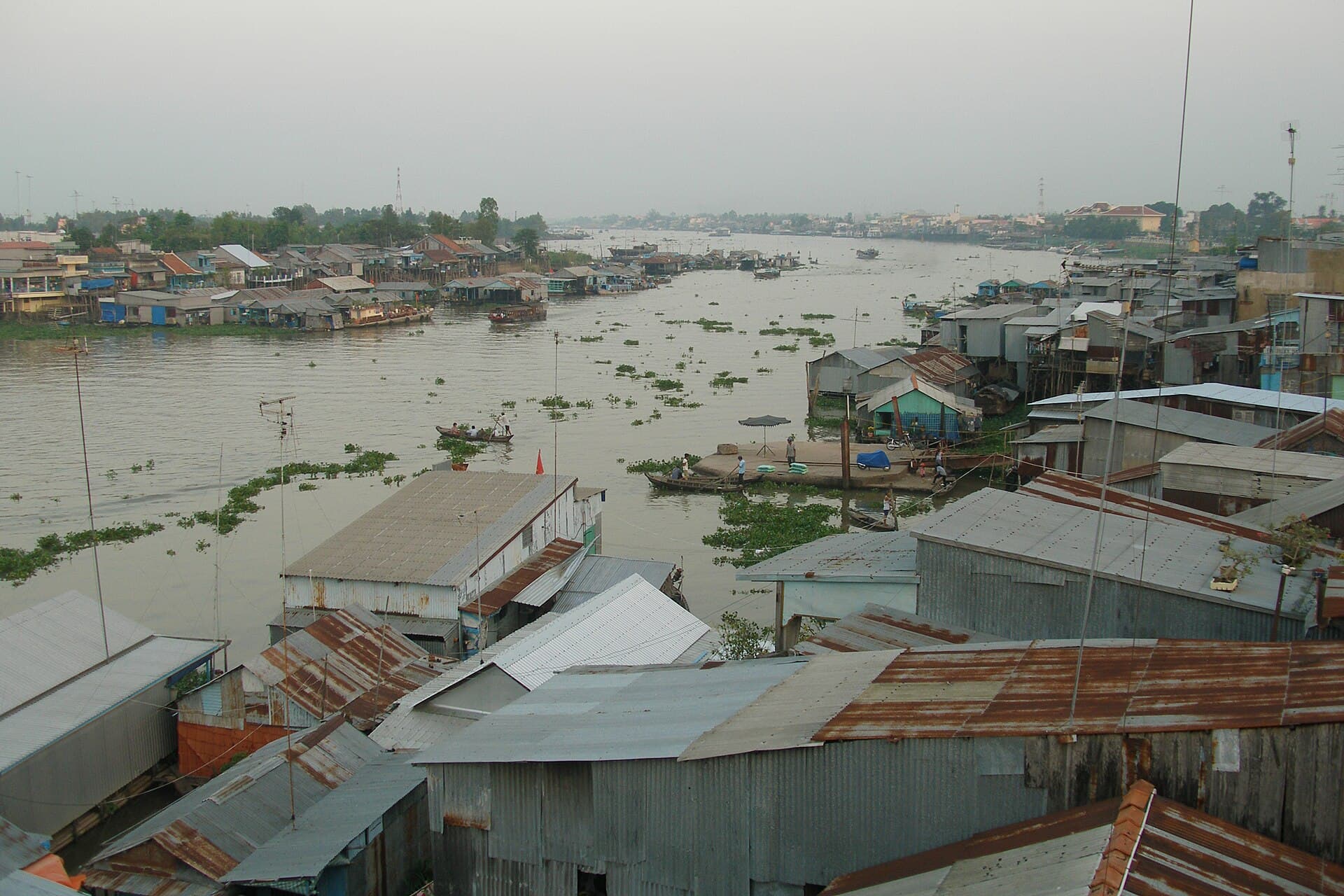
Châu Đốc, VietnamVyacheslav Argenberg / CC BY 4.0, via Wikimedia Commons
VN

Châu Đốc

Self-guided audio walking tour of Châu Đốc — GPS route, offline playback, story-driven narration in 32 languages.

Where the Mekong's currents carry ancient faith and diverse cultures.

The secrets of Châu Đốc

Châu Đốc, as no one tells it.

Not the postcards. The stories even locals don't know — whispered in your ear, right where they happened.

3 secrets below. Many more wait inside the tour.
Ba Chua Xu Temple

The revered statue of Ba Chua Xu is at the heart of Chau Doc's spiritual life, attracting pilgrims from across Vietnam. The origins of this sacred effigy are cloaked in a tale of mystery and a surprising act of community strength.

Full story unlocks in the tour
Floating Fish Farms

Chau Doc's rivers are dotted with floating houses, beneath which a unique form of aquaculture thrives. Yet, the traditional methods of these riverine farms are slowly yielding to a different kind of industry.

Full story unlocks in the tour
Tay An Pagoda

This striking pagoda at the foot of Sam Mountain presents an architectural style unlike many others in Vietnam. Its singular design suggests a broader world of influences.

Full story unlocks in the tour
The full tour

Discover every secret of Châu Đốc

Every address, every reveal in full — in your ear, right where it happened.

Get the key to Châu Đốc

You pick your stops. You walk. The voice reveals what the others miss.

Châu Đốc — white house between two cliffs
Photo: Ruslan Bardash / Unsplash
Châu Đốc — brown and green pagoda temple under blue sky
Photo: Degaharu / Unsplash
Châu Đốc — a flag on a tower
Photo: Matt Brown / Unsplash
Choose your time

How long do you have in Châu Đốc?

Your self-guided audio tour of Châu Đốc is ready — pick your landmarks, choose your language, and start the moment you arrive.

Buy
About Châu Đốc

The story of Châu Đốc

Châu Đốc, a city in Vietnam's An Giang Province, sits at the confluence of the Hậu River and the Vĩnh Tế Canal, just a few kilometers from the Cambodian border. This strategic location has shaped a dynamic cultural mosaic, where Vietnamese, Khmer, Cham, and Chinese communities have coexisted for centuries, each leaving their mark on the architecture, traditions, and cuisine.

Often a transit point for travelers crossing between Vietnam and Cambodia, Châu Đốc offers far more than a simple stopover. It's a place where daily life unfolds with a calm, grounded atmosphere, deeply intertwined with spiritual devotion and the rhythms of the Mekong Delta. From active floating markets to serene temples and expansive rice fields, Châu Đốc invites a deeper immersion into authentic Vietnamese culture.

History

Early Kingdoms and Vietnamese Expansion

The area now known as Châu Đốc has a long history, once belonging to the ancient Kingdom of Funan, and later the Khmer Empire. Vietnamese settlement in the region began around the 16th century, with General Nguyễn Hữu Cảnh (1650-1700) often credited with establishing Châu Đốc as a military base. His troops built communities, and many local streets and canals still bear his name.

The Nguyễn Dynasty's Strategic Vision

In 1815, King Gia Long of the Nguyễn Dynasty ordered the construction of Châu Đốc Fort on the western bank of the river, marking a significant step in the town's growth and strategic importance. To encourage settlement and economic development, a Chinese mandarin named Diệp Hội was tasked with attracting farmers and artisans, offering loans for land reclamation and business ventures. A pivotal development was the construction of the 87-kilometer Vĩnh Tế Canal between 1819 and 1824, supervised by the revered official Nguyễn Văn Thoại (also known as Thoại Ngọc Hầu). This monumental project connected Châu Đốc to the coastal town of Hà Tiên, boosting trade and irrigation, and serving as a vital defense against Siam (modern-day Thailand).

Colonial Influence and Modern Development

In 1832, Emperor Minh Mạng's administrative reforms established Châu Đốc as the center of the new An Giang province. The late 1800s saw Châu Đốc come under French control as part of French Indochina, which contributed to the town's distinct European colonial aesthetic. After Vietnam gained independence, Châu Đốc became part of the unified nation. In more recent history, the Ba Chúa Xứ Temple underwent a major reconstruction in 1972, giving it its current majestic appearance. The city officially attained provincial city status in 2013, further accelerating its urban development.
What to see

Châu Đốc offers a captivating blend of spiritual sites, active markets, and serene riverine landscapes. Begin your exploration at Sam Mountain, a sacred site dotted with around 200 temples and pagodas. Ascend to the summit for panoramic views of the Mekong Delta, stretching all the way to Cambodia on a clear day. At its base, visit the Ba Chúa Xứ Temple, a significant pilgrimage site dedicated to the "Lady of the Realm," believed to bring prosperity and good health. Nearby, the Tây An Pagoda stands out with its unique blend of Indian, Islamic, and Buddhist architectural influences.

Immerse yourself in river life with a boat trip to the Châu Đốc Floating Market, best visited in the early morning to witness the lively trade of fresh produce. Continue across the river to the Chăm villages of Châu Giang and Châu Phong, where you can explore traditional stilt houses, visit the Mubarak Mosque, and observe Cham women weaving intricate textiles. For a taste of the region's natural beauty, take an excursion to the Trà Sư Cajuput Forest, a tranquil haven for birdwatching, especially during the high water season. Do not overlook the active Châu Đốc Market in the town center, particularly the section dedicated to the famous local fish sauce.

When to visit

The best time to visit Châu Đốc is during the dry season, which generally runs from December to April. During these months, the weather is typically sunny with pleasant breezes and comfortable temperatures ranging from 25°C to 30°C (77°F to 86°F), ideal for outdoor activities and sightseeing. The period from August to November, known as the floating season, also offers a unique experience, particularly for visiting the Trà Sư Cajuput Forest and floating villages as the water levels are high. Additionally, consider visiting during the Ba Chúa Xứ Festival, usually held in April or May according to the lunar calendar, to witness lively traditional ceremonies and a significant cultural event.

Practical

Châu Đốc is approximately 250 km (155 miles) from Ho Chi Minh City, with travel by bus or private car taking around 5-6 hours. Sleeper buses are a common and affordable option. For those arriving from Cambodia, Châu Đốc serves as a major border crossing, with daily speedboat connections to Phnom Penh taking about 5 hours.

Getting around Châu Đốc is relatively easy; the city center is walkable, and motorbikes are an excellent way to explore the surrounding countryside and rice fields. Boat tours are readily available for visiting floating villages and Cham communities, and can be booked through local agencies or hotels, typically costing 150,000–250,000 VND (6–10 USD) per person. English is spoken in most hotels and guesthouses, and many restaurants offer English menus.

Good to know
What is Châu Đốc known for?
Châu Đốc is known for its spiritual landmarks, particularly the Ba Chúa Xứ Temple and the pagodas on Sam Mountain, its active floating markets, and its diverse cultural fabric, being home to Vietnamese, Cham, Khmer, and Chinese communities.
Is Châu Đốc worth visiting?
Yes, Châu Đốc is absolutely worth visiting for travelers seeking an authentic, local experience in the Mekong Delta, especially those interested in spiritual sites, cultural diversity, and serene river landscapes away from the main tourist circuits.
How do I get to Châu Đốc from Ho Chi Minh City?
You can reach Châu Đốc from Ho Chi Minh City by bus or private car. The journey is approximately 250 km and takes about 5-6 hours.
Can I cross the border to Cambodia from Châu Đốc?
Yes, Châu Đốc is a popular border crossing point to Cambodia. There are daily speedboat connections from Châu Đốc to Phnom Penh, typically taking around 5 hours.
What local dishes should I try in Châu Đốc?
Do not leave Châu Đốc without trying *bún cá* (fish noodle soup), *cá kho tộ* (caramelized fish in a claypot), and *chè* made with palm nuts, coconut cream, and shaved ice. The city is also famous for its fish sauce.
Are there any unique festivals in Châu Đốc?
Yes, the most significant is the Ba Chúa Xứ Festival, held annually from the 23rd to the 27th day of the fourth lunar month. It is a major pilgrimage event with traditional rituals and lively celebrations.
On the map

Châu Đốc in your own language — all 32· 32

Châu Đốc in Korean, in Chinese or in Hebrew — and 29 more languages, every stop narrated by a native voice. The widest language range of any self-guided audio tour.

Available in:

  • English
  • FrenchFrançais
  • SpanishEspañol
  • GermanDeutsch
  • ItalianItaliano
  • PortuguesePortuguês
  • DutchNederlands
  • PolishPolski
  • SwedishSvenska
  • DanishDansk
  • NorwegianNorsk
  • FinnishSuomi
  • RussianРусский
  • UkrainianУкраїнська
  • TurkishTürkçe
  • CzechČeština
  • HungarianMagyar
  • RomanianRomână
  • BulgarianБългарски
  • GreekΕλληνικά
  • Japanese日本語
  • Korean한국어
  • Chinese中文
  • Arabicالعربية
  • Hebrewעברית
  • Hindiहिन्दी
  • Thaiไทย
  • VietnameseTiếng Việt
  • IndonesianBahasa Indonesia
  • MalayBahasa Melayu
  • CatalanCatalà
  • BasqueEuskara
More cities in South
Châu Đốc
$9.99
No booking · code valid 1 year · 12h to walk once activated
Load on Wi-Fi, then walk offline — no roaming abroad
Get the key to Châu Đốc