Vung Tau Lighthouse
The Vung Tau Lighthouse, a guiding light for ships for over a century, initially drew its illumination from a surprising local resource.
Full story unlocks in the tour
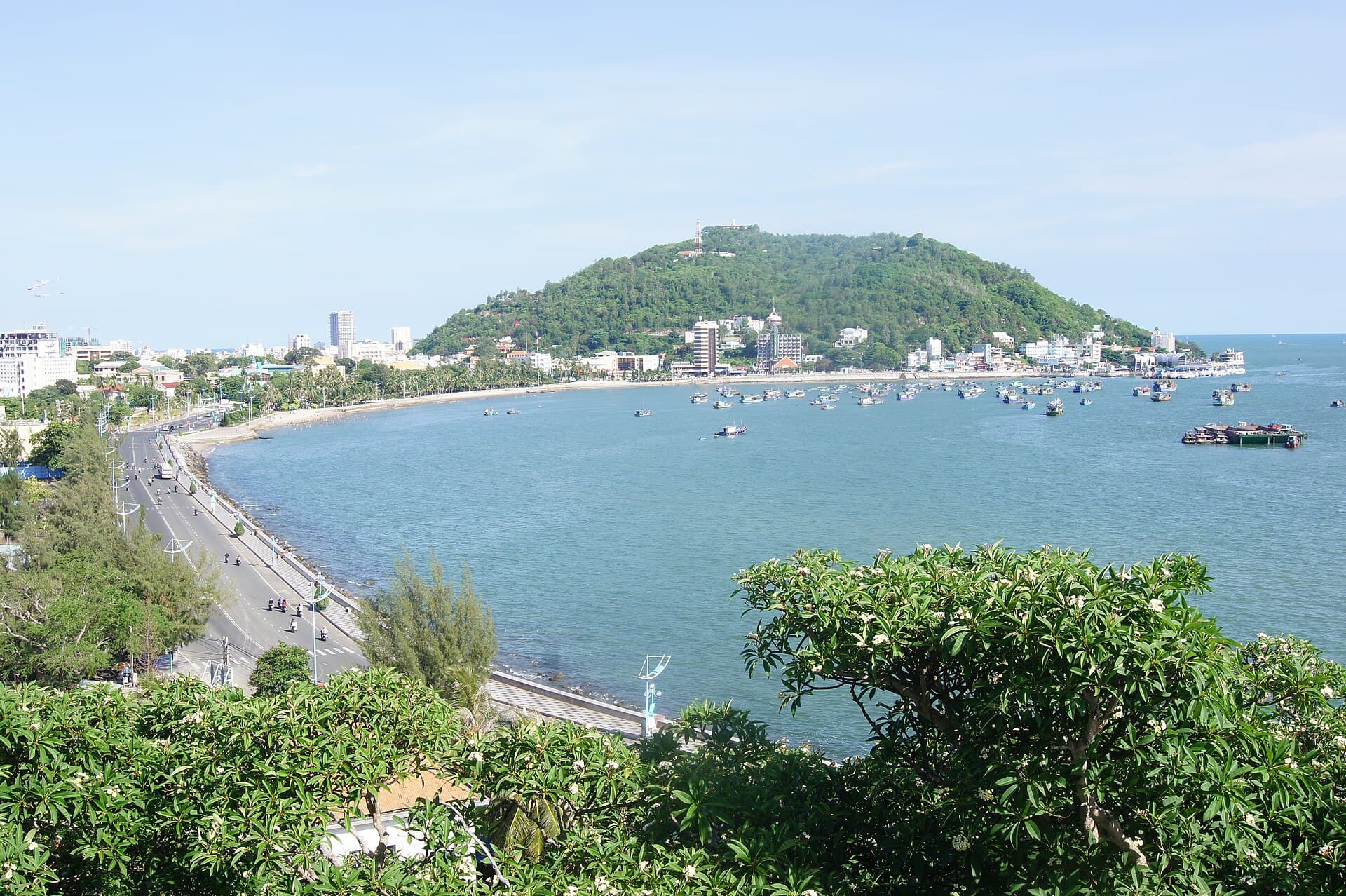 Hoangvantoanajc / CC BY-SA 3.0, via Wikimedia Commons
Self-guided audio walking tour of Vũng Tàu — GPS route, offline playback, story-driven narration in 32 languages.
“Where the mountains meet the sea, and history breathes on the breeze.”
Not the postcards. The stories even locals don't know — whispered in your ear, right where they happened.
The Vung Tau Lighthouse, a guiding light for ships for over a century, initially drew its illumination from a surprising local resource.
This grand French colonial villa, conceived as a retreat for a Governor-General, also served as an elegant prison for a Vietnamese emperor.
During the Vietnam War, Vung Tau was a popular 'R&R' destination not only for Allied soldiers but, according to rumor, also for an unexpected group.
Discover every secret of Vũng Tàu
Every address, every reveal in full — in your ear, right where it happened.
You pick your stops. You walk. The voice reveals what the others miss.


Your self-guided audio tour of Vũng Tàu is ready — pick your landmarks, choose your language, and start the moment you arrive.
BuyLume has a built-in augmented-reality guide. Hold your phone up and its camera shows the street ahead of you, with a glowing arrow laid over the real view that always points to your next stop — no map to puzzle over, no wrong turns. Like everything in Lume, it works fully offline.
Vũng Tàu, a coastal city in southern Vietnam, extends into the South China Sea like a slender finger, offering a unique blend of seaside charm and historical depth. Its name, translating to "Bay of Ships" or "Anchorage," hints at its long-standing maritime significance. Just a two-hour drive or a scenic hydrofoil ride from Ho Chi Minh City, Vũng Tàu has long been a favored escape for city dwellers seeking fresh sea air and a slower pace.
Beyond its beaches, Vũng Tàu presents a captivating narrative of Vietnamese history, marked by colonial influences and wartime resilience. From ancient fishing villages to a strategic port and an elite resort town, the city's evolution is etched into its architecture, landmarks, and the daily rhythms of its people. Today, it serves as a major crude oil extraction center for Vietnam, balancing its industrial importance with a growing tourism industry.
The origins of Vũng Tàu trace back to the 14th and 15th centuries, when the area was a cluster of three fishing villages: Thang Nhat, Thang Nhi, and Thang Tam. Its strategic location at the mouth of the Saigon River made it a frequent stop for European merchant ships, with Portuguese sailors charting it as Cap Saint-Jacques in the 16th century. In the early 19th century, Emperor Gia Long ordered the construction of a fortress to protect trade routes from pirates, solidifying Vũng Tàu's importance.
The mid-19th century brought French colonial rule, and with it, significant transformation. The French seized the region in 1862, retaining the name Cap Saint-Jacques. Under their administration, the city rapidly developed as an elite resort, characterized by elegant villas and French-style infrastructure. The iconic Vũng Tàu Lighthouse was first built by the French in 1862, followed by a pilot station to guide ships to Saigon. In 1895, the Governor-General of French Indochina officially established Vũng Tàu as a resort town.
During the Vietnam War, Vũng Tàu played a dual role as both a strategic military base and a popular R&R (Rest and Recreation) destination for Allied forces. The 1st Australian Logistics Support Group was headquartered here, and various United States military units were stationed at the Vũng Tàu Air Base. Its population surged from approximately 29,000 in 1955 to nearly 120,000 by 1973. After the war, Vũng Tàu became a significant departure point for many Vietnamese refugees, often referred to as "boat people," seeking to escape the post-war Communist regime.
In 1991, Bà Rịa–Vũng Tàu province was officially founded, and Vũng Tàu became its provincial capital. While its role as a shipping port has diminished, it remains a crucial center for Vietnam's offshore oil industry. As of July 2025, Vũng Tàu City was legally abolished and became part of Ho Chi Minh City, though the name "Vũng Tàu" is still colloquially used for the area.
Vũng Tàu offers a range of attractions that blend natural beauty with historical significance. Ascend Small Mountain to reach the Christ the King Statue (Tượng Chúa Kitô Vua), a towering 32-meter-high figure of Jesus with outstretched arms. Visitors can climb 133 steps inside the statue for expansive views of the coastline and city. Nearby, the Vũng Tàu Lighthouse, dating back to 1862, stands as Vietnam's oldest lighthouse, offering 360-degree vistas. The winding road to the lighthouse itself provides scenic overlooks.
Explore the White Palace (Bach Dinh), a grand European-style villa built between 1898 and 1902 as a summer retreat for French Governors-General. This historical landmark, situated on Big Mountain, features period furnishings, gardens, and artifacts, including ceramics recovered from sunken ships. For those interested in military history, the Worldwide Arms Museum houses a vast private collection of weaponry from various eras and cultures. Additionally, the Thang Tam Communal House, over 200 years old, provides insight into the city's founding and traditional Southern Vietnamese architecture. Discover the lively local seafood culture, with numerous eateries serving fresh catches like stingray hot pot and bánh khọt (mini-pancakes).
The ideal time to visit Vũng Tàu is during the dry season, which runs from November to April. During these months, the weather is generally pleasant, sunny, and features minimal rainfall, making it perfect for beach activities and sightseeing. December to February offers slightly cooler temperatures, ranging from 20°C to 30°C, providing the most comfortable conditions for exploration. Weekdays are often less crowded, allowing for a more relaxed experience.
Vũng Tàu is easily accessible from Ho Chi Minh City, with travel options including a two-hour drive by car or bus, or a more scenic 90-minute hydrofoil ride. For getting around the city, renting an electric scooter is a popular and convenient choice. While Vũng Tàu offers extensive beaches like Back Beach (Bai Sau) and Front Beach (Bai Truoc), be mindful that they can become very crowded on weekends, particularly with tourists from Ho Chi Minh City. It's advisable to carry cash for local markets and to confirm seafood prices before ordering. When visiting religious sites like the Christ the King Statue, adhere to standard dress codes, which typically mean no vest-tops or shorts.
Vũng Tàu in Korean, in Chinese or in Hebrew — and 29 more languages, every stop narrated by a native voice. The widest language range of any self-guided audio tour.
Available in: